


What Is the Hyakunin Isshu?
The Hyakunin Isshu is one of Japan's most famous waka poetry anthologies, and it remains beloved today in the form of the card game karuta. Compiled in the early Kamakura period (around 1235) by the poet Fujiwara no Sadaie, the anthology consists of one hundred waka poems, each selected from a different one of one hundred poets. In later ages, various other anthologies modeled on this format were created—such as the Nyōbō Hyakunin Isshu and the Shin Hyakunin Isshu—and so the anthology that Sadaie compiled at his villa near Ogura Mountain in Kyoto came to be known specifically as the Ogura Hyakunin Isshu.
All of the waka poems Sadaie selected for the Hyakunin Isshu were drawn from chokusen wakashū—imperially commissioned anthologies compiled as national projects by order of the reigning emperor at the time. This is one of the anthology's most distinctive characteristics.
Themes of the Collected Poems
The most common theme in the Hyakunin Isshu is love (koi), with as many as 43 of the hundred poems devoted to the subject. This reflects the structure of the imperially commissioned anthologies—such as the Kokin Wakashū—that formed the source material for the Hyakunin Isshu. In those anthologies, poems were organized by theme using a system called daitate (thematic categorization), in which "love" ranked alongside the four seasons as one of the most important genres. In the aristocratic society of the Heian period, waka poetry served as an essential means of communication for expressing one's feelings to another. As a result, a great many outstanding love poems were composed, and love became established as one of the most prized themes in waka poetry.
The Birth of the Hyakunin Isshu
The compiler of the Hyakunin Isshu was the poet Fujiwara no Sadaie, who was active from the late Heian period into the early Kamakura period. The era in which Sadaie lived was one of upheaval, as the long-flourishing court culture began to crumble and warriors rose to the center of political power. Sadaie himself held an important government post as Provisional Middle Counselor (Gon Chūnagon). Yet even amid the tumultuous changes of the time—including the Jōkyū War—he wrote in his diary Meigetsuki: "紅旗征戎, 吾が事に非ず", which means that "War and military affairs are no concern of mine". This may seem like a lack of responsibility for a statesman, but it appears that Sadaie believed his true calling was not to be swept up in the worldly strife of a turbulent age, but rather to preserve and pass down to future generations the world of beauty embodied in waka poetry.
When it came to poetry, Sadaie never compromised. He was involved in the compilation of numerous imperially commissioned anthologies, but his path was far from smooth—at times he was buffeted by political circumstances and forced into the anguish of betraying his own convictions. The episode that most clearly reveals this inner conflict is the compilation of the Shin Chokusen Wakashū (New Imperially Commissioned Waka Collection) during the Kamakura period. This anthology was compiled under the order of Emperor Gohorikawa, with Sadaie at the helm.
However, the compilation posed a profound dilemma for Sadaie. He desperately wanted to include poems by the retired emperors Go-Toba and Juntoku, both of whom were gifted poets. Yet these two retired emperors had also been the central figures behind the Jōkyū War, an armed uprising against the Kamakura shogunate. Out of political necessity, their poems were therefore barred from inclusion in the imperially commissioned anthology. For Sadaie—who had wished to select poems purely on the basis of their poetic merit—this was a source of deep anguish and bitter regret.
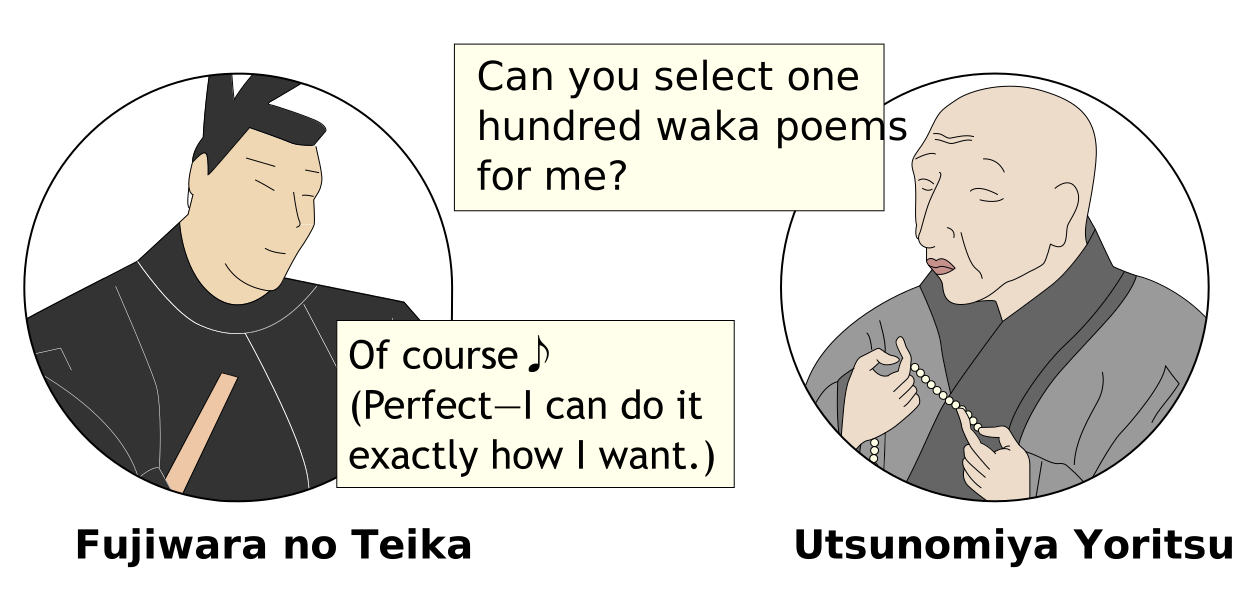
It was in the midst of these circumstances that Sadaie received a request from his relative Utsunomiya Yoritsuna to select one hundred waka poems to be used as decorative paintings on the sliding doors of his country villa. For Sadaie, this was a perfect opportunity—free from political constraints—to select poems based purely on their poetic quality. The desire he had been unable to fulfill in the compilation of the imperially commissioned anthology, to choose works according to their literary merit alone, was rekindled with fresh intensity.
And so, around 1235, drawing on the waka tradition that had come before him and guided by his own aesthetic sensibility and pride as a poet, Sadaie selected one hundred poems. This was the birth of the Ogura Hyakunin Isshu as we know it today. The Hyakunin Isshu is more than a mere anthology of great poems—it might be called a crystallization of Fujiwara no Sadaie's passionate devotion to poetry and the complex emotions he harbored amid the political constraints of his time.
There are various theories regarding the circumstances of the Hyakunin Isshu's compilation, but it is generally believed that Fujiwara no Sadaie selected the poems at the request of Utsunomiya Yoritsuna.
Fujiwara no Sadaie's Family Tree
Fujiwara no Sadaie is renowned, alongside his father Fujiwara no Toshinari, as one of the foremost poets in the history of waka. Both father and son belonged to the Mikohidari family, a prestigious lineage celebrated as the foremost house of the poetic tradition.
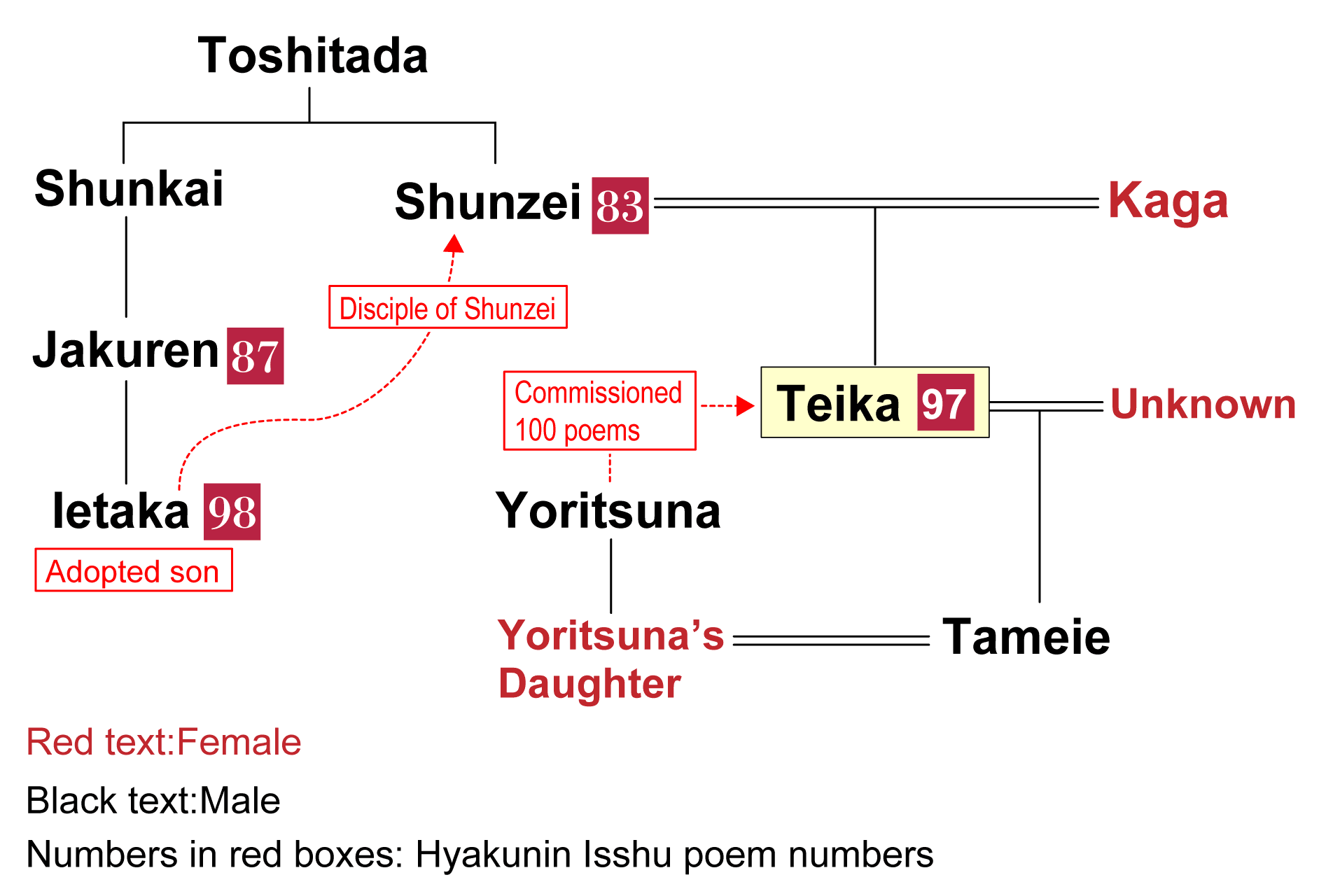
Click on a person marked with a number to go to that poet's page.
The Hyakunin Isshu as a Record of the Heian Court
The Hyakunin Isshu is not merely a collection of celebrated poems. It is, in essence, "the history of court culture itself"—a work that distills the splendor of an imperial dynasty spanning some five hundred years, along with the hearts of those who witnessed its decline. Woven into its structure is a clear and deliberate intention on the part of its compiler, Fujiwara no Sadaie.
At the very beginning of the anthology, Sadaie placed Emperor Tenji and Empress Jitō, both symbolic of the dynasty's origins. At the very end, he placed Retired Emperor Go-Toba and Retired Emperor Juntoku, who had been defeated by the Kamakura shogunate and condemned to exile. The fact that Sadaie deliberately placed at the close of this private anthology the poems of these "vanquished" figures—poets he had been compelled to exclude from the imperially commissioned anthology for political reasons—offers a glimpse of his quiet act of resistance.
Though the rise of the warrior class could not be stopped, the brilliance of court culture and its refined aesthetic sensibility would not be allowed to fade—they would be handed down to future generations. It was out of that near-obsessive passion that the Hyakunin Isshu was born.
Recommeded page:
Please enjoy "Karuta taisen(Karua Game)".