Front of the Card
Back of the Card
Japanese
English
Audio: NHK Creative Library
Read by LibriVox volunteer Larry Wilson.
Audio courtesy of LibriVox
春道列樹
山川に
風のかけたる
しがらみは
流れもあへぬ
紅葉なりけり

なかれもあ
へぬもみち
なりけり

やまが


- Poem 32
- 山川に
風のかけたる
しがらみは
流れもあへぬ 紅葉なりけり
Author: Harumichi no Tsuraki (dates unknown–920)
Source: Kokin Wakashū, Autumn
- English Verse Translation
- The stormy winds of yesterday The maple branches shook; And see! a mass of crimson leaves
Has lodged within that nook, And choked the mountain brook.
— William N. Porter, 1909
- Modern Translation
- The weir of fallen maple leaves, caught by the mountain wind across the stream — the water cannot flow through.
- Commentary
- The Kokin Wakashū says this was written while crossing the Shiga pass, on the mountain road from Kyoto to Ōtsu. The poet sees maple leaves piled up in a stream and calls them a beautiful weir built by the autumn wind.
- About the Poet
- Harumichi no Tsuraki was a descendant of the powerful Mononobe clan and studied literature at the court school when young. Named governor of Iki, he died before he could take up the post. He left no poetry collection and is little known, but Fujiwara no Sadaie liked this poem enough to borrow from it in his own.
- Poem Illustration
-
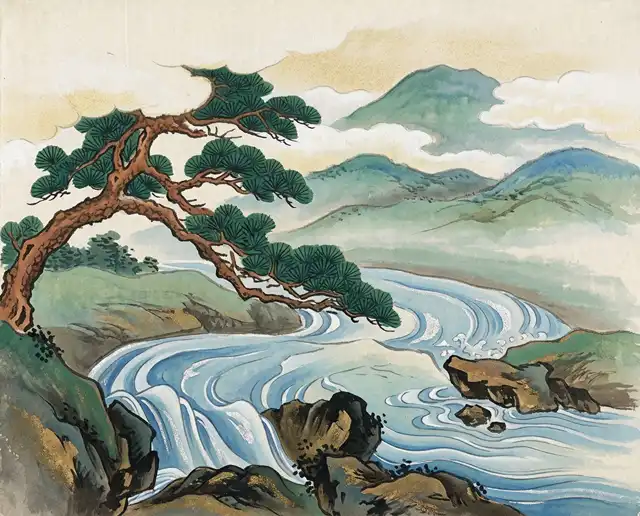
This image is based on an illustration from William N. Porter's A Hundred Verses from Old Japan, his 1909 English translation of the Hyakunin Isshu published in England, colorized and reworked using Adobe Firefly (generative AI).
- Harumichi no Tsuraki: A Short Timeline
-
- 910
- Becomes a student of literature at the court university
- Unknown
- Becomes a senior secretary at Dazaifu
- 920
- Named governor of Iki Province, but dies before taking up the post
- Appendix
-
- A Poem in Which Fujiwara no Sadaie Borrowed from Tsuraki
-
The phrase kaze no kaketaru shigarami, "a weir the wind has built," is thought to have been a very original expression first used by Harumichi no Tsuraki.
This original expression must be why Sadaie was so drawn to his poem that he borrowed from it (honkadori).In Japanese
木の葉もて 風のかけたる しがらみに
さてもよどまぬ 秋の暮れかな konohamote kazenokaketaru shigaramini
satemoyodomanu akinokurekana Shūi Gusō (Sadaie's own collection), Fujiwara no SadaieIn English
The wind has blown the leaves together into something like a weir, yet even so, the end of autumn flows on without stopping.
- A Poem About the Flow of a River
-
The headnote in the Kokin Wakashū says this poem was written at the end of the year, and it is about how quickly the months and days flow by as a year ends. Tsuraki's Hyakunin Isshu poem is also about the flow of a river, and we can almost see him gazing at a river, lost in many thoughts.
In Japanese
昨日といひ けふと暮らして 飛鳥川
流れてはやき 月日なりけり kinoutoihi kefutokurashite asukagawa
nagaretehayaki tsukihinarikeri Kokin Wakashū, Harumichi no TsurakiIn English
Saying "yesterday," saying "today," we live day after day until tomorrow (asu) comes.
Like the Asuka River, the months and days flow by so fast. - Ukiyo-e by Katsushika Hokusai
-
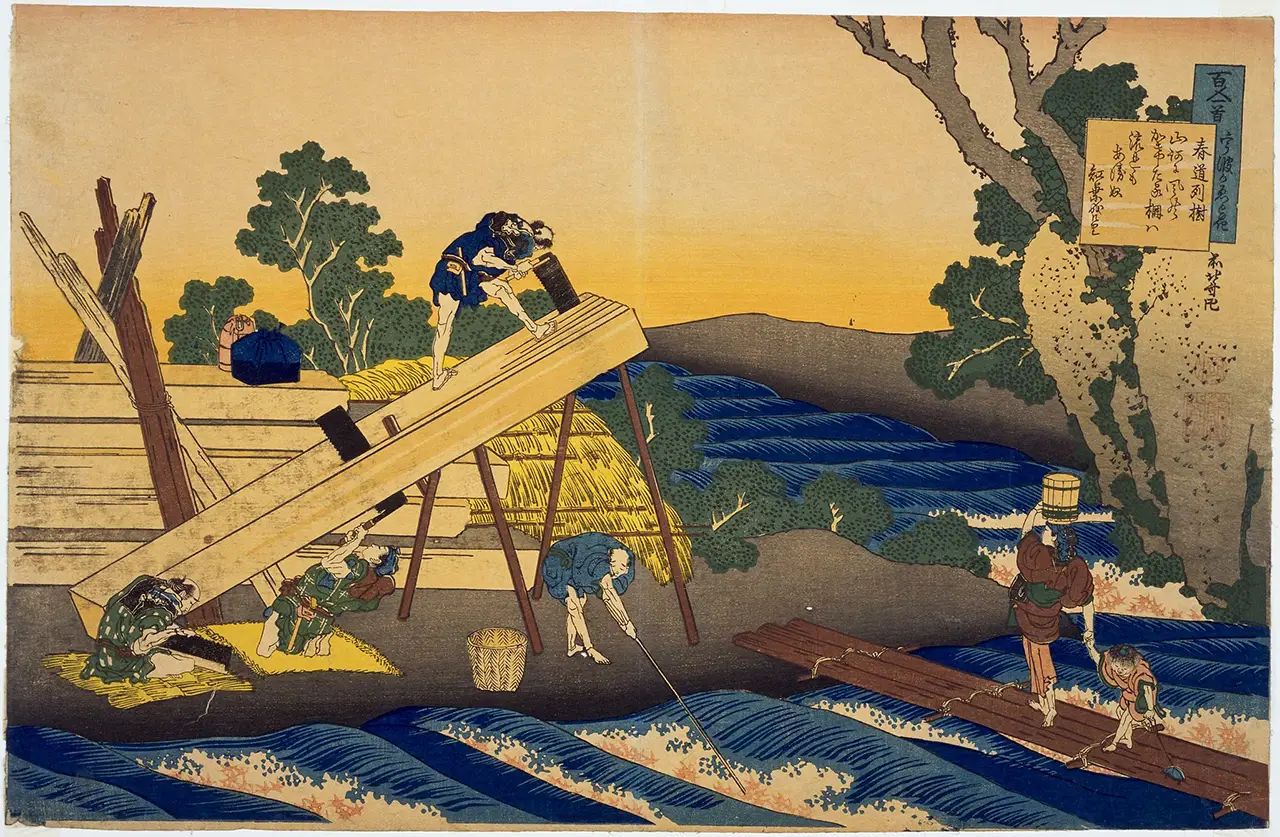
National Diet Library, Public domain, via Wikimedia Commons This print is from One Hundred Poems Explained by the Nurse (Hyakunin Isshu Uba ga Etoki) by Katsushika Hokusai, an ukiyo-e artist of the Edo period. The idea of the series is a nurse explaining the Hyakunin Isshu poems with easy-to-understand pictures. Below the people working on timber, autumn leaves are gathered in the river as if they were forming a weir.
- Utagawa Kuniyoshi's Hyakunin Isshu no Uchi
-
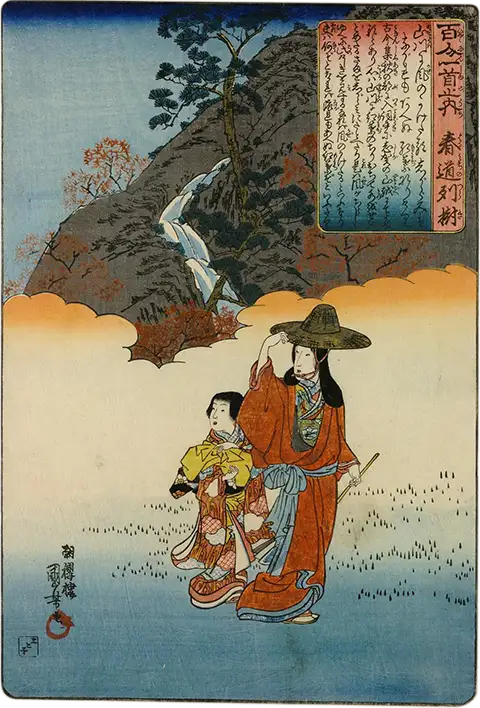
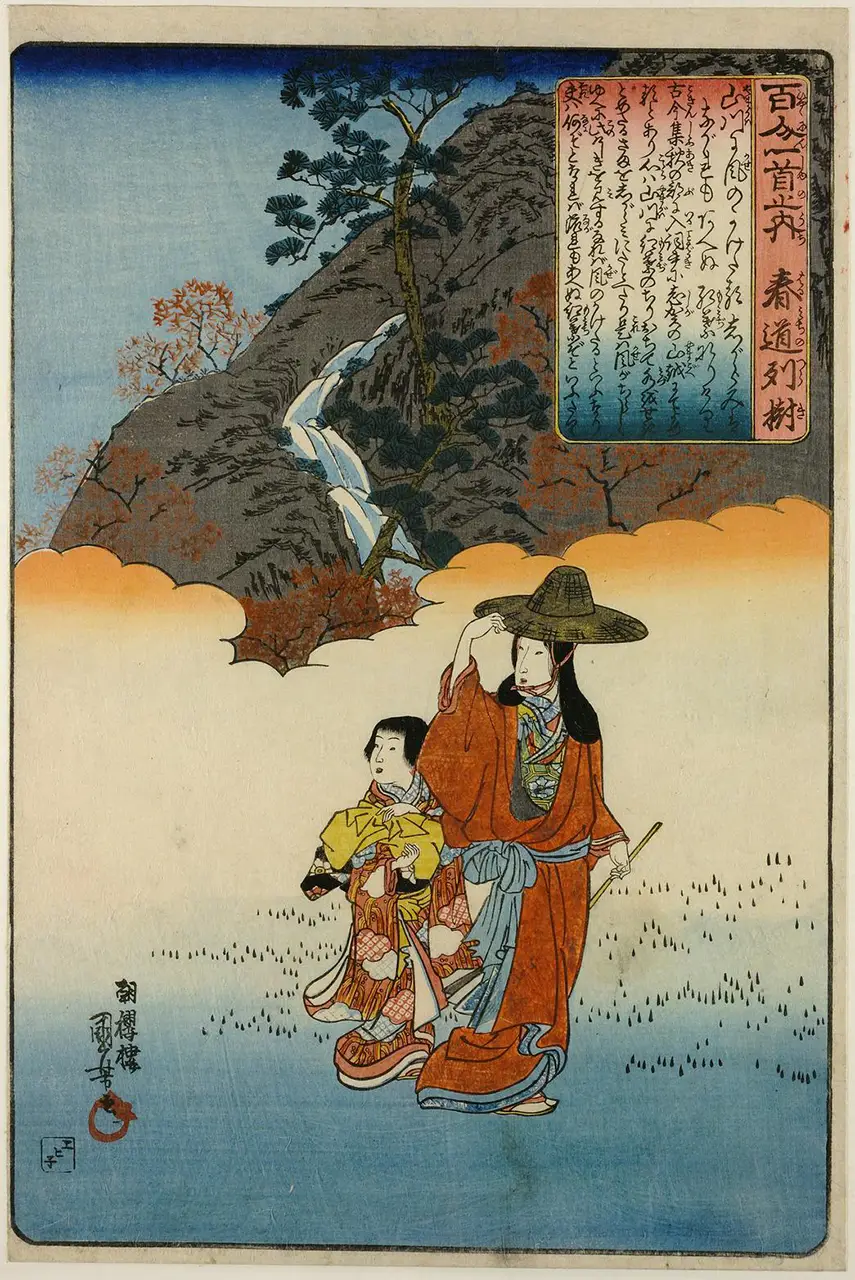
British Museum, Public domain, via Wikimedia Commons This ukiyo-e is by Utagawa Kuniyoshi, an artist of the Edo period. It shows a scene that matches the poem in the Hyakunin Isshu.