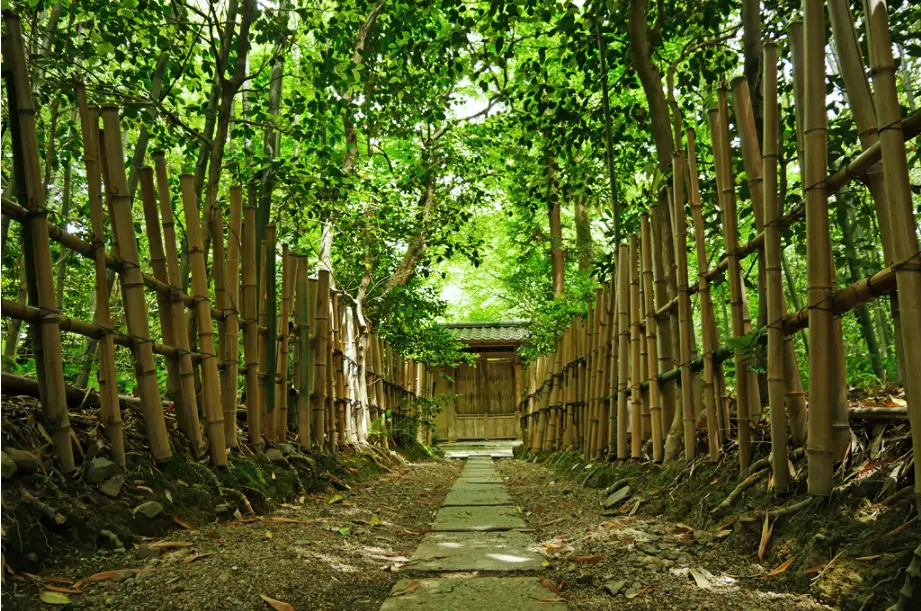
Front of the Card
Back of the Card
Japanese
English
Audio: NHK Creative Library
Read by LibriVox volunteer Larry Wilson.
Audio courtesy of LibriVox
権中納言定家
来ぬ人を
松帆の浦の
夕なぎに
焼くやもしほの
身もこがれつつ
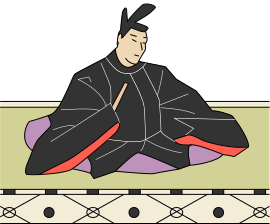
やくやもし
ほのみもこ
かれつつ

こぬ


- Poem 97
- 来ぬ人を
松帆の浦の
夕なぎに
焼くやもしほの 身もこがれつつ
Author: Acting Middle Counselor Sadaie (1162–1241)
Source: Shin Chokusen Wakashū, Love
- English Verse Translation
- Upon the shore of Matsu-hō For thee I pine and sigh; Though calm and cool the evening air,
These salt-pans caked and dry Are not more parched than I!
— William N. Porter, 1909
- Modern Translation
- Waiting for someone who will not come, at the quiet evening shore — like salt burned from the seaweed, I too am consumed by longing.
- Commentary
- The poem borrows from a long poem in the Man'yōshū, in which a man in Akashi loves a young fisher girl at Matsuho Bay across the sea. Sadaie turns it around: here it is the girl at Matsuho Bay who waits, burning with longing, for her lover.
- About the Poet
- Fujiwara no Sadaie compiled the Hyakunin Isshu and was a compiler of the Shin Kokin Wakashū, a giant of waka. He also studied the classics, copying The Tale of Genji, the Sarashina Diary, and The Tales of Ise, and wrote a commentary on the Kokin Wakashū. Many classics survive today thanks to him.
- Poem Illustration
-
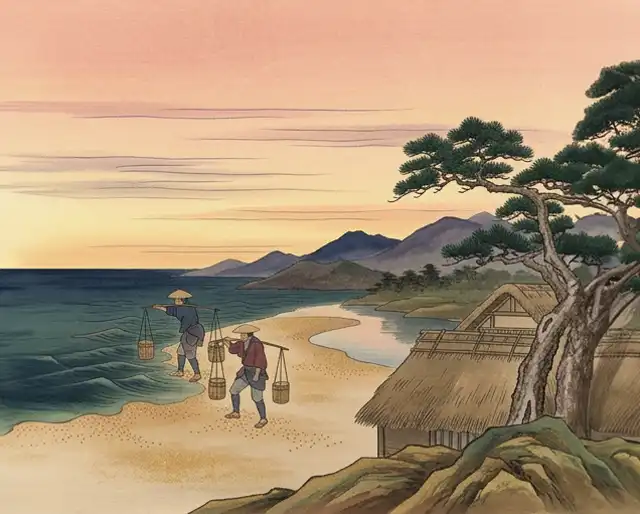
This image is based on an illustration from William N. Porter's A Hundred Verses from Old Japan, his 1909 English translation of the Hyakunin Isshu published in England, colorized and reworked using Adobe Firefly (generative AI).
- Fujiwara no Sadaie: A Short Timeline
-
- 1162
- Born as a son of Fujiwara no Toshinari
- 1175
- Becomes a Chamberlain (Jijū)
- 1201
- Chosen to compile the Shin Kokin Wakashū
- 1211
- Given Junior Third Rank
- 1232
- Becomes Acting Middle Counselor
- 1235
- The Shin Chokusen Wakashū is completed
- 1235
- Chooses the poems for the paper squares at his Ogura mountain villa (later the Ogura Hyakunin Isshu)
- 1241
- Dies
- Fujiwara no Sadaie's Family Tree
-
Fujiwara no Sadaie's father was Fujiwara no Toshinari (Poem 83 of the Hyakunin Isshu). Toshinari was also a great master of waka and taught poetry to Retired Emperor Go-Toba, Princess Shikishi, Ietaka, and others. Sadaie and his father Toshinari belonged to a famous family of poets known as the Mikohidari family.
When Sadaie was about 74, Utsunomiya Yoritsuna, the father of his son's wife, asked him to choose and copy out one hundred poems to decorate the sliding doors of his country villa, and Sadaie is said to have compiled the Hyakunin Shūka. The Hyakunin Shūka became the original version of the Hyakunin Isshu.
- Appendix
-
- The Original Poem (a Long Poem in the Man'yōshū)
-
In Japanese
名寸隅の 船瀬見ゆる
淡路島 松帆の浦に
朝凪に 玉藻刈りつつ
夕凪に 藻塩焼きつつ
海人娘子 ありとは聞けど
見に行かむ よしのなければ
ますらをの 心はなしに
たわやめの 思ひたわみて
たもとほり われはそ恋ふる
船梶をなみ nakisumino funasemiyuru
awajishima matsuhonourani
asanagini tamamokaritsutsu
yuunagini moshioyakitsutsu
amaotome aritohakikedo
miniyukamu yoshinonakereba
masuraono kokorohanashini
tawayameno omohitawamite
tamotohori warehasokofuru
funekajionami Man'yōshū, Kasa no KanamuraIn English
At Matsuho Bay on Awaji Island,
which can be seen from the harbor of Nakisumi,
I hear there is a fisher girl
who cuts seaweed in the morning calm
and burns seaweed for salt in the evening calm.
But I have no way to go and see her,
and with no manly courage,
my heart gives way like a frail woman's;
wandering, I can only long for her,
for I have neither boat nor oar. - The Poem That Made Go-Toba Notice His Talent
-
Retired Emperor Go-Toba had poets each present a hundred poems in a project called the Shōji Shodo Hyakushu (the First Hundred-Poem Sequences of the Shōji Era), and Sadaie presented a hundred poems as well. The next poem is one of them and is also in the Shin Kokin Wakashū. It is said that Go-Toba discovered Sadaie's talent at this time and thought highly of him.
In Japanese
駒とめて 袖うちはらふ かげもなし
佐野のわたりの 雪の夕暮れ komatomete sodeuchiharafu kagemonashi
sanonowatarino yukinoyuugure Shin Kokin Wakashū, Fujiwara no SadaieIn English
There is no shelter where I can stop my horse and brush the snow from my sleeves: a snowy evening at the Sano ferry crossing.
- The Poem That Angered Go-Toba
-
Retired Emperor Go-Toba recognized Sadaie's talent, but once, because Sadaie wrote the next poem, he angered Go-Toba and was ordered to stay at home in disgrace. The poem was based on a poem by Sugawara no Michizane, and it expresses the frustration of Sadaie, a man eager for promotion, at not being promoted. Here it is together with the poem by Michizane that Sadaie based it on.
In Japanese
道のべの 野原の柳 したもえぬ
あはれ歎の 煙くらべに michinobeno noharanoyanagi shitamoenu
aharenagekino keburikurabeni Shūi Gusō, Fujiwara no SadaieIn English
By the roadside, under the willows of the field, the grass is sprouting,
as if competing with the smoke of grief smoldering in my heart.Shūi Gusō is Sadaie's personal poetry collection.
This is the poem by Sugawara no Michizane that Sadaie based his poem on. Michizane wrote it when he arrived in Tsukushi (today's Fukuoka Prefecture), after being sent away because of Fujiwara no Tokihira's false accusations. There are several theories about why Go-Toba ordered Sadaie into disgrace, but if Sadaie wrote his poem based on this poem full of Michizane's bitterness, it is no wonder Go-Toba was angry.
In Japanese
夕されば 野にも山にも 立つ煙
なげきよりこそ 燃えまさりけれ yuusareba nonimoyamanimo tatsukeburi
nagekiyorikoso moemasarikere Ōkagami, Sugawara no MichizaneIn English
When evening comes, smoke rises over the fields and the mountains. It burns all the more fiercely, fed by the wood of my grief (nageki, which also means "throwing on wood").
- A Famous Poem with the World of The Tale of Genji
-
The next poem includes "Yume no Ukihashi" (The Floating Bridge of Dreams), the name of the last chapter of The Tale of Genji. It calls to mind the dawn sky seen after lovers part, and leaves a lingering feeling like the ending of a story. It is famous as one of Sadaie's masterpieces and is in the Shin Kokin Wakashū.
In Japanese
春の夜の 夢の浮橋 とだえして
峰に別るる 横雲の空 harunoyono yumenoukihashi todaeshite
mineniwakaruru yokogumonosora Shin Kokin Wakashū, Fujiwara no SadaieIn English
When the fleeting spring night's dream, like a floating bridge, broke off, what I saw was the dawn sky, where trailing clouds were pulling away from the mountain peak.
- A Poem About the Autumn Leaves of Mount Ogura
-
The next poem was written at the Ogura mountain villa, where Sadaie is said to have compiled the Hyakunin Isshu. Because of this poem, the villa also came to be called "Shigure-tei" (the Pavilion of Autumn Showers).
In Japanese
小倉山 しぐるるころの 朝な朝な
昨日はうすき 四方のもみぢ葉 ogurayama shigururukorono asanaasana
kinouhausuki shihounomomijiba Shūi Gusō, Fujiwara no SadaieIn English
In the season of autumn showers on Mount Ogura, the leaves all around grow deeper in color day by day, and each morning I realize that yesterday's colors were paler than today's.
- Ogura Shikishi (Poem Cards)
-
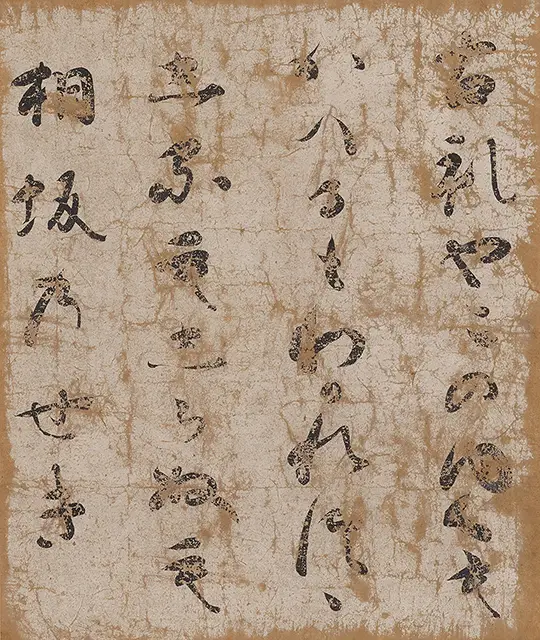
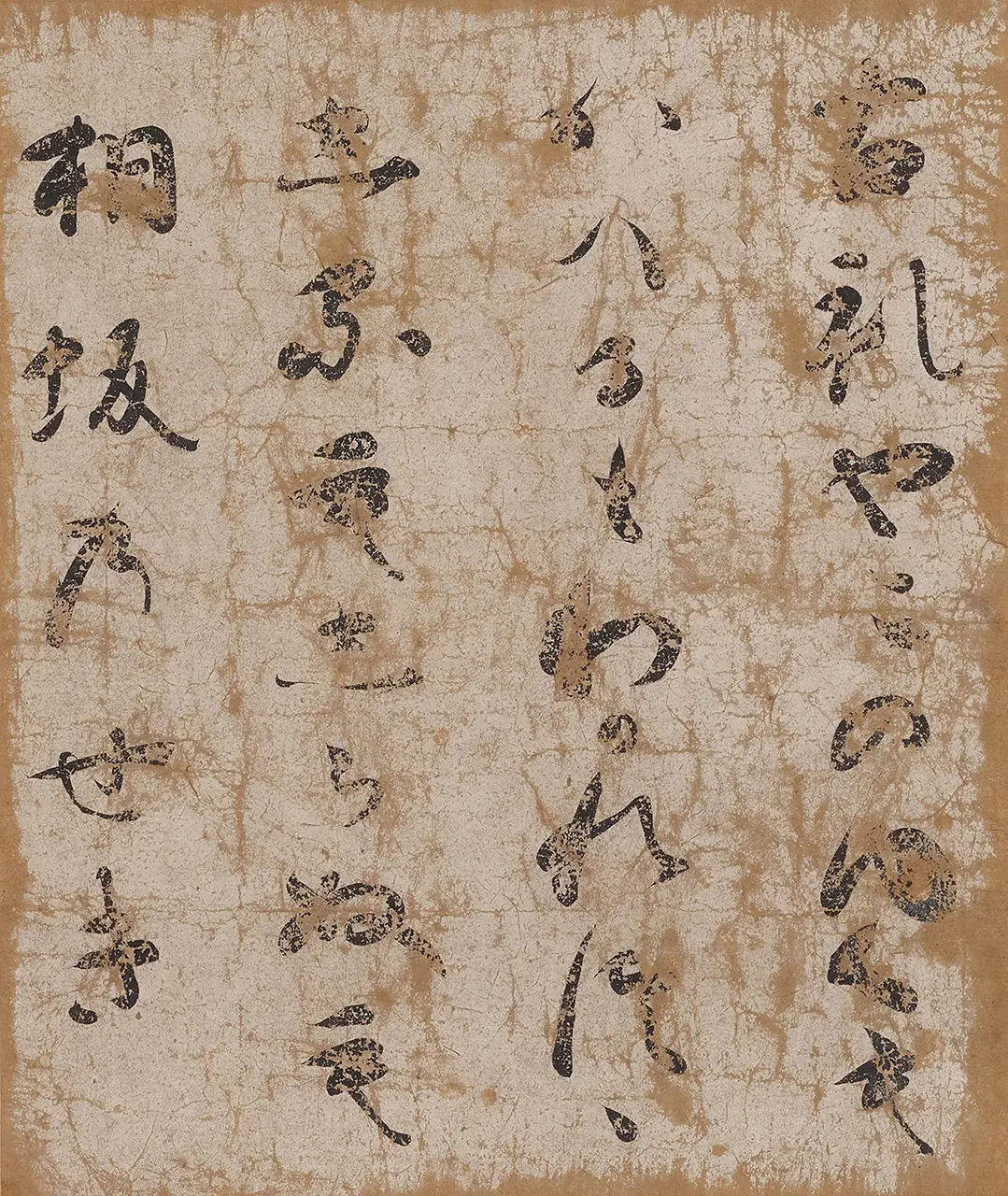
Source: ColBase (https://colbase.nich.go.jp/) The Ogura shikishi are the poem cards on which Fujiwara no Sadaie, at the request of Utsunomiya Yoritsuna, chose one hundred poems and wrote them out himself.
This card has the poem by Semimaru.Sadaie's distinctive handwriting became popular in the Edo period. It is still popular today, and Adobe offers a font called "Kazuraki SP2N," inspired by his handwriting.
- Meigetsuki
-

Photo of the Crab Nebula: Adobe Stock The Meigetsuki is Fujiwara no Sadaie's diary. Sadaie himself called it "Guki" (my foolish record), but later generations named it Meigetsuki. It is kept by the Reizei family, Sadaie's descendants.
Sadaie kept the diary almost every day from age 19 until about age 74. He collected a wide range of knowledge, not only about poetry, and he also recorded astronomical events.
For example, he recorded in detail a "supernova explosion" (today's Crab Nebula) that happened in 1054, before he was born, noting that at its brightest it could be seen even in the daytime, and that it stayed visible for about two years after it appeared. Such records are valuable for astronomy, and in 2019 the Astronomical Society of Japan named the Meigetsuki one of the first "Japan Astronomical Heritage" items.
In addition, in 2000 the Meigetsuki was designated a National Treasure.
- Teikakazura (Asian Star Jasmine)
-
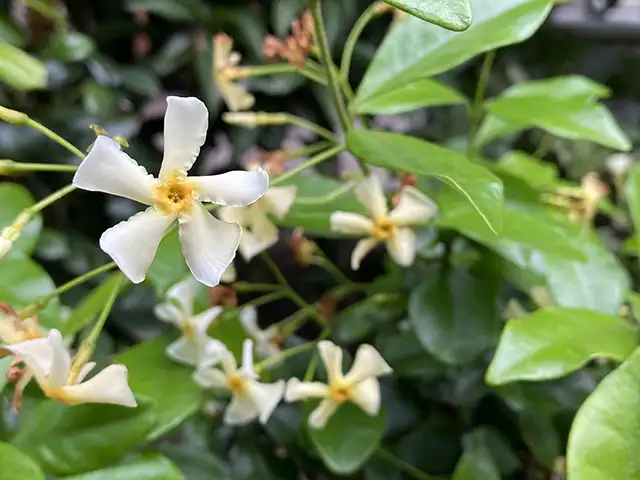
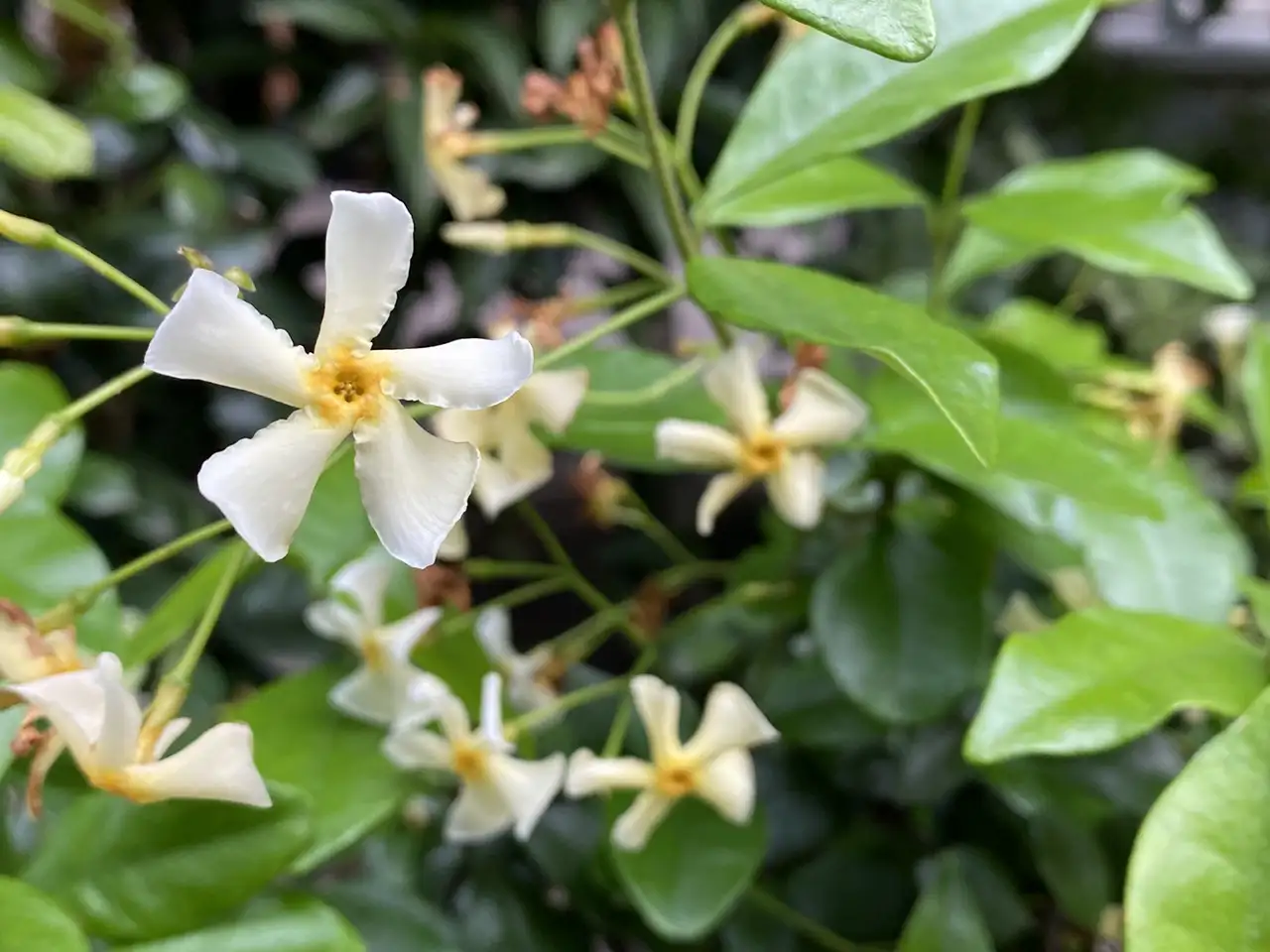
Teikakazura is an evergreen climbing shrub of the dogbane family. It is named after a legend that Fujiwara no Sadaie (whose name can also be read "Teika") loved Princess Shikishi deeply, and after her death became this plant and wound itself around her grave.
- An Ukiyo-e Print by Katsushika Hokusai
-
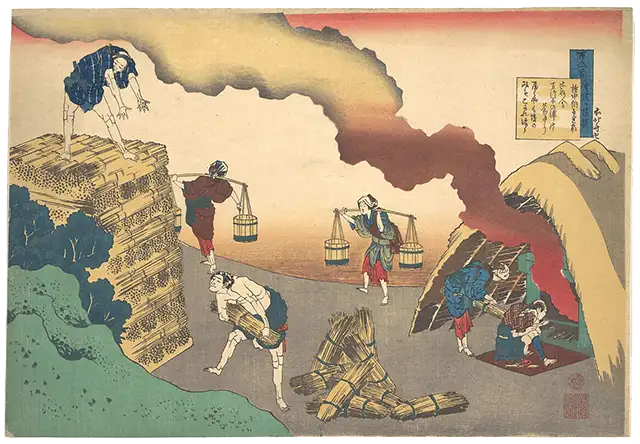
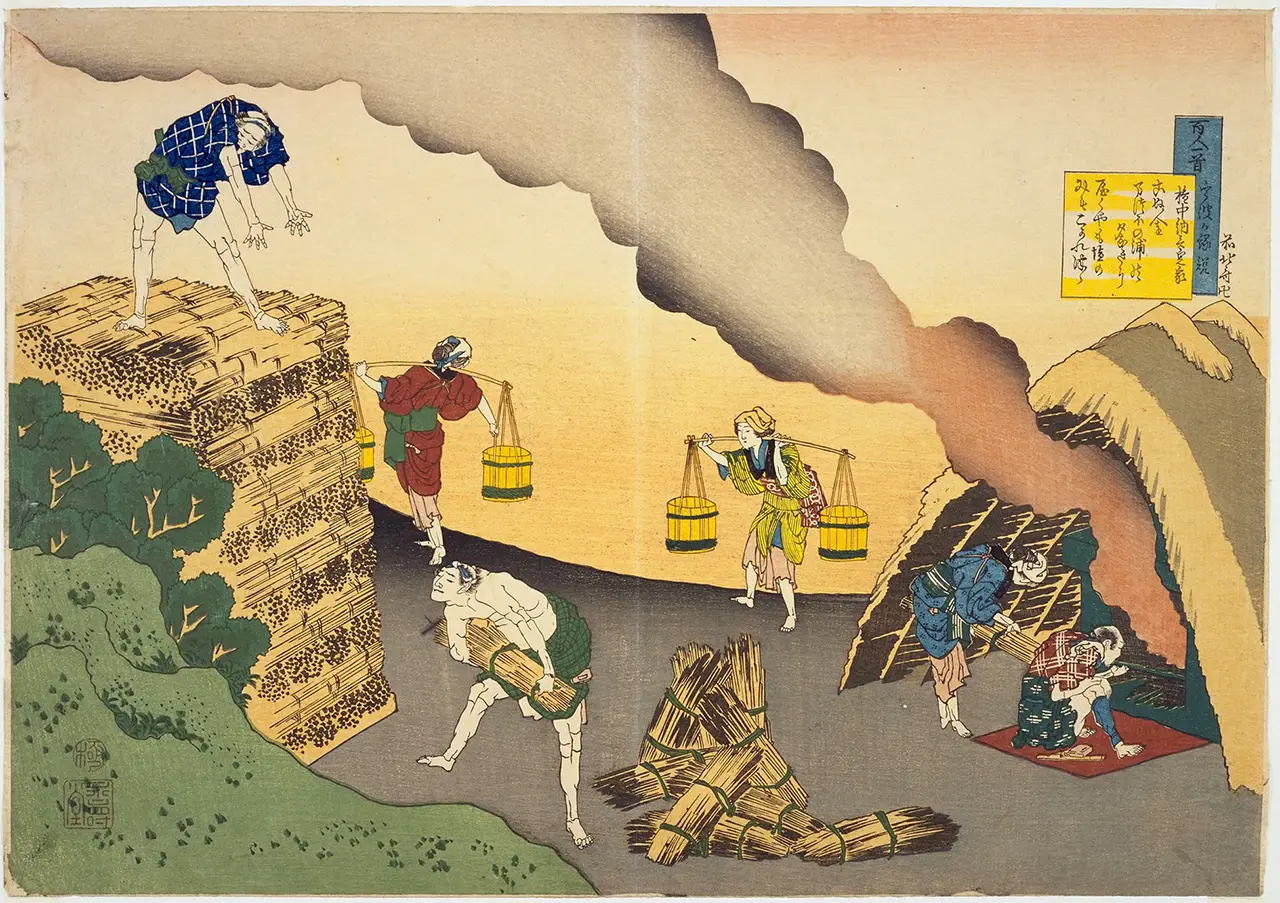
National Diet Library, Public domain, via Wikimedia Commons This is from Hyakunin Isshu Uba ga Etoki (The Hyakunin Isshu Explained by the Nurse) by Katsushika Hokusai, an ukiyo-e artist of the Edo period. The series was made so that a nurse could explain the poems of the Hyakunin Isshu simply, with pictures. People boiling down salt water, people carrying seawater in buckets, people piling up bundles of straw: Hokusai shows people making moshio (salt from seaweed). Just looking at the picture, you can feel how hard the real salt makers worked, but the nobles seem to have found it elegant. The Minister of the Left of Kawara even built a salt kiln at his own mansion and had seawater carried all the way from the coast to make salt for fun.
- Utagawa Kuniyoshi's Hyakunin Isshu no Uchi
-
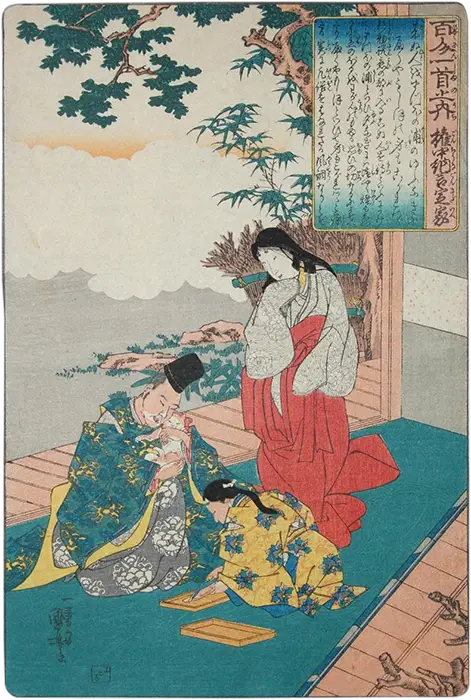
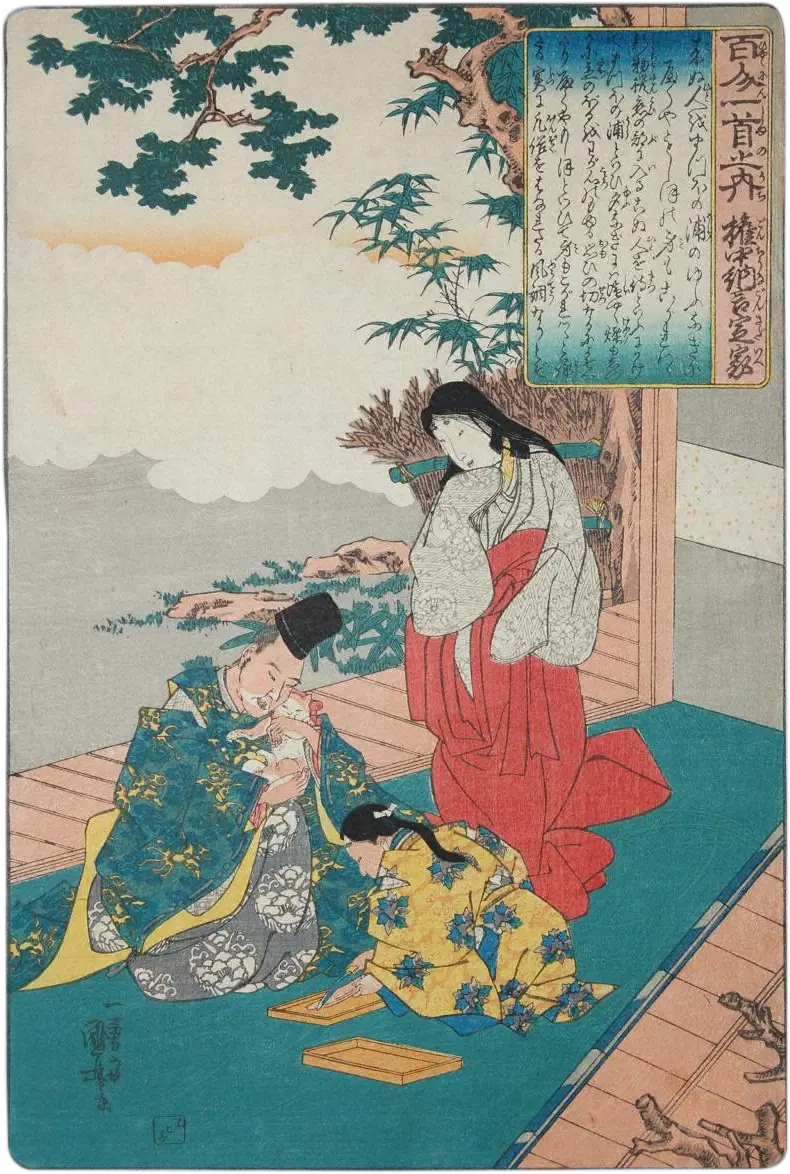
Collection of the Adachi City Folk Museum An ukiyo-e print by Utagawa Kuniyoshi, an ukiyo-e artist of the Edo period.
In the Edo period, Sadaie's Hyakunin Isshu poem seems to have been known as a charm to bring back a lost cat.Instead of the poem's content, the print shows a family giving dried bonito flakes to a cat that has come home.
- Enri-an (Shigure-tei)
-
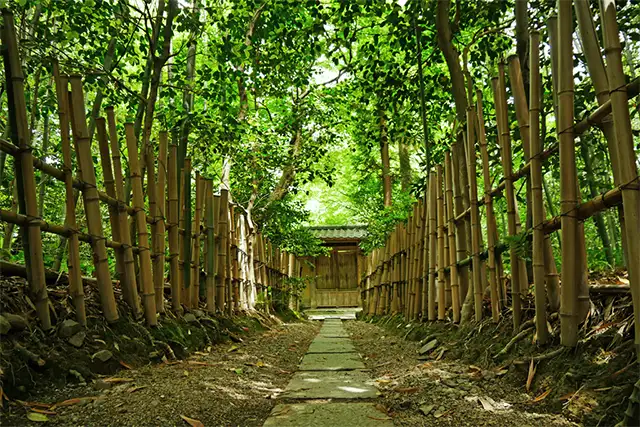
Photo: Kyoto Free Photos A temple in Ukyō Ward, Kyoto. Fujiwara no Sadaie's mountain villa is said to have stood here. However, there are several theories about the site of Shigure-tei, and it is also said to have been at Jōjakkō-ji or Nison-in. See it on the map
- How to Read the Name 定家
- The name 定家 is read both "Sadaie" and "Teika." Both readings are correct.
Reading a name in the Chinese-style way, like "Teika," is called yūsoku-yomi.