Front of the Card
Back of the Card
Japanese
English
Audio: NHK Creative Library
Read by LibriVox volunteer Larry Wilson.
Audio courtesy of LibriVox
入道前太政大臣
花さそふ
嵐の庭の
雪ならで
ふりゆくものは
わが身なりけり
ふりゆくも
のはわかみ
なりけり

はなさ


- Poem 96
- 花さそふ
嵐の庭の
雪ならで
ふりゆくものは わが身なりけり
Author: Lay Novice and former Chancellor of the Realm (1171–1244)
Source: Shin Chokusen Wakashū, Miscellaneous
- English Verse Translation
- This snow is not from blossoms white Wind-scattered, here and there, That whiten all my
garden paths And leave the branches bare; 'Tis age that snows my hair!
— William N. Porter, 1909
- Modern Translation
- It is not the snow of blossoms scattered by the storm in the garden — it is I myself who am fading with the years.
- Commentary
- Written on the theme "falling blossoms." Watching cherry blossoms fall like snow, the poet seems to reflect that even a man at the height of glory, who has gained everything, cannot stop growing old.
- About the Poet
- Saionji Kintsune married a niece of Minamoto no Yoritomo and built close ties with the Kamakura shogunate. In the Jōkyū War, though on the court's side, he secretly told the shogunate of Go-Toba's plans, and was later rewarded with the post of Chancellor. He built the splendid Saion-ji temple in Kitayama, Kyoto.
- Poem Illustration
-
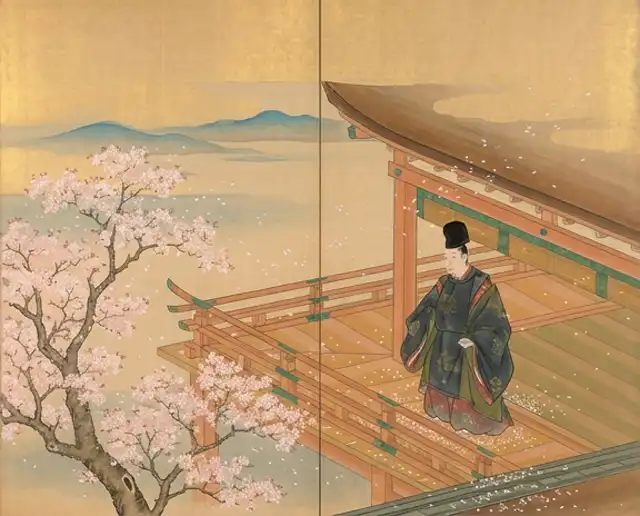
This image is based on an illustration from William N. Porter's A Hundred Verses from Old Japan, his 1909 English translation of the Hyakunin Isshu published in England, colorized and reworked using Adobe Firefly (generative AI).
- Saionji Kintsune: A Short Timeline
-
- 1171
- Born as a son of Fujiwara no Sanemune
- 1221
- Sides with the shogunate in the Jōkyū War and is locked up by Retired Emperor Go-Toba
- 1222
- Becomes Chancellor of the Realm
- 1224
- Builds Saionji Temple in Kitayama
- 1231
- Becomes a monk because of illness
- 1244
- Dies
- Saionji Kintsune's Family Tree and Relationship Chart
-
Saionji Kintsune married the daughter of Ichijō Yoshiyasu, whose wife Bōmon-hime was Minamoto no Yoritomo's elder or younger sister by the same mother, and so built close ties with the Kamakura shogunate. But he was disliked by Retired Emperor Go-Toba, who aimed to overthrow the shogunate, and because he supported the shogunate's side in the Jōkyū War, he was confined. When the shogunate won and Emperor Go-Horikawa came to the throne, Kintsune was appointed Palace Minister, and in the end he rose to Chancellor of the Realm. Kintsune's daughter Rinshi married Kampaku Fujiwara no Michiie, and their son Fujiwara no Yoritsune later became the fourth shogun of the Kamakura shogunate.
- Appendix
-
- Saion-ji Temple
-
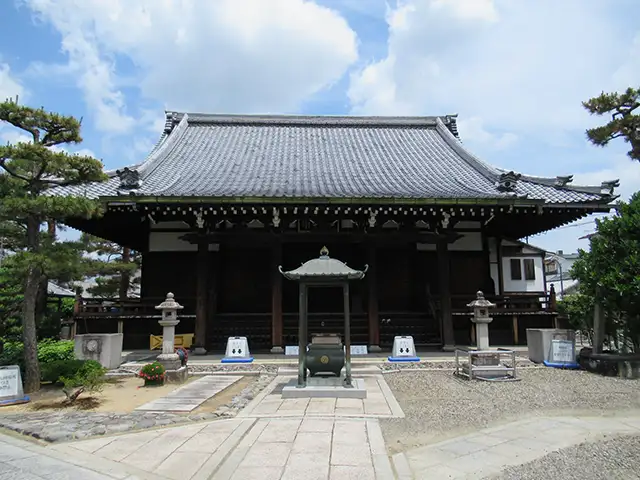
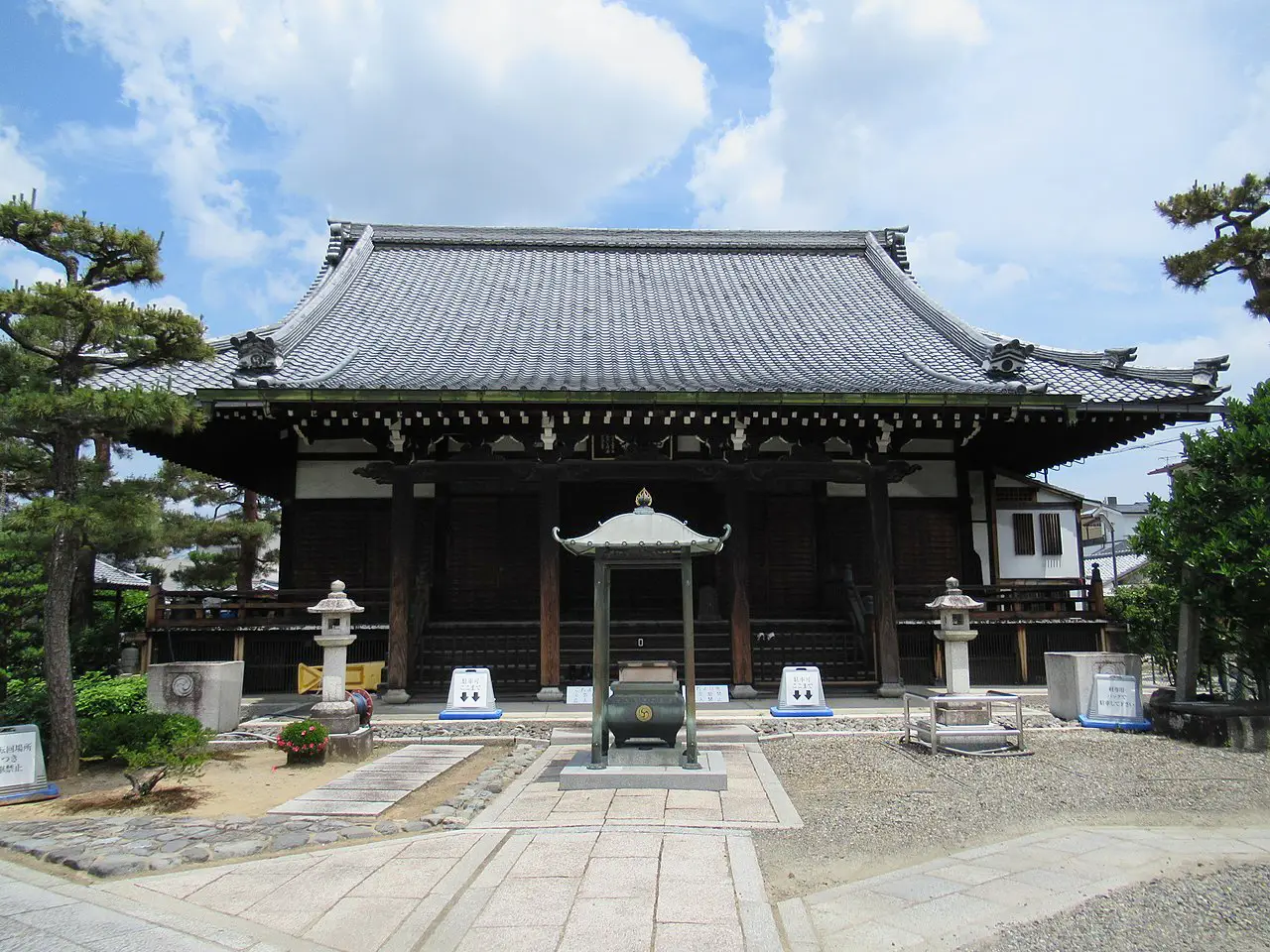
Brakeet, CC0, via Wikimedia Commons Kintsune rebuilt his mountain villa in Kitayama, Kyoto, and founded the temple Saion-ji.
He changed his family name from Fujiwara to Saionji. The family name comes from this temple, which Kintsune built and which earned him the name Saionji-dono. See it on the map - Kinkaku-ji Temple
-
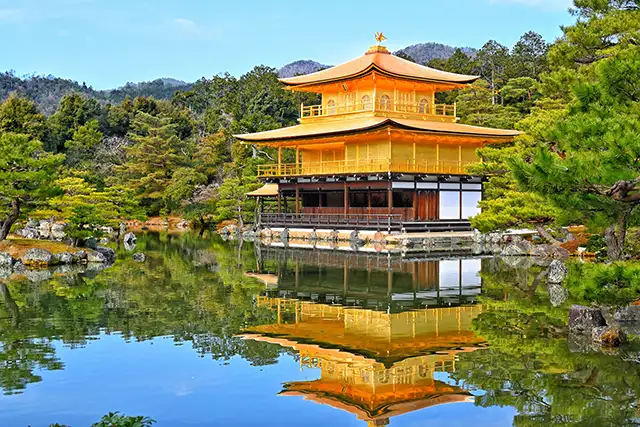
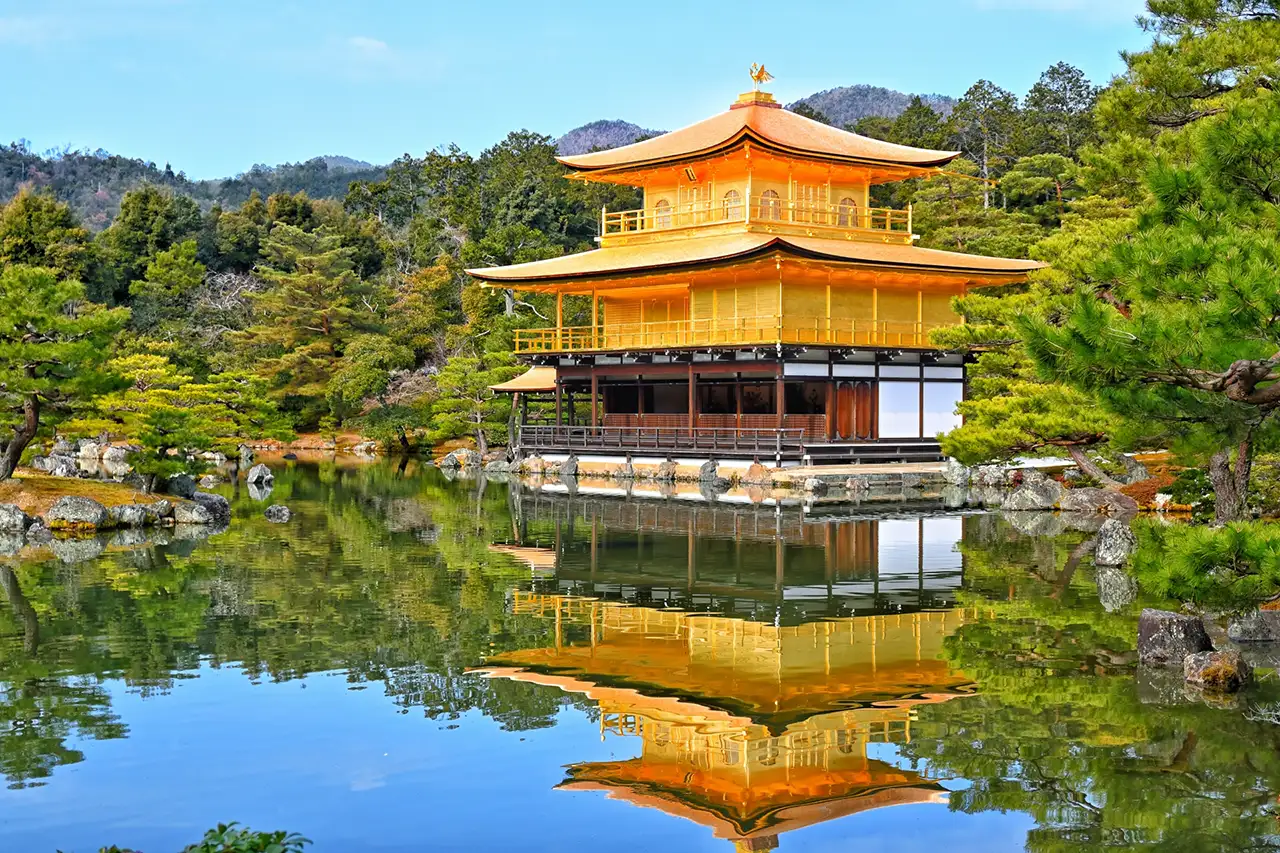
The site of Kinkaku-ji (Rokuon-ji) was originally Kitayama-tei, a mountain villa built by Saionji Kintsune. Ashikaga Yoshimitsu took it over and built Kitayama-dono, and after Yoshimitsu's death it became a Zen temple, Rokuon-ji. Today it is widely known as Kinkaku-ji, the Golden Pavilion. See it on the map