Front of the Card
Back of the Card
Japanese
English
Audio: NHK Creative Library
Read by LibriVox volunteer Larry Wilson.
Audio courtesy of LibriVox
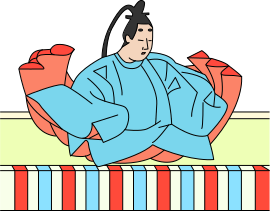
順徳院
ももしきや
ふるき軒ばの
しのぶにも
なほあまりある
昔なりけり
なほあまり
あるむかし
なりけり

もも


- Poem 100
- ももしきや
ふるき軒ばの
しのぶにも
なほあまりある 昔なりけり
Author: Retired Emperor Juntoku (1197–1242)
Source: Zoku Gosen Wakashū, Miscellaneous
- English Verse Translation
- My ancient Palace I regret, Though rot attacks the eaves, And o'er the roof the creeping
vine Spreads out and interweaves Unpruned its straggling leaves.
— William N. Porter, 1909
- Modern Translation
- Even the ancient ferns on the old eaves of the palace — there is more than enough of the past that they call to mind.
- Commentary
- Seeing the palace so neglected that ferns grew under its eaves, Retired Emperor Juntoku seems to long for the days when emperors truly ruled. He wrote it at 20, five years before the Jōkyū War.
- About the Poet
- Juntoku was the third son of Go-Toba. Bright and lively, he was his father's favorite and became emperor at 14. He set down court customs in the Kinpishō to show the court's importance. At 25 he joined his father in the Jōkyū War, lost, and was exiled to Sado. Never allowed home or to pass on the throne, he died there at 46.
- Poem Illustration
-
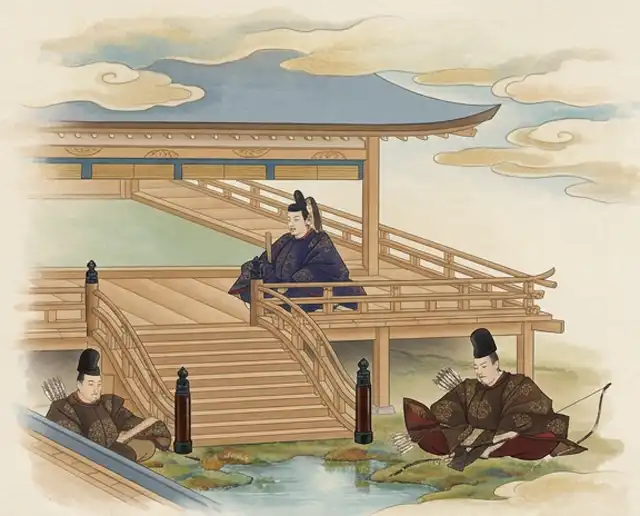
This image is based on an illustration from William N. Porter's A Hundred Verses from Old Japan, his 1909 English translation of the Hyakunin Isshu published in England, colorized and reworked using Adobe Firefly (generative AI).
- Retired Emperor Juntoku: A Short Timeline
-
- 1197
- Born as a son of Emperor Go-Toba
- 1210
- Becomes emperor at age 14
- 1221
- Joins the Jōkyū War, loses, and is exiled to Sado Province
- 1242
- Dies in Sado Province
- Retired Emperor Juntoku's Family Tree
-
Retired Emperor Juntoku was a son of Retired Emperor Go-Toba and a younger half-brother of Emperor Tsuchimikado. Tsuchimikado became emperor at 3, but at 15 Go-Toba made him give up the throne, and Juntoku became the new emperor. Tsuchimikado seems to have been gentle, while Juntoku had a fierce temper. At the time of the Jōkyū War, Tsuchimikado tried to talk his father Go-Toba out of it, while Juntoku is said to have actively supported his father in trying to overthrow the shogunate.
- Appendix
-
- The Jōkyū War
-
In 1185, the shogunate placed land stewards (jitō) throughout the country, which reduced the income the court received from its estates, and the conflict with the shogunate deepened. Retired Emperor Go-Toba added the Western Guards (saimen no bushi) to the Northern Guards (hokumen no bushi) to strengthen his military power against the shogunate.
In 1219, Minamoto no Sanetomo was assassinated by his nephew Kugyō, and Kugyō in turn was killed by the shogunate's men. After this, there was a growing move at court to rethink its policy of getting along with the shogunate. Judging that a succession struggle was going on inside the shogunate, Go-Toba issued an order in 1221 to strike down Hōjō Yoshitoki, starting the Jōkyū War.
The shogunate, however, had already learned of Go-Toba's plans to raise an army from household officials of Saionji Kintsune and others. Hōjō Masako appealed to the shogun's vassals, telling them that the court was trying to destroy the shogunate, and the conflict grew into a war between the court's army and the shogunate's army. The shogunate's army marched on Kyoto along three routes, the Tōkaidō, the Tōsandō, and the Hokurikudō, and defeated the court's army only a month after the order was issued. Go-Toba was exiled to Oki and Juntoku to Sado, Tsuchimikado moved to Tosa of his own will, and Emperor Chūkyō was removed from the throne.
- Poems Written on Sado
-
After losing the Jōkyū War and being exiled to Sado, Retired Emperor Juntoku wrote many poems far from the capital.
Here are two that show how he felt on Sado.The first poem expresses the anguish of Juntoku, whose hopes of returning to the capital were fading and whose wish to make his son crown prince could no longer come true. It shows him getting through uncertain days by comforting himself with the thought "tomorrow, surely."
In Japanese
いかならむ 明日に心を 慰めて
昨日も今日も すぐす頃かな ikanaramu ashitanikokoroo nagusamete
kinoumokyoumo sugusukorokana Shūfū Wakashū, Retired Emperor JuntokuIn English
What will become of me? Comforting my heart with hopes for tomorrow, I simply get through yesterday and today.
The second poem is said to have been written when he saw a beautiful white chrysanthemum in his loneliness far from the capital. Comforted by its beauty, he felt it was "a flower that lets me forget the capital for a while," and so, it is said, the flower came to be called miyako-wasure ("forgetting the capital").
In Japanese
いかにして 契りおきけむ 白菊を
都忘れと 名づくるも憂し ikanishite chigiriokikemu shiragikuo
miyakowasureto nazukurumoushi Retired Emperor JuntokuIn English
What bond from a past life brought me to this white chrysanthemum? It is a flower so beautiful it could make me forget the capital, but to name it "forget the capital" is painful for one who longs for the capital.
- Miyako-wasure
-
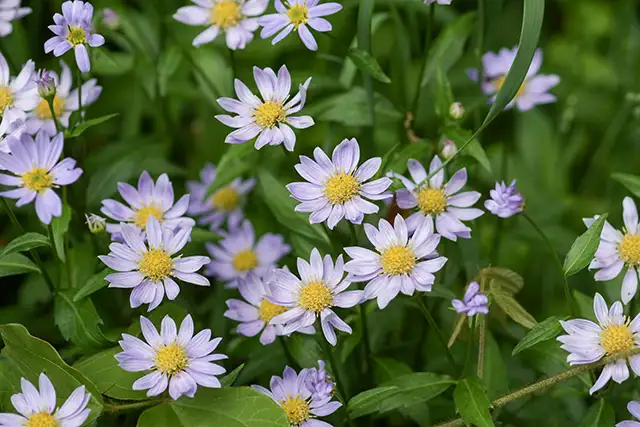
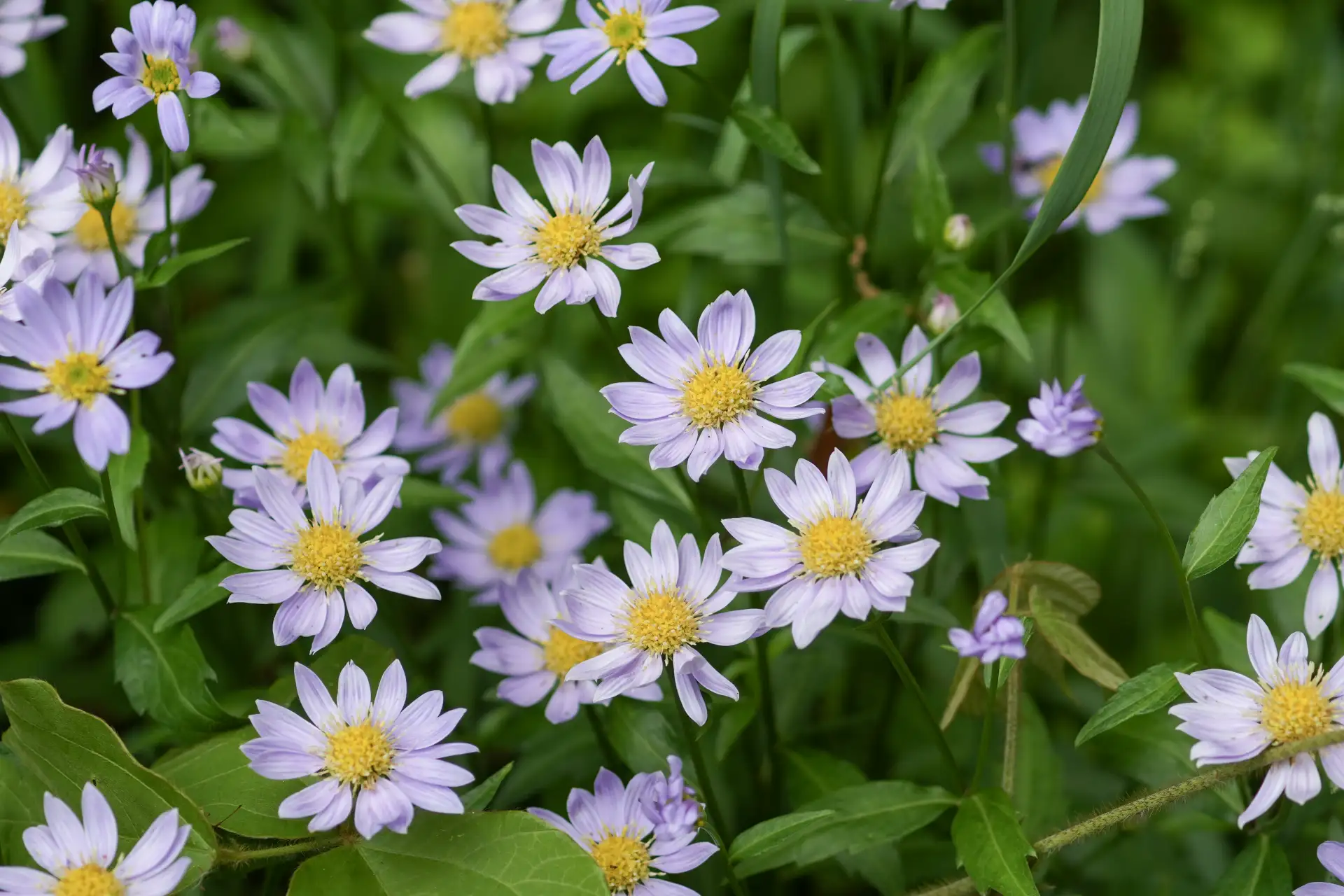
Miyako-wasure is a perennial of the aster family that blooms from about April to June, with small, lovely purple or white flowers. Its original name is miyama-yomena, but because of the legend of Retired Emperor Juntoku, it became widely known by the other name miyako-wasure ("forgetting the capital").
It is said that when Juntoku saw this flower on Sado, far from the capital, its beauty comforted him, and he felt it was "a flower that lets me forget the capital for a while." Perhaps the sorrow of Juntoku, longing for the capital, lives on in the name of this lovely flower.
- Mano Goryō
-
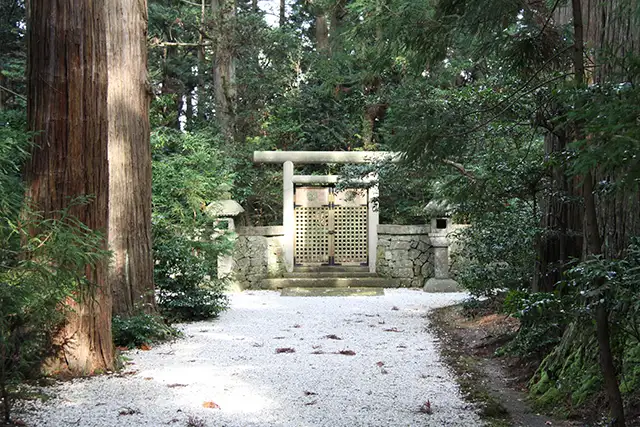
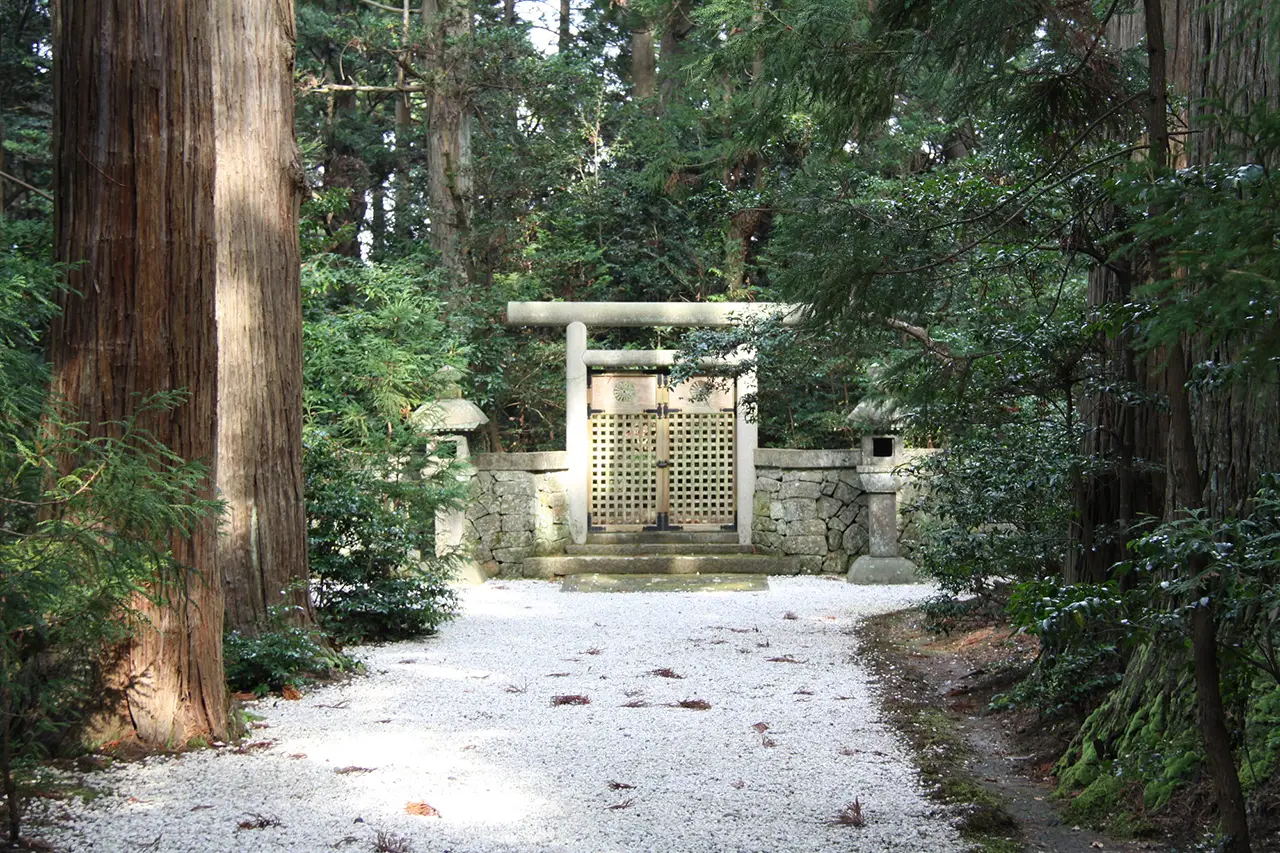
Mano Goryō, the cremation mound of Emperor Juntoku on Sado, Niigata Prefecture. See it on the map