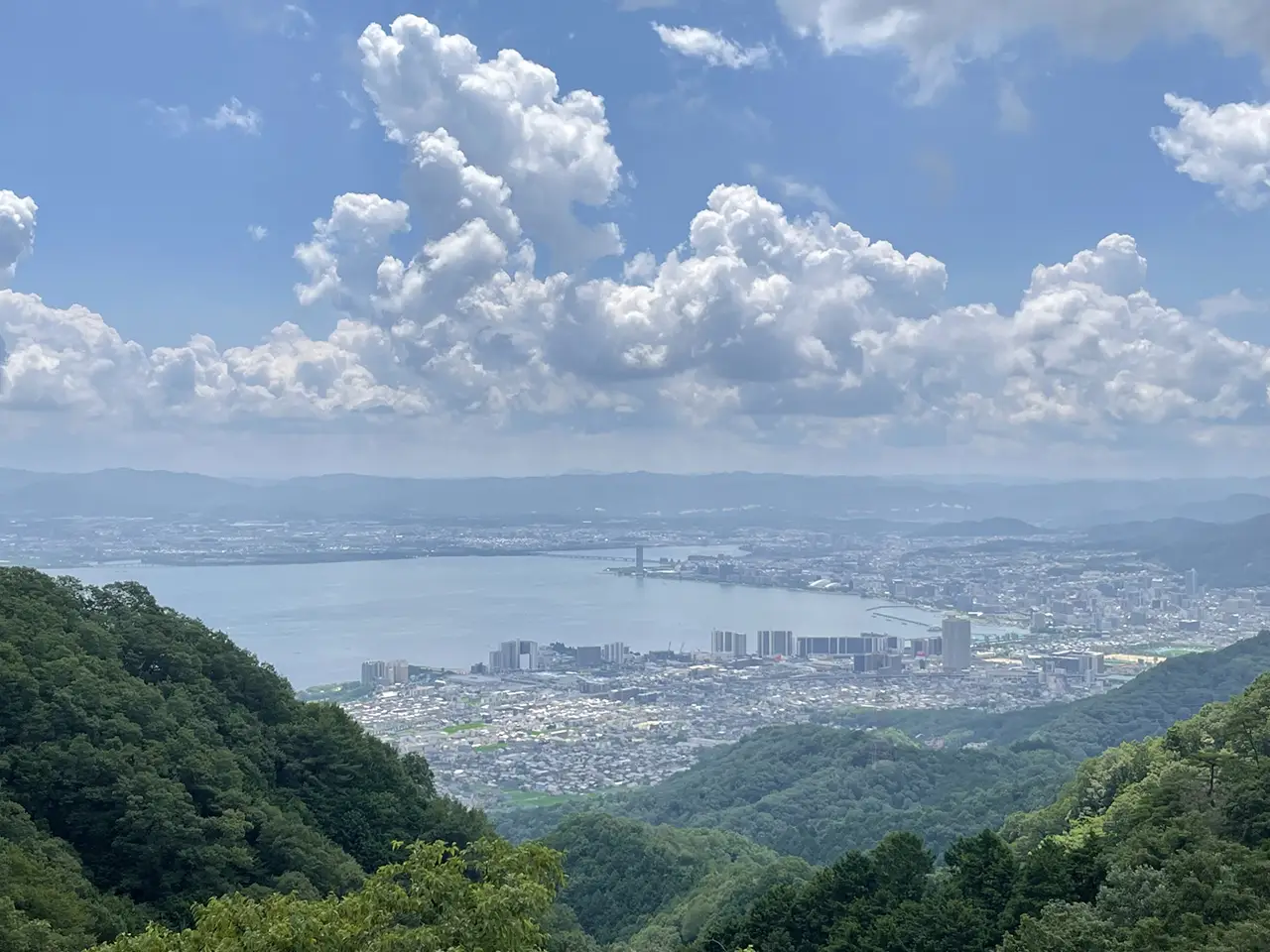
Front of the Card
Back of the Card
Japanese
English
Audio: NHK Creative Library
Read by LibriVox volunteer Larry Wilson.
Audio courtesy of LibriVox
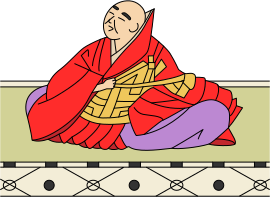
前大僧正慈円
おほけなく
憂き世の民に
おほふかな
わがたつ杣に
墨染の袖
わかたつそ
まにすみそ
めのそて

おおけ


- Poem 95
- おほけなく
憂き世の民に
おほふかな
わがたつ杣に 墨染の袖
Author: Former Senior High Priest Jien (1155–1225)
Source: Senzai Wakashū, Miscellaneous
- English Verse Translation
- Unfit to rule this wicked world With all its pomp and pride, I'd rather in my plain black
robe A humble priest abide, Far up the mountain side.
— William N. Porter, 1909
- Modern Translation
- How bold it is of me — yet I spread my ink-black sleeves to shelter the people of this troubled world.
- Commentary
- The end of the Heian period and the start of the Kamakura period brought disasters, epidemics, famine, and bandits, as power passed from the court to the shogunate amid repeated wars. Jien probably wrote this grieving for the world and wishing to save people through Buddhism.
- About the Poet
- Jien was the sixth son of Fujiwara no Tadamichi and became a monk as a child. A famous monk, he headed the Tendai school at Enryaku-ji four times. He wrote the Gukanshō, a history of Japan, and is thought to have tried to stop Go-Toba from going to war.
- Poem Illustration
-
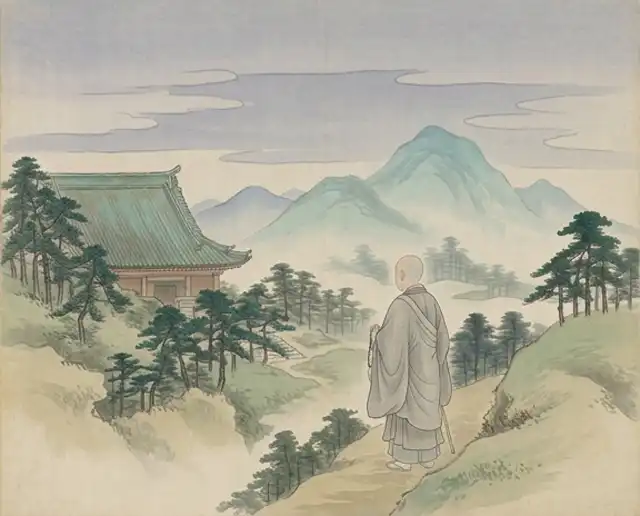
This image is based on an illustration from William N. Porter's A Hundred Verses from Old Japan, his 1909 English translation of the Hyakunin Isshu published in England, colorized and reworked using Adobe Firefly (generative AI).
- Jien: A Short Timeline
-
- 1155
- Born as a son of Fujiwara no Tadamichi
- 1167
- Enters Shōren-in Temple and becomes a monk
- 1192
- Becomes head of the Tendai school (he held this post 4 times in his life)
- c. 1220
- Writes the Gukanshō, a history of Japan
- 1225
- Dies
- Jien's Family Tree
-
Jien was a son of Fujiwara no Tadamichi (the Lay Novice of Hosshō-ji Temple, former Kampaku and Chancellor of the Realm), and a younger brother of Kujō Kanezane by the same mother. He was also the uncle of Kujō Yoshitsune, the poet of Poem 91.
In 1192, at 38, he became a guardian monk (gojisō) of the emperor and was also highly valued by Retired Emperor Go-Toba. He had influence not only in the religious world but also in politics.
Jien summed up the deeds of the emperors and the flow of history in the Gukanshō. One theory says he wrote it to warn Retired Emperor Go-Toba against the uprising that would become the Jōkyū War.
- Appendix
-
- The Original Poem (Honka)
-
Jien borrowed (honkadori) from the next poem.
This poem is said to have been written by Saichō when he built the Konponchūdō, the main hall of Enryaku-ji.In Japanese
阿耨多羅 三藐三菩提の 仏たち
わが立つ杣に 冥加あらせたまえ anokutara sanmiyakusanbodaino hotoketachi
wagatatsusomani myougaarasetamae Shin Kokin Wakashū, SaichōIn English
O Buddhas of supreme wisdom (anokutara sanmyaku sanbodai),
grant your unseen blessing (myōga) to this mountain where I stand. - An Autumn Scene of Wild Geese and the Moon
-
The next poem by Jien is in the Shin Kokin Wakashū.

In Japanese
大江山 かたぶく月の 影さえて
鳥羽田の面に 落つる雁が音 ooeyama katabukutsukino kagesaete
tobatanoomoni otsurukarigane Shin Kokin Wakashū, JienIn English
The moon sinking toward Mount Ōe shines cold and clear,
and I hear the cries of wild geese coming down onto the rice fields of Toba. - The View from Mount Hiei
-
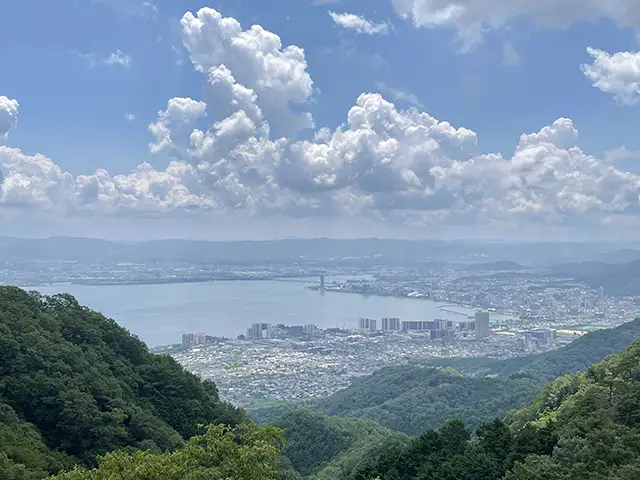
Mount Hiei is a mountain about 848 m high on the border of Shiga Prefecture and Kyoto City. Enryaku-ji, whose grounds cover the whole mountain, was founded in the early Heian period by Saichō, the founder of the Tendai school.