Front of the Card
Back of the Card
Japanese
English
Audio: NHK Creative Library
Read by LibriVox volunteer Larry Wilson.
Audio courtesy of LibriVox
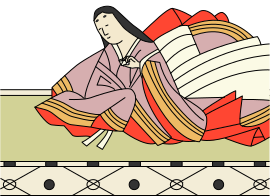
皇嘉門院別当
難波江の
葦のかりねの
ひとよゆゑ
みをつくしてや
恋ひわたるべき
みをつくし
てやこひわ
たるへき

なにわえ


- Poem 88
- 難波江の
葦のかりねの
ひとよゆゑ
みをつくしてや 恋ひわたるべき
Author: Attendant to Empress Kōka (dates unknown)
Source: Senzai Wakashū, Love
- English Verse Translation
- I've seen thee but a few short hours; As short, they seemed to me, As bamboo reeds at
Naniwa; But tide-stakes in the sea Can't gauge my love for thee.
— William N. Porter, 1909
- Modern Translation
- For just one brief night together, like the cut end of a reed at Naniwa — must I go on longing for you forever?
- Commentary
- Written on the theme "love met at a traveler's inn" at a contest at Kujō Kanezane's home. Naniwa Bay was a busy port with many travelers and many courtesans, and the poet is thought to have had their lives in mind.
- About the Poet
- The poet served as steward (bettō) to Kōkamon-in (Fujiwara no Seishi), empress of Sutoku.
- Poem Illustration
-
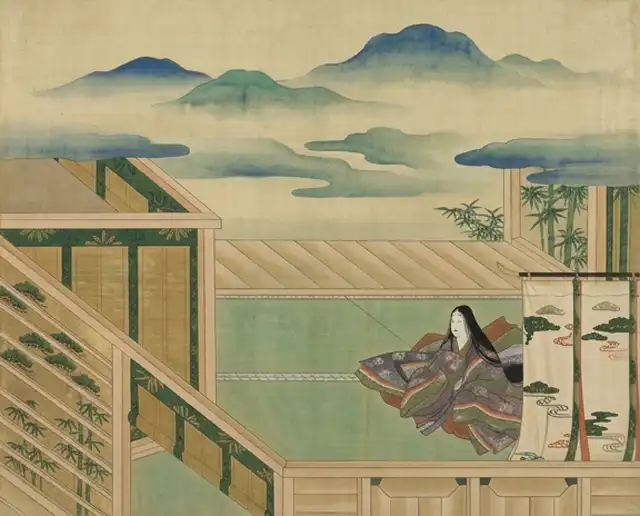
This image is based on an illustration from William N. Porter's A Hundred Verses from Old Japan, his 1909 English translation of the Hyakunin Isshu published in England, colorized and reworked using Adobe Firefly (generative AI).
- Bettō of Kōkamon-in: A Short Timeline
-
- 1175
- Takes part in the poetry contest at the home of Minister of the Right Kanezane
- 1178
- Takes part in the Minister of the Right's Hundred-Poem Sequence
- 1182
- Already a nun by the time her mistress Kōkamon-in dies
- Attendant to Empress Kōka's Relationship Chart
-
The poet served Kōkamon-in, the daughter of Fujiwara no Tadamichi.
Because Kōkamon-in's younger half-brother was Kujō Kanezane, the poet often took part in Kanezane's poetry gatherings and became well known as a poet.
- Appendix
-
- What Is "Ashi no Fushi"?
-
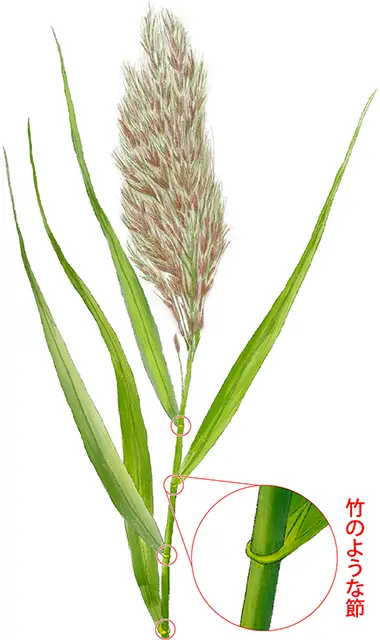
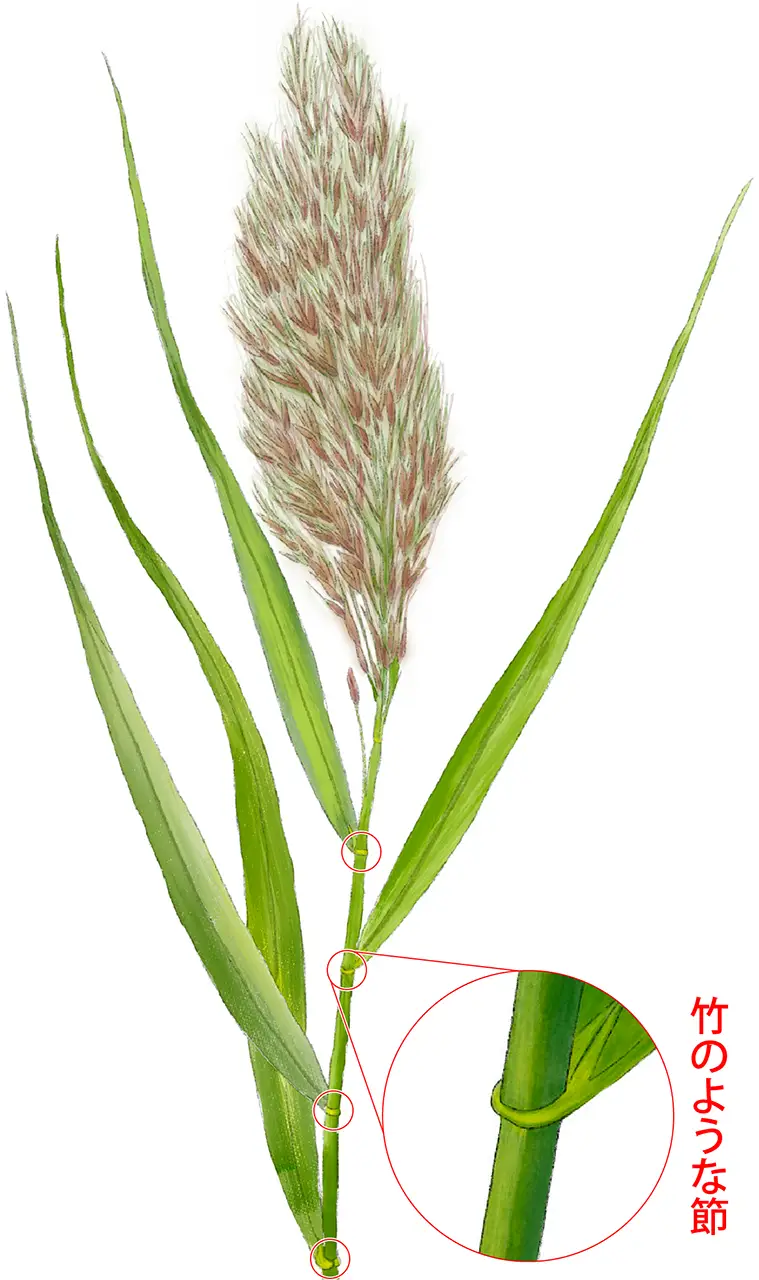
Ashi (also called yoshi) is the common reed, a plant of the grass family that grows by the water. Its stem is thin and has joints (fushi) like bamboo.
It sprouts in late April and grows very fast until about June, and its stem can reach 3 m.
Its underground stems spread sideways, so it grows in large clumps.Fushi no ma, "the space between the joints," is used as an image of something very short.
Naniwa was famous for its reeds and appears in many poems.When you look at a real reed, the space between the joints does not seem short. One theory says that the phrase stands for "a short time" because a reed grows so quickly, adding joint after joint to its stem.
- Miotsukushi (Channel Markers)
-
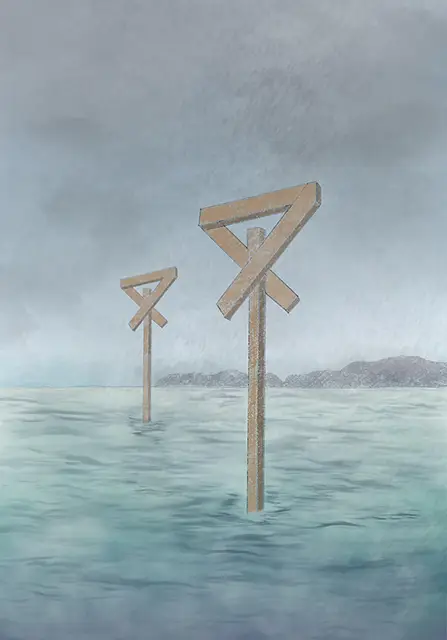
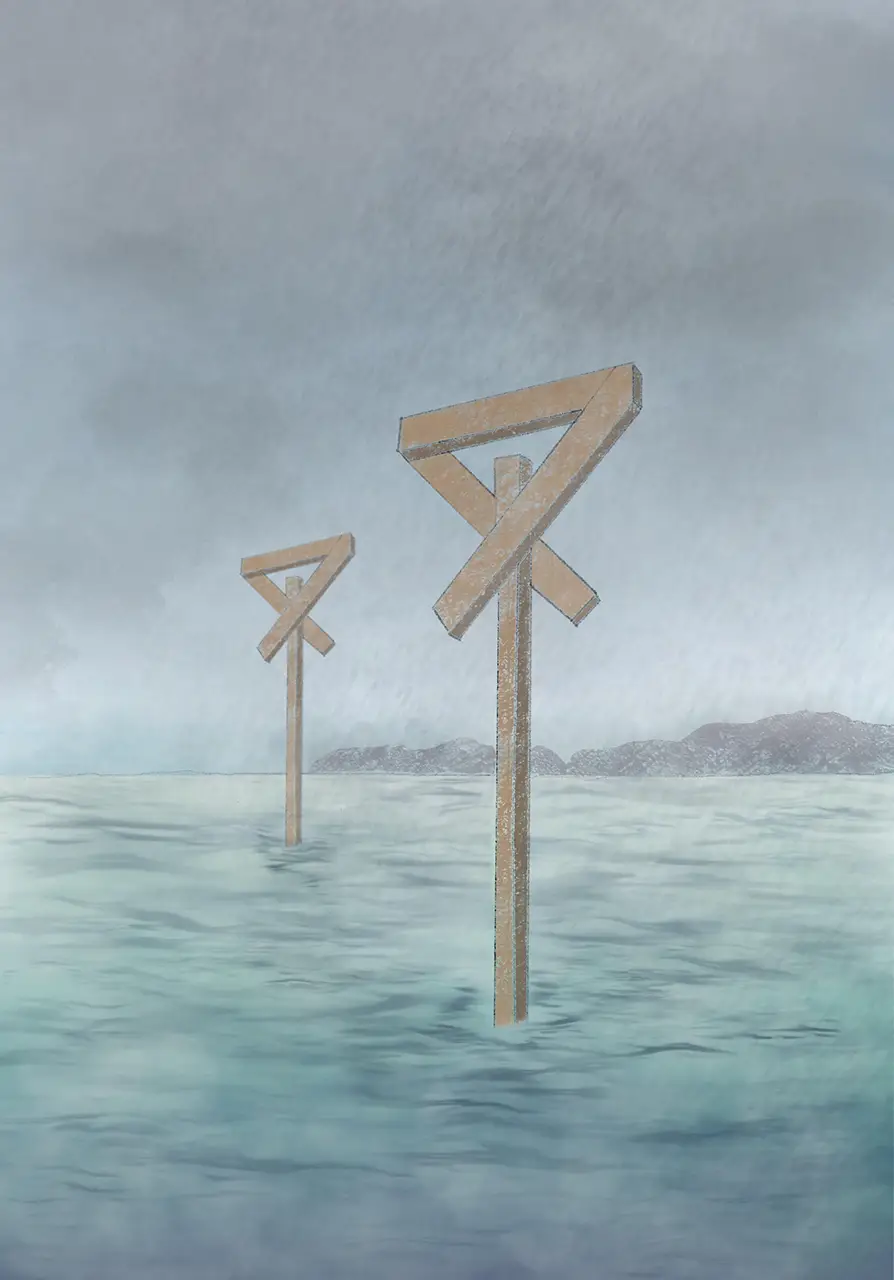
Miotsukushi are posts set in shallow waters where ships might run aground, to show where the water is deep enough for ships to pass. At Naniwa, the mouth of the Yodo River spread out into many shallows that made sailing difficult, so the miotsukushi of Naniwa were famous.
The word comes from mio-tsu-kushi, "posts of the mio." Mio means the same as 水脈: the line where water flows in the sea or a river. In waka, miotsukushi is often used as a kakekotoba together with mi o tsukushi, "giving oneself completely."
The symbol on the left is the emblem of Osaka City.
It is based on a miotsukushi. - Nobles and Courtesans
- From the mid-Heian period to the early Kamakura period, popular songs of the day called imayō were a favorite among nobles. Some courtesans (yūjo) performed by singing imayō and were invited to nobles' mansions. Emperor Go-Shirakawa learned imayō from a courtesan named Otomae, and was such a keen supporter that he compiled the Ryōjin Hishō, a collection of imayō songs. It may seem surprising that the poet wrote a poem thinking of courtesans, but through imayō, nobles had contact with courtesans and felt close to them.