Front of the Card
Back of the Card
Japanese
English
Audio: NHK Creative Library
Read by LibriVox volunteer Larry Wilson.
Audio courtesy of LibriVox
崇徳院
瀬をはやみ
岩にせかるる
滝川の
われても末に
あはむとぞ思ふ
われてもす
ゑにあはむ
とそおもふ

せ


- Poem 77
- 瀬をはやみ
岩にせかるる
滝川の
われても末に あはむとぞ思ふ
Author: Retired Emperor Sutoku (1119–1164)
Source: Shika Wakashū, Love
- English Verse Translation
- The rock divides the stream in two, And both with might and main Go tumbling down the
waterfall; But well I know the twain Will soon unite again.
— William N. Porter, 1909
- Modern Translation
- Like the river that is split by rocks and flows apart — though we are separated now, I believe we will meet again in the end.
- Commentary
- Some read this as a vow to meet a parted lover again; others as Sutoku's vow to win back his lost power. Either way, it shows the struggle between a strong hidden passion and the wish to stay calm.
- About the Poet
- Sutoku became emperor at 5 as Emperor Toba's eldest son, but Toba disliked him, calling him the son of his own grandfather, Shirakawa. At 22 he was tricked into giving up the throne, and his son was blocked from it. Years of anger led him to start the Hōgen Rebellion; he lost, was exiled to Sanuki, and died there.
- Poem Illustration
-
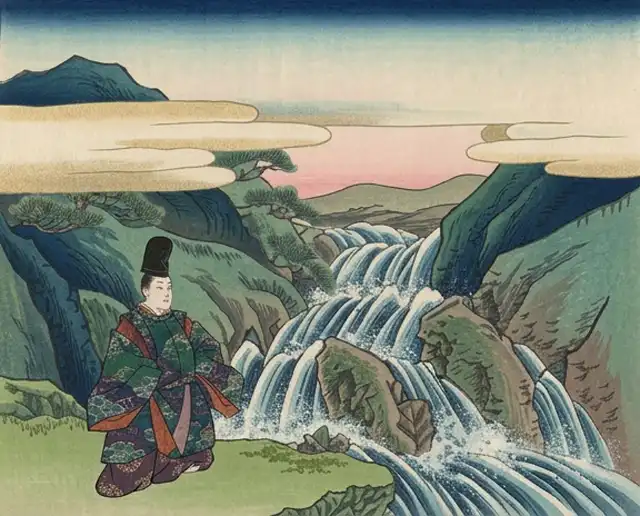
This image is based on an illustration from William N. Porter's A Hundred Verses from Old Japan, his 1909 English translation of the Hyakunin Isshu published in England, colorized and reworked using Adobe Firefly (generative AI).
- Retired Emperor Sutoku: A Short Timeline
-
- 1119
- Born as a son of Emperor Toba
- 1123
- Becomes emperor at age 5
- 1141
- Hands the throne to Emperor Konoe
- 1144
- Orders Fujiwara no Akisuke to compile the Shika Wakashū
- 1151
- The Shika Wakashū is completed
- 1156
- Loses the Hōgen Rebellion and is exiled to Sanuki Province
- 1164
- Dies in Sanuki Province
- Retired Emperor Sutoku's Family Tree
-
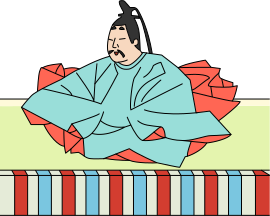
Retired Emperor Sutoku was born as Emperor Toba's first child. But there was a rumor that his great-grandfather, Retired Emperor Shirakawa, had been the lover of Taikenmon-in (Fujiwara no Shōshi), and Emperor Toba treated Sutoku coldly, calling him oji-go ("uncle-son," meaning both his uncle and his child).
Emperor Toba urged Sutoku to adopt Emperor Konoe, and Sutoku gave up the throne. But the imperial edict of abdication called Konoe the emperor's "younger brother" (kōtaitei), and if Konoe was Sutoku's younger brother, Sutoku could not rule as retired emperor. In this way, Sutoku fell into Emperor Toba's trap.
Then, when Emperor Konoe died, Sutoku's son Prince Shigehito was seen as the most likely next emperor, but Emperor Toba put Emperor Go-Shirakawa on the throne.
- Appendix
-
- The Hōgen Rebellion
-
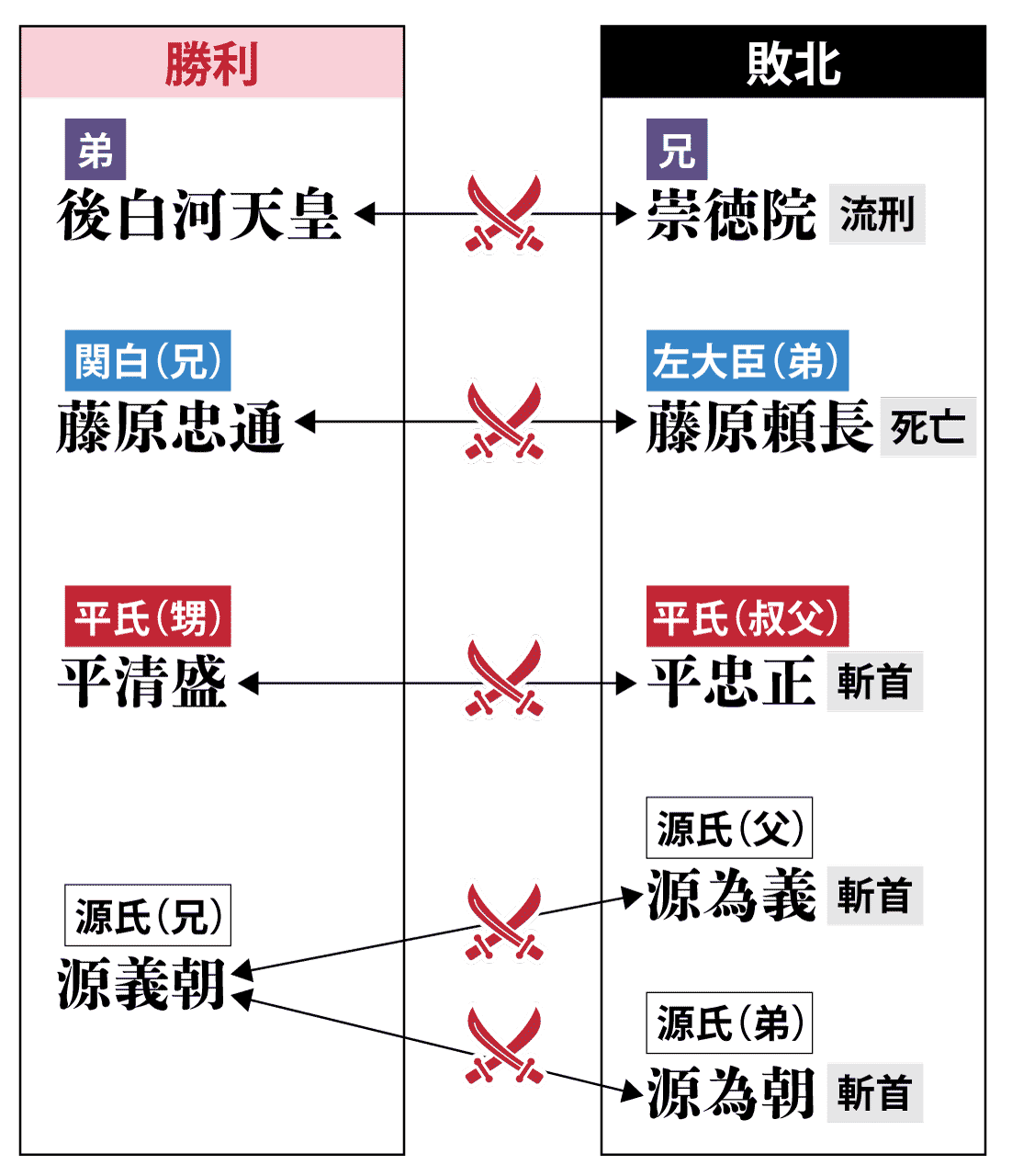
When Emperor Go-Shirakawa and Retired Emperor Sutoku clashed over who would hold power as retired emperor, Fujiwara no Tadamichi was fighting his younger brother, Fujiwara no Yorinaga, within the regents' family.
This struggle over the imperial family and the regents' family grew into fierce fighting between the side of Retired Emperor Sutoku and Fujiwara no Yorinaga, centered on the warrior Minamoto no Tameyoshi, and the side of Emperor Go-Shirakawa and Fujiwara no Tadamichi, led by the warriors Taira no Kiyomori and Minamoto no Yoshitomo.
In the end, Retired Emperor Sutoku lost and was exiled to Sanuki (Kagawa Prefecture). Fujiwara no Yorinaga was hit by a stray arrow and died. Taira no Tadamasa was beheaded by Taira no Kiyomori, Minamoto no Tameyoshi was beheaded by Minamoto no Yoshitomo, and Minamoto no Tametomo was exiled to Izu Ōshima.
- Sutoku-in, a Place Name (Amagasaki, Hyōgo Prefecture)
-
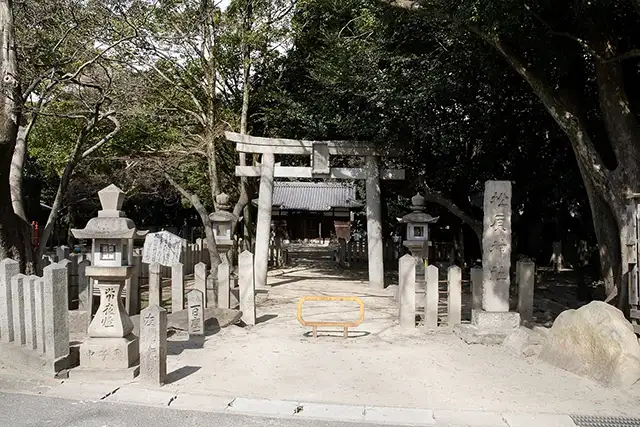
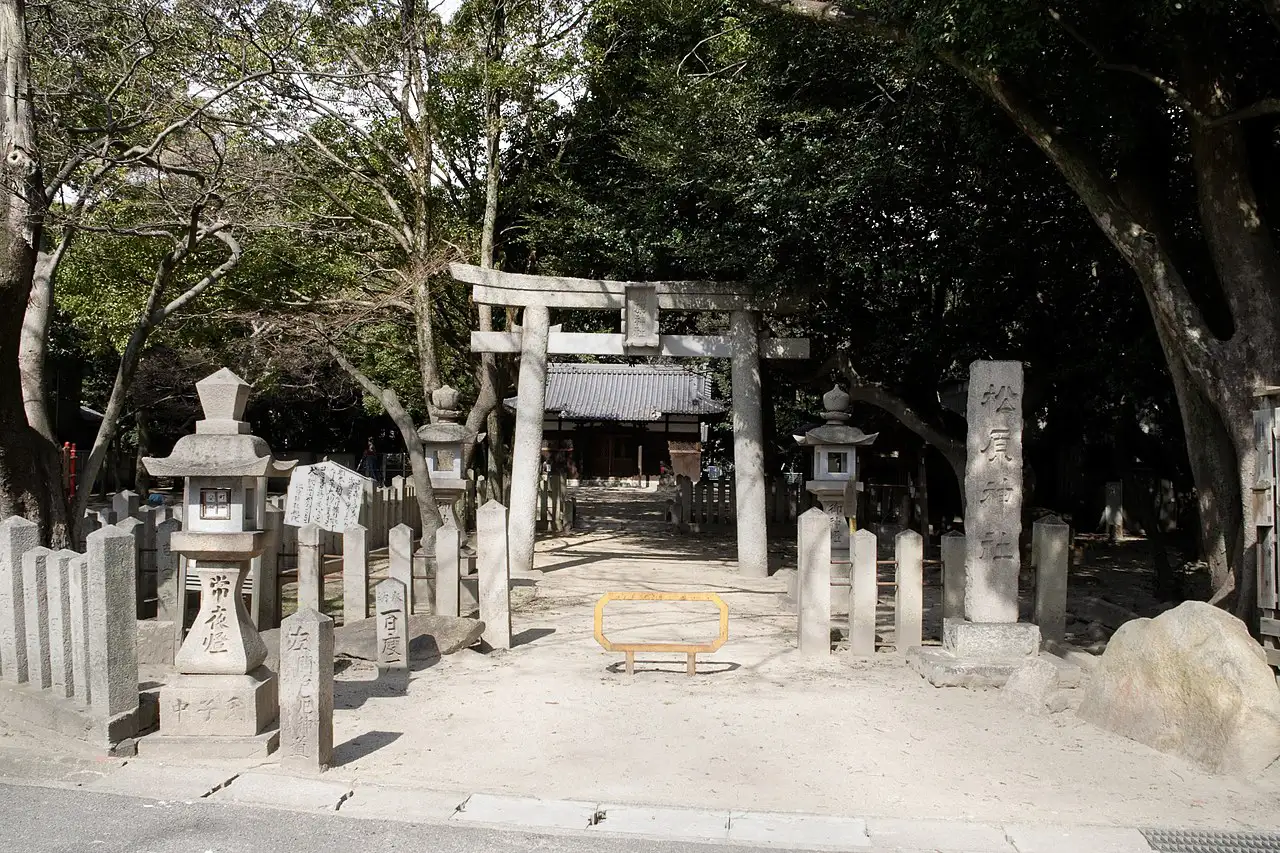
Bittercup, CC BY-SA 4.0 <https://creativecommons.org/licenses/by-sa/4.0>, via Wikimedia Commons After losing the Hōgen Rebellion, Retired Emperor Sutoku was exiled to Sanuki (today's Kagawa Prefecture). On the way, his ship was hit by an unexpected storm and took shelter for a time at what is now Amagasaki City, Hyōgo Prefecture. The villagers are said to have welcomed him with konoshiro (gizzard shad), clams, oysters, yomena (a wild aster), burdock, and roasted rice. Because of this, nearby Matsubara Shrine (in the photo) came to enshrine Sutoku as a co-enshrined deity (aidono-shin), together with Susanoo-no-Mikoto and Miwa Myōjin.
The place name "Sutoku-in" also remains in this area; Amagasaki still has Sutoku-in 1-chōme to 3-chōme today.
- Shiramine-ji Temple
-
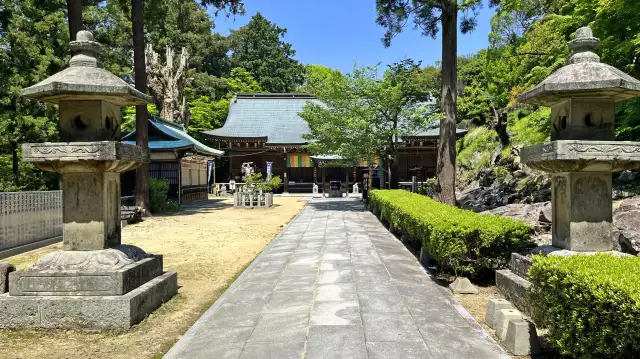
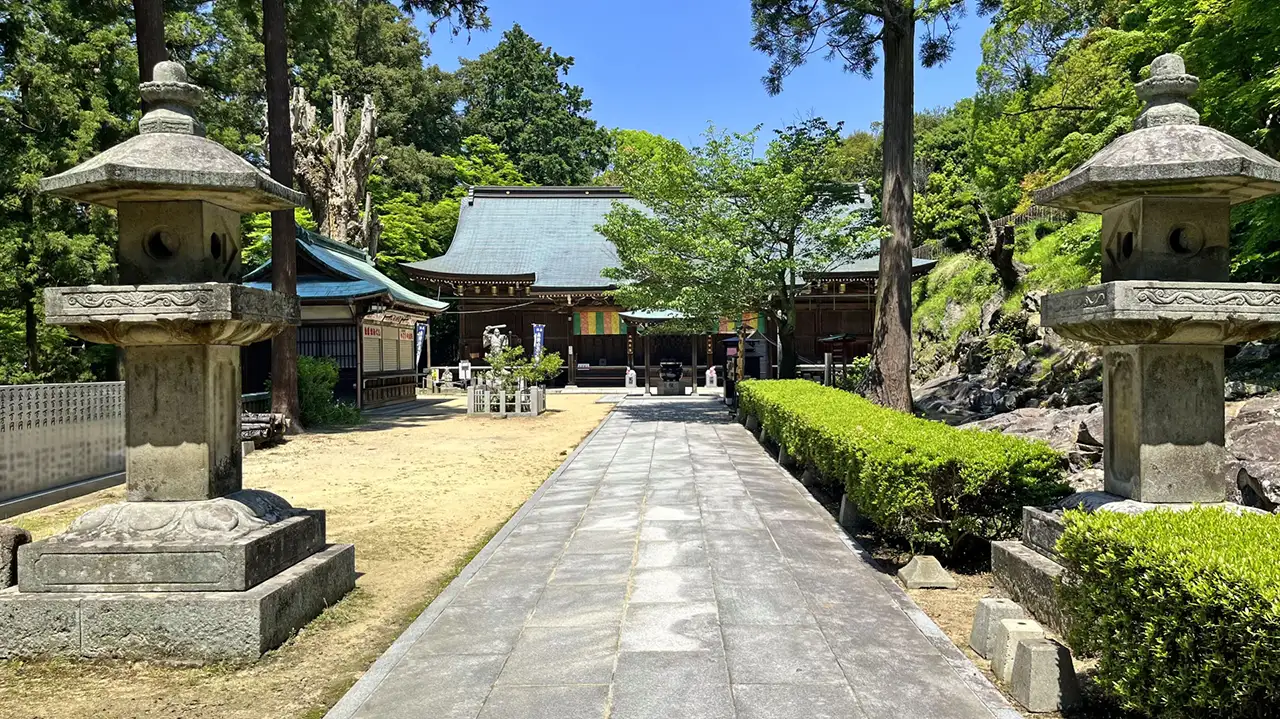
A temple in Sakaide City, Kagawa Prefecture. Along the approach stands the "Thirteen-Story Stone Pagoda of Shiramine-ji," which Minamoto no Yoritomo is said to have built to pray for the soul of Emperor Sutoku.
See it on the map - Shiramine Jingū Shrine
-
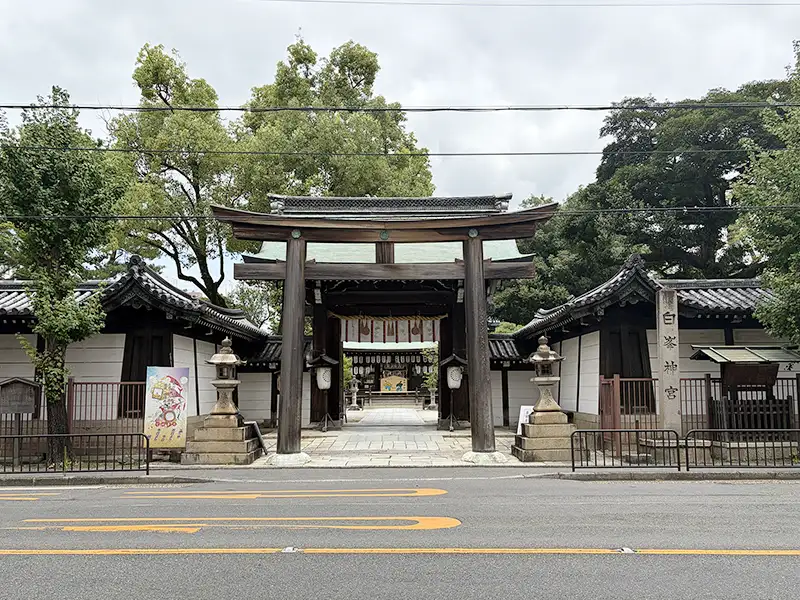
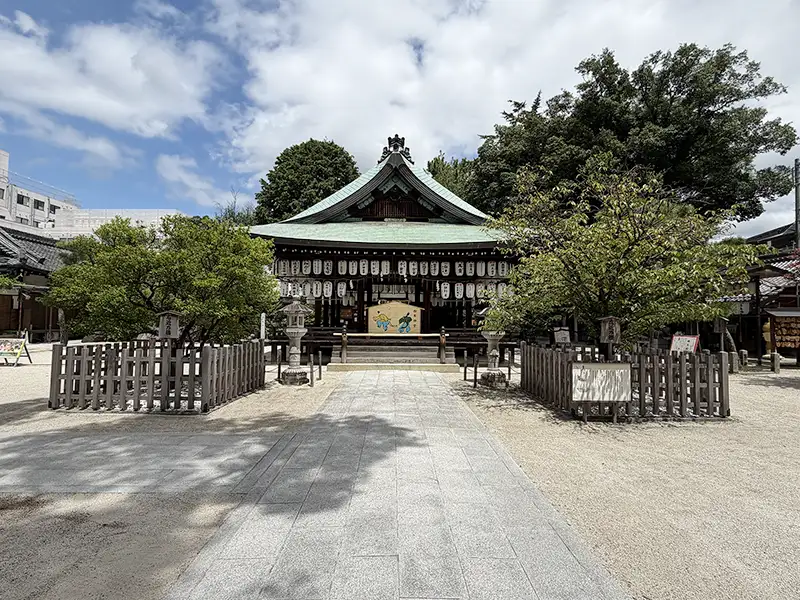
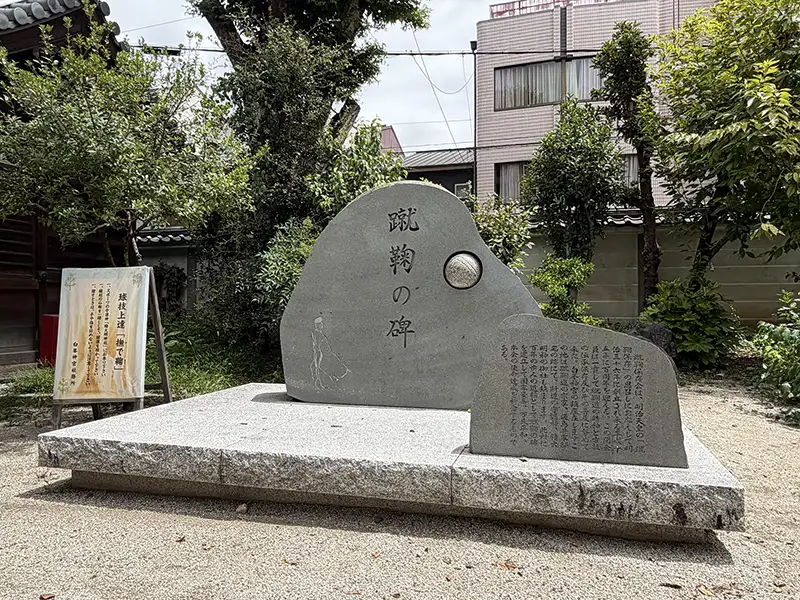
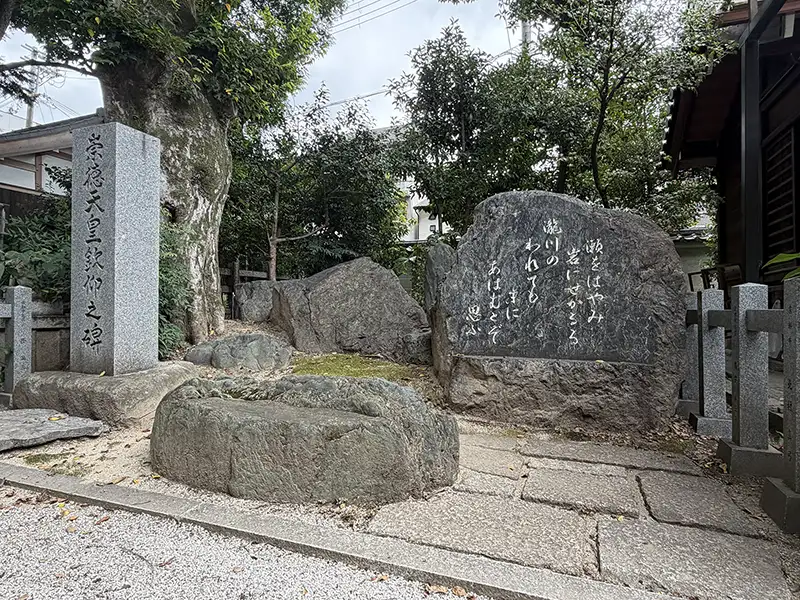
Shiramine Jingū stands on the site of the Asukai family's mansion. It is connected with the Asukai family, known for waka and kemari (court football), and so with two Hyakunin Isshu poets: Asukai Masatsune (Poem 94) and Retired Emperor Sutoku (Poem 77), the shrine's deity.
See it on the map(Photos taken August 8, 2026)
- Utagawa Kuniyoshi's Hyakunin Isshu no Uchi
-
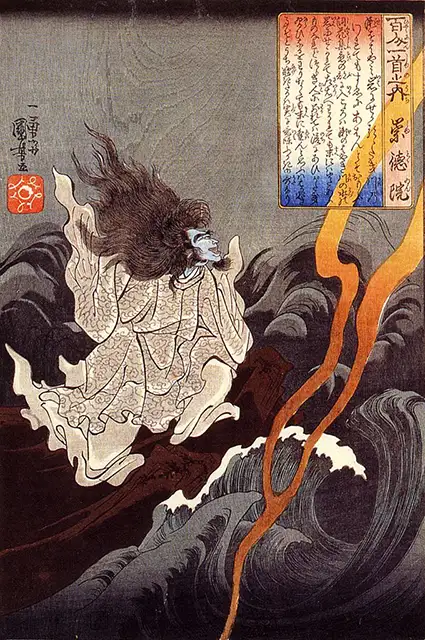
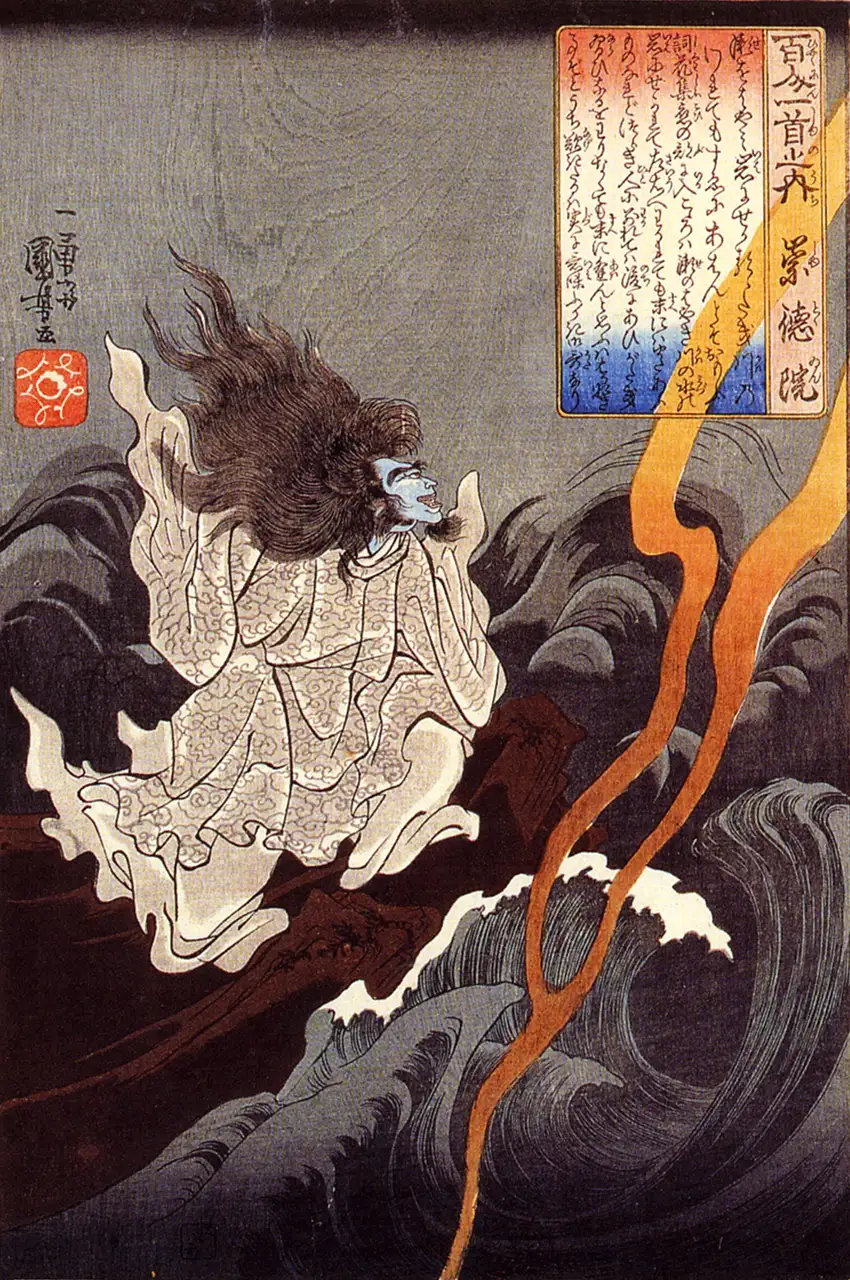
Public domain After he was exiled to Sanuki, Retired Emperor Sutoku was never allowed to return to the capital. Turning to Buddhism for comfort, he spent three years copying many sutras by hand, and asked that at least these copies be sent to the capital. But Emperor Go-Shirakawa, fearing a curse, refused to accept them.
Bitter at this, Sutoku is said to have bitten off his own tongue and written in his blood on the sutras: "I will become a great demon... I will take the emperor and make him a commoner, and make a commoner the emperor." These words were a curse on Emperor Go-Shirakawa.
In his last years, it is said, Sutoku let his hair, beard, and nails grow, as shown in the print, until he looked like a tengu (a mountain goblin).
- The Three Great Vengeful Spirits of Japan
- Sugawara no Michizane, Taira no Masakado, and Retired Emperor Sutoku lost political struggles and died in despair, still full of resentment, and people believed they became vengeful spirits that brought disaster to the capital. Ten years after Sutoku's death, people close to Emperor Go-Shirakawa died one after another, and the Great Angen Fire burned a third of Kyoto. People seem to have feared that these disasters were Sutoku's curse.
- Saigyō's Poem for Retired Emperor Sutoku
- Three years after Retired Emperor Sutoku died, Saigyō visited the Shiramine Imperial Tomb to calm his spirit. This poem is thought to have been offered by Saigyō to Sutoku, who had died without his wish to return to the capital coming true and had not found peace.
In Japanese
永らへて つひに住むべき 都かは
この世はよしや とてもかくても nagarahete tsuhinisumubeki miyakokaha
konoyohayoshiya totemokakutemo Sankashū, SaigyōIn English
However long you lived, you could not stay in the capital forever. Whatever happened, let the things of this world go.