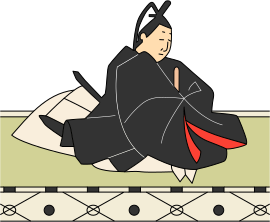
Front of the Card
Back of the Card
Japanese
English
Audio: NHK Creative Library
Read by LibriVox volunteer Larry Wilson.
Audio courtesy of LibriVox
法性寺入道前関白太政大臣
わたの原
こぎいでてみれば
久方の
雲居にまがふ
沖つ白波
くもゐにま
かふおきつ
しらなみ

わたのはらこ


- Poem 76
- わたの原
こぎいでてみれば
久方の
雲居にまがふ 沖つ白波
Author: Lay Novice of Hosshō-ji Temple, former Kampaku and Chancellor of the Realm (1097–1164)
Source: Shika Wakashū, Miscellaneous
- English Verse Translation
- When rowing on the open sea, The waves, all capped with white, Roll onward, like the fleecy
clouds With their resistless might; Truly a wondrous sight!
— William N. Porter, 1909
- Modern Translation
- Rowing out onto the open sea and looking around — the white waves far off on the water seem to blur into the clouds.
- Commentary
- Written for a palace poetry contest held while Sutoku (Poem 77) was emperor, on the theme "a distant view over the sea."
- About the Poet
- Fujiwara no Tadamichi was the eldest son of regent Fujiwara no Tadazane. With no son, he adopted his half-brother Yorinaga, but when a son was born he cancelled the adoption. The feud this caused led to the Hōgen Rebellion, where Tadamichi sided with Go-Shirakawa, won, and became head of the Fujiwara. He also founded the Hosshō-ji school of calligraphy.
- Poem Illustration
-
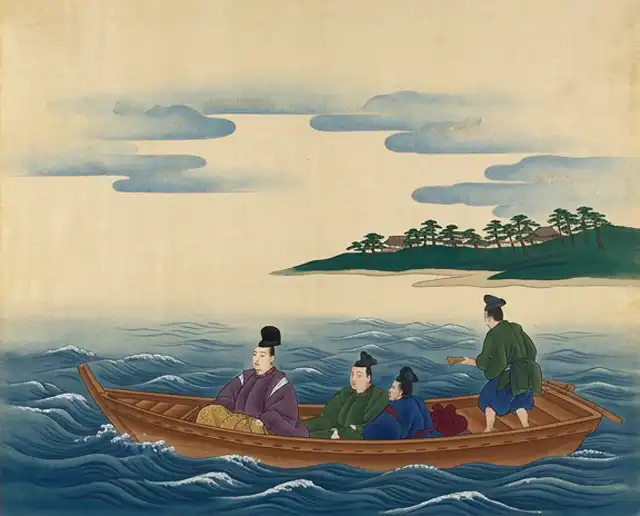
This image is based on an illustration from William N. Porter's A Hundred Verses from Old Japan, his 1909 English translation of the Hyakunin Isshu published in England, colorized and reworked using Adobe Firefly (generative AI).
- Fujiwara no Tadamichi: A Short Timeline
-
- 1097
- Born as a son of Fujiwara no Tadazane
- 1121
- Becomes Kampaku (chief adviser to the emperor)
- 1156
- Sides with Emperor Go-Shirakawa in the Hōgen Rebellion and wins
- 1162
- Becomes a monk and is called Hosshō-ji-dono
- 1164
- Dies
- Fujiwara no Tadamichi's Family Tree
-
Fujiwara no Tadamichi (the Lay Novice of Hosshō-ji Temple, former Kampaku and Chancellor of the Realm) clashed with his younger half-brother, Fujiwara no Yorinaga. Together with the conflict between Emperor Go-Shirakawa and Retired Emperor Sutoku, this led to the Hōgen Rebellion.
Although Tadamichi's daughter Kōkamon-in had become Retired Emperor Sutoku's empress, Sutoku had a son, Prince Shigehito, with Hyōe no Suke no Tsubone. This is also said to have made Tadamichi and Kōkamon-in hostile toward Sutoku and Prince Shigehito. Tadamichi's brother Yorinaga, who sided with Sutoku, died in the Hōgen Rebellion.
Tadamichi's son Jien argued in his history, the Gukanshō, that the Hōgen Rebellion was the beginning of "the age of warriors" and a turning point in history.
- Appendix
-
- The Hōgen Rebellion
-
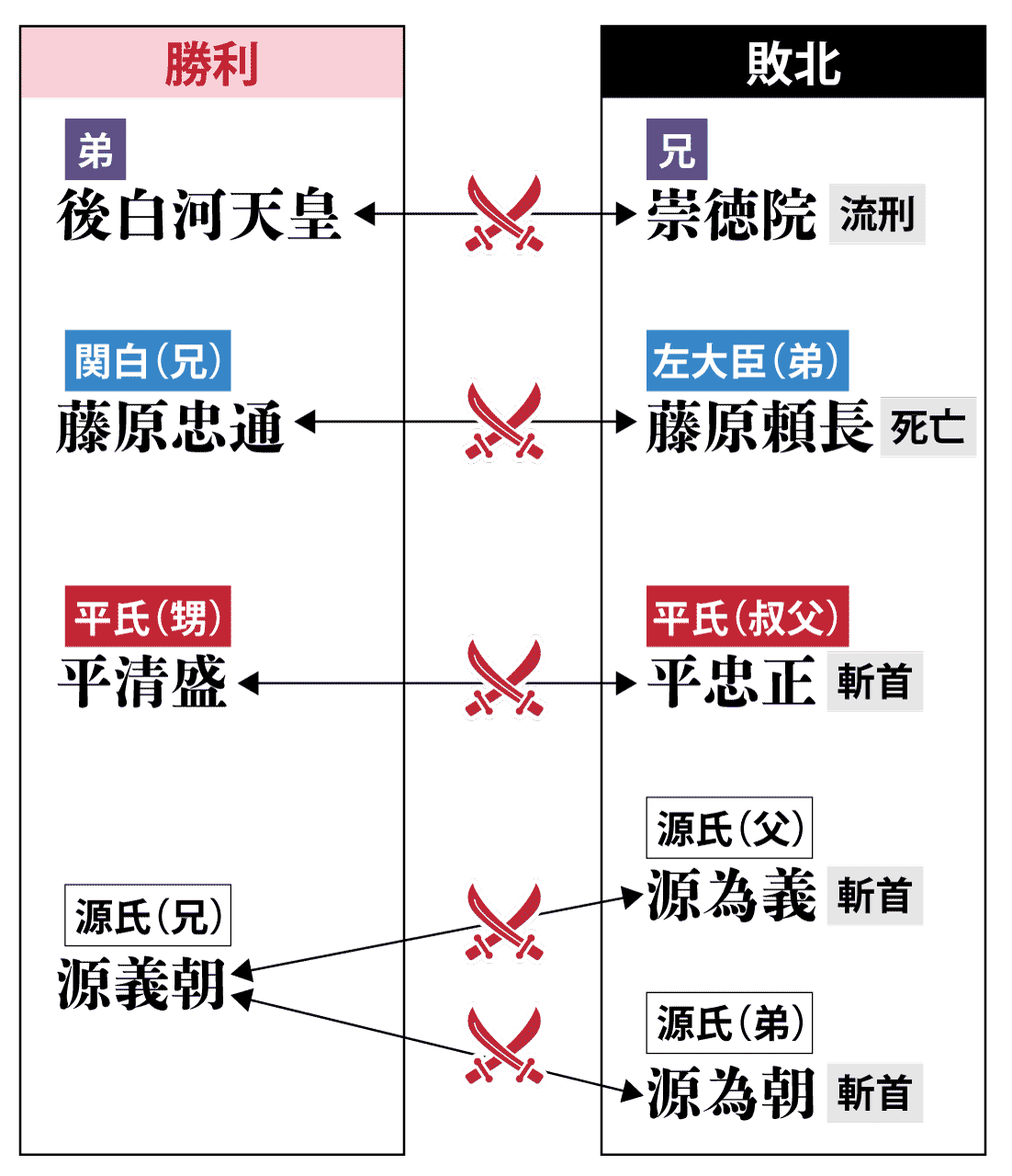
When Emperor Go-Shirakawa and Retired Emperor Sutoku clashed over who would hold power as retired emperor, Fujiwara no Tadamichi (the Lay Novice of Hosshō-ji Temple, former Kampaku and Chancellor of the Realm) was fighting his younger brother, Fujiwara no Yorinaga, within the regents' family.
This struggle over the imperial family and the regents' family grew into fierce fighting between the side of Retired Emperor Sutoku and Fujiwara no Yorinaga, centered on the warrior Minamoto no Tameyoshi, and the side of Emperor Go-Shirakawa and Fujiwara no Tadamichi, led by the warriors Taira no Kiyomori and Minamoto no Yoshitomo.
In the end, Retired Emperor Sutoku lost and was exiled to Sanuki (Kagawa Prefecture). Fujiwara no Yorinaga was hit by a stray arrow and died. Taira no Tadamasa was beheaded by Taira no Kiyomori, Minamoto no Tameyoshi was beheaded by Minamoto no Yoshitomo, and Minamoto no Tametomo was exiled to Izu Ōshima.
- A Poem Written in Shiga
-
The next poem was written by Fujiwara no Tadamichi at Karasaki (today's Kosei area of Ōtsu City, Shiga Prefecture). In this beautiful area, mountains 800 to 1,000 meters high rise to the west, and Lake Biwa spreads out to the east. Karasaki in Shiga is a famous place that appears in many poems. This poem is in the Shin Kokin Wakashū.
In Japanese
楽浪や 志賀の唐崎風さえて
比良の高嶺に 霰降るなり sazanamiya shiganokarasakikazesaete
hiranotakaneni ararefurunari Shin Kokin Wakashū, Fujiwara no TadamichiIn English
At Karasaki in Shiga the wind blows cold,
and hail is falling on the high peaks of Hira."Sazanami ya" is a pillow word (makurakotoba) that leads into "Shiga" or "Ōtsu."
- Hosshō-ji Temple
-
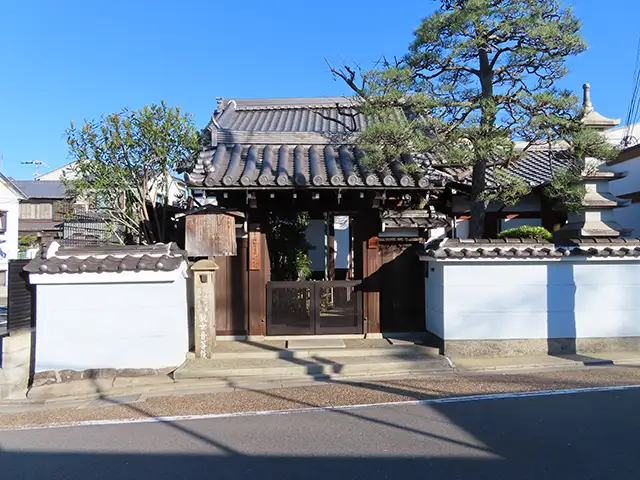
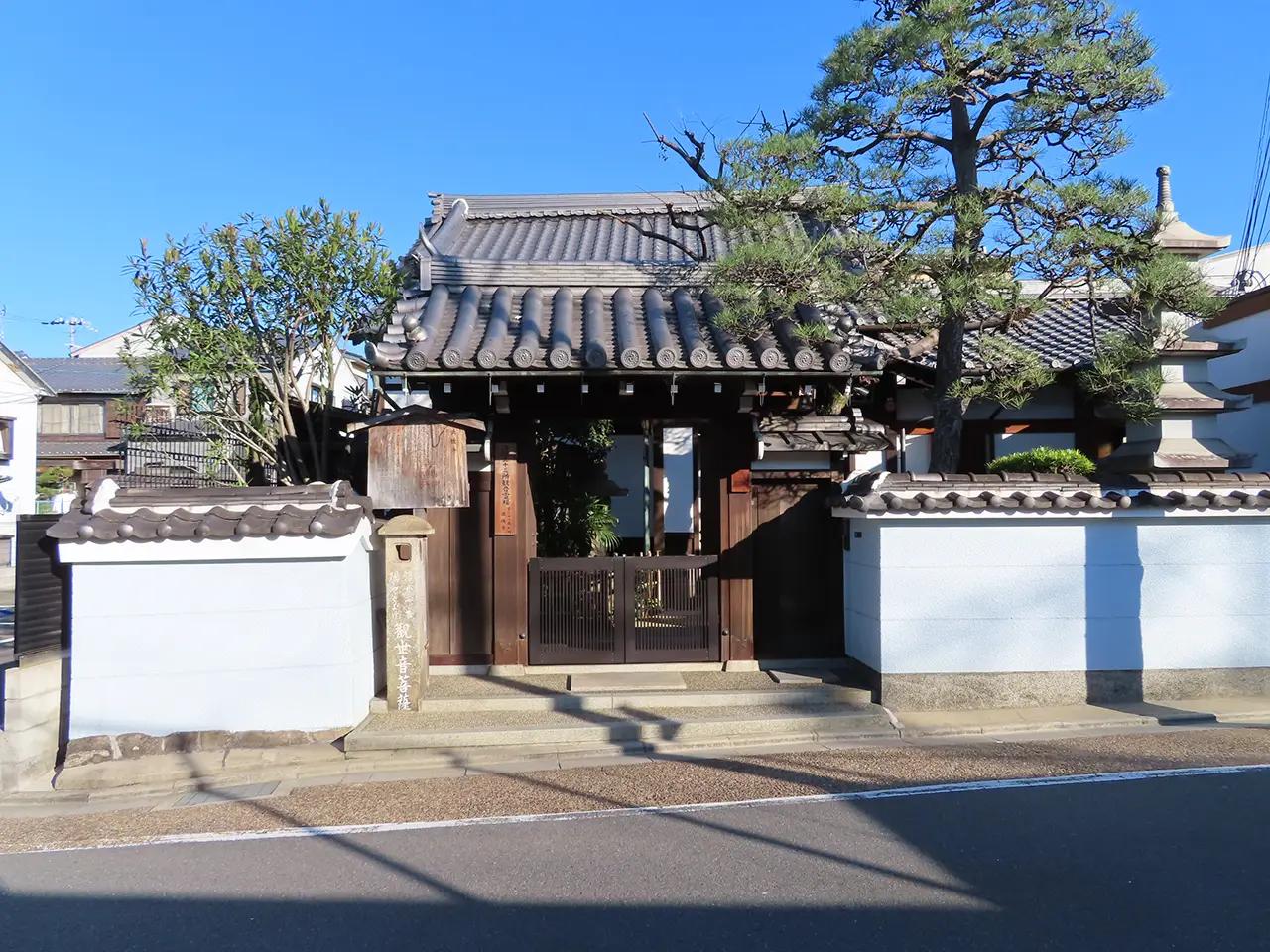
運動会プロテインパワー, CC BY-SA 4.0 <https://creativecommons.org/licenses/by-sa/4.0>, via Wikimedia Commons A temple of the Seizan Zenrin-ji branch of the Jōdo school in Higashiyama Ward, Kyoto. It is said to have been founded by Teishin-kō (Fujiwara no Tadahira). Fujiwara no Tadamichi (the Lay Novice of Hosshō-ji Temple, former Kampaku and Chancellor of the Realm) lived in a villa next to this temple, so he was called "Hosshō-ji-dono."