Front of the Card
Back of the Card
Japanese
English
Audio: NHK Creative Library
Read by LibriVox volunteer Larry Wilson.
Audio courtesy of LibriVox
鎌倉右大臣
世の中は
つねにもがもな
渚こぐ
あまの小舟の
綱手かなしも
あまのをふ
ねのつなて
かなしも

よのなかは


- Poem 93
- 世の中は
つねにもがもな
渚こぐ
あまの小舟の 綱手かなしも
Author: Minister of the Right of Kamakura (1192–1219)
Source: Shin Chokusen Wakashū, Travel
- English Verse Translation
- I love to watch the fishing-boats Returning to the bay, The crew, all straining at the
oars, And coiling ropes away; For busy folk are they.
— William N. Porter, 1909
- Modern Translation
- I wish the world could stay just as it is forever. How moving it is to watch the small fishing boats being towed along the shore.
- Commentary
- Minamoto no Sanetomo, the third Kamakura shogun, wrote this around age 20 while looking at a beach near Kamakura. In an age that felt how fleeting life is, it shows a ruler's fond care for the everyday lives of ordinary people.
- About the Poet
- Sanetomo was the son of Minamoto no Yoritomo, founder of the Kamakura shogunate, and Hōjō Masako. He followed his brother Yoriie as shogun at only 12. Though he led the warriors, he loved waka and wished for peace. At 28 he was killed by his nephew Kugyō, probably caught up in a power struggle.
- Poem Illustration
-
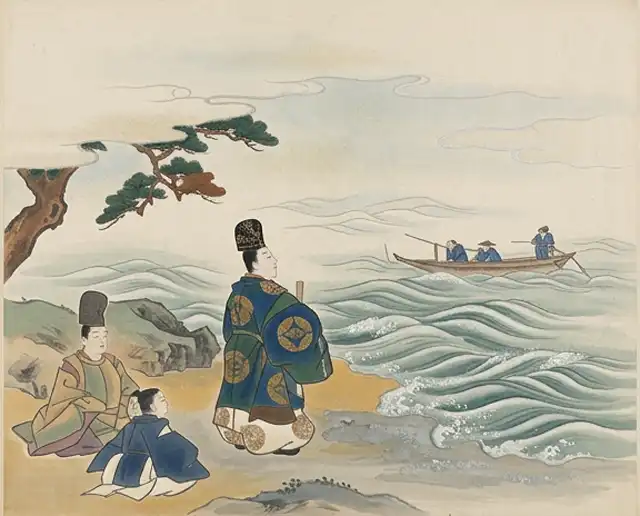
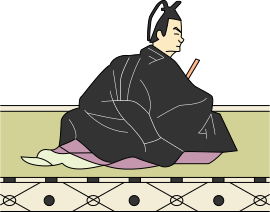
This image is based on an illustration from William N. Porter's A Hundred Verses from Old Japan, his 1909 English translation of the Hyakunin Isshu published in England, colorized and reworked using Adobe Firefly (generative AI).
- Minamoto no Sanetomo: A Short Timeline
-
- 1192
- Born in Kamakura as a son of Minamoto no Yoritomo
- 1203
- Becomes shōgun at age 12
- c. 1213
- His poems are collected in the Kinkai Wakashū
- 1218
- Becomes Minister of the Right
- 1219
- Killed by Kugyō at Tsurugaoka Hachimangū Shrine
- Minamoto no Sanetomo's Family Tree
-
Minamoto no Sanetomo was the fourth son of Minamoto no Yoritomo, the first shogun of the Kamakura shogunate, and the second son of his mother, Hōjō Masako. Because his elder brother Yoriie was driven out in a power struggle among the shogun's vassals (gokenin), Sanetomo became shogun at only 12. But real power was held by his grandfather Hōjō Tokimasa, his mother Hōjō Masako, and her younger brother Hōjō Yoshitoki.
At the same time, Sanetomo built ties with Retired Emperor Go-Toba and became the first warrior to be appointed Minister of the Right. He was also interested in court culture and loved waka so much that he held poetry gatherings at the shogun's residence, and he studied waka under Fujiwara no Sadaie.
But at 28, while visiting Tsurugaoka Hachimangū Shrine, he was assassinated by his nephew Kugyō. His life, lived amid struggles for power, was full of upheaval, yet his poem "Yo no naka wa tsune ni mo ga mo na..." carries his wish for peace.
- Appendix
-
- A Poem Pledging Loyalty to Retired Emperor Go-Toba
- In the next poem, Sanetomo pledged his loyalty to Retired Emperor Go-Toba. Though he was the third shogun of the Kamakura shogunate, Sanetomo had close ties with the imperial court. This poem is at the end of the Kinkai Wakashū.
In Japanese
山は裂け 海は褪せなむ 世なりとも
君にふた心 わがあらめやも yamahasake umihaasenamu yonaritomo
kiminifutakokoro wagaarameyamo Kinkai Wakashū, Minamoto no SanetomoIn English
Even if the world should come to a time when the mountains split and the seas dry up,
could I ever betray you?
No, never. - The Poem Monument in Kamakura Seaside Park
-
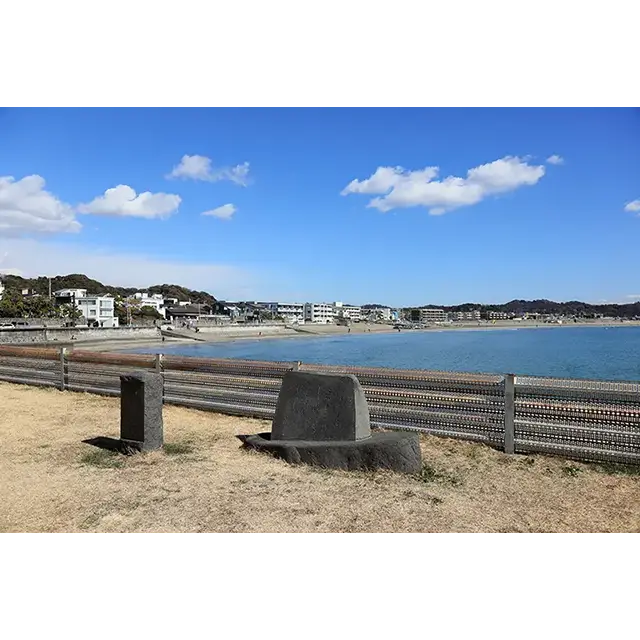
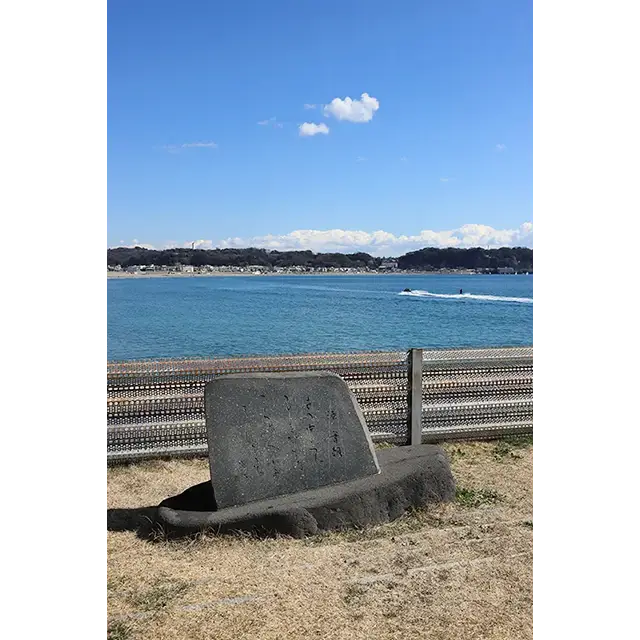
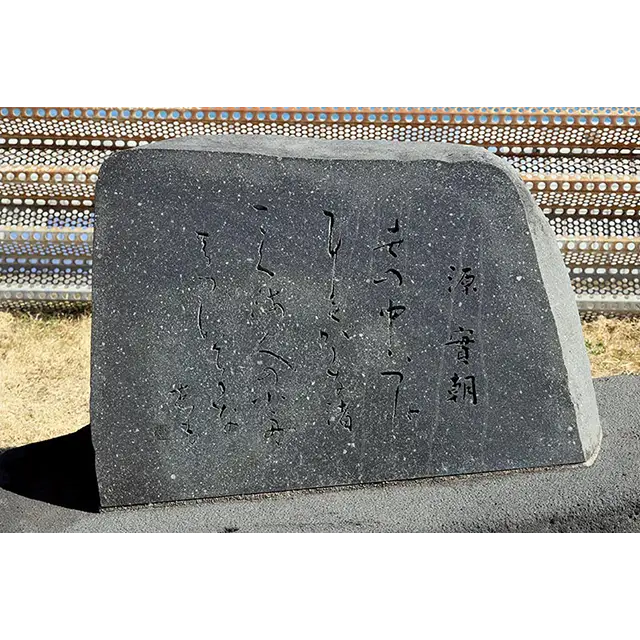
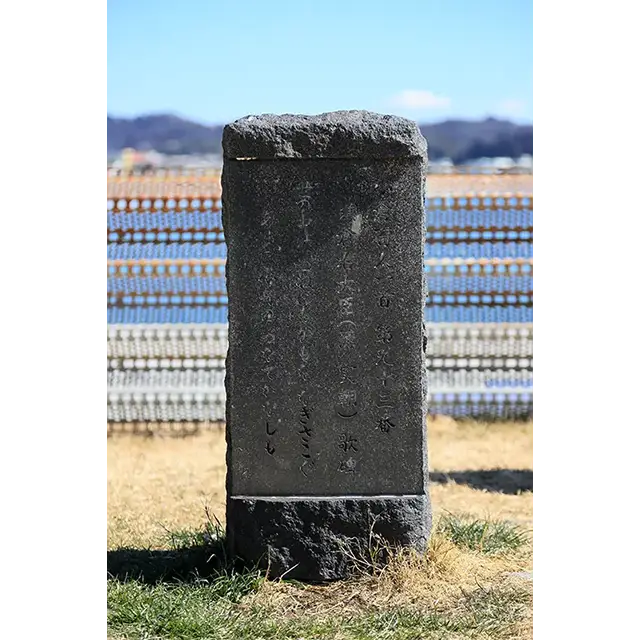
Below Kamakura Seaside Park stretches Yuigahama Beach. Its beautiful sands are known as a swimming beach that is crowded with people in summer. In the park stands a monument with Sanetomo's poem, shaped like a boat.
According to the Azuma Kagami, Sanetomo planned to sail to Song China himself and tried to have a Chinese-style ship built. On this calm beach, Sanetomo watched fishermen pulling their boats and wished for lasting peace. His feelings still seem to watch gently over this place.
From Hase Station on the Enoshima Electric Railway, walk south for about 10 minutes to reach Yuigahama Beach. From there, walk to the right along the beach for about 5 minutes to reach Kamakura Seaside Park.
(Photos taken February 22, 2025) - Tsurugaoka Hachimangū Shrine
-
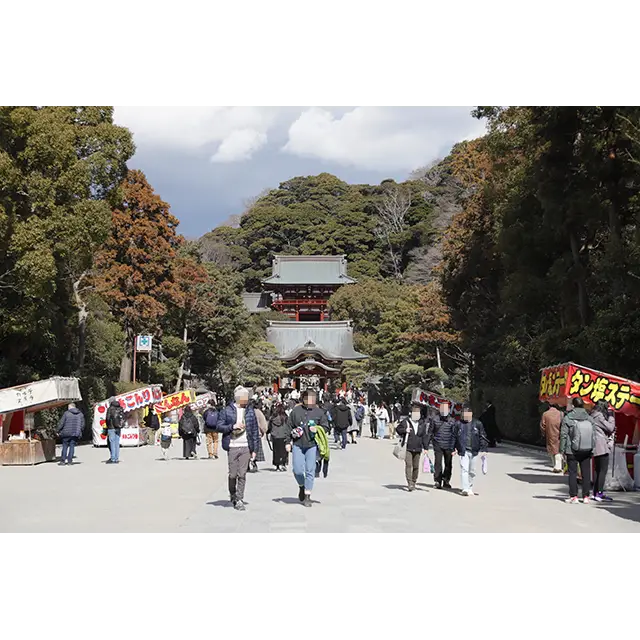
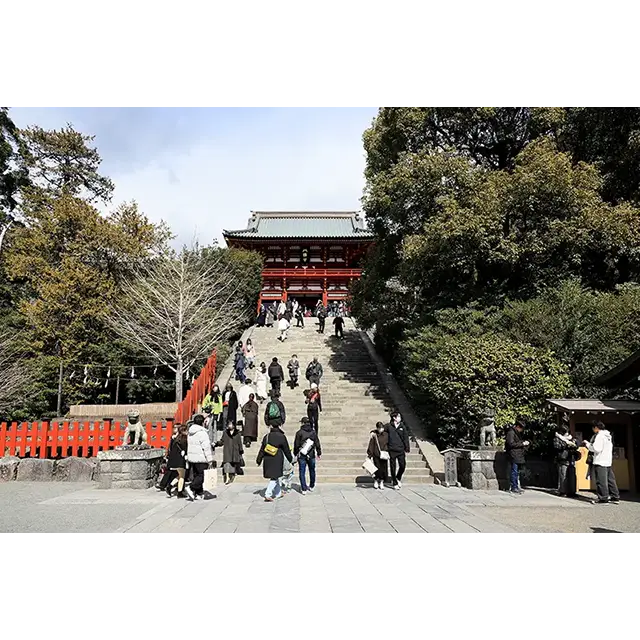
Minamoto no Sanetomo, the third shogun of the Kamakura shogunate, was appointed Minister of the Right at 28. He visited Tsurugaoka Hachimangū Shrine to report it, and as he was coming down the great stone steps, he was attacked and killed by Kugyō, his nephew and also his adopted son.
Kugyō was the son of Minamoto no Yoriie, who had been driven from the post of shogun. He killed Sanetomo to avenge his father, but was himself killed soon after, and so the Minamoto line of shoguns ended after three generations.
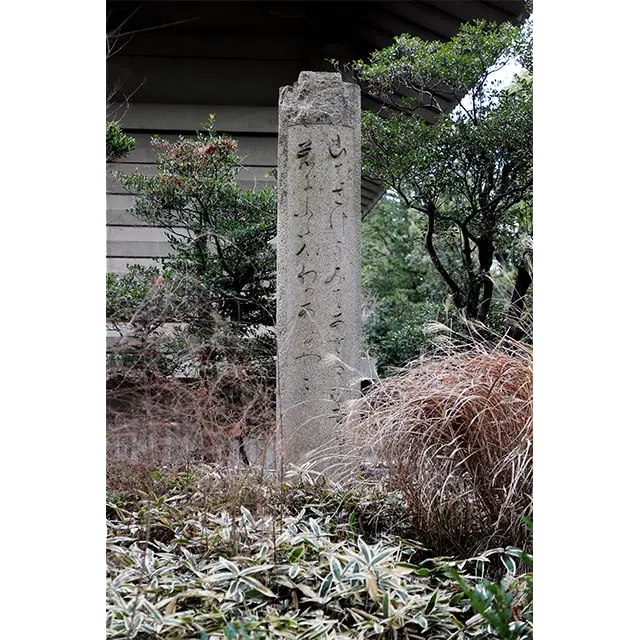
Near the Kamakura Museum of National Treasures in the shrine grounds stands a monument with Sanetomo's poem:
山はさけ うみはあせなむ 世なりとも
君にふた心 わがあらめやもThis poem is widely known as a pledge of loyalty to Retired Emperor Go-Toba.
Tsurugaoka Hachimangū Shrine is about a 10-minute walk from Kamakura Station on the JR and Enoshima Electric Railway lines, but it is often crowded with tourists, so it is best to allow plenty of time.
(Photos taken February 22, 2025)