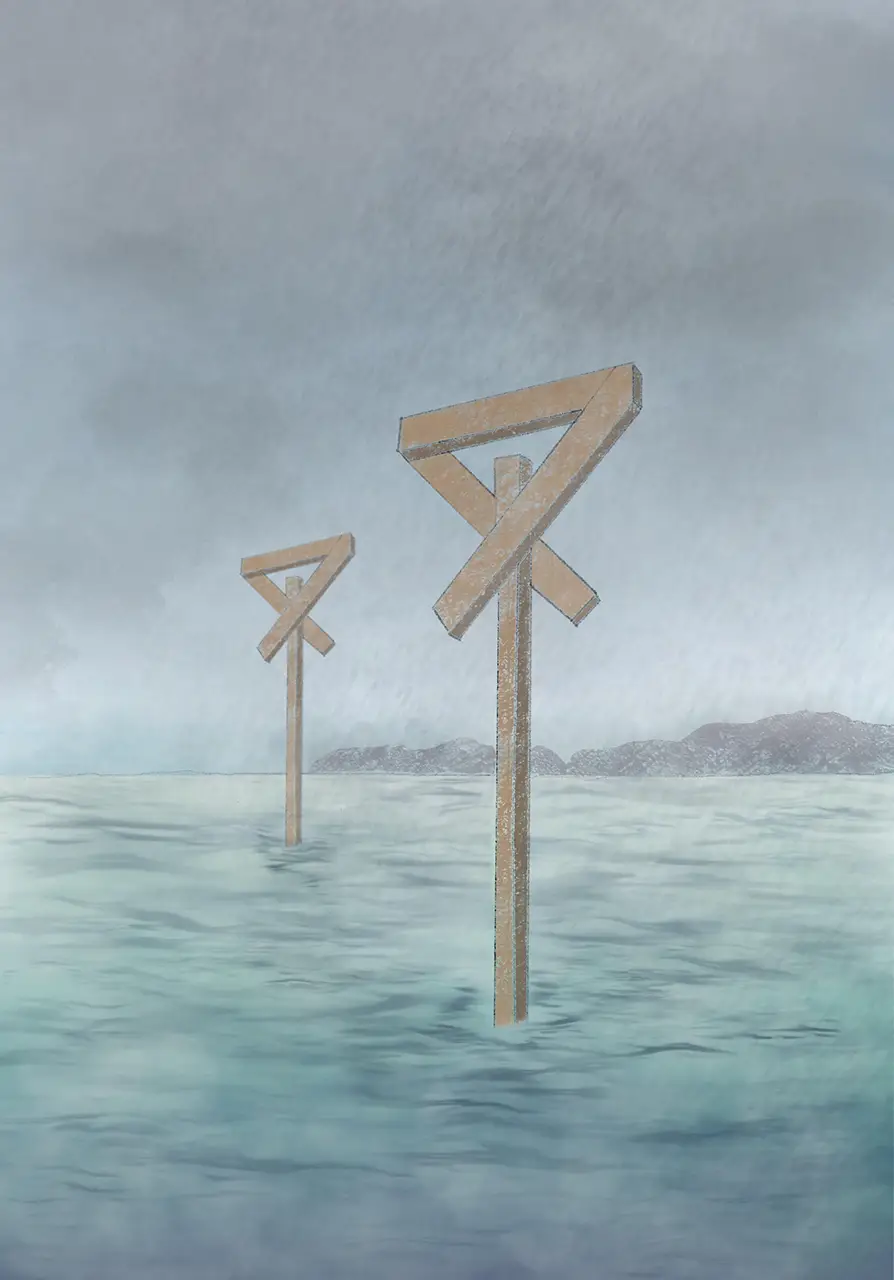
Front of the Card
Back of the Card
Japanese
English
Audio: NHK Creative Library
Read by LibriVox volunteer Larry Wilson.
Audio courtesy of LibriVox
元良親王
わびぬれば
いまはたおなじ
難波なる
みをつくしても
逢はむとぞ思ふ
みをつくし
てもあはむ
とそおもふ

わび


- Poem 20
- わびぬれば
いまはたおなじ
難波なる
みをつくしても 逢はむとぞ思ふ
Author: Prince Motoyoshi (890–943)
Source: Gosen Wakashū, Love
- English Verse Translation
- We met but for a moment, and I'm wretched as before; The tide shall measure out my life,
Unless I see once more The maid, whom I adore.
— William N. Porter, 1909
- Modern Translation
- Since things have come to this, it no longer matters. Even if I must sacrifice everything, I still want to meet you.
- Commentary
- The Gosen Wakashū says this was sent to the Kyōgoku consort after their affair became known. Prince Motoyoshi sent it to Fujiwara no Hōshi, a consort of Retired Emperor Uda, once rumors spread. It carries the sad, half-desperate feelings of a man in a forbidden love.
- About the Poet
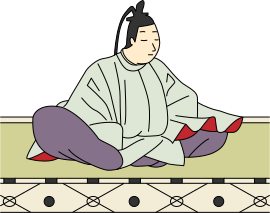
- Prince Motoyoshi was the eldest son of Emperor Yōzei, born after Yōzei stepped down. He was known for his free ways with women, changing lovers almost every night, and was even nicknamed "the prince of one-night visits."
- Poem Illustration
-
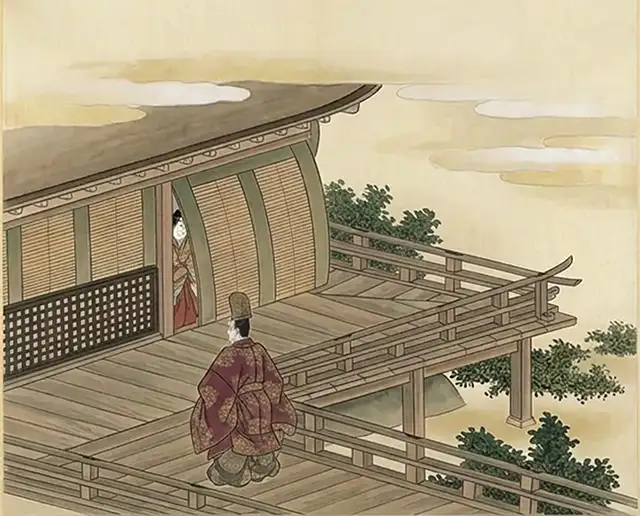
This image is based on an illustration from William N. Porter's A Hundred Verses from Old Japan, his 1909 English translation of the Hyakunin Isshu published in England, colorized and reworked using Adobe Firefly (generative AI).
- Prince Motoyoshi: A Short Timeline
-
- 890
- Born as a son of Emperor Yōzei
- 929
- For his 40th birthday, Ki no Tsurayuki writes poems for a folding screen
- 943
- Dies
- Notes
-
- Known as the greatest lover of his time
- 20 of his poems appear in imperial anthologies from the Gosenshū on
- Prince Motoyoshi's Family Tree
-
Prince Motoyoshi was born after his father, Retired Emperor Yōzei, had given up the throne, so he could never become emperor.
Fujiwara no Hōshi, with whom Prince Motoyoshi had a secret love affair, was a consort of Emperor Uda and a daughter of Tokihira, son of Fujiwara no Mototsune. Mototsune was the man who had pressed Motoyoshi's father, Retired Emperor Yōzei, to give up the throne.
- Appendix
-
- "Ima hata onaji Naniwa naru," Quoted in The Tale of Genji
- Prince Motoyoshi's poem stayed famous in later ages and is quoted in The Tale of Genji. In "Miotsukushi," the fourteenth chapter, there is a memorable scene in which Hikaru Genji recites it. Genji has come to pray at Sumiyoshi Shrine, and he knows that the Akashi Lady has come there too, very close by, but he cannot meet her. Out of that painful longing, he murmurs Prince Motoyoshi's words, "Ima hata onaji Naniwa naru." His quick-witted attendant understands his feelings and gives him a chance to reach the Akashi Lady again. Taking a brush and paper from the attendant, Genji sends her the next poem.
In Japanese
みをつくし 恋ふるしるしに ここまでも
めぐり逢ひける 縁は深しな miotsukushi kofurushirushini kokomademo
meguriahikeru enihafukashina The Tale of Genji, Hikaru GenjiIn English
Loving you with all my heart has been worth it. That I have come all the way here, where the miotsukushi stand (Naniwa), and met you must mean the bond between us is deep. - Miotsukushi (Channel Markers)
-
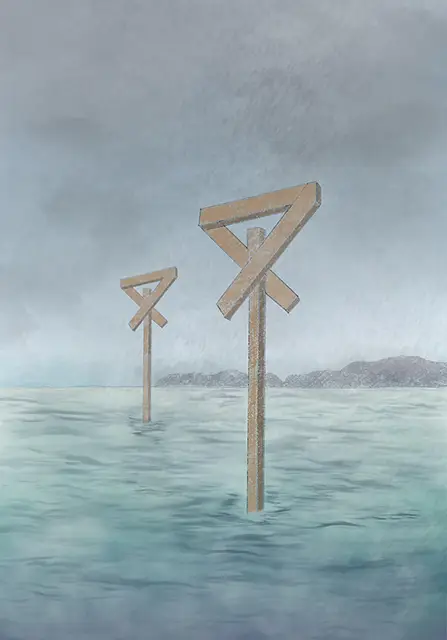
Miotsukushi are posts set in shallow waters where ships might run aground, to show where the water is deep enough for ships to pass. At Naniwa, the mouth of the Yodo River spread out into many shallows that made sailing difficult, so the miotsukushi of Naniwa were famous.
The word comes from mio-tsu-kushi, "posts of the mio." Mio means the same as 水脈: the line where water flows in the sea or a river. In waka, miotsukushi is often used as a kakekotoba together with mi o tsukushi, "giving oneself completely."
The symbol on the left is the emblem of Osaka City.
It is based on a miotsukushi. - Ukiyo-e by Katsushika Hokusai
-
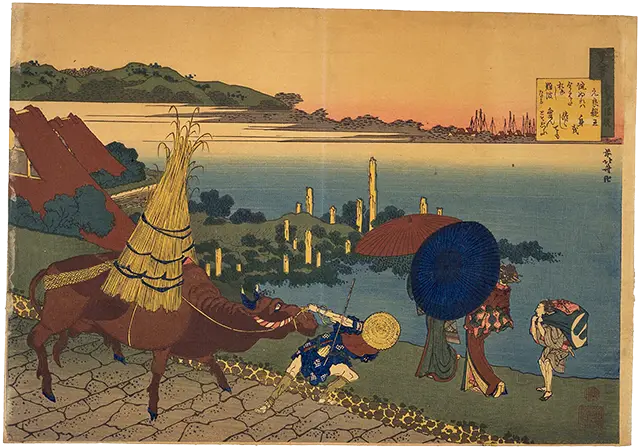
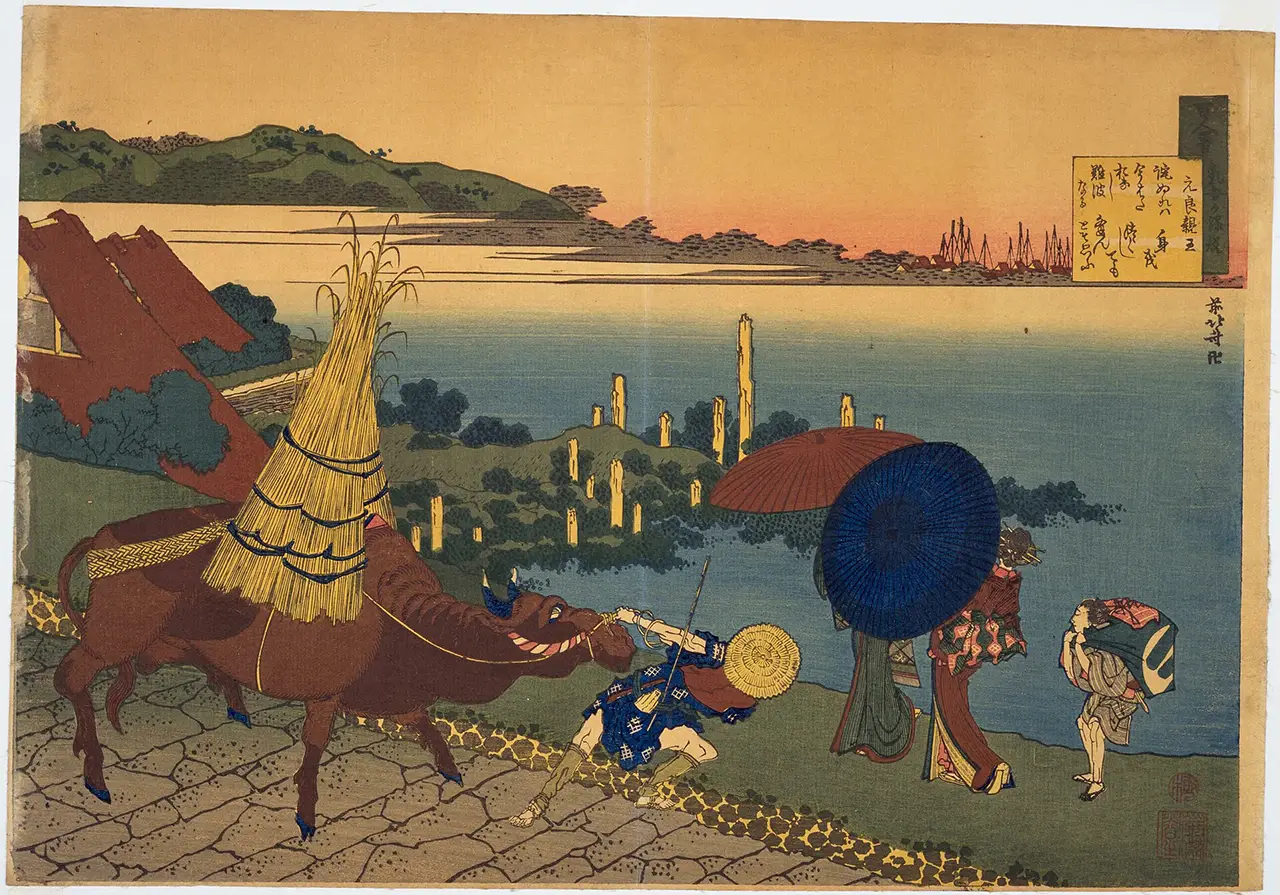
National Diet Library, Public domain, via Wikimedia Commons This print is from One Hundred Poems Explained by the Nurse (Hyakunin Isshu Uba ga Etoki) by Katsushika Hokusai, an ukiyo-e artist of the Edo period. The idea of the series is a nurse explaining the Hyakunin Isshu poems with easy-to-understand pictures.
Bundles of straw have been loaded onto an ox that carries heavy loads, and part of a saddle can be seen under the straw, so perhaps someone is hiding on the ox's back. Maybe it is Prince Motoyoshi, riding in secret!