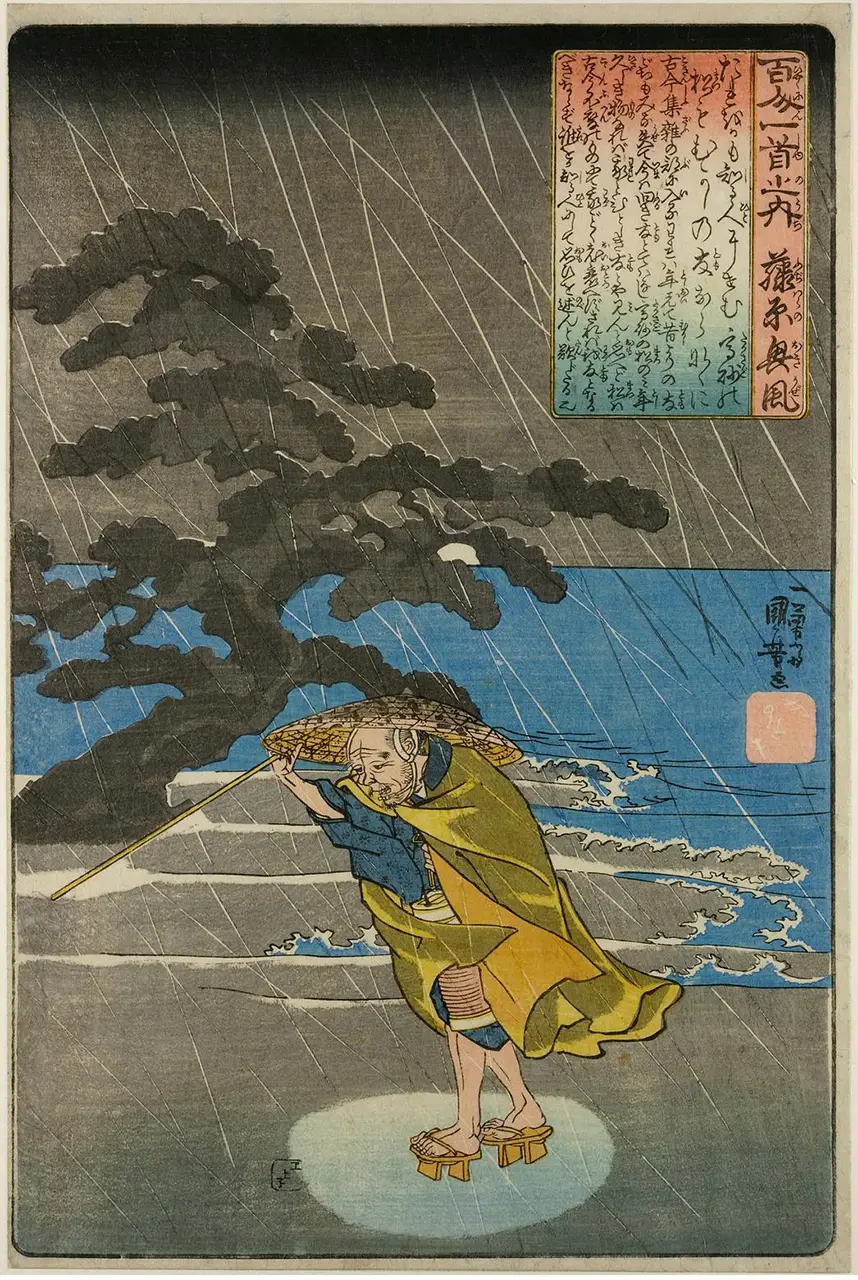
Front of the Card
Back of the Card
Japanese
English
Audio: NHK Creative Library
Read by LibriVox volunteer Larry Wilson.
Audio courtesy of LibriVox
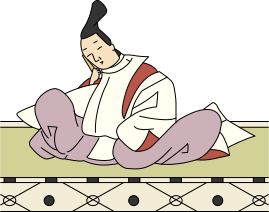
藤原興風
誰をかも
知る人にせむ
高砂の
松も昔の
友ならなくに
まつもむか
しのともな
らなくに

たれ


- Poem 34
- 誰をかも
知る人にせむ
高砂の
松も昔の 友ならなくに
Author: Fujiwara no Okikaze (dates unknown)
Source: Kokin Wakashū, Miscellaneous
- English Verse Translation
- Gone are my old familiar friends, The men I used to know; Yet still on Takasago beach
The same old pine trees-grow, That I knew long ago.
— William N. Porter, 1909
- Modern Translation
- Who can I call a true friend now? Even the old pine of Takasago knew the friends of long ago no longer.
- Commentary
- With its evergreen needles, the pine has long stood for long life, and Takasago (Hyōgo Prefecture) was famous for pines. A long life means outliving the friends who understood you, and the poem speaks of that loneliness of old age. The poet is said to have written it at 74, when 40 already counted as old.
- About the Poet
- Fujiwara no Okikaze held a low rank but was highly praised as a poet and left a personal collection, the Okikaze Shū. He was also known as a skilled koto player.
- Poem Illustration
-
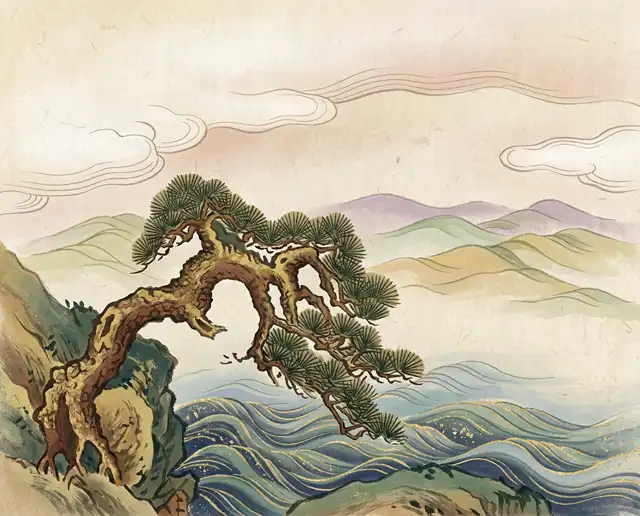
This image is based on an illustration from William N. Porter's A Hundred Verses from Old Japan, his 1909 English translation of the Hyakunin Isshu published in England, colorized and reworked using Adobe Firefly (generative AI).
- Fujiwara no Okikaze: A Short Timeline
-
- 900
- Becomes an official of Sagami Province
- 902
- Becomes a junior secretary in the Ministry of Ceremonial
- 904
- Becomes an official of Kōzuke Province
- 914
- Becomes a senior secretary of Shimōsa Province
- Notes
-
- 38 of his poems appear in imperial anthologies from the Kokinshū on
- Said to have also been a fine musician
- Counted as one of the Thirty-Six Immortal Poets
- Fujiwara no Okikaze's Family Tree
-
Fujiwara no Okikaze is the only poet from the Capital House (Kyōke) of the Fujiwara chosen for the Hyakunin Isshu. The Capital House was the line founded by Fujiwara no Maro, and it got its name because Maro served as Master of the Left Capital (Sakyō no Daibu).
Okikaze's ancestor, the Councillor Fujiwara no Hamanari, was caught up when the plot of his son-in-law Hikami no Kawatsugu to rebel against Emperor Kanmu (the Hikami no Kawatsugu Incident) came to light, and he was removed from his post as Councillor. The Capital House did not play a large part in politics.
- Appendix
-
- A Spring Poem
- In this poem, Fujiwara no Okikaze asks the bush warbler, whose song tells of spring's arrival, to sing more.
In Japanese
声絶えず 鳴けや鶯 ひと年に
再びとだに 来べき春かは koetaezu nakeyauguisu hitotoseni
futatabitodani kubekiharukaha Kokin Wakashū, Fujiwara no OkikazeIn English
Bush warbler, sing on without a pause.
Spring does not come even twice a year. - A Poem That Appeared in Hikaru Kimi e
- This poem by Fujiwara no Okikaze, from the Kokin Wakashū, appeared in Episode 10, "The Moonlit Plot," of the NHK historical drama Hikaru Kimi e (Dear Radiant One).
Michinaga sends it to Mahiro (Murasaki Shikibu).In Japanese
死ぬる命 生きもやすると こころみに
玉の緒ばかり 逢はむと言はなむ shinuruinochi ikimoyasuruto kokoromini
tamanoobakari ahamutoihanamu Kokin Wakashū, Fujiwara no OkikazeIn English
My life is about to end. It might come back to life,
so just to try, please say you will meet me, even for a moment. - The Koto
-
The koto is a stringed instrument that came from China in the Nara period. You press the strings with your left hand and pluck them with your right to make sounds. There are several kinds: the 琴 (kin) with 7 strings, the 和琴 (wagon) with 6 strings, and the 筝 (sō) with 13 strings.

Metropolitan Museum of Art, Public domain - Utagawa Kuniyoshi's Hyakunin Isshu no Uchi
-
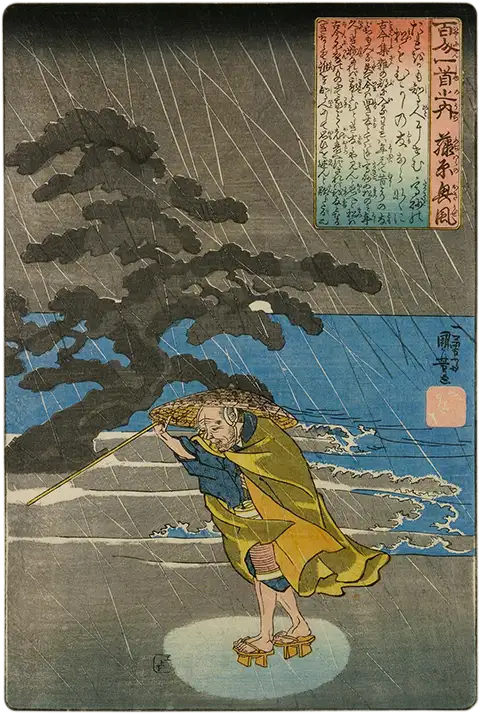
British Museum, Public domain, via Wikimedia Commons This ukiyo-e is by Utagawa Kuniyoshi, an artist of the Edo period.
It shows a scene that matches the poem in the Hyakunin Isshu.