Front of the Card
Back of the Card
Japanese
English
Audio: NHK Creative Library
Read by LibriVox volunteer Larry Wilson.
Audio courtesy of LibriVox
山部赤人
田子の浦に
うちいでてみれば
白妙の
富士の高嶺に
雪は降りつつ
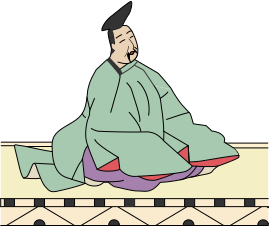
ふしのたか
ねにゆきは
ふりつつ

たご


- Poem 4
- 田子の浦に
うちいでてみれば
白妙の
富士の高嶺に 雪は降りつつ
Author: Yamabe no Akahito (dates unknown)
Source: Shin Kokin Wakashū, Winter
- English Verse Translation
- I started off along the shore, The sea shore at Tago, And saw the white and glist'ning peak
Of Fuji all aglow Through falling flakes of snow.
— William N. Porter, 1909
- Modern Translation
- Going out to Tago Bay and looking around, I see snow falling ceaselessly on the high peak of Fuji, white as freshly woven cloth.
- Commentary
- Tago Bay is the western shore of Suruga Bay. Mountains come right down to the coast there, so Tago Bay is where the whole of Mount Fuji first comes into view. In Japan, snow has long been treasured along with the moon and flowers. The poem holds the poet's awe at snow falling on Fuji's grand peak.
- About the Poet
- Yamabe no Akahito was a Man'yōshū poet of the Nara period who served Emperor Shōmu. Though a minor official, he had a gift for nature poetry and wrote many poems while traveling with the emperor. Later ages praised him, with Kakinomoto no Hitomaro, as one of the two "Sages of Poetry."
- Poem Illustration
-
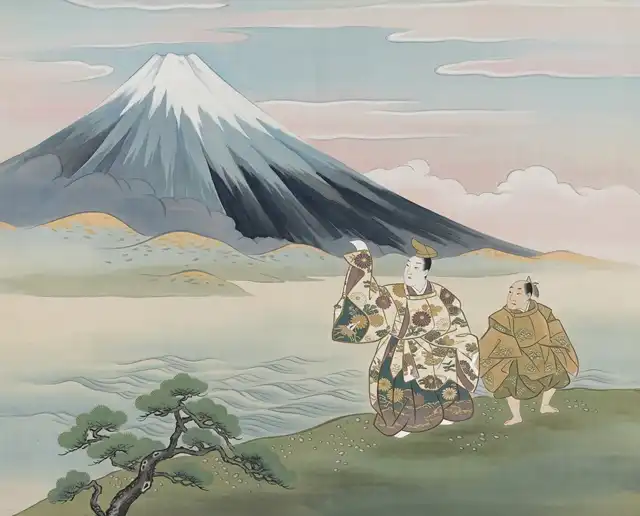
This image is based on an illustration from William N. Porter's A Hundred Verses from Old Japan, his 1909 English translation of the Hyakunin Isshu published in England, colorized and reworked using Adobe Firefly (generative AI).
- Yamabe no Akahito: A Short Timeline
-
- 724
- In Emperor Shōmu's reign, his first poems with a known date appear
- 736
- Writes his last poem with a known date
- Notes
-
- Counted as one of the Thirty-Six Immortal Poets
- Appendix
-
- The Original Poem
- The original of Akahito's poem in the Hyakunin Isshu is a hanka in the Man'yōshū (Book 3, Poem 317). A hanka is a short poem added after a chōka (long poem). A chōka repeats pairs of 5- and 7-syllable lines three or more times and ends with lines of 5, 7, and 7 syllables.
- The Original: The Long Poem (Chōka)
-
In Japanese
天地の 分れし時ゆ
神さびて 高く貴き
駿河なる 富士の高嶺を
天の原 ふりさけ見れば
渡る日の 影も隠らひ
照る月の 光も見えず
白雲も い行きはばかり
時じくそ 雪は降りける
語り継ぎ 言ひ継ぎ行かむ
富士の高嶺は amatsuchino wakareshitokiyu
kamusabite takakutafutoki
suruganaru fujinotakaneo
amanohara furisakemireba
wataruhino kagemokakurahi
terutsukino hikarimomiezu
shirakumomo iyukihabakari
tokijikuso yukihafurikeru
kataritsugi ihitsugiyukamu
fujinotakaneha Man'yōshū, Yamabe no AkahitoIn English
Since heaven and earth were parted,
godlike, high, and noble
stands the lofty peak of Fuji in Suruga.
When I look up at it in the wide sky,
the sun crossing the sky hides behind it,
and the shining moon cannot be seen.
Even the white clouds cannot pass,
and snow falls on it in every season.
Let us keep telling of it,
and pass on its story forever,
this lofty peak of Fuji. - The Original: The Short Poem (Hanka)
-
In Japanese
田子の浦ゆ うち出でてみれば 真白にそ
富士の高嶺に 雪は降りける tagonourayu uchiidetemireba mashironiso
fujinotakaneni yukihafurikeru Man'yōshū, Yamabe no AkahitoIn English
When I came out onto Tago Bay,
I saw pure white snow had fallen on the high peak of Fuji. - A Poem Akahito Wrote When He Visited Iyo Province
- Akahito wrote the next poem when he visited a hot spring in Iyo Province. In 661, when Empress Saimei's party stayed at Nikitatsu on its way to Kyushu to help the kingdom of Baekje, Princess Nukata wrote a poem about Nikitatsu (see Emperor Tenji's page). About half a century later, Akahito visited Iyo and, with her poem in mind, is thought to have written this poem thinking back on the courtiers who once sailed from Nikitatsu.
In Japanese
ももしきの 大宮人の 熟田津に
船乗りしけむ 年の知らなく momoshikino oomiyabitono nikitatsuni
funanorishikemu toshinoshiranaku Man'yōshū, Yamabe no AkahitoIn English
The people of the court must have boarded their ships here at Nikitatsu, but no one knows anymore what year it was.
- Poems Written on Imperial Journeys (Man'yōshū)
- Yamabe no Akahito was a master of poems describing scenery, and he sometimes wrote poems on the emperor's journeys.
He wrote the next poem when Emperor Shōmu visited Kii Province (present-day Wakayama Prefecture). "Waka no Ura" is the name for a group of scenic spots in the southwest of Wakayama City, recognized in 2017 as a Japan Heritage site, "Waka-no-ura, a Treasure Trove of Scenic Beauty."In Japanese
若の浦に 潮満ち来れば 潟をなみ
葦辺をさして 鶴鳴き渡る wakanourani shiomichikureba kataonami
ashibeosashite tazunakiwataru Man'yōshū, Yamabe no AkahitoIn English
When the tide comes in at Waka no Ura, the tidal flats disappear, and the cranes fly crying toward the reeds.
He wrote the next poem when Emperor Shōmu visited Yoshino.
In Japanese
ぬばたまの 夜の更けゆけば
久木生ふる
清き川原に
千鳥しば鳴く nubatamano yonofukeyukeba hisagiofuru
kiyokikawarani chidorishibanaku Man'yōshū, Yamabe no AkahitoIn English
As the night grows late, on the clear riverbank where the hisagi trees grow,
the plovers cry again and again. - A Poem About the Spring Fields
- The next poem, about the fields in spring, is in the Man'yōshū.
In Japanese
春の野に すみれ摘みにと 来し我ぞ
野をなつかしみ 一夜寝にける harunononi sumiretsuminito koshiwarezo
noonatsukashimi hitoyonenikeru Man'yōshū, Yamabe no AkahitoIn English
I came to the spring fields to pick violets, but the fields were so lovely that I ended up staying the night.
- A Waka About Mount Fuji
- The next poem is by Fujiwara no Tadayuki, a poet of the early Heian period. He served as governor of Tōtōmi Province, a post a bit like today's governor of Shizuoka Prefecture. Mount Fuji then was not the calm mountain we know today, but a wild, active volcano sending smoke high into the sky.
Standing there as the local governor, Tadayuki must have seen a Fuji far grander and more full of life than the one we see now.
In Japanese
君といへば 見まれ見ずまれ 富士の嶺の
珍しげなく 燃ゆるわが恋 kimitoiheba mimaremezumare fujinoneno
mezurashigenaku moyuruwagakohi Kokin Wakashū, Fujiwara no TadayukiIn English
When it comes to you, whether I see you or not, my love keeps burning, always sending up smoke like the peak of Mount Fuji.
- Mount Fuji
-
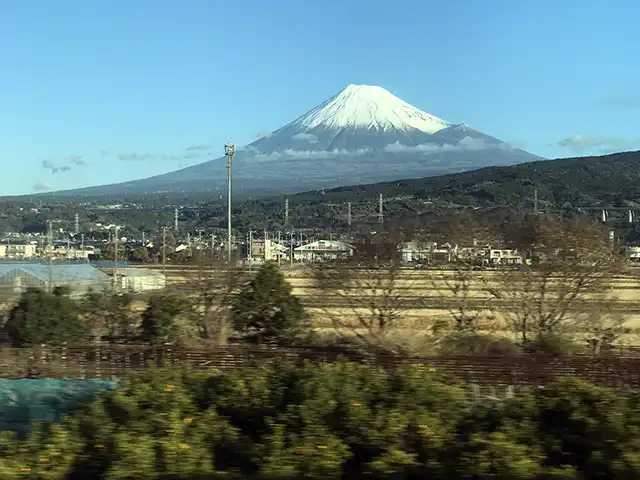
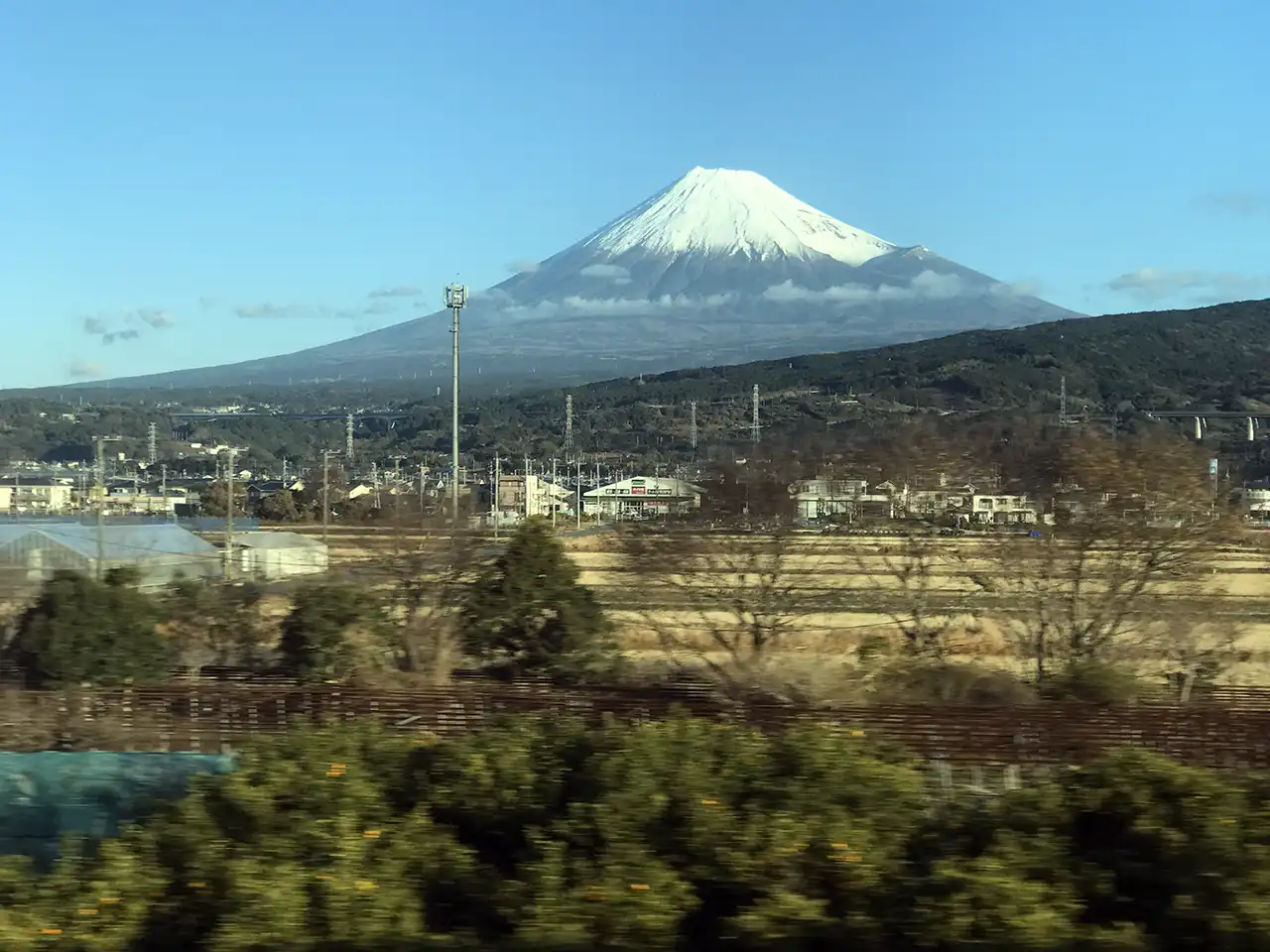
(Photo taken December 29, 2025, from a Shinkansen window) Seen from the window of a Shinkansen bullet train, Mount Fuji looks calm today, but it is said that it once showed a wild face, sending up smoke that seemed to scorch the sky.
Seeing that endless smoke, people of the time may have seen in it a passion that burned in their own hearts.
- Wakamiya Shrine
-
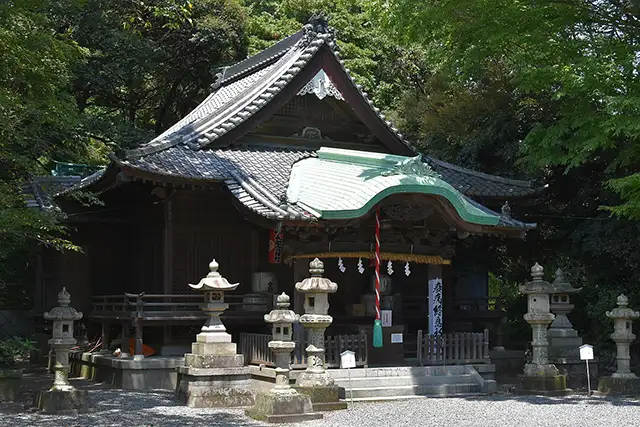
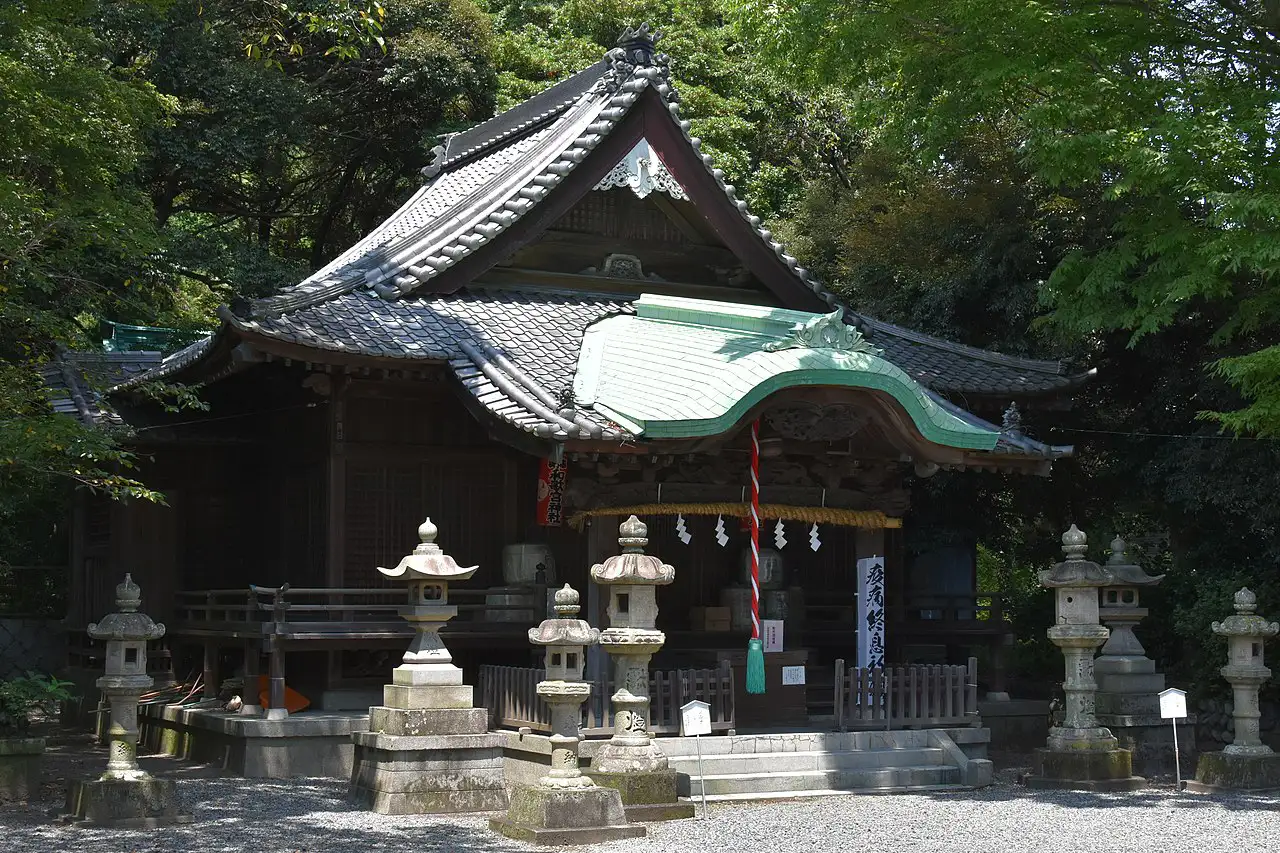
Sablier de Verrie, CC BY-SA 4.0 <https://creativecommons.org/licenses/by-sa/4.0>, via Wikimedia Commons This shrine in Kanbara, Shimizu Ward, Shizuoka City, honors Yamabe no Akahito. No one knows exactly when it was founded, but it is said to have been built because of his Hyakunin Isshu poem, written at Fukiage Beach near the Kanbara post town (a little west of the Fuji River).
- Ukiyo-e by Katsushika Hokusai
-
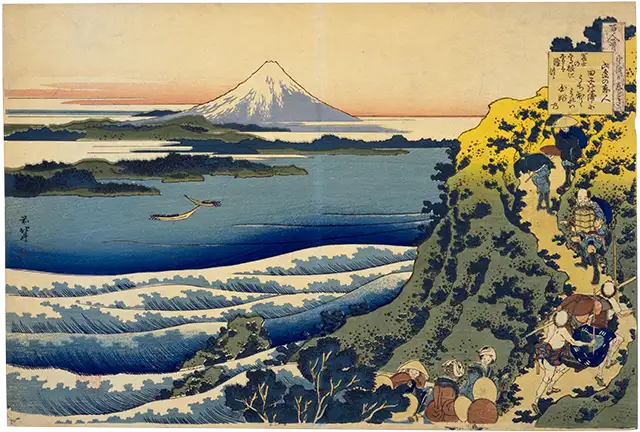
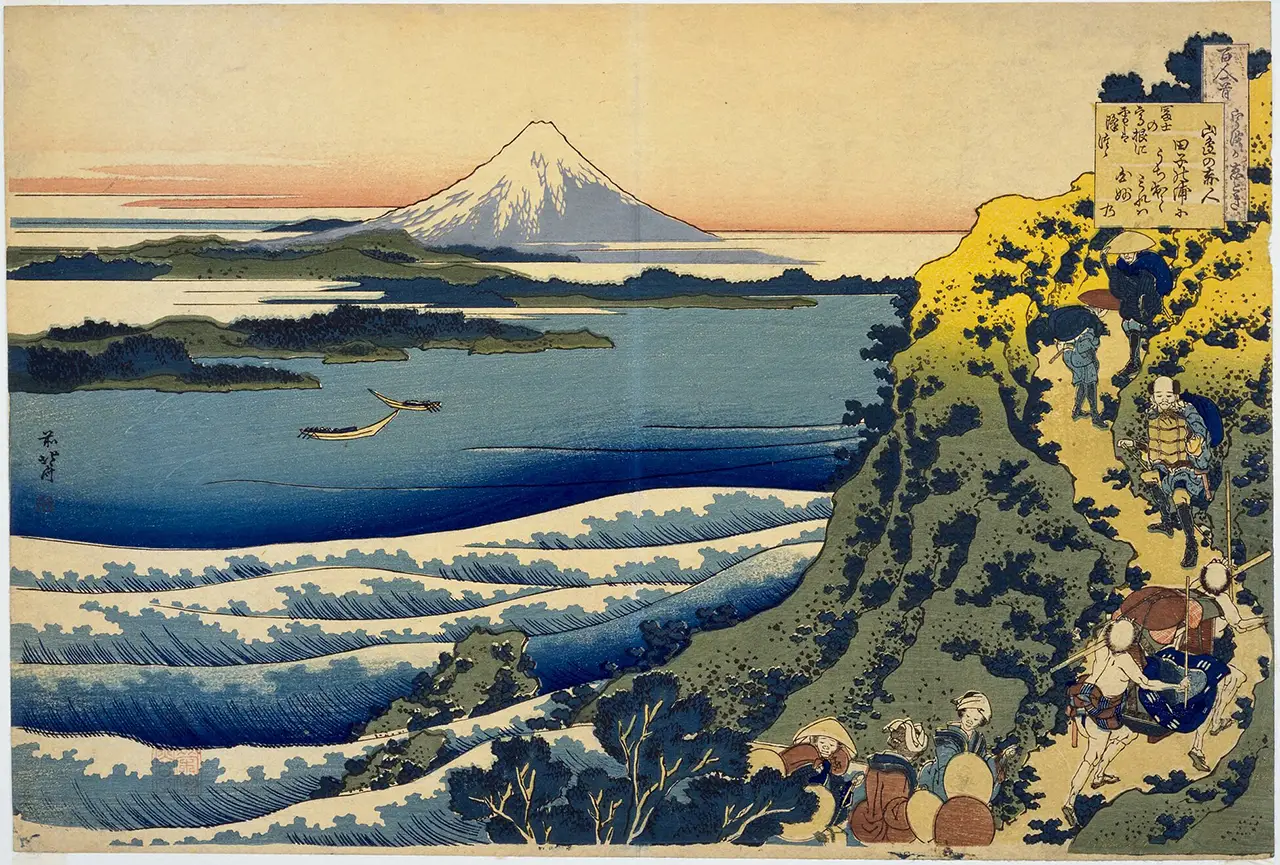
National Diet Library, Public domain, via Wikimedia Commons This print is from One Hundred Poems Explained by the Nurse (Hyakunin Isshu Uba ga Etoki) by Katsushika Hokusai, an ukiyo-e artist of the Edo period. The idea of the series is a nurse explaining the Hyakunin Isshu poems with easy-to-understand pictures.
Hokusai seems to have drawn the area around Satta Pass, where the mountains come right down to the sea on the way to Tago Bay. The composition, with travelers crossing the pass in front and Mount Fuji far behind, is very appealing.
- Utagawa Kuniyoshi's Hyakunin Isshu no Uchi
-
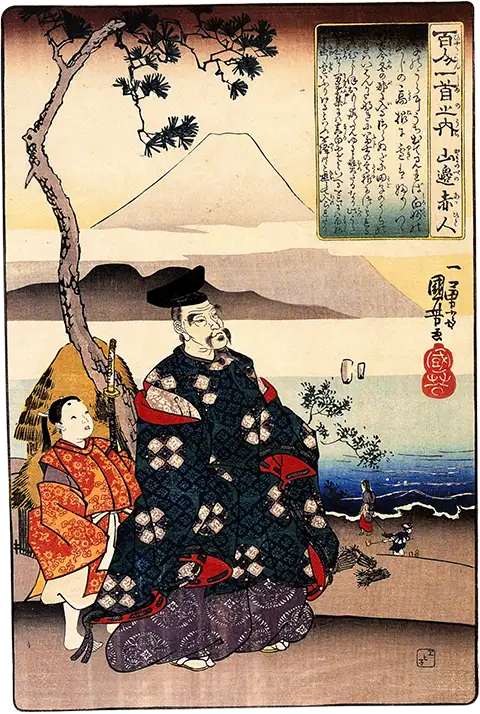
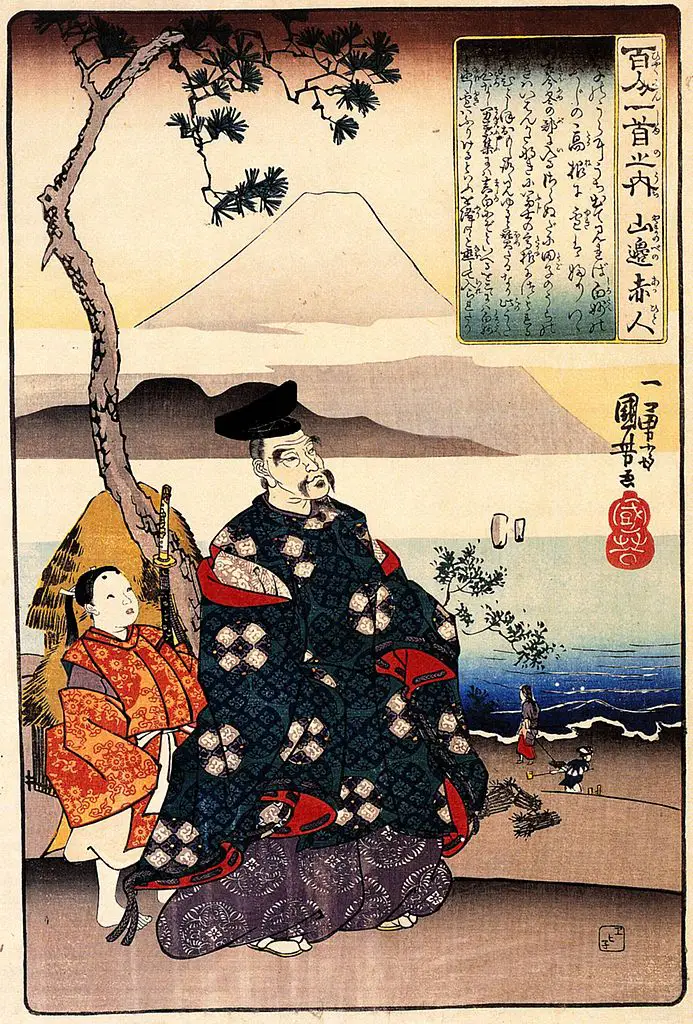
Utagawa Kuniyoshi, Public domain, via Wikimedia Commons This ukiyo-e is by Utagawa Kuniyoshi, an artist of the Edo period.
It shows a scene that matches the poem in the Hyakunin Isshu.By Kuniyoshi's time in the Edo period, Mount Fuji had already calmed down, looking much like what we see from the Shinkansen today.
It gives us a glimpse of a Mount Fuji loved across the ages.