Front of the Card
Back of the Card
Japanese
English
Audio: NHK Creative Library
Read by LibriVox volunteer Larry Wilson.
Audio courtesy of LibriVox
二条院讃岐
わが袖は
潮干に見えぬ
沖の石の
人こそ知らね
かわくまもなし

ひとこそし
らねかわく
まもなし

わがそ


- Poem 92
- わが袖は
潮干に見えぬ
沖の石の
人こそ知らね かわくまもなし
Author: Sanuki, attendant to Retired Emperor Nijō (c. 1141–c. 1217)
Source: Senzai Wakashū, Love
- English Verse Translation
- My sleeve is wet with floods of tears As here I sit and cry; 'Tis wetter than a low-tide
rock,— No one, howe'er he try, Can find a spot that's dry!
— William N. Porter, 1909
- Modern Translation
- My sleeves are like a rock hidden beneath the tides — unseen by others, they are never dry.
- Commentary
- Written on the theme "love compared to a stone," the poem became so famous that she was called "Sanuki of the stone in the offing." Her father, Minamoto no Yorimasa, had compared a tear-soaked pillow to a rock under the tide, and the poem also borrows from a poem by Izumi Shikibu.
- About the Poet
- Sanuki served Emperor Nijō and later Gishūmon-in, empress of Go-Toba. She was ranked with Princess Shikishi as a master of waka. In 1180 her father and brothers joined Prince Mochihito's revolt against the Taira and died, and she later became a nun.
- Poem Illustration
-
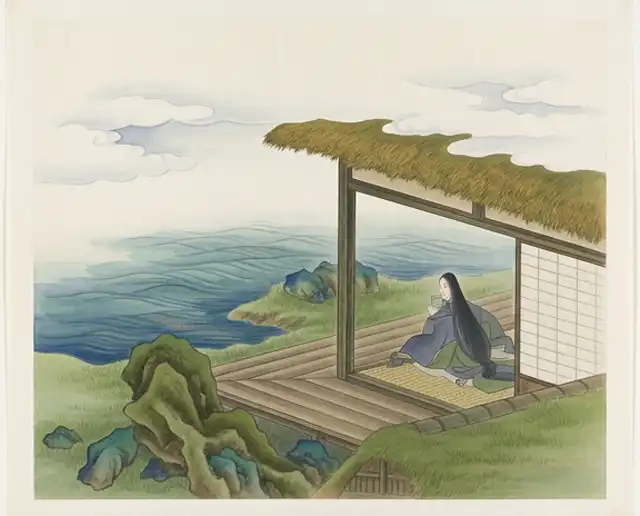
This image is based on an illustration from William N. Porter's A Hundred Verses from Old Japan, his 1909 English translation of the Hyakunin Isshu published in England, colorized and reworked using Adobe Firefly (generative AI).
- Sanuki of Nijō-in: A Short Timeline
-
- c. 1141
- Born as a daughter of Minamoto no Yorimasa
- c. 1158
- Serves at Emperor Nijō's palace as a lady-in-waiting
- 1180
- Her father Yorimasa and her elder brother die in battle at Uji
- c. 1190
- Serves Ninshi, empress of Emperor Go-Toba
- 1200
- Becomes one of the poets of the First Shōji Hundred-Poem Sequence
- 1216
- Takes part in a palace poetry contest
- c. 1217
- Dies
- Sanuki's Family Tree
-
Sanuki served Emperor Nijō as a lady-in-waiting. After Emperor Nijō died, she is said to have married Fujiwara no Shigeyori (there are several theories) and had Shigemitsu and Ariyori, and later to have served Gishūmon-in (Kujō Taeko), the empress of Emperor Go-Toba.
Her father, Minamoto no Yorimasa, joined Prince Mochihito's uprising together with his sons, but they were defeated by the Taira; some died in battle and others killed themselves.
Because of this, Sanuki is said to have gone to live in Miyagawa Village, Onyū District (now the Miyagawa area of Obama City), which had been her father's land.
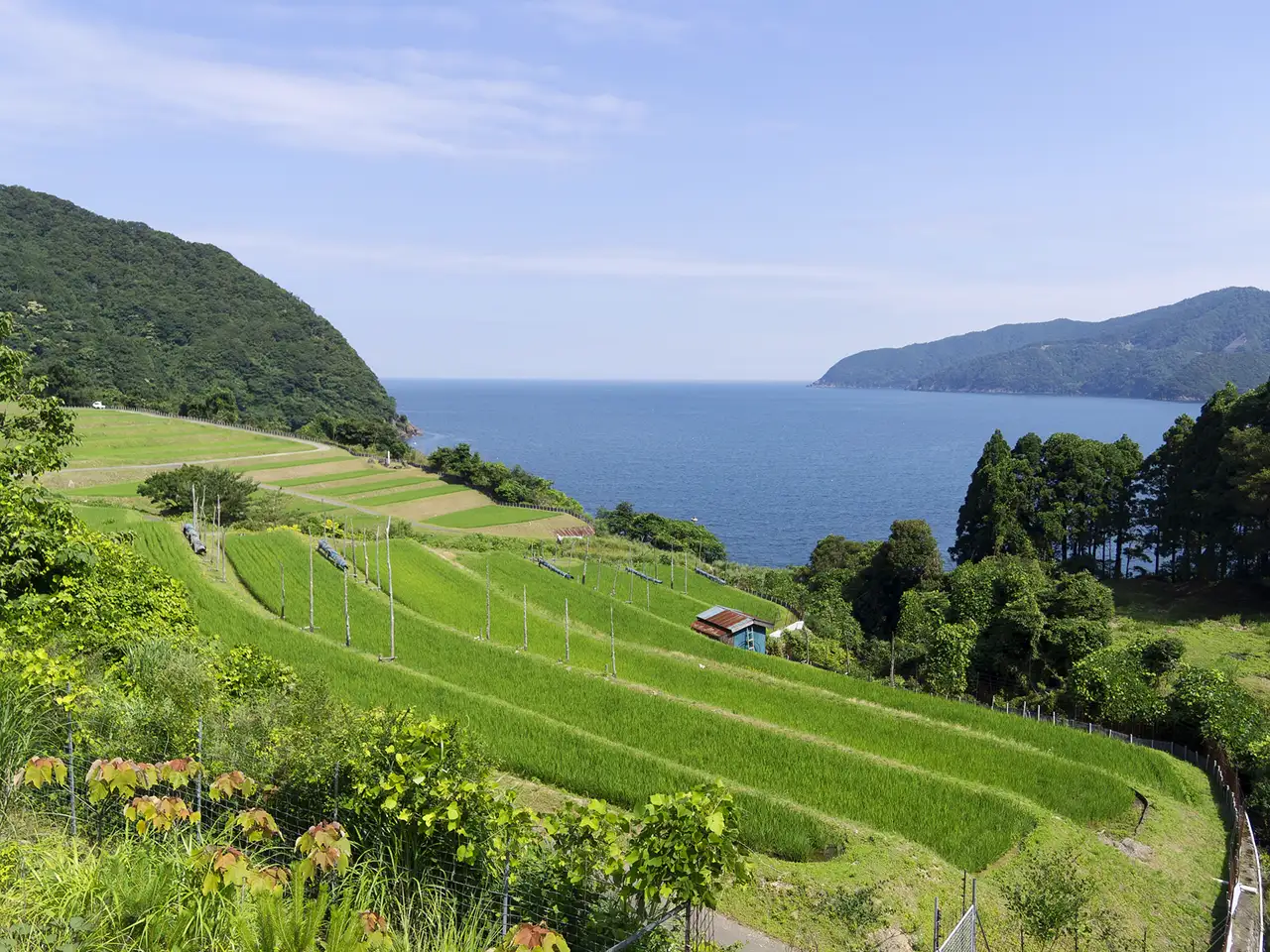
That place is Tagarasu in Fukui Prefecture, on the coast of Wakasa Bay. With little flat land there, it is famous for the Tagarasu terraced rice fields, cut into the hills. In one corner of the terraces stands a stone marking "the site of Lady Nijō-in Sanuki's residence."
It is said that Sanuki wrote her Hyakunin Isshu poem, "Waga sode wa shiohi ni mienu oki no ishi no...," while gazing from there at a rocky reef called "Oki no Ishi" (the stone in the offing), 2 km off the shore.
If this story is true, the "stone in the offing" in her poem was not under the sea, but a reef that is always being hit by waves and never has time to dry.
- Appendix
-
- The Original Poem (Honka)
- Sanuki borrowed (honkadori) from the next poem to write her poem about the stone in the offing.
In Japanese
わが袖は 水の下なる 石なれや
人に知られで かわく間もなし wagasodeha mizunoshitanaru ishinareya
hitonishirarede kawakumamonashi Izumi Shikibu-shū, Izumi ShikibuIn English
My sleeves are like a stone under the water. Wet with the tears I shed in secret, they never have time to dry.
- The Tagarasu Terraced Rice Fields,
Site of Sanuki's Residence -
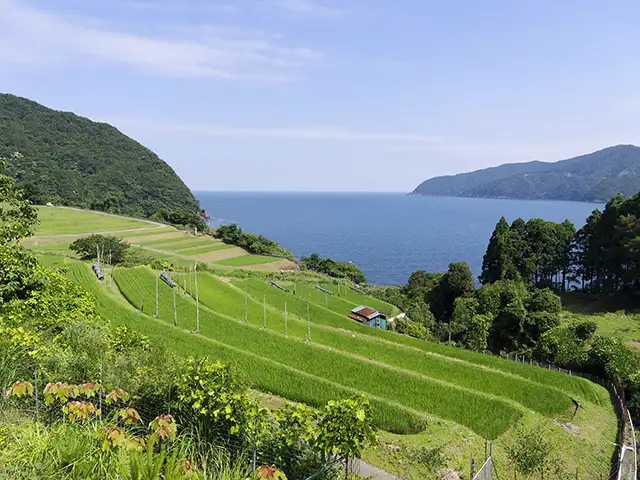
The Tagarasu terraced rice fields in Obama City, Fukui Prefecture. The Sea of Japan can be seen in the distance, and 2 km off the shore is a rocky reef called "Oki no Ishi." See it on the map
- "Oki no Ishi" as an Utamakura
-
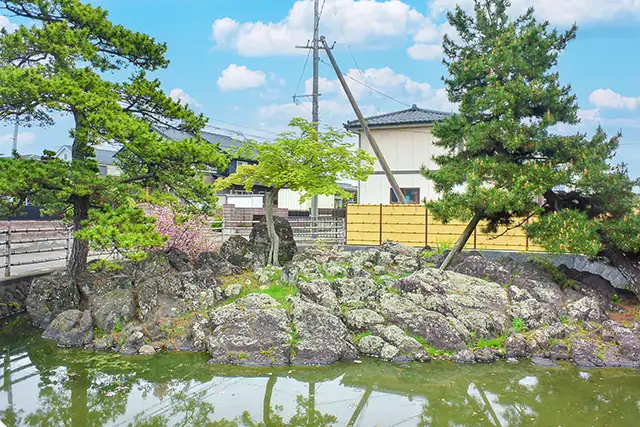
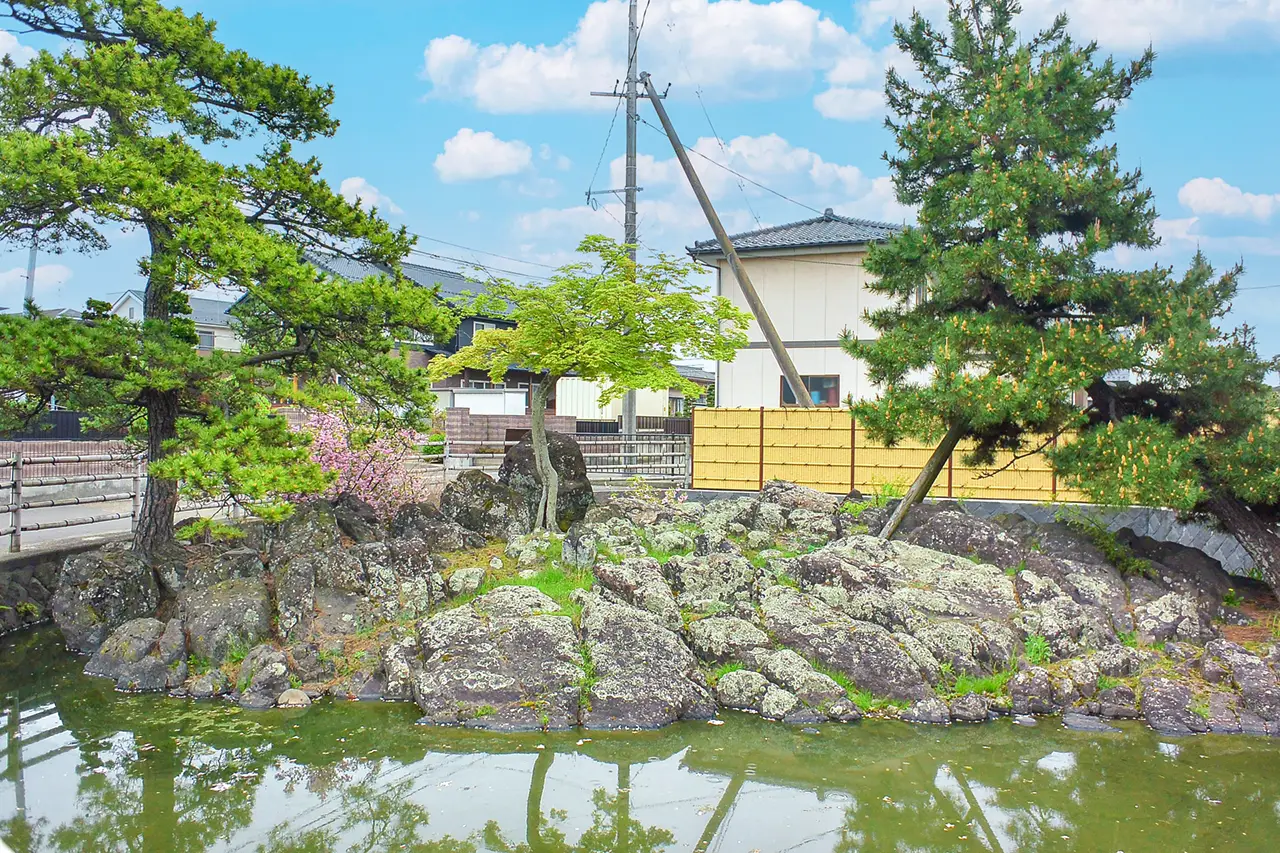
"Oki no Ishi" is an utamakura (a famous place in poetry) in Tagajō City, Miyagi Prefecture.
Matsuo Bashō also visited it. See it on the map - Minamoto no Yorimasa's Poem That Inspired Sanuki
- Sanuki's father, Minamoto no Yorimasa, was also a famous poet.
It is said that Sanuki may have been inspired by the next poem when she wrote her poem about the stone in the offing.In Japanese
ともすれば 涙にしづむ 枕かな
潮満つ磯の 石ならなくに tomosureba namidanishizumu makurakana
shiomitsuisono ishinaranakuni Yorimasa-shū, Minamoto no YorimasaIn English
At times my pillow seems to sink, soaked with tears, though it is not a stone on the shore that sinks when the tide comes in.
- Minamoto no Yorimasa's Death Poem
- Sanuki's father, Minamoto no Yorimasa, joined Prince Mochihito's uprising but was defeated by the Taira.
The next poem was written by Yorimasa just before he killed himself, cornered by the Taira.In Japanese
埋木の 花咲くことも なかりしに
身のなる果てぞ 悲しかりける umoregino hanasakukotomo nakarishini
minonaruhatezo kanashikarikeru The Tale of the Heike, Minamoto no YorimasaIn English
Like buried wood that never blooms, I, an old man, joined an uprising with no hope of winning, and how sad that it has ended like this, against my wishes.
- The Slaying of the Nue
-
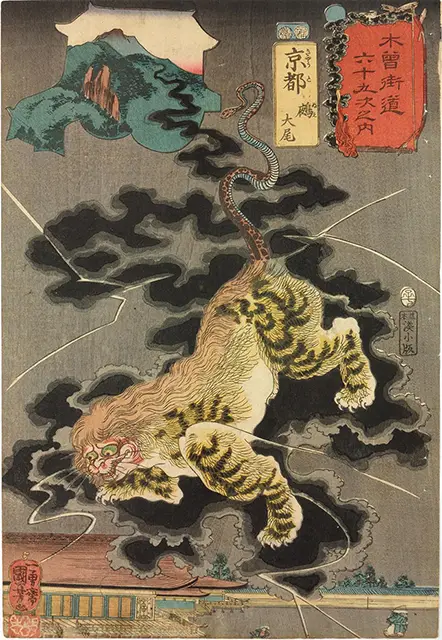
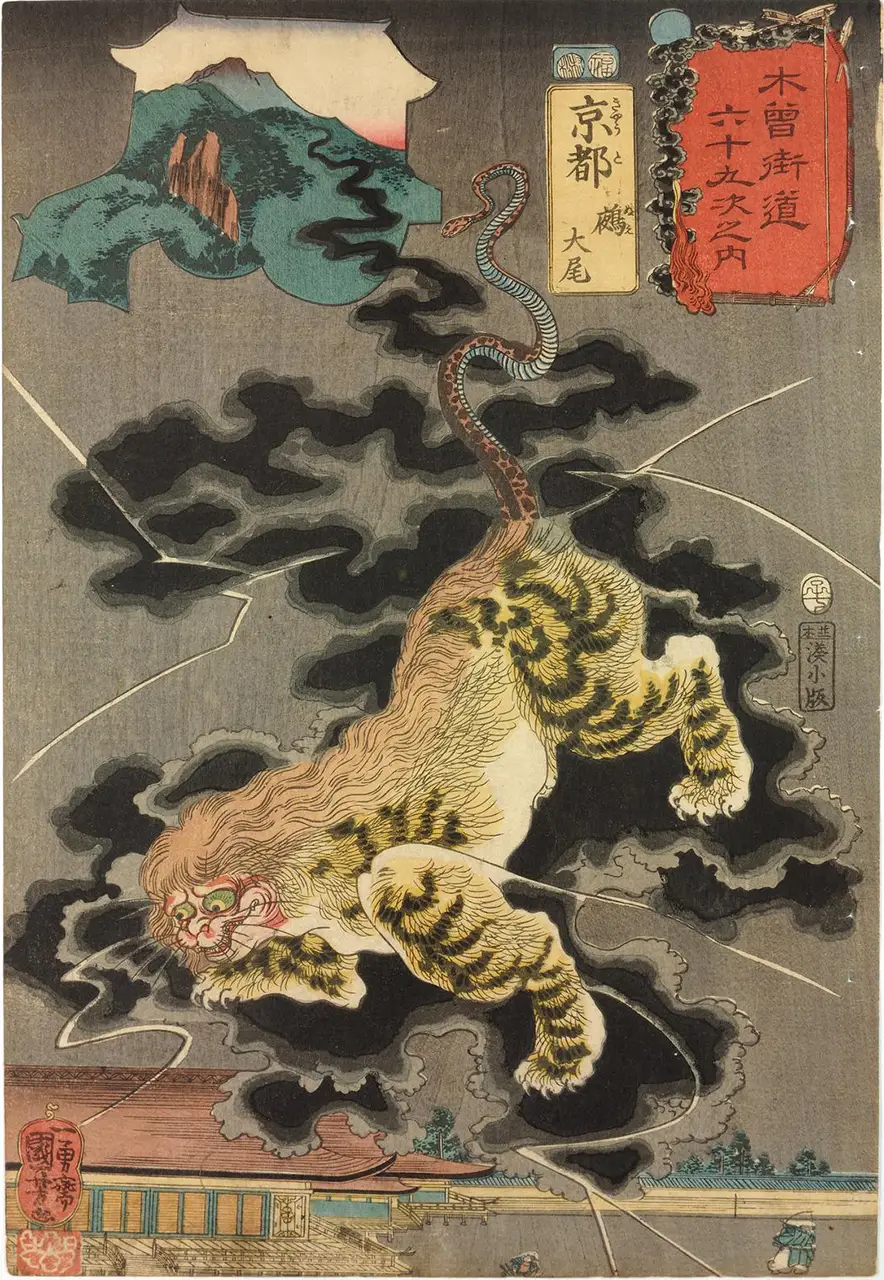
British Museum, Public domain, via Wikimedia Commons The nue is a monster with the head of a monkey, the body of a raccoon dog, the limbs of a tiger, and a snake for a tail. In the late Heian period, a nue appeared every night at the hour of the ox (around 2 a.m.) over the Seiryōden, the emperor's living quarters, and troubled the emperor with its eerie cries.
Sanuki's father, Minamoto no Yorimasa, a master archer, was ordered to get rid of it, and he is said to have shot and killed the nue. It is thought that the nue was really a scaly thrush (toratsugumi), a bird that calls at night in the breeding season.
Audio: Springin’ Sound Stock