Front of the Card
Back of the Card
Japanese
English
Audio: NHK Creative Library
Read by LibriVox volunteer Larry Wilson.
Audio courtesy of LibriVox
式子内親王
玉の緒よ
絶えなば絶えね
ながらへば
忍ぶることの
弱りもぞする
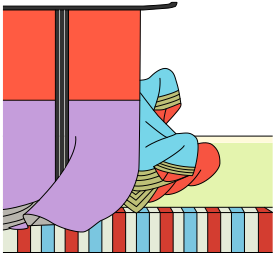
しのふるこ
とのよわり
もそする

たま


- Poem 89
- 玉の緒よ
絶えなば絶えね
ながらへば
忍ぶることの 弱りもぞする
Author: Princess Shikishi (1149–1201)
Source: Shin Kokin Wakashū, Love
- English Verse Translation
- The ailments of advancing years Though I should try to hide, Some day the thread will
break, the pearls Be scattered far and wide; Age cannot be defied.
— William N. Porter, 1909
- Modern Translation
- Let my life end now, if it must. For if I go on living, my power to endure this secret love may weaken.
- Commentary
- Written on the theme "hidden love." As a Kamo priestess serving the gods, Princess Shikishi could not love openly, so her own life makes the theme of hidden love deeply convincing.
- About the Poet
- Princess Shikishi was the third daughter of Retired Emperor Go-Shirakawa. She served as Kamo priestess from her teens to her early twenties and was never free to love. She lost family one after another and was even suspected of cursing someone. Yet she wrote many beautiful poems, and has 49 in the Shin Kokin Wakashū, the most of any woman.
- Poem Illustration
-
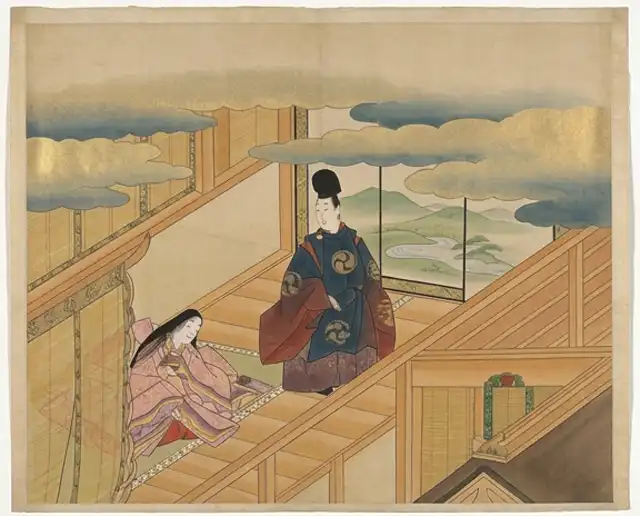
This image is based on an illustration from William N. Porter's A Hundred Verses from Old Japan, his 1909 English translation of the Hyakunin Isshu published in England, colorized and reworked using Adobe Firefly (generative AI).
- Princess Shikishi: A Short Timeline
-
- 1149
- Born as a daughter of Emperor Go-Shirakawa
- 1159
- Becomes the Kamo Priestess, serving the Kamo Shrines
- 1169
- Leaves the post because of illness
- 1192
- Her father, Retired Emperor Go-Shirakawa, dies
- 1200
- Presents poems for the First Shōji Hundred-Poem Sequence at Retired Emperor Go-Toba's request
- 1201
- Dies
- Princess Shikishi's Family Tree
-
Princess Shikishi was the third daughter of Emperor Go-Shirakawa and Fujiwara no Shigeko. In 1159 she was appointed Kamo priestess (saiin), and for ten years, until she left the post because of illness in 1169, she lived a life of service to the gods.
After that, in 1171, her younger sister Princess Yasuko died at only 15, and in 1177 her mother Shigeko died. Then, in 1179, Taira no Kiyomori confined her father, Emperor Go-Shirakawa, and his rule as retired emperor was stopped. In response, her younger brother Prince Mochihito raised an army in 1180, but he was hit by a stray arrow in the fighting against the Taira and was killed.
Princess Shikishi also lived in the household of her aunt, Princess Akiko (Hachijō-in). But when someone put a curse on Princess Akiko, Shikishi was treated as the culprit. This led her to become a nun.
Despite her troubled life, Princess Shikishi studied waka under Fujiwara no Toshinari and showed great talent. In the Shin Kokin Wakashū, 49 of her poems were chosen, the most of any woman poet.
- Appendix
-
- A Poem from Her Years as Kamo Priestess
- The next poem was written early in the morning when, as Kamo priestess, she took part in the Aoi Festival (the Kamo Festival). On the day before the ceremony, the priestess stayed in a temporary hut called the kandachi to purify herself. The poem sings of the pure morning dew on the fields at daybreak.
In Japanese
忘れめや 葵を草に ひき結び
仮寝の野べの 露のあけぼの wasuremeya aoiokusani hikimusubi
karinenonobeno tsuyunoakebono Shin Kokin Wakashū, Princess ShikishiIn English
How could I forget the sparkle of the dew on the fields at dawn, after a night spent sleeping with aoi leaves tied into my pillow?
- Aoi Leaves
-
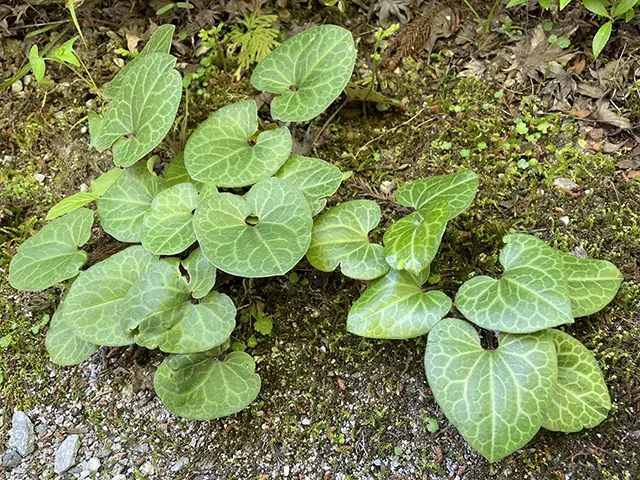
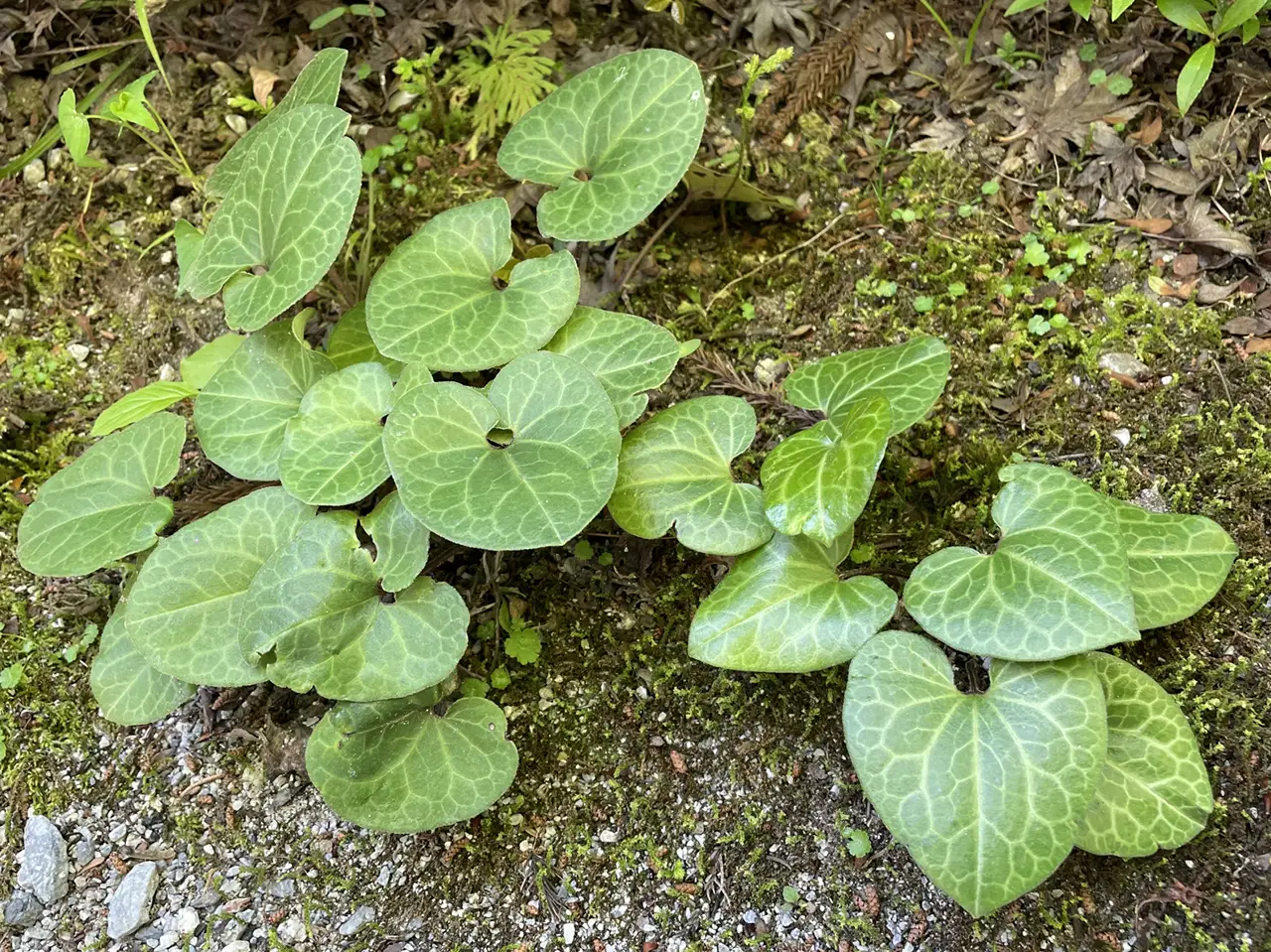
At the Aoi Festival (the Kamo Festival), a decoration called aoi-katsura is used, made by twining small branches of katsura (a symbol of purity) with leaves of futaba aoi (wild ginger).
At the festival, you can see the people taking part wearing this decoration in their hair, and ox carriages decorated with it.
- Poems of the Four Seasons
- Here are some of Princess Shikishi's poems describing scenery.
They capture the beautiful scenes of each season in delicate words.A Poem About the Coming of Spring
In Japanese
山深み 春とも知らぬ 松の戸に
絶え絶えかかる 雪の玉水 yamafukami harutomoshiranu matsunotoni
taedaekakaru yukinotamamizu Shin Kokin Wakashū, Princess ShikishiIn English
A mountain home so deep in the hills that it does not even know spring has come. On its door beneath the pines, drops of melting snow fall now and then, beautiful as jewels.
A Poem About the Feeling of Spring
The poem describes the long-awaited blooming of the cherry blossoms and the feeling of spring in the air.
In Japanese
いま桜 咲きぬとみえて うす曇り
春にかすめる 世のけしきかな imasakura sakinutomiete usugumori
harunikasumeru yonokeshikikana Shin Kokin Wakashū, Princess ShikishiIn English
Now the cherry trees seem to have bloomed. Thin clouds cover the sky,
and the whole world is wrapped in the haze of spring.A Poem About a Summer Evening
The poem describes a fresh summer scene after an evening shower.

In Japanese
夕立の 雲もとまらぬ 夏の日の
かたぶく山に ひぐらしの声 yuudachino kumomotomaranu natsunohino
katabukuyamani higurashinokoe Shin Kokin Wakashū, Princess ShikishiIn English
On a summer day, after the clouds that brought the evening shower have passed,
the cry of the higurashi cicada is heard on the mountain where the sun is setting.A Poem About the End of Summer
It borrows (honkadori) from a poem in The Tales of Ise: "ゆく蛍 雲のうへまで 往ぬべくは 秋風吹くと 雁に告げこせ" (Fireflies flying off, if you can go as high as the clouds, tell the wild geese that the autumn wind is blowing).

In Japanese
秋風と 雁にやつぐる 夕暮の
雲近きまで ゆく蛍かな akikazeto kariniyatsuguru yuugureno
kumochikakimade yukuhotarukana Fūga Wakashū, Princess ShikishiIn English
Are you going to tell the wild geese that the autumn wind is blowing?
Fireflies, flying up so high in the evening that you almost reach the clouds.A Poem About the Autumn Moon
In Japanese
風さむみ 木の葉晴れゆく 夜な夜なに
残るくまなき 庭の月影 kazesamumi konohahareyuku yonayonani
nokorukumanaki niwanotsukikage Shin Kokin Wakashū, Princess ShikishiIn English
Night after night the wind is cold and the leaves fall from the trees,
and the moonlight shines on every corner of the garden.A Poem About the First Snow of Winter
In Japanese
さむしろの 夜半の衣手 さえさえて
初雪白し岡の辺の松 samushirono yowanokoromode saesaete
hatsuyukishiroshiokanobenomatsu Shin Kokin Wakashū, Princess ShikishiIn English
Late at night, on a poor straw mat, even the sleeves of my robe are chilled through. Looking out, I see the pines on the hill white with the first snow.
- Poems of Hidden Love
-
In The Tales of Ise there is a poem: "五月待つ 花橘の 香をかげば 昔の人の 袖の香ぞする" (When I smell the tachibana flowers that wait for the fifth month, I smell the sleeves of someone I once loved). Because of this poem, the scent of tachibana (a kind of citrus) flowers came to be thought of as something that brings back the past. The next poem probably expresses Princess Shikishi's wish that, even if she longed for an old love, she would keep it only within her dreams.

In Japanese
かへり来ぬ 昔を今と おもひ寝の
夢の枕に 匂ふたちばな kaherikonu mukashioimato omohineno
yumenomakurani nihofutachibana Shin Kokin Wakashū, Princess ShikishiIn English
I fell asleep wishing that the past, which will never return, could come back once more, and dreamed. When I woke, the scent of tachibana flowers hung by my pillow.
The next poem tries to keep a love hidden even after death.
In Japanese
君ゆゑと いふ名はたてじ 消はてむ
夜半の煙の すゑまでも見よ kimiyueto ifunahatateji kiehatemu
yowanokemurino suemademomiyo Shoku Gosen Wakashū, Princess ShikishiIn English
I will not let a rumor spread that I died because of my love for you. I will vanish as smoke, but please watch my smoke rising in the night until the very end.