Front of the Card
Back of the Card
Japanese
English
Audio: NHK Creative Library
Read by LibriVox volunteer Larry Wilson.
Audio courtesy of LibriVox
能因法師
嵐吹く
三室の山の
紅葉葉は
竜田の川の
錦なりけり
たつたのか
はのにしき
なりけり

あらし


- Poem 69
- 嵐吹く
三室の山の
紅葉葉は
竜田の川の 錦なりけり
Author: Priest Nōin (988–1050 or 1058)
Source: Go Shūi Wakashū, Autumn
- English Verse Translation
- The storms, which round Mount Mimuro Are wont to howl and scream, Have thickly scattered
maple leaves Upon Tatsuta's stream; Like red brocade they seem.
— William N. Porter, 1909
- Modern Translation
- The storm blows through Mimuro Mountain, and the scattered maple leaves become a brocade on the Tatsuta River.
- Commentary
- Written for a poetry contest at Emperor Go-Reizei's court on the theme "autumn leaves."
- About the Poet
- Priest Nōin studied literature at the court school but became a monk at 26. He loved utamakura, places famous in poetry, and traveled the country writing poems. One story says he tanned himself in the sun to pretend a poem written in Kyoto was written on a journey. Another says his prayer poem brought rain for three days in a drought.
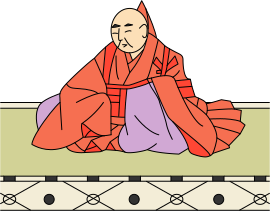
- Poem Illustration
-
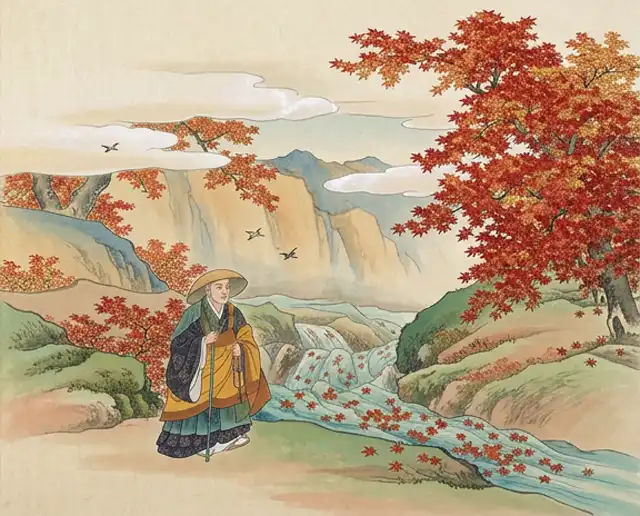
This image is based on an illustration from William N. Porter's A Hundred Verses from Old Japan, his 1909 English translation of the Hyakunin Isshu published in England, colorized and reworked using Adobe Firefly (generative AI).
- Priest Nōin: A Short Timeline
-
- 988
- Born as Tachibana no Nagayasu
- 1013
- Becomes a monk and later takes the name Nōin
- c. 1013
- Lives at Kosobe in Settsu Province
- c. 1025
- Travels through the Tōhoku region
- 1050 or 1058
- Dies
- Priest Nōin's Family Tree
-
Priest Nōin's name before he became a monk was Tachibana no Nagayasu, and his father was Tachibana no Tadamochi, Governor of Ōmi. Nōin became the adopted son (yūshi) of his elder brother, Tachibana no Motoyasu, Governor of Higo. He studied hard and became a student of literature (monjōshō) at the court school, but in 1013, at 26, he became a monk.
There are several theories about why he became a monk, and the reason is not clear.
An elder or younger sister of Nōin married Tachibana no Norinaga, the son of Sei Shōnagon.
- Appendix
-
- A Poem About Spring in Naniwa
-
The next poem is about spring in Settsu Province.
Nōin lived at Kosobe in Settsu Province (today's Takatsuki City, Osaka Prefecture).In Japanese
心あらむ 人にみせばや 津の国の
難波あたりの 春の景色を kokoroaramu hitonimisebaya tsunokunino
naniwaatarino harunokeshikio Go Shūi Wakashū, Priest NōinIn English
I wish I could show it to someone who truly appreciates beauty:
this spring scenery around Naniwa in Settsu Province. - A Poem He Shared After Getting a Suntan
-
Nōin is known as a poet who wrote many travel poems. Here is a funny story. He wrote a poem about the Shirakawa Barrier in today's Fukushima Prefecture, and legend says that, although he had actually stayed in Kyoto, he secretly got a suntan before presenting the poem so that it would look as if he had really traveled there. If the legend is true, he must have had a playful side. The poem describes how the spring haze was rising when he set out, but by the time he reached the Shirakawa Barrier the autumn wind was blowing, giving a sense of a long journey.
In Japanese
都をば 霞とともに たちしかど
秋風ぞ吹く 白河の関 miyakooba kasumitotomoni tachishikado
akikazezofuku shirakawanoseki Go Shūi Wakashū, Priest NōinIn English
I left the capital together with the spring haze,
but the autumn wind is blowing by the time I reach the Shirakawa Barrier. - A Poem About Kisakata
-
Nōin is said to have lived in retirement for three years at Kisakata, in today's Nikaho City, Akita Prefecture. Already a famous poetic place in his day, it may have been a place he especially longed for. Kyoto and Kisakata are more than about 700 km apart even in a straight line. Considering travel at the time, it was truly a journey that risked his life. That he still went to see the famous place with his own eyes and put the scenery into poems shows that he was a true sukimono (a devotee of the arts).
In Japanese
世の中は かくても経けり 象潟の
海士の苫屋を わが宿にして yononakaha kakutemohekeri kisakatano
amanotomayao wagayadonishite Go Shūi Wakashū, Priest NōinIn English
So one can live in this world even like this, making a fisherman's rough hut at Kisakata one's home.
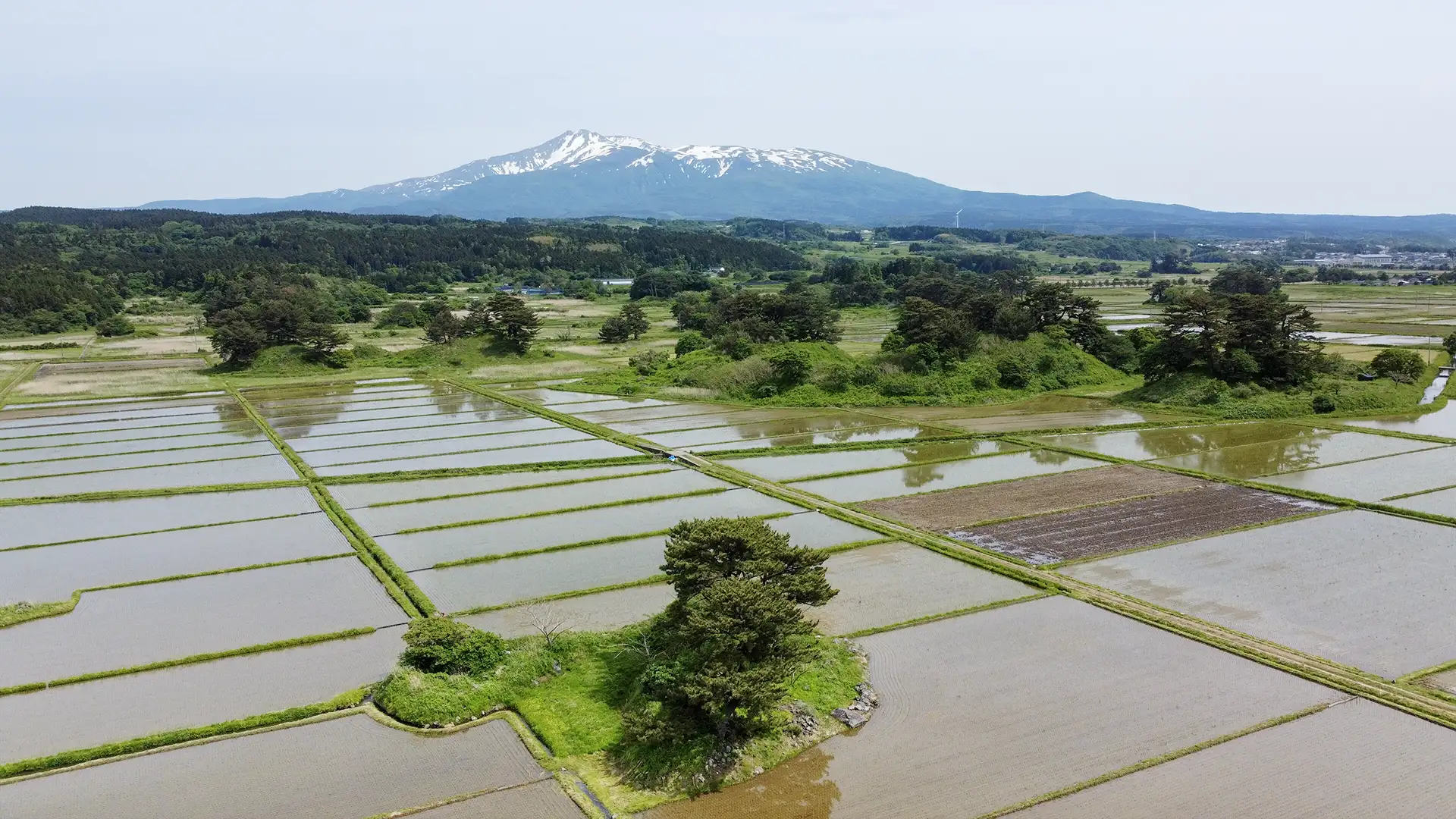
- Kisakata, Nikaho City, Akita Prefecture
-
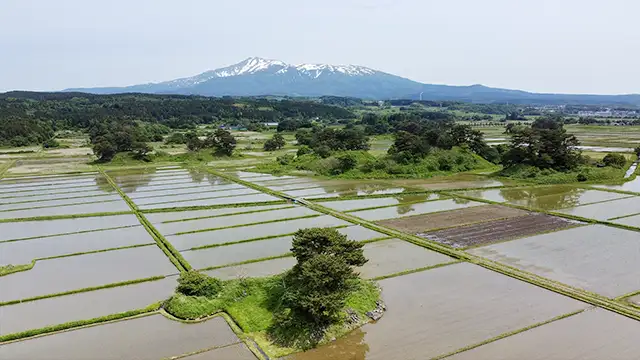
Photo: らんで (Rande), CC BY 4.0 <https://creativecommons.org/licenses/by/4.0>, via Wikimedia Commons Kisakata in Nikaho City, Akita Prefecture, was once a scenic inlet of the Sea of Japan dotted with islands. An earthquake in 1804 lifted the sea floor, and today the islands stand among rice paddies, a unique landscape. These islands are known as "Kujūkushima" (Ninety-Nine Islands), which keep the memory of the old days. Nōin is said to have stayed here for about three years in the Heian period, and in his memory one of the islands is named "Nōin Island." This beautiful scenery was later loved by Saigyō, Matsuo Bashō, and many other writers and artists.
- A Poem Praying for Rain
-
When Nōin was in Iyo Province and saw farmers suffering from drought, he prayed for rain at Mishima Shrine and offered the next poem. Nawashiro-mizu is the water poured into a nawashiro (a seedbed for rice). It is said that when Nōin prayed for rain, it rained for three days and three nights, and the villagers sent him rice cakes (mochi) to thank him.
In Japanese
天の川 苗代水を 堰くだせ
天下ります 神ならば神 amanogawa nawashiromizuo sekikudase
amakudarimasu kaminarabakami Kin'yō Wakashū, Priest NōinIn English
Open the weir of the Heavenly River and let water flow down into the rice seedbeds, if you are a god who sends rain from heaven.
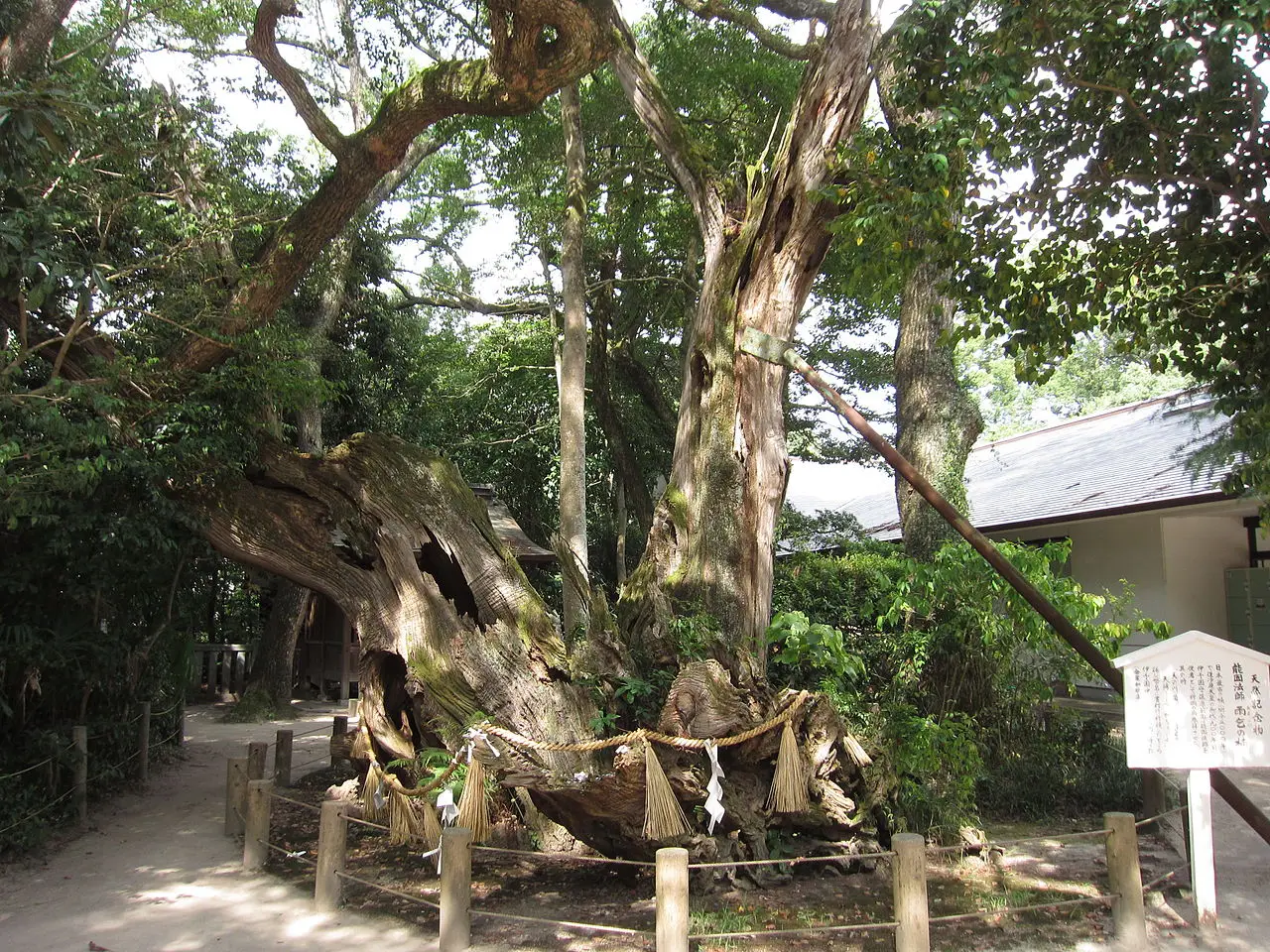
- The Camphor Tree Where Nōin Prayed for Rain
-
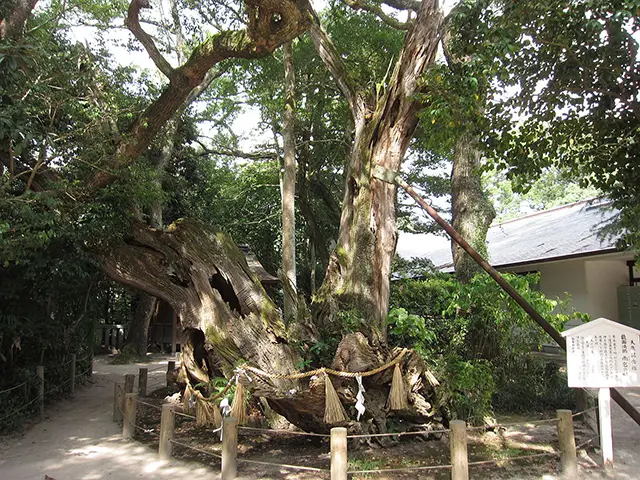
Saigen Jiro, CC0, via Wikimedia Commons The "Camphor Tree Where Priest Nōin Prayed for Rain" stands in the grounds of Ōyamazumi Shrine (Ōmishima-chō, Imabari City, Ehime Prefecture). It is a giant tree, 10 m tall with a trunk 10 m around. It has now died, but people still come to see it and think of the old days.
When Nōin prayed for rain, he is said to have hung a heihaku with his poem written on it on this camphor tree.
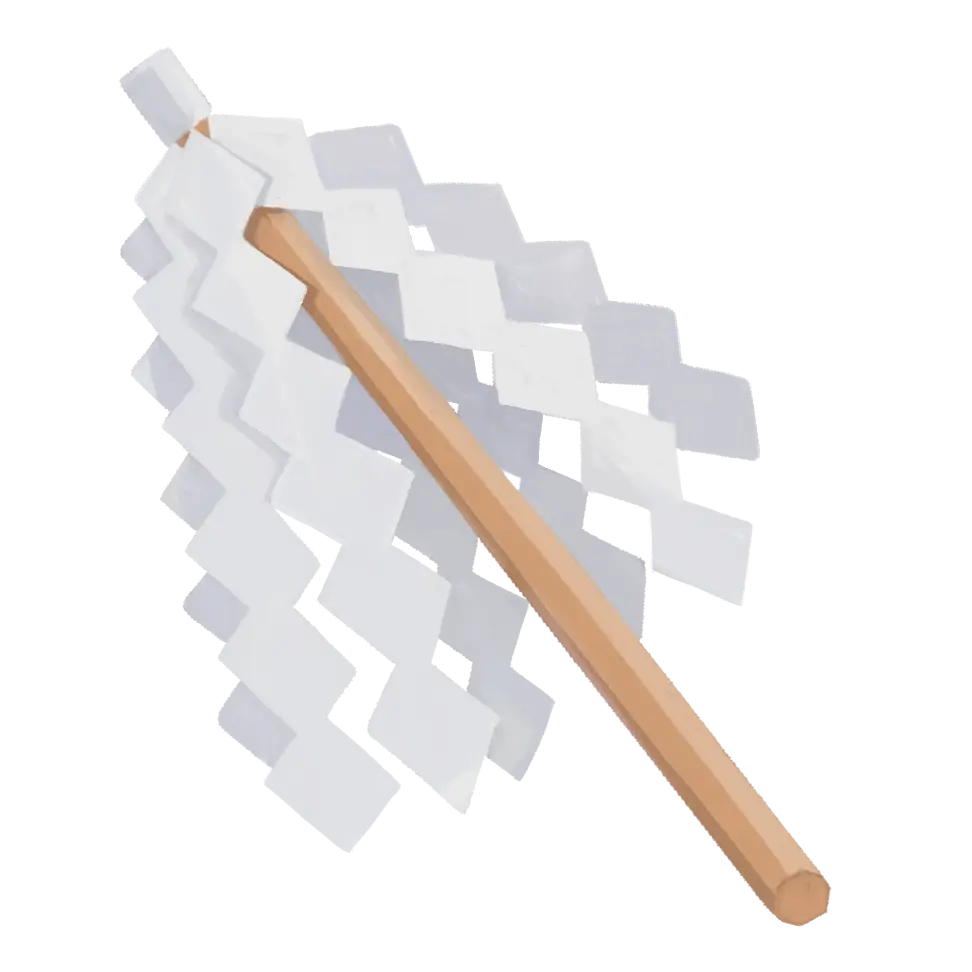
A heihaku is an offering to the gods: a Shinto ritual tool made of strips of cut paper, hemp, or other material hung down.
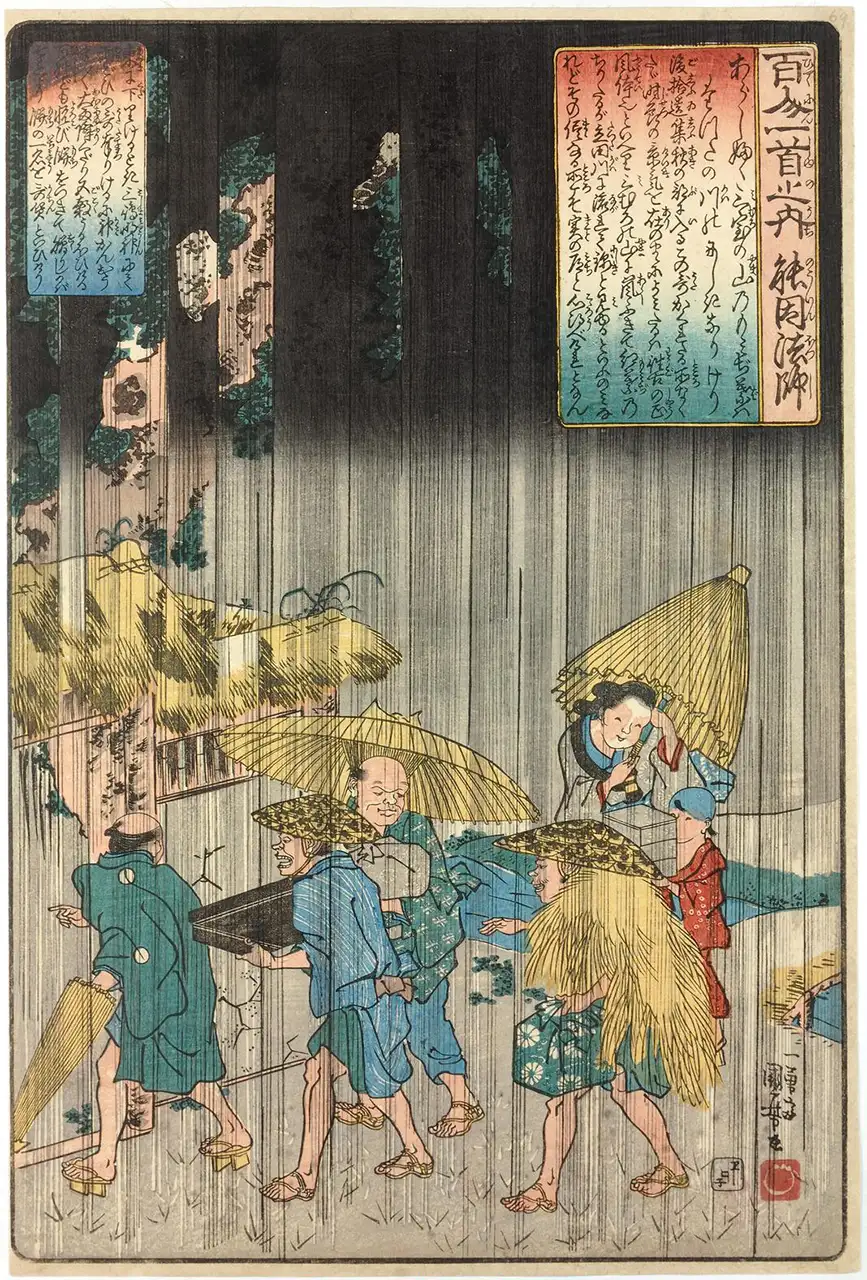
- Utagawa Kuniyoshi's Hyakunin Isshu no Uchi
-
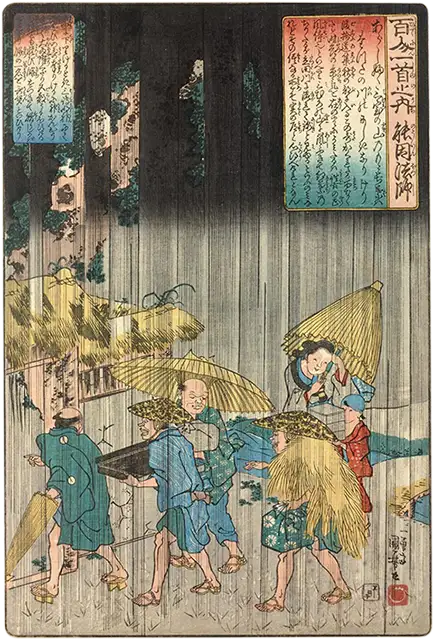
British Museum, Public domain, via Wikimedia Commons This ukiyo-e print is by Utagawa Kuniyoshi, an artist of the Edo period.
It shows a scene to go with the Hyakunin Isshu poem.The picture is thought to show villagers bringing rice cakes to thank Nōin, who prayed for rain in Iyo Province and brought rain for three days and three nights.