Front of the Card
Back of the Card
Japanese
English
Audio: NHK Creative Library
Read by LibriVox volunteer Larry Wilson.
Audio courtesy of LibriVox
清原元輔
契りきな
かたみに袖を
しぼりつつ
末の松山
波こさじとは
すゑのまつ
やまなみこ
さしとは

ちぎりき


- Poem 42
- 契りきな
かたみに袖を
しぼりつつ
末の松山 波こさじとは
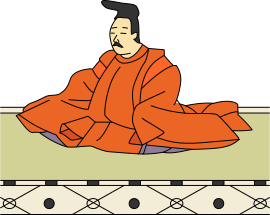
Author: Kiyohara no Motosuke (908–990)
Source: Go Shūi Wakashū, Love
- English Verse Translation
- Our sleeves, all wet with tears, attest That you and I agree That to each other we'll be true,
Till Pine-tree Hill shall be Sunk far beneath the sea.
— William N. Porter, 1909
- Modern Translation
- We promised each other, wringing out our tear-soaked sleeves, that our love would last forever, never to be swept away like the waves beyond Suenomatsu.
- Commentary
- Sue-no-Matsuyama is a scenic spot near the coast in Tagajō, Miyagi Prefecture. It was said that even a great tsunami could never cross it, and it appears in many poems. Here it stands for love that never changes.
- About the Poet
- Kiyohara no Motosuke helped compile the Gosen Wakashū. He was the grandson of Kiyohara no Fukayabu, and his daughter was Sei Shōnagon, author of The Pillow Book. She respected him so much that she said she would not write poems for fear of shaming his name.
- Poem Illustration
-
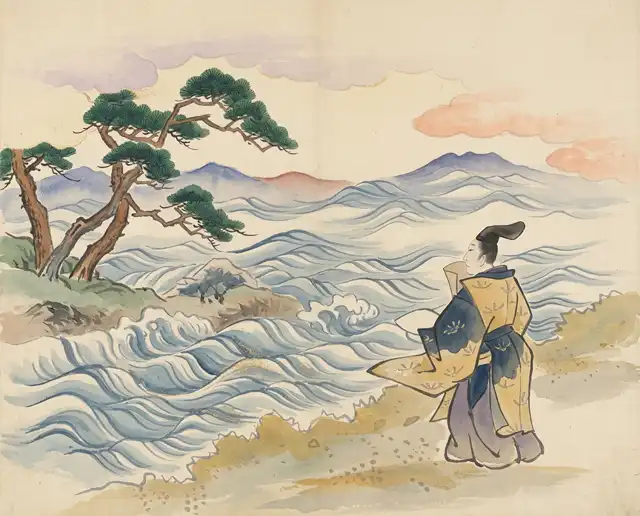
This image is based on an illustration from William N. Porter's A Hundred Verses from Old Japan, his 1909 English translation of the Hyakunin Isshu published in England, colorized and reworked using Adobe Firefly (generative AI).
- Kiyohara no Motosuke: A Short Timeline
-
- 908
- Born
- 951
- As one of the Five Men of the Pear Pavilion, helps compile the Gosen Wakashū
- 961
- Becomes a junior inspector of the Ministry of Central Affairs
- 967
- Becomes a senior secretary in the Ministry of Popular Affairs
- 969
- Given Junior Fifth Rank, Lower Grade, and becomes Acting Governor of Kawachi Province
- 974
- Becomes governor of Suō Province
- 980
- Given Junior Fifth Rank, Upper Grade
- 986
- Becomes governor of Higo Province
- 990
- Dies in Higo
- Notes
-
- Counted as one of the Thirty-Six Immortal Poets
- Kiyohara no Motosuke's Family Tree
-
The Kiyohara clan includes many descendants of Prince Toneri, a son of Emperor Tenmu. Like his grandfather, Kiyohara no Fukayabu, Kiyohara no Motosuke was a master of waka. On the orders of Emperor Murakami, he compiled the Gosen Wakashū together with Ōnakatomi no Yoshinobu, Minamoto no Shitagō, Sakanoue no Mochiki, and Ki no Tokibumi (Ki no Tsurayuki's son). They worked in the Shōyōsha, a building in the women's quarters of the palace. Because pear trees grew in its garden, they were called the "Five Men of the Pear Pavilion" (Nashitsubo no Gonin).
Motosuke had his daughter, Sei Shōnagon, when he was about 58. He lived a very long life for his time, reaching the age of 83.
- Appendix
-
- The Source Poem (Honka)
- Motosuke's Hyakunin Isshu poem is based on the following poem.
The original is a poem that vows love that never changes.In Japanese
君をおきて あだし心を 我が持たば
末の松山 波も越えなむ kimiookite adashigokoroo wagamotaba
suenomatsuyama namimokoenamu Kokin Wakashū, AnonymousIn English
If I should ever give my heart to anyone but you,
the waves would surely cross Sue-no-Matsuyama, which no wave ever crosses. - Sue-no-Matsuyama (Tagajō, Miyagi Prefecture)
-
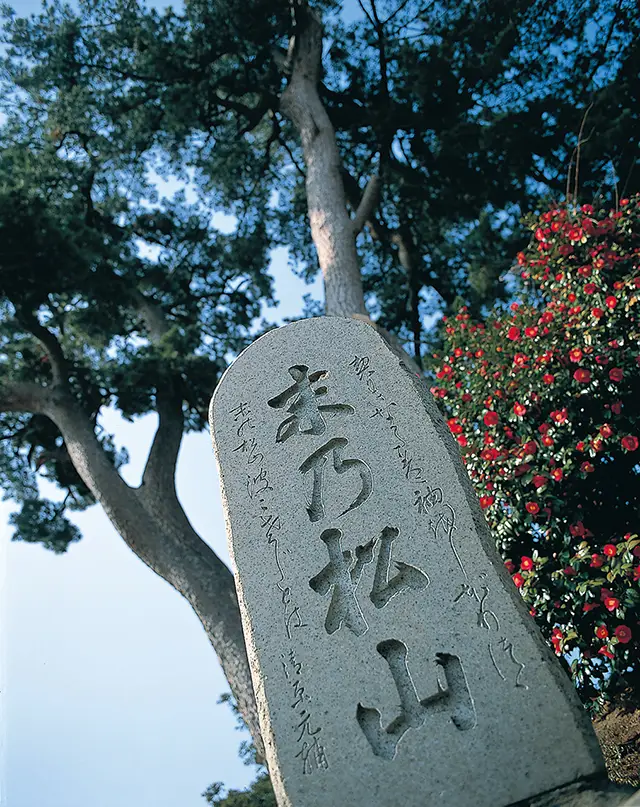
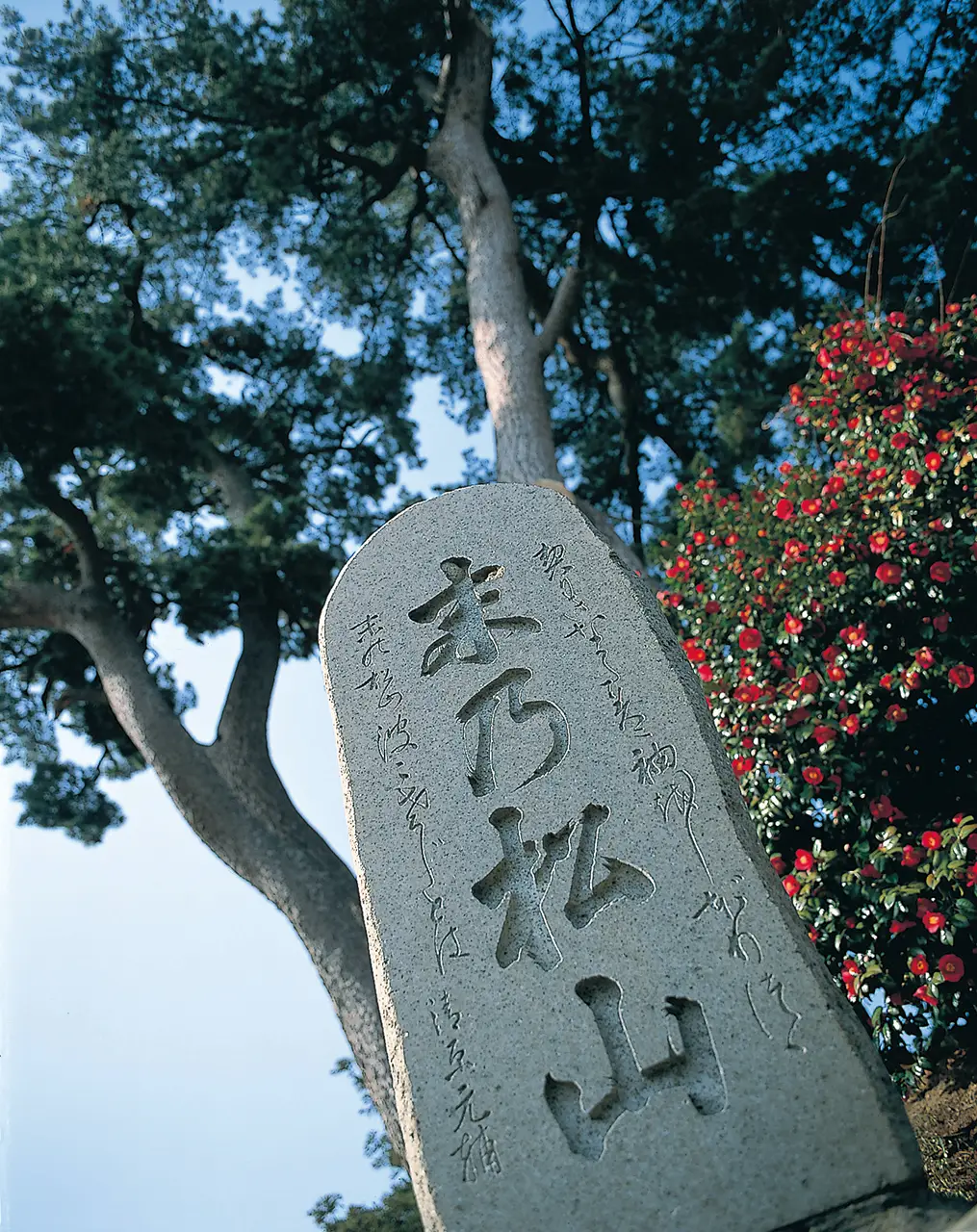
Photo: Miyagi Prefecture Tourism Promotion Office A small hill in Tagajō, Miyagi Prefecture.
In 869, the Jōgan Earthquake struck, as large as the Great East Japan Earthquake of 2011. Even then, the tsunami did not go over Sue-no-Matsuyama, so in waka it was often used as an image of something that could never happen. During the Great East Japan Earthquake, the town around Sue-no-Matsuyama was flooded up to 2 meters deep, but news reports said that the people who took shelter on the hill were safe.
See it on the map - Sue-no-Matsuyama (Tagajō):
The Lay of the Land -
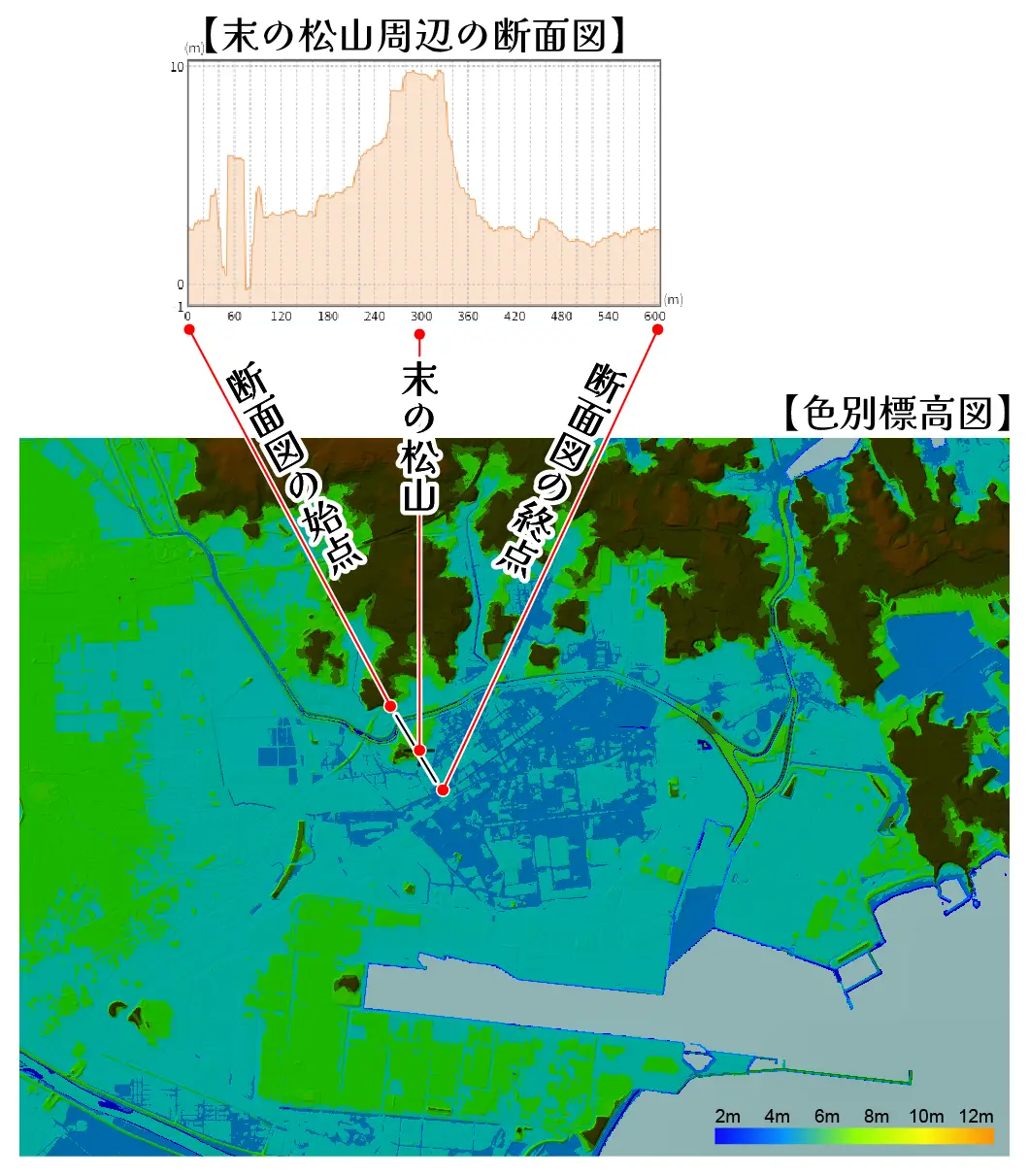
Source: made from GSI Maps (Geospatial Information Authority of Japan) Motosuke wrote "nami kosaji" (no wave will cross it). Is Sue-no-Matsuyama really a place that waves cannot cross? We used the map website of the Geospatial Information Authority of Japan to show the land around it.
The cross-section and the color-coded elevation map show that the Sue-no-Matsuyama area rises a little higher than the land around it.
Just as its name ("pine hill") suggests, pine trees still grow on Sue-no-Matsuyama today. Perhaps there were pines here in the Heian period too. Pines, a symbol of long life, and a place no wave can cross: perhaps because of these images of things that never change, Sue-no-Matsuyama became an utamakura (a famous place in poetry) for poems about unchanging love.
- Sue-no-Matsuyama (Ichinohe, Iwate Prefecture)
-
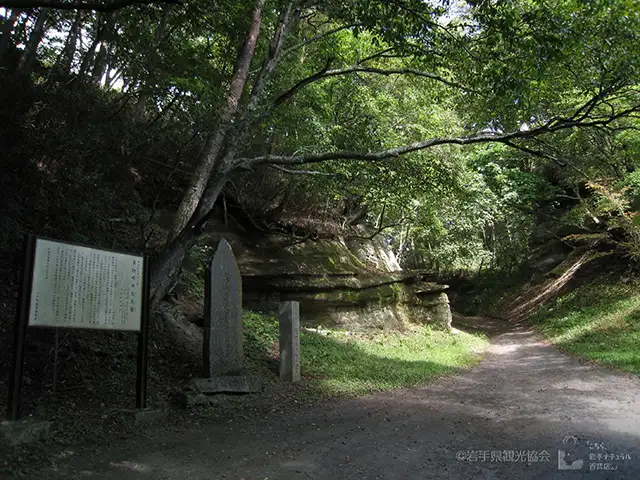
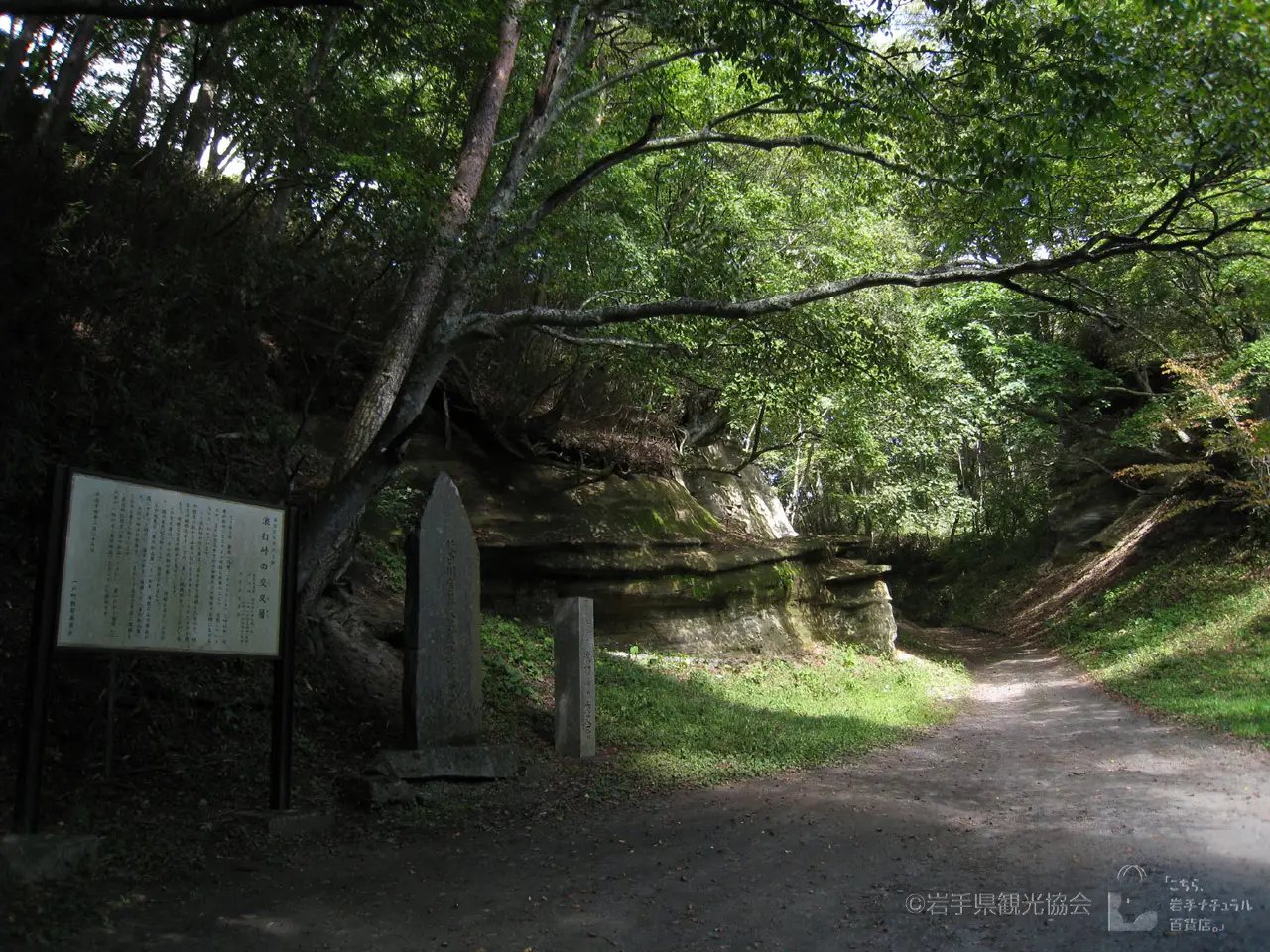
Photo: Iwate Prefecture Tourism Association Ichinohe, Iwate Prefecture, between Ichinohe and Fukuoka, two post towns on the old Ōshū Kaidō road. Tagajō in Miyagi Prefecture is thought to be the most likely site of Sue-no-Matsuyama, but one theory says it is Namiuchi Pass in Ichinohe.
See it on the map - Utagawa Kuniyoshi's Hyakunin Isshu no Uchi
-
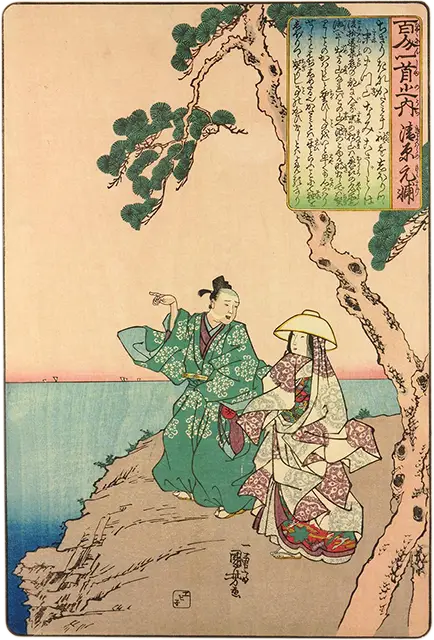
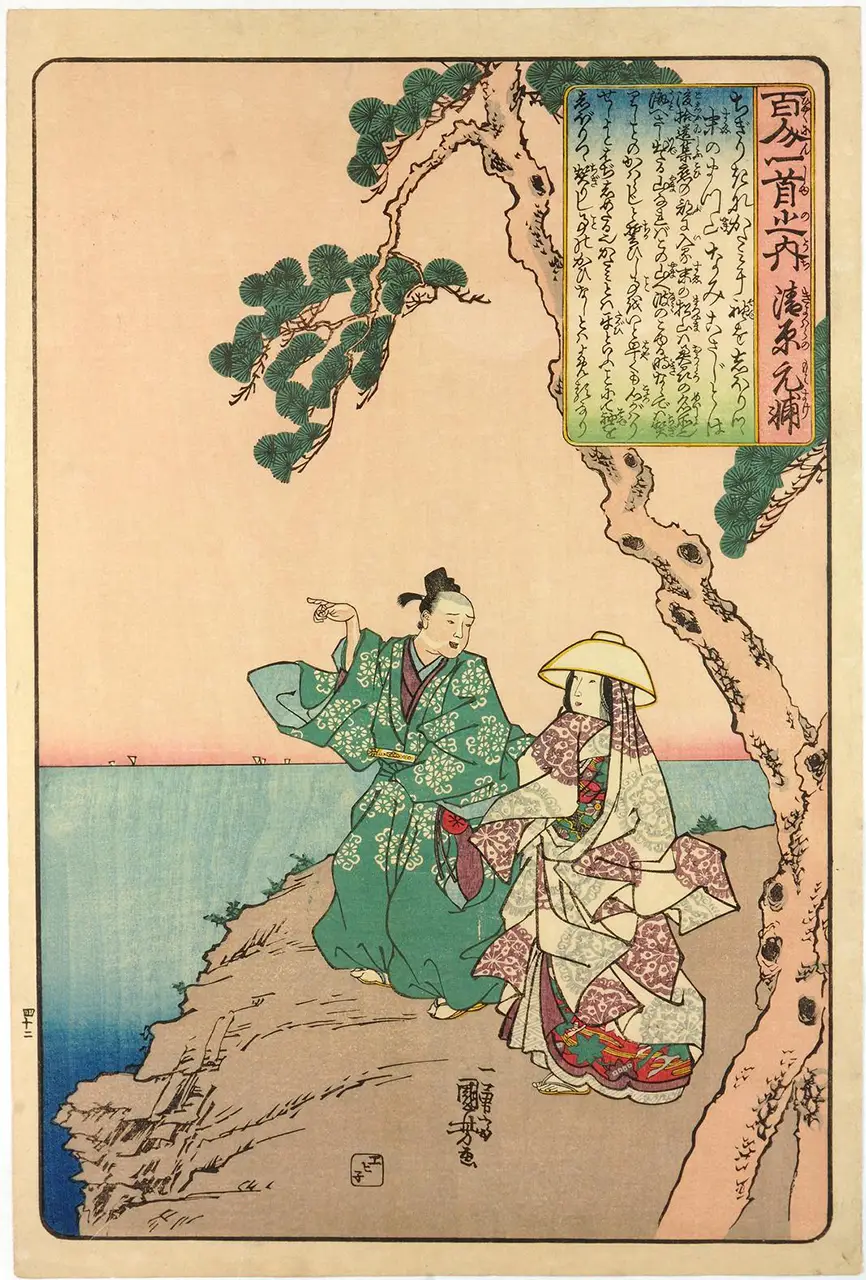
British Museum, Public domain, via Wikimedia Commons This ukiyo-e print is by Utagawa Kuniyoshi, an artist of the Edo period.
It shows a scene to go with the Hyakunin Isshu poem.
Because pine trees are drawn near the sea, Kuniyoshi probably had in mind Sue-no-Matsuyama in Tagajō, Miyagi Prefecture, near Sendai Port.