Front of the Card
Back of the Card
Japanese
English
Audio: NHK Creative Library
Read by LibriVox volunteer Larry Wilson.
Audio courtesy of LibriVox
祐子内親王家紀伊
音に聞く
高師の浜の
あだ波は
かけじや袖の
ぬれもこそすれ
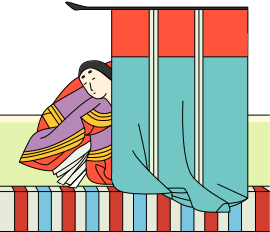
かけしやそ
てのぬれも
こそすれ

おと


- Poem 72
- 音に聞く
高師の浜の
あだ波は
かけじや袖の ぬれもこそすれ
Author: Kii of Princess Yūshi's Household (dates unknown)
Source: Kin'yō Wakashū, Love
- English Verse Translation
- The sound of ripples on the shore, E'er fails at Takashi; My sleeves all worn and wet with
tears, Should surely prove to thee, too, will constant be.
— William N. Porter, 1909
- Modern Translation
- I have heard how fickle the waves at Takashi Beach are. I will not let them wet my sleeves — I will keep my heart guarded.
- Commentary
- Written for the Horikawa love-letter contest, where men sent love poems and women replied. Fujiwara no Toshitada, 29, wrote that he secretly loved her and wished to tell her at night, as waves come in on the shore wind. Kii, over 70, replied smartly that she would not trust such fickle waves.
- About the Poet
- Kii served Princess Yūshi, a daughter of Emperor Go-Suzaku, and was active as a poet for many years. Some records say she was the sister or wife of Fujiwara no Shigetsune, governor of Kii, and her name probably comes from that post.
- Poem Illustration
-
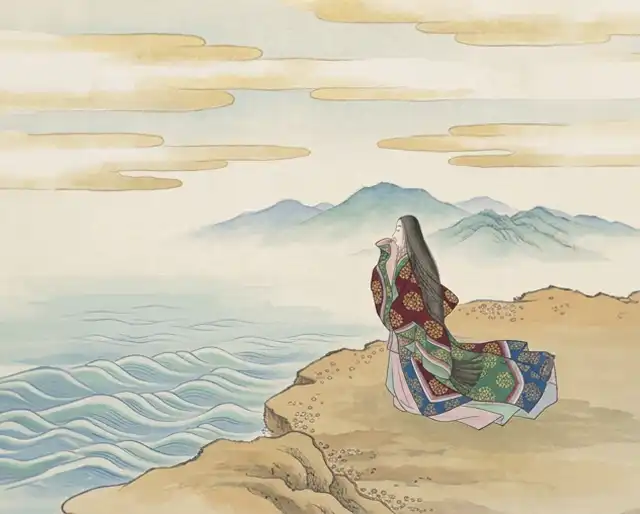
This image is based on an illustration from William N. Porter's A Hundred Verses from Old Japan, his 1909 English translation of the Hyakunin Isshu published in England, colorized and reworked using Adobe Firefly (generative AI).
- Kii of Princess Yūshi's Household: A Short Timeline
-
- Unknown
- Serves as a lady-in-waiting to Princess Yūshi, daughter of Emperor Go-Suzaku
- 1061
- Takes part in the Famous Places Poetry Contest held by Princess Yūshi
- 1078
- Takes part in the Palace Poetry Contest of the 2nd year of Jōryaku
- 1102
- Writes the poem "Oto ni kiku" at the love-letter poetry contest held by Emperor Horikawa
- c. 1105
- Takes part in the Horikawa Hundred-Poem Sequence
- 1113
- Takes part in the poetry contest held by Minor Counselor Sadamichi
- Relationship Chart of Kii of Princess Yūshi's Household
-
Kii of Princess Yūshi's Household was a lady-in-waiting to Princess Yūshi, the third daughter of Emperor Go-Suzaku. Fujiwara no Toshitada, who sent her a poem, was the grandfather of Fujiwara no Sadaie, the compiler of the Hyakunin Isshu.
- Appendix
-
- Fujiwara no Toshitada's Poem
-
Kii's Hyakunin Isshu poem was written in reply to the following poem by Fujiwara no Toshitada.
In Japanese
人知れぬ 思ひあり その浦風に
波のよるこそ 言はまほしけれ hitoshirenu omohiari sonourakazeni
naminoyorukoso iwamahoshikere Kin'yō Wakashū, Fujiwara no ToshitadaIn English
I love you in secret. As waves come in (yoru) on the shore wind of Ariso, I long to tell you my feelings at night (yoru).
"Omoi ariso no" contains "Arisoumi," a famous poetic place (utamakura) in Takaoka City, Toyama Prefecture.
- Hamadera Park, Where Part of the Takashi Beach Remains
-
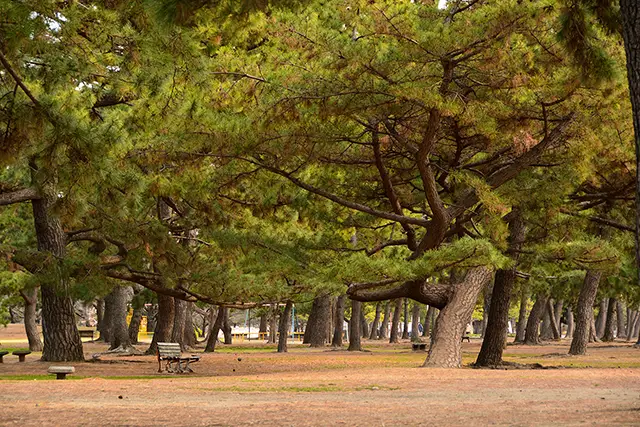
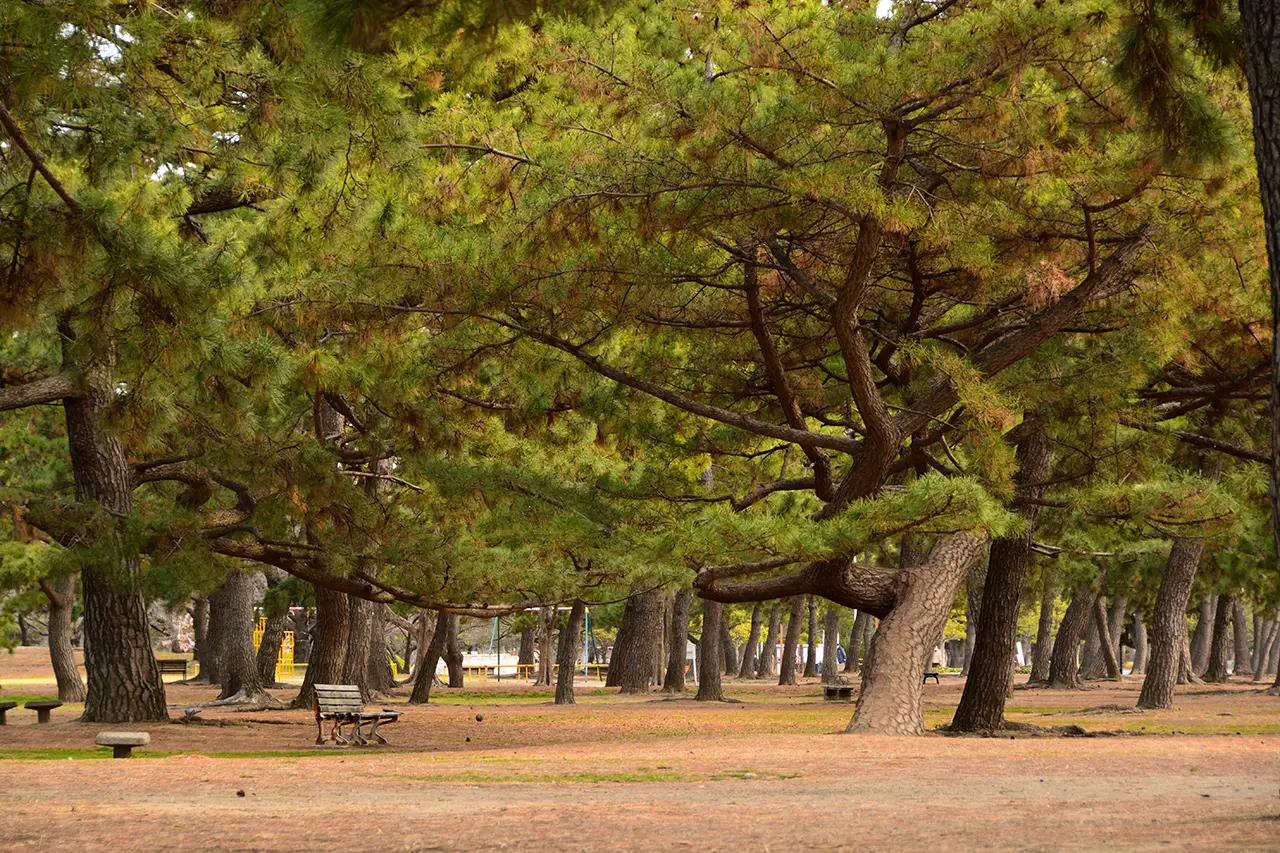
The area from Hamadera in Sakai City to Takashi in Takaishi City, Osaka Prefecture. It was once a scenic spot with pine woods along a sandy beach. Today it is a coastal industrial area, and the beach has been replaced by concrete seawalls.
But Hamadera Park was built here, and part of the old pine woods remains in the park, so you can still imagine how it once was.
- Ōkubo Toshimichi's Poem That Saved
the Pines of Takashi Beach -
In the Meiji period, new rice fields were being developed at Takashi Beach, and its pine woods were in danger of being cut down. But when Ōkubo Toshimichi visited and saw the pines being cut, he was saddened and wrote the next poem. Because of this poem, the cutting was stopped, and later Hamadera Park was created.
In Japanese
音に聞く 高師の浜の 浜松も
世のあだ波は のがれざりけり otonikiku takashinohamano hamamatsumo
yonoadanamiha nogarezarikeri Monument to Treasured Pines (Sekishōhi), Hamadera Park, Ōkubo ToshimichiIn English
Even the beach pines of famous Takashi Beach
could not escape the fickle waves of people's changing hearts. - Ukiyo-e by Utagawa Hiroshige
-
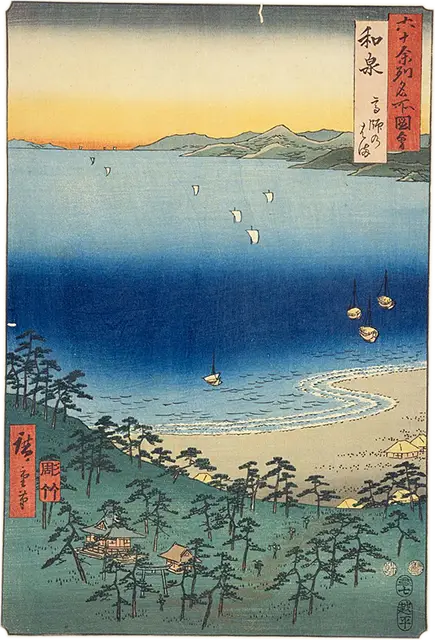
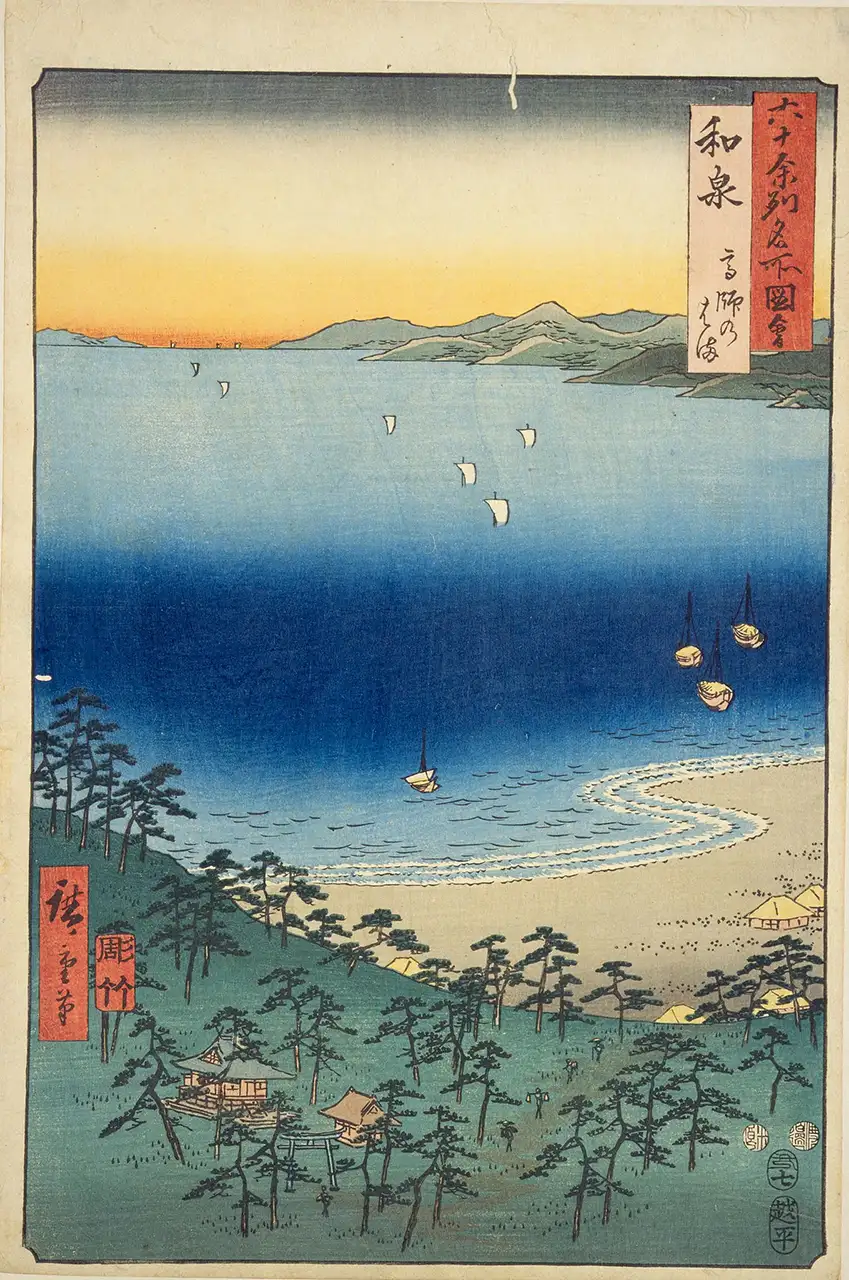
Utagawa Hiroshige, Public domain, via Wikimedia Commons "Takashi Beach" by Utagawa Hiroshige, an ukiyo-e artist of the Edo period. It shows that this was once a scenic spot of white sand and green pines.
See it on the map - Utagawa Kuniyoshi's Hyakunin Isshu no Uchi
-
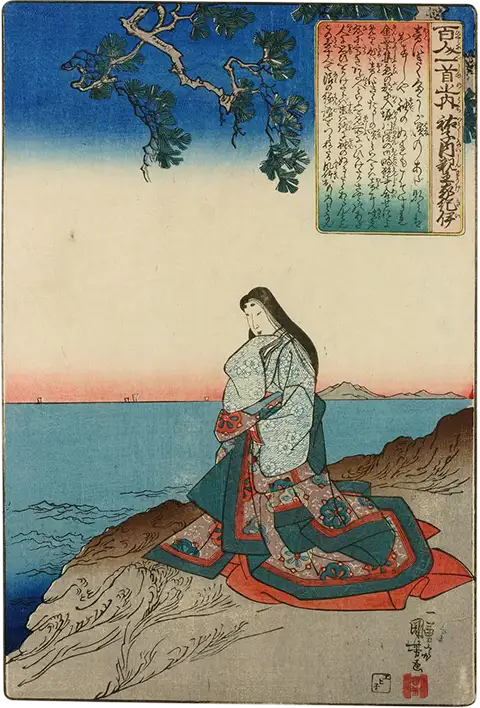
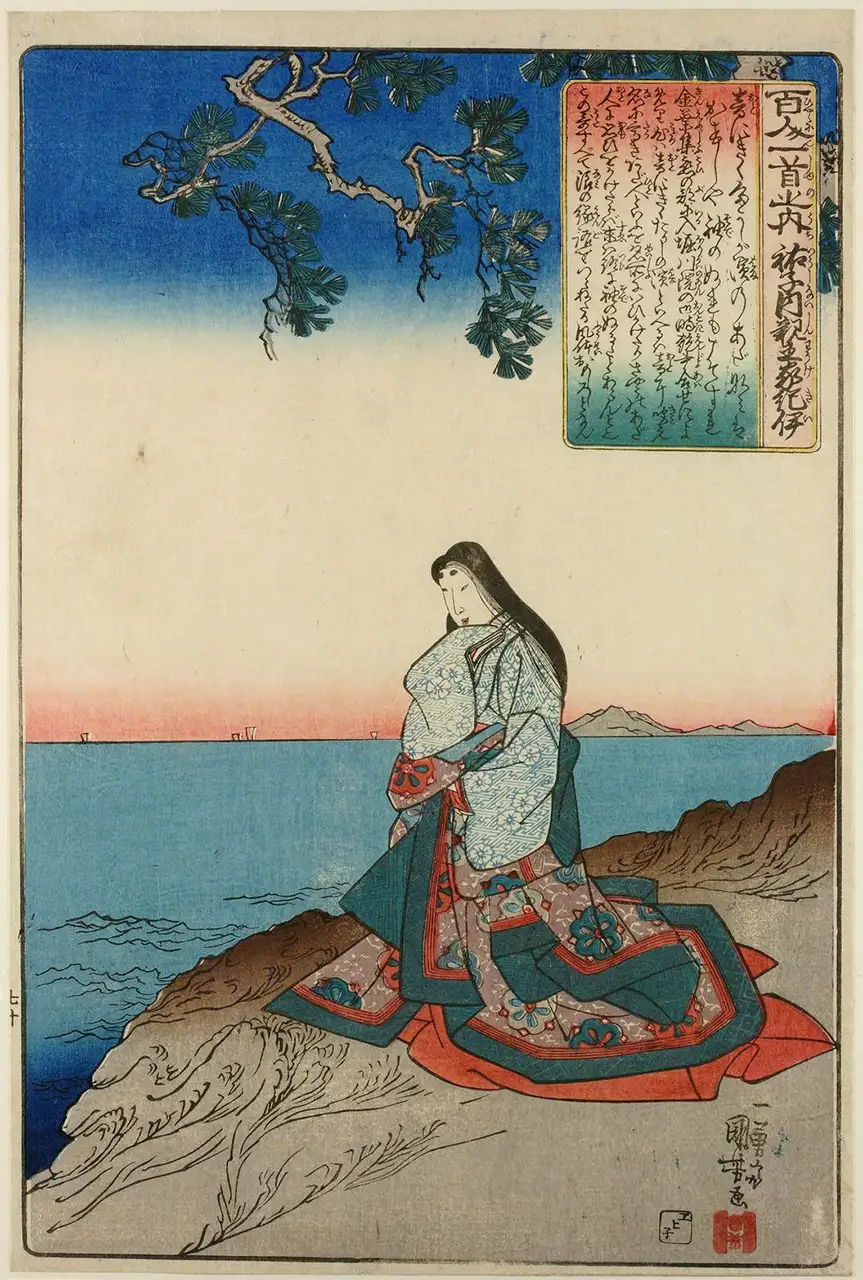
British Museum, Public domain, via Wikimedia Commons This ukiyo-e print is by Utagawa Kuniyoshi, an artist of the Edo period.
It seems to show Kii standing under a pine tree at Takashi Beach.