Front of the Card
Back of the Card
Japanese
English
Audio: NHK Creative Library
Read by LibriVox volunteer Larry Wilson.
Audio courtesy of LibriVox
源俊頼朝臣
憂かりける
人を初瀬の
山おろしよ
はげしかれとは
祈らぬものを
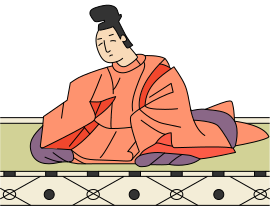
はけしかれ
とはいのら
ぬものを

うか


- Poem 74
- 憂かりける
人を初瀬の
山おろしよ
はげしかれとは 祈らぬものを
Author: Minamoto no Toshiyori Ason (1055–1129)
Source: Senzai Wakashū, Love
- English Verse Translation
- Oh! Kwannon, Patron of this hill, The maid, for whom I pine, Is obstinate and wayward, like
The gusts around thy shrine. What of those prayers of mine?
— William N. Porter, 1909
- Modern Translation
- I prayed to the storm wind of Hatsuse — but I never prayed for it to grow fiercer. Why has this person become so cold to me?
- Commentary
- The Senzai Wakashū says this was written at a gathering at the home of Fujiwara no Toshitada, Toshinari's father, on the theme "love that prayer cannot win." Hatsuse is in Sakurai, Nara Prefecture, home of Hase-dera, a temple famous for prayers to Kannon.
- About the Poet
- Minamoto no Toshiyori was known for a new style of poetry; with the traditional Fujiwara no Mototoshi, he led the poetry world of his time. Though of low rank, he compiled the Kin'yō Wakashū for Retired Emperor Shirakawa and took part in many contests as poet and judge.
- Poem Illustration
-
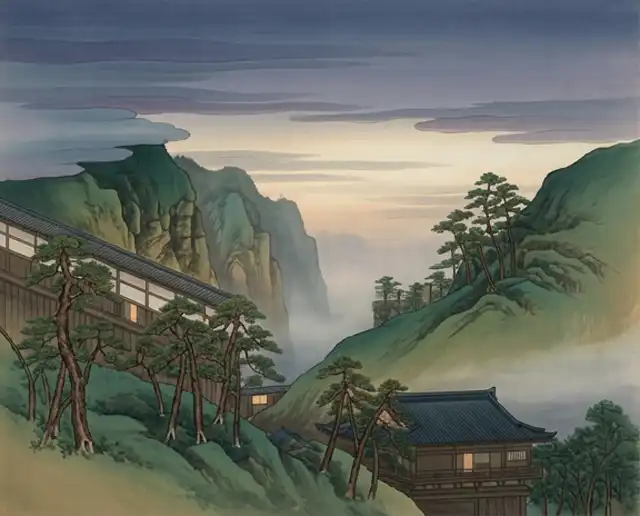
This image is based on an illustration from William N. Porter's A Hundred Verses from Old Japan, his 1909 English translation of the Hyakunin Isshu published in England, colorized and reworked using Adobe Firefly (generative AI).
- Minamoto no Toshiyori: A Short Timeline
-
- 1055
- Born as a son of Minamoto no Tsunenobu
- 1077
- Becomes Minor Captain of the Right Palace Guards
- 1105
- Becomes Head of the Carpentry Office
- c. 1124
- Ordered by Retired Emperor Shirakawa to compile the Kin'yō Wakashū
- c. 1127
- The Kin'yō Wakashū is completed
- 1129
- Dies
- Minamoto no Toshiyori's Family Tree
-
Minamoto no Toshiyori was a descendant of the Uda Genji, the Minamoto line founded by Emperor Uda.
His father was Minamoto no Tsunenobu, and his son was Priest Shun'e.
Three generations were chosen for the Hyakunin Isshu.Toshiyori excelled at waka and the hichiriki (a double-reed pipe) and was active as both a poet and a musician. He reached Junior Fourth Rank, Upper Grade, and the post of Head of the Carpentry Bureau (Moku no kami), but in his later years he had no post and spent his time without office (san'i).
- Appendix
-
- Hatsuse, the "Hidden Land"
- "Komoriku" (hidden land) is a pillow word (makurakotoba) that leads into "Hatsuse." Hatsuse lies deep in the mountains, surrounded on three sides by peaks; cut off from the everyday world, it seems to have had a mysterious image as a place where the gods dwelt. The fact that the Hatsuse road led to Ise Shrine also seems to have strengthened its sacred image. The next poem is said to have been written by Kakinomoto no Hitomaro when Hijikata no Otome, an uneme (a court lady who served the emperor), died and was cremated, which was still rare at the time (the Nara period).
In Japanese
隠国の 泊瀬の山の 山際に
いさよふ雲は 妹にかもあらむ komorikuno hatsusenoyamano yamanomani
isayofukumoha imonikamoaramu Man'yōshū, Kakinomoto no HitomaroIn English
Could the cloud drifting along the ridge of the mountains of Hatsuse
be that young woman? - Hase-dera Temple
-
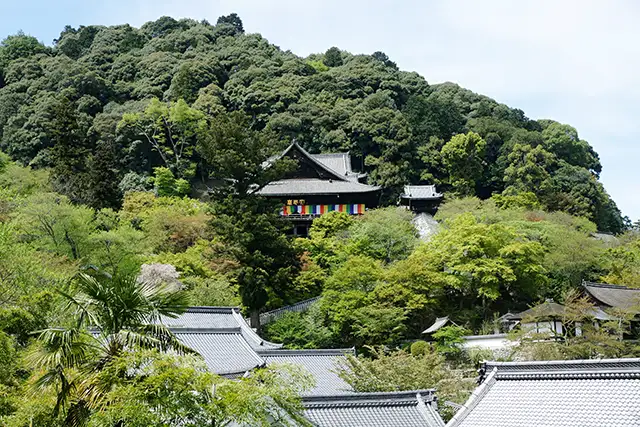
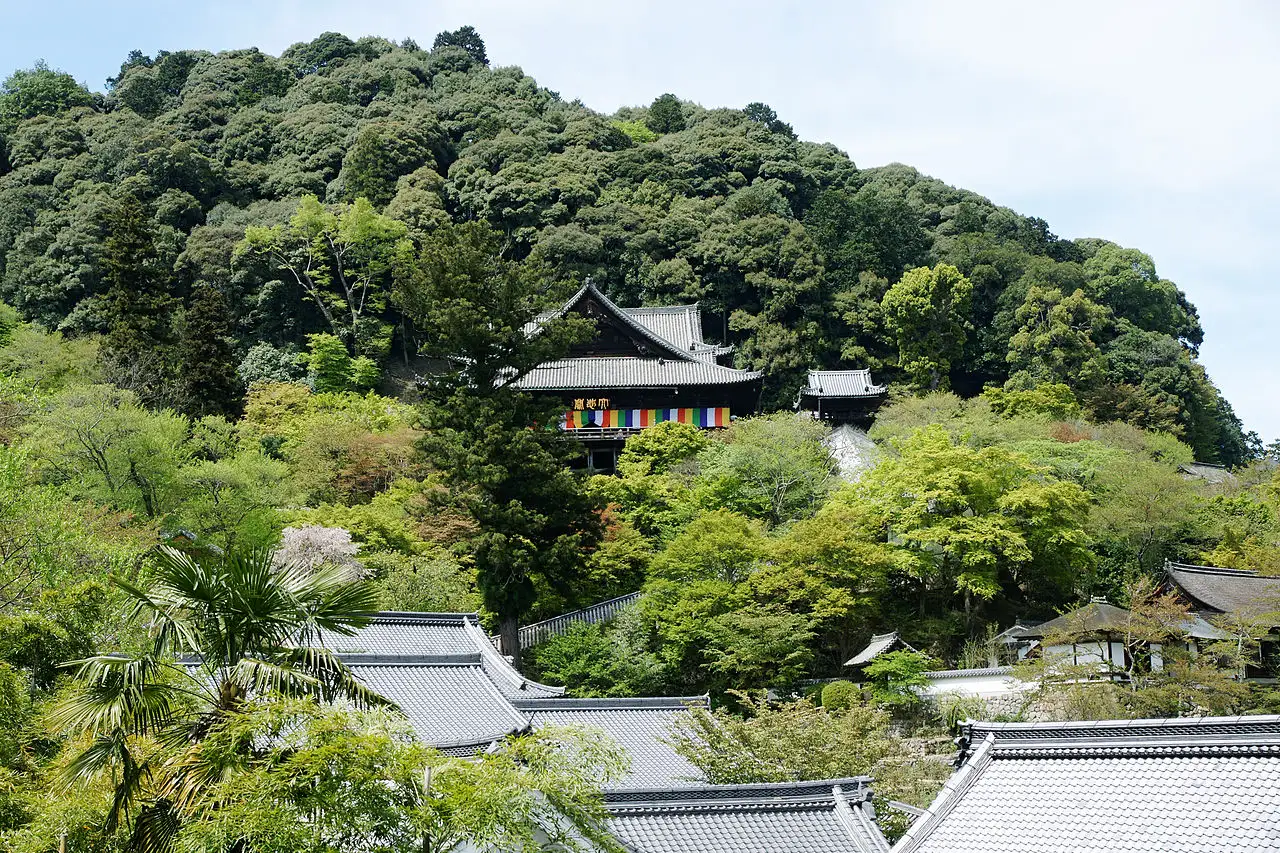
663highland, CC BY-SA 3.0 <http://creativecommons.org/licenses/by-sa/3.0/>, via Wikimedia Commons Hase-dera is an old temple founded in the Nara period, standing halfway up a mountain at Hase (Hatsuse), Sakurai City, Nara Prefecture. Its main image, an Eleven-Headed Kannon, is a giant figure more than 10 meters tall. In the Heian period, faith in Kannon, which promised blessings in this life, was very popular, and many people made pilgrimages to the temple, called Hase-mōde.
The Hyakunin Isshu poem by Ki no Tsurayuki, "Hito wa isa kokoro mo shirazu furusato wa hana zo mukashi no ka ni nioikeru," is also connected with a pilgrimage to Hase-dera.
- Faith in Kannon
- The belief that by worshipping Kannon (the bodhisattva of compassion) one could be saved or gain blessings in this life. It became popular in the Heian period. Hase-dera (Nara Prefecture), Ishiyama-dera (Shiga Prefecture), and Kiyomizu-dera (Kyoto Prefecture) were said to answer prayers with great power, and many people visited them.
- Minamoto no Toshiyori, a Master of the Hichiriki
-
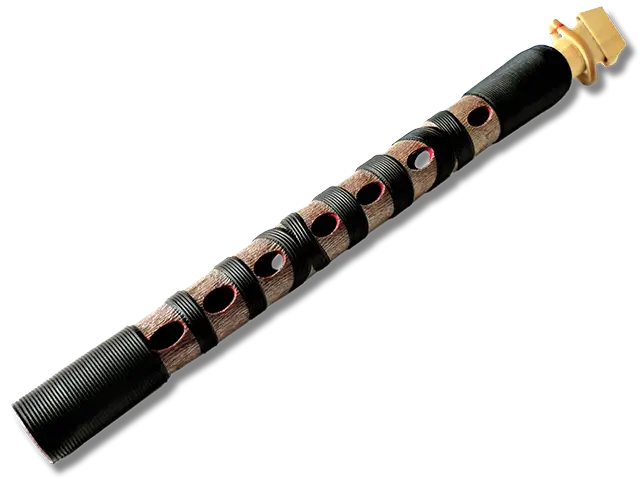
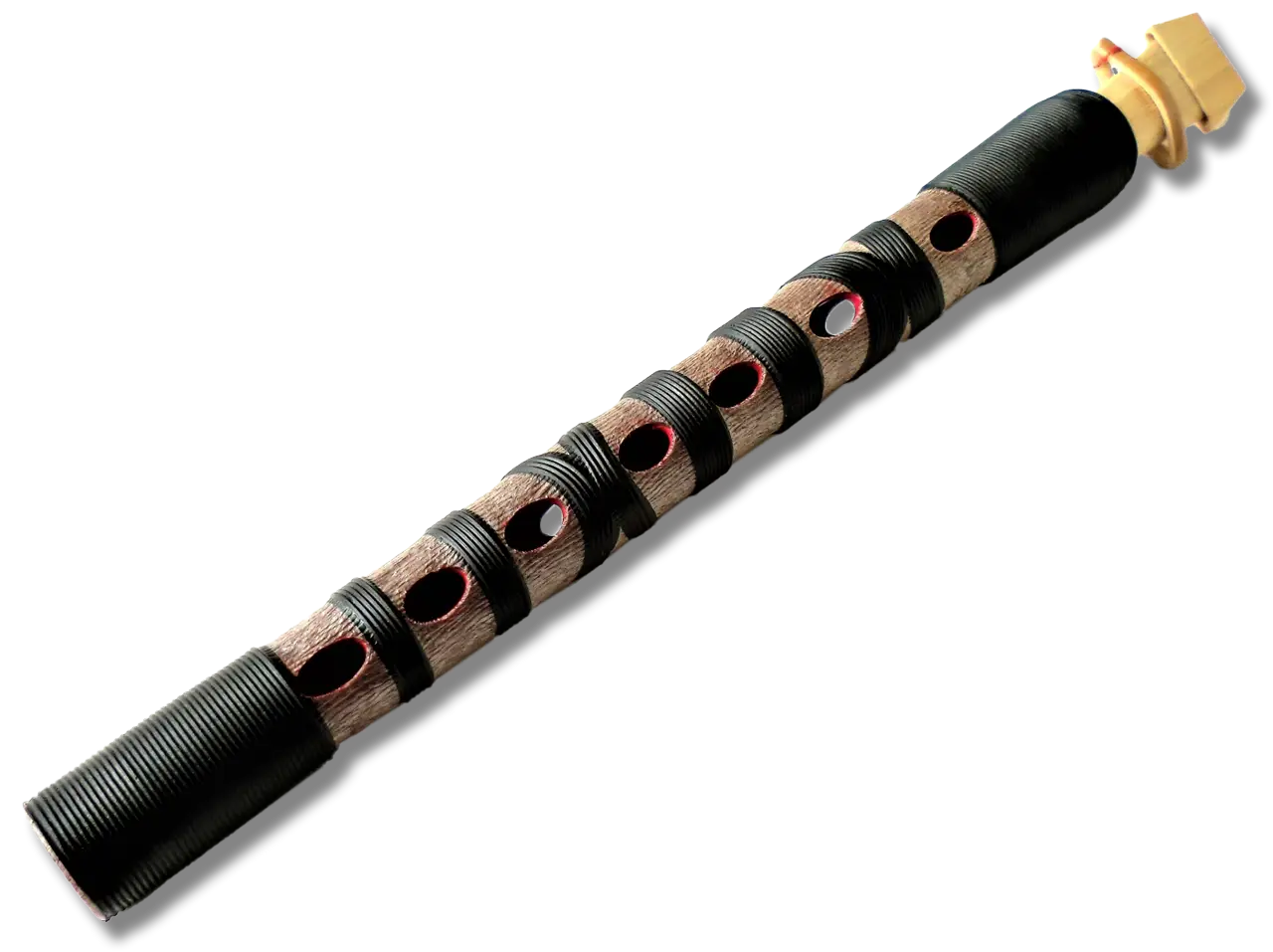
Minamoto no Toshiyori was a master of the hichiriki and was also active as a musician for Emperor Horikawa. The hichiriki is a vertical pipe that plays the main melody in gagaku (court music). It is a small instrument, only about 18 cm long, but it makes a loud sound.
- Horikawa Hyakushu
- The Horikawa Hyakushu is a set of a hundred poems from the time of Emperor Horikawa. Minamoto no Toshiyori planned it, and Minamoto no Kuninobu had the leading poets of the day compose and present the poems. There are 100 topics in all: 20 for spring, 15 for summer, 20 for autumn, 15 for winter, 10 for love, and 20 miscellaneous, and each poet wrote one poem on each topic. It became the model for later hundred-poem sets.
- Sanboku Kikashū
- The Sanboku Kikashū is Minamoto no Toshiyori's personal poetry collection. It has 10 volumes and about 1,600 poems. "Sanboku" (useless wood) is said to be a modest name chosen by Toshiyori, who had been Head of the Carpentry Bureau, and "ki" means new and unusual poems.
- Toshiyori Zuinō
- The Toshiyori Zuinō is a book on poetry (a poetry handbook) by Minamoto no Toshiyori. It is said that Kampaku Fujiwara no Tadazane had him write it for his daughter, Fujiwara no Taishi, who later became the empress of Retired Emperor Toba.
- A Poem Linking His Feelings to the Early-Summer Rain
-
In Japanese
おぼつかな いつか晴るべき わび人の
思ふ心や 五月雨の空 obotsukana itsukaharubeki wabihitono
omofukokoroya samidarenosora Senzai Wakashū, Minamoto no ToshiyoriIn English
How uncertain! Will my sad heart ever clear?
The sky of the early-summer rain (samidare) will clear someday, but... - A Poem Chosen for the Hyakunin Shūka
-
In the Hyakunin Shūka, which is thought to be the basis of the Hyakunin Isshu, the same poem is included for each poet, except for Minamoto no Toshiyori, for whom a different poem was chosen. The next poem is Toshiyori's poem in the Hyakunin Shūka.
In Japanese
山桜 さきそめしより 久方の
くもゐにみゆる 瀧の白糸 yamazakura sakisomeshiyori hisakatano
kumoinimiyuru takinoshiraito Hyakunin Shūka, Minamoto no ToshiyoriIn English
Ever since the mountain cherries began to bloom, on the distant mountains
the blossoms look like white threads hanging down from the sky.