Front of the Card
Back of the Card
Japanese
English
Audio: NHK Creative Library
Read by LibriVox volunteer Larry Wilson.
Audio courtesy of LibriVox
喜撰法師
わが庵は
都の辰巳
しかぞすむ
世をうぢ山と
人はいふなり
よをうちや
まとひとは
いふなり

わがい


- Poem 8
- わが庵は
都の辰巳
しかぞすむ
世をうぢ山と 人はいふなり
Author: Priest Kisen (dates unknown)
Source: Kokin Wakashū, Miscellaneous
- English Verse Translation
- My home is near the Capital, My humble cottage bare Lies south-east on Mount Uji; so
The people all declare My life's a 'Hill of Care'.
— William N. Porter, 1909
- Modern Translation
- My home is in the southeast of the capital, and I live here at peace. People say I moved to Mount Uji because I found the world hard to bear — but that is only what others say.
- Commentary
- Priest Kisen lived on Mount Uji (now Mount Kisen in Uji City), southeast of the capital. "Ushiyama" (mountain of gloom) in the poem is a pun on "Ujiyama." People teased him for living on a "mountain of gloom," but he lived there calmly, following his own heart.
- About the Poet
- Priest Kisen is one of the Six Poetic Sages, yet only two of his poems survive: this one and one in the Man'yōshū. Almost nothing is known of his life or family, so he may have been handed down more as a literary symbol than as a real person.
- Poem Illustration
-
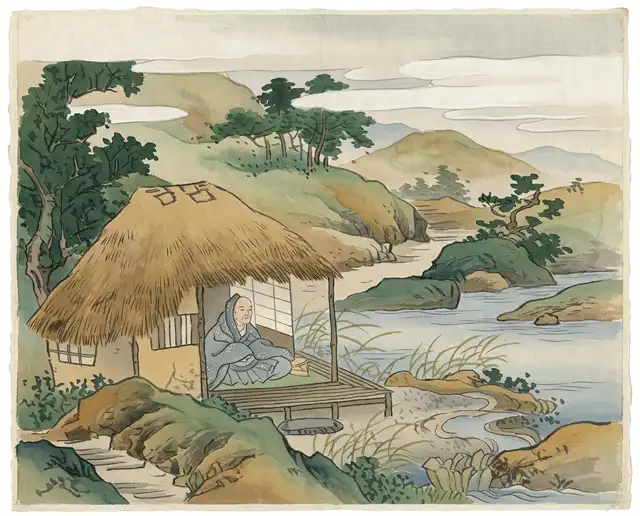
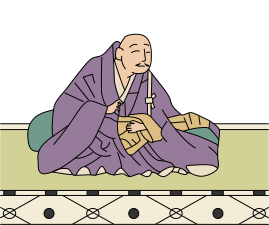
This image is based on an illustration from William N. Porter's A Hundred Verses from Old Japan, his 1909 English translation of the Hyakunin Isshu published in England, colorized and reworked using Adobe Firefly (generative AI).
- Priest Kisen: A Short Timeline
-
- Notes
-
- Only one poem, in the Kokin Wakashū, is surely his
- Counted as one of the Six Immortal Poets
- Appendix
-
- The Image of Uji
-
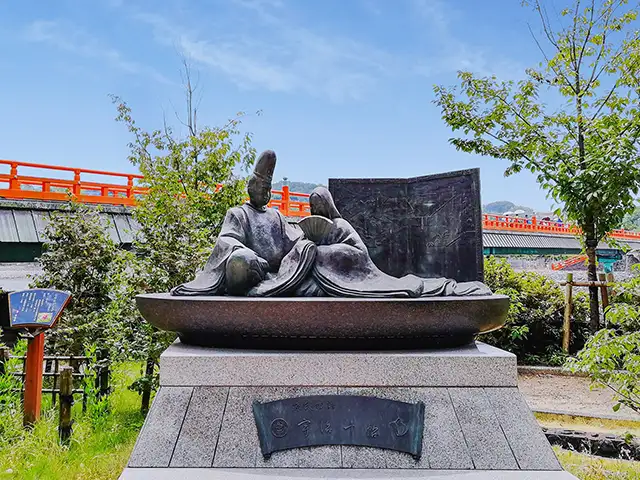
Today Uji is known as a scenic tourist spot, but in the Heian period, as Priest Kisen's poem shows, it seems to have been seen as a place where people who had left the capital, weary of the world, lived quietly.
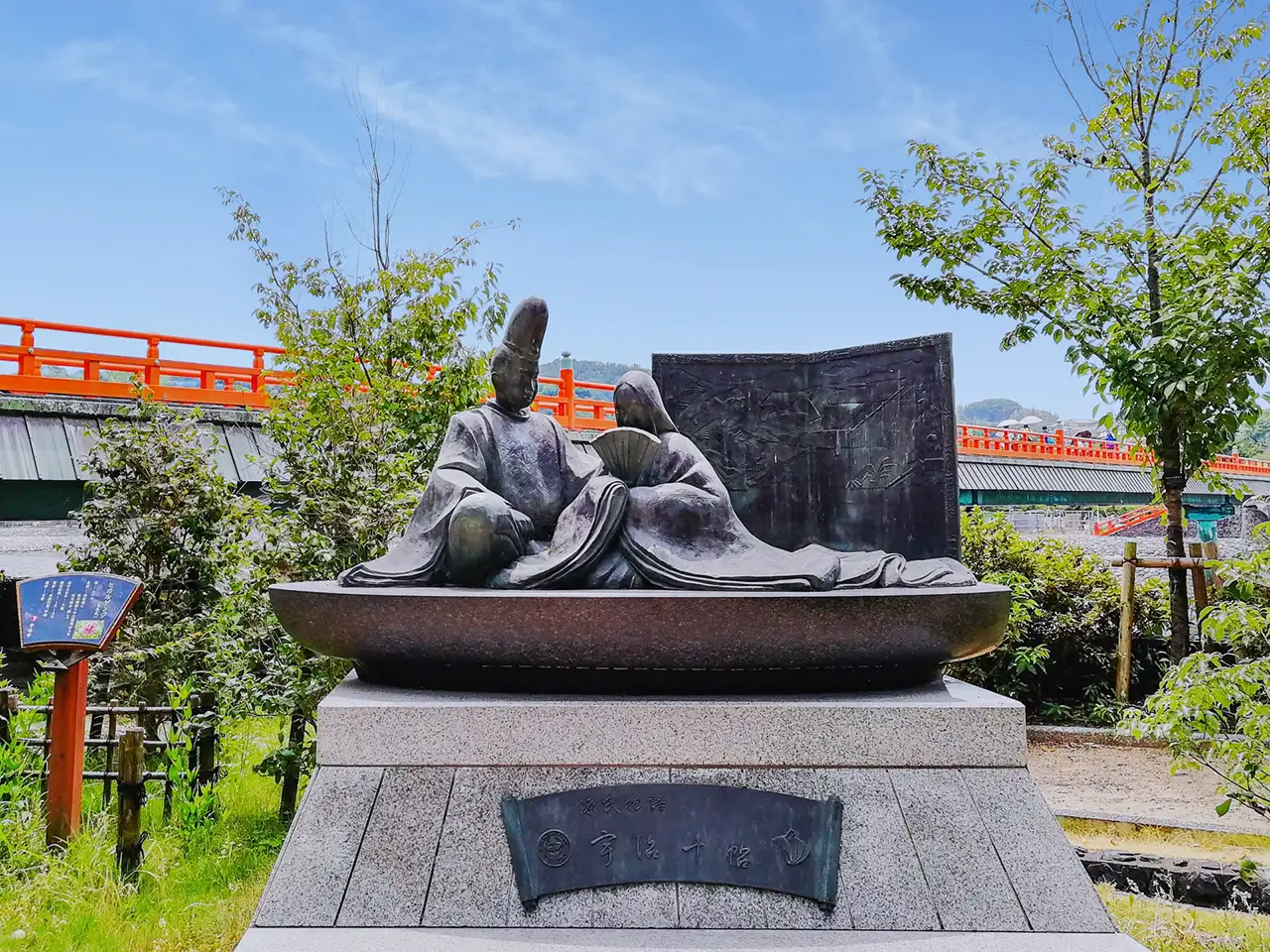
The "Uji Chapters" (Uji Jūjō) of The Tale of Genji are set in Uji. These ten chapters, from Chapter 45 "The Lady at the Bridge" to Chapter 54 "The Floating Bridge of Dreams," tell the story after Hikaru Genji's death. They are full of sorrow, suffering, and a sense that nothing lasts; a woman troubled by love even tries to drown herself in the Uji River.
The photo shows the monument to the "Uji Chapters," near Asagiri Bridge on the Uji River.
- The Six Poetic Sages (Rokkasen)
-
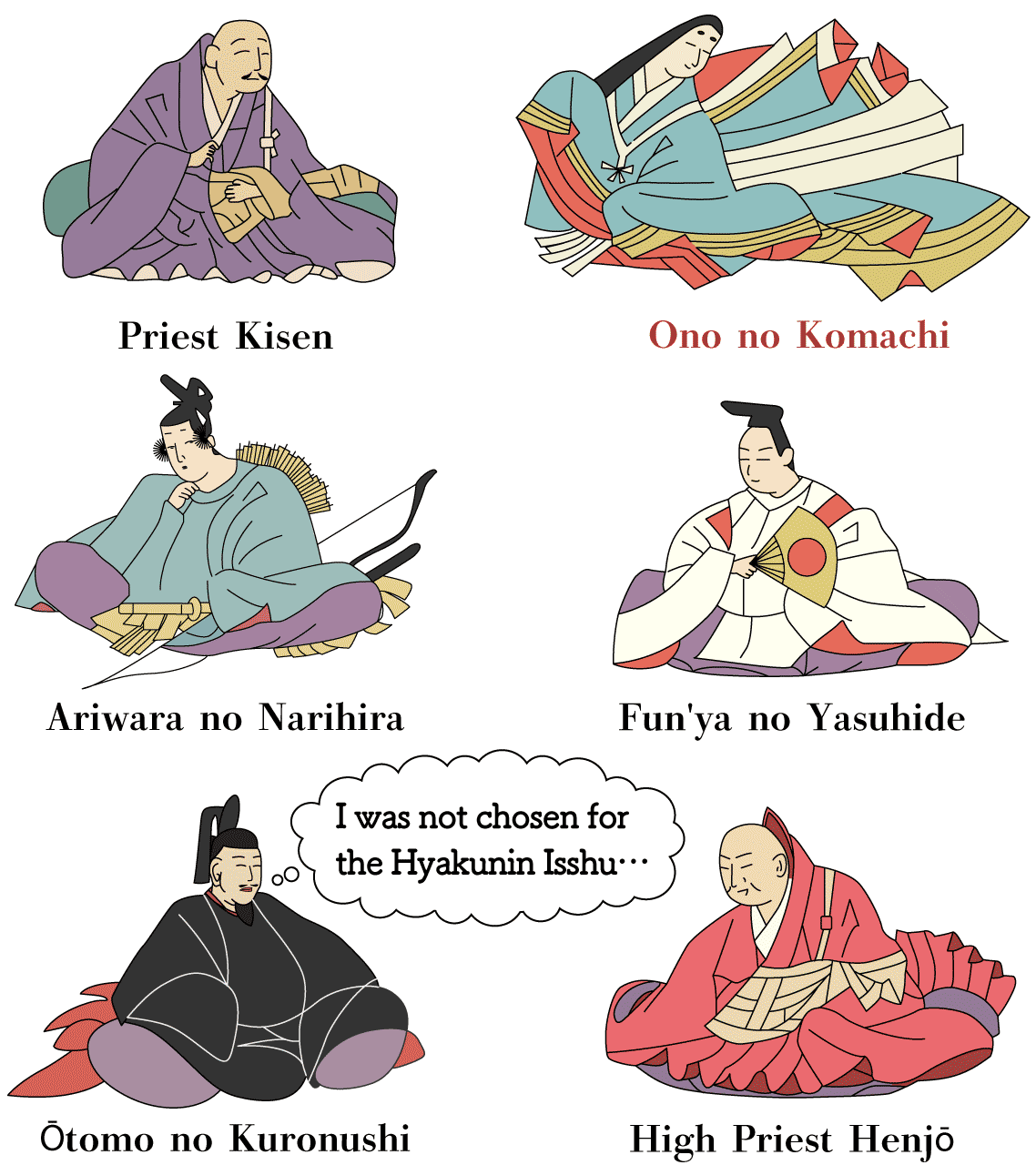
Click a poet to go to their poem page. When the Kokin Wakashū was compiled, these six poets, including Priest Kisen, were very famous poets of the generation before. In the Japanese preface to the Kokin Wakashū, Ki no Tsurayuki picked them out as "people whose names were known in recent times" and judged their poetry. His judgments were quite harsh, but the six later came to be called the Rokkasen, the Six Poetic Sages, and were highly praised as great poets.
See Ki no Tsurayuki's judgments of the six poets.
One of the Six Poetic Sages, Ōtomo no Kuronushi, has no poem in the Hyakunin Isshu.
- Priest Kisen, a Legendary Poet
- In the Kokin Wakashū, Priest Kisen's Hyakunin Isshu poem is listed as by an unknown author. Because this is the only poem known to be his, some think he may not have really existed. However, Kamo no Chōmei wrote in his book on poetry, the Mumyōshō, that "about twenty chō (some 2 km) into the mountains beyond Mimuroto, there are the remains of where Kisen lived," so it seems certain that Kisen did live in seclusion on Mount Uji.
- Utagawa Kuniyoshi's Hyakunin Isshu no Uchi
-
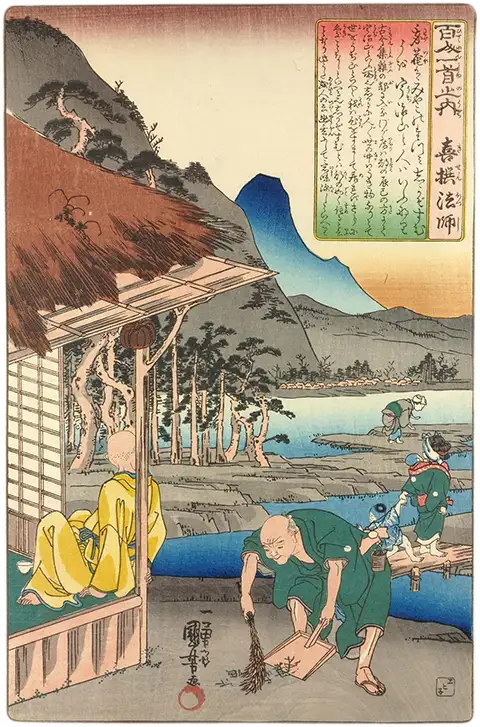
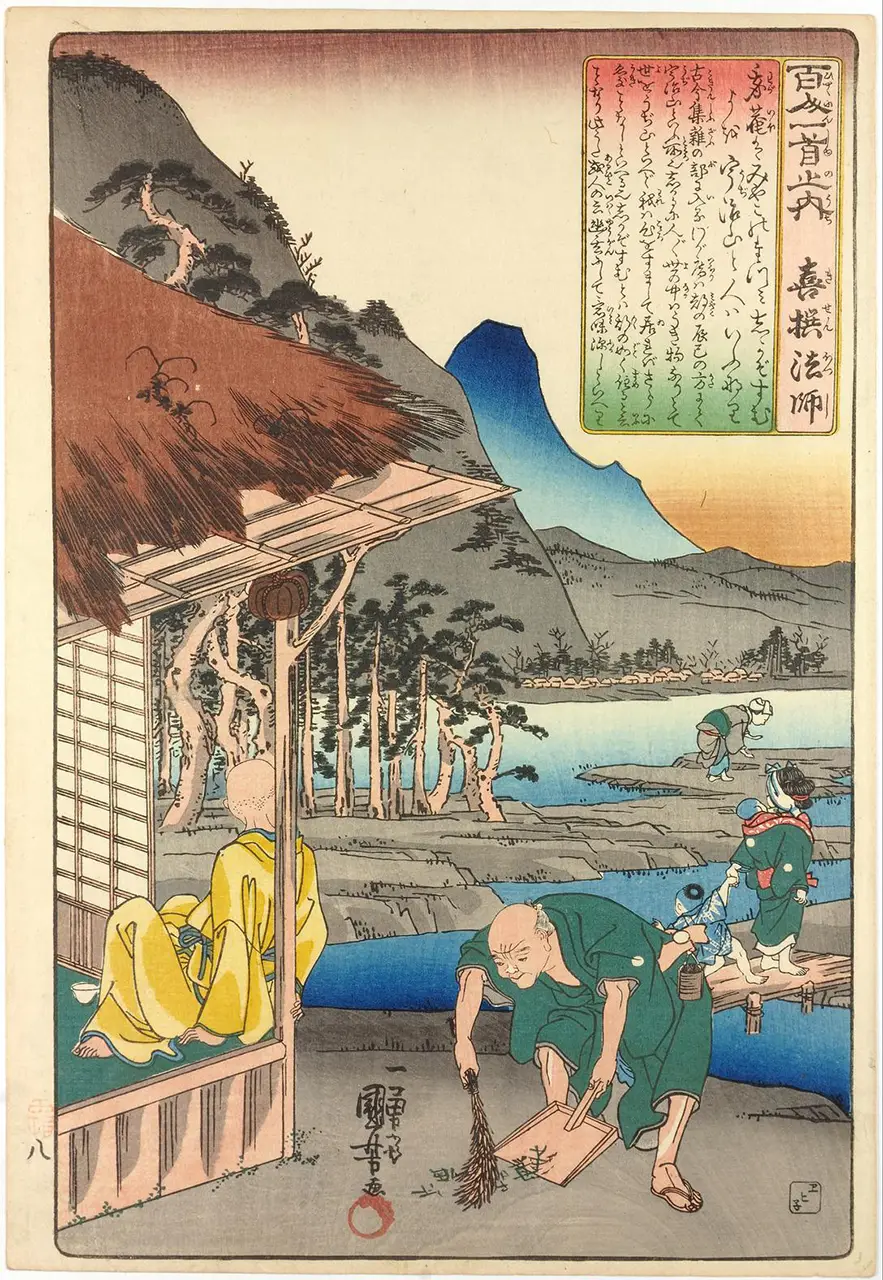
British Museum, Public domain, via Wikimedia Commons This ukiyo-e is by Utagawa Kuniyoshi, an artist of the Edo period.
It shows a scene that matches the poem in the Hyakunin Isshu.Kuniyoshi seems to have pictured Priest Kisen living by the Uji River. Going upstream from around Byōdō-in Temple, the Uji River runs through a V-shaped valley between mountains.
Kisen might be imagined living alone deep in the mountains, but the picture also shows a woman with a small child. It seems to be a place where ordinary people lived, even if it was not as lively as the capital.
Just as the poem says, Kuniyoshi may have wanted to show that Kisen did not live lonely and all alone after leaving the capital.
- A Comic Poem About the Black Ships
-
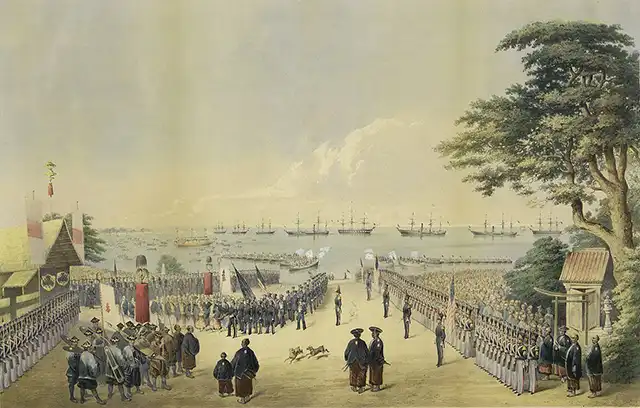
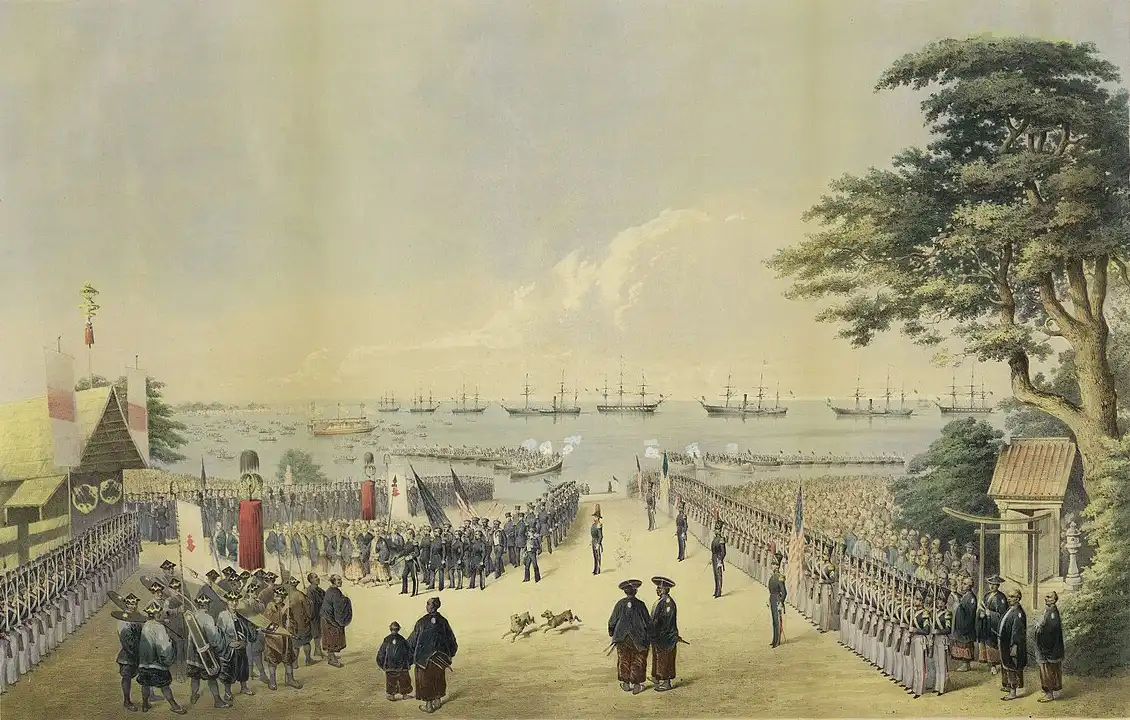
Wilhelm Heine, Public domain, via Wikimedia Commons In 1853, four "Black Ships" led by Commodore Perry appeared off Uraga and shocked Japan. A famous comic poem (kyōka) of the time made fun of how panicked the shogunate was:泰平の 眠りをさます 上喜撰
たった四盃で 夜も寝られず"Jōkisen," a brand of high-quality tea from Uji, is a pun on jōkisen, "steamship," and "four cups" also means "four ships." So it says: "Just four cups of fine tea (four steamships) woke us from our long, peaceful sleep, and now we cannot sleep at night." The name of this fine tea comes from Priest Kisen, who lived in Uji.