


The Rokkasen (Six Poetic Sages)
In the Kana Jo, the preface to the Kokin Wakashū written in kana, Ki no Tsurayuki picked out six poets as "people whose names were known in recent times" (famous poets of the generation before his) and judged their poetry. All of his judgments are harsh, yet these six poets later came to be called the Rokkasen, the Six Poetic Sages, and were deeply admired.
High Priest Henjō
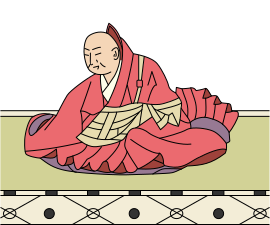
僧正遍昭
天つ風
雲のかよひ路
吹きとぢよ
をとめの姿
しばしとどめむ
In Japanese
歌のさまは得たれども、まこと少なし。例えば、絵に描ける女を見て、いたづらに心を動かすがごとし。
In English
He has the style of poetry, but little true feeling. It is like being moved, to no purpose, by a woman in a painting.
Ariwara no Narihira
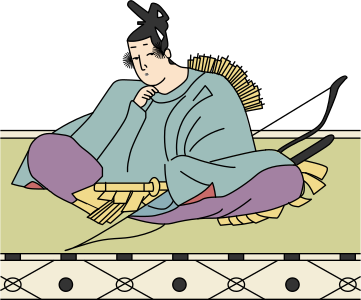
在原業平
ちはやぶる
神代もきかず
竜田川
から紅に
水くくるとは
In Japanese
その心余りて詞たらず。しぼめる花の色なくて、匂ひ残れるがごとし。
In English
His feelings overflow, but his words fall short. It is like a withered flower that has lost its color but still keeps its scent.
Fun'ya no Yasuhide
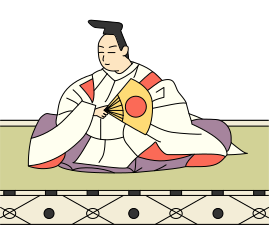
文屋康秀
吹くからに
秋の草木の
しをるれば
むべ山風を
嵐といふらむ
In Japanese
詞はたくみにてその様身に負はず。いはば、商人のよき衣着たらむがごとし。
In English
He uses words skillfully, but his poems do not match his feelings. It is like a merchant dressed in fine clothes.
Priest Kisen
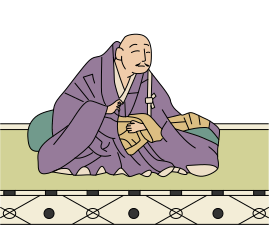
喜撰法師
わが庵は
都の辰巳
しかぞすむ
世をうぢ山と
人はいふなり
In Japanese
詞かすかにして、始め終はり確かならず。いはば、秋の月を見るに、暁の雲にあへるがごとし。
In English
His words are vague, and the beginning and end of his poems do not hold together. It is like watching the autumn moon and having it hidden by the clouds of dawn.
Ono no Komachi
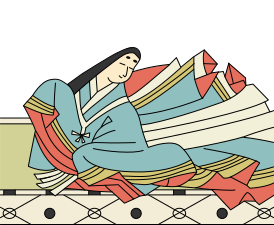
小野小町
花の色は
うつりにけりな
いたづらに
わが身よにふる
ながめせしまに
In Japanese
いにしへの衣通姫の流なり。あはれなるやうにて強からず。いはば、よき女のなやめるところあるに似たり。
In English
She follows the style of Princess Sotoori of long ago. Her poems are deeply moving, but they lack strength. It is like a beautiful woman who is unwell.
Ōtomo no Kuronushi
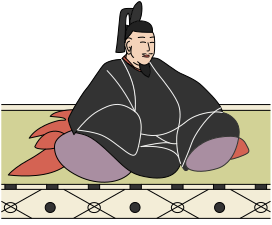
大友黒主
春さめの
ふるは涙か
桜花
散るを惜しまぬ
人しなければ
In Japanese
そのさまいやし。いはば、薪負へる山人の、花の陰に休めるがごとし。
In English
His style is crude. It is like a mountain woodcutter with firewood on his back, resting in the shade of blossoms.
Of the Six Poetic Sages, only Ōtomo no Kuronushi was left out of the Hyakunin Isshu. It feels a little sad for him.