Front of the Card
Back of the Card
Japanese
English
Audio: NHK Creative Library
Read by LibriVox volunteer Larry Wilson.
Audio courtesy of LibriVox
僧正遍昭
天つ風
雲のかよひ路
吹きとぢよ
をとめの姿
しばしとどめむ
をとめのす
かたしはし
ととめむ

あまつ


- Poem 12
- 天つ風
雲のかよひ路
吹きとぢよ
をとめの姿 しばしとどめむ
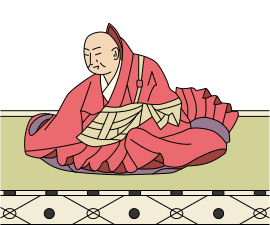
Author: High Priest Henjō (816–890)
Source: Kokin Wakashū, Miscellaneous
- English Verse Translation
- Oh stormy winds, bring up the clouds, And paint the heavens grey; Lest these fair maids of form divine
Should angel wings display, And fly far far away.
— William N. Porter, 1909
- Modern Translation
- Heavenly wind, please close the path through the clouds! I want to keep the celestial maidens here a little longer.
- Commentary
- The Kokin Wakashū says this was written on seeing the Gosechi dancers at court. Henjō compares the dancing girls to heavenly maidens. The author is listed under his lay name, Yoshimine no Munesada, so he wrote it before he became a monk.
- About the Poet
- Henjō was a grandson of Emperor Kanmu; his lay name was Yoshimine no Munesada. He served Emperor Ninmyō as Head Chamberlain. When the emperor died and the mourning period ended, he saw his colleagues celebrating, felt how fleeting the world is, and became a monk. He rose to Sōjō, a top rank among monks.
- Poem Illustration
-
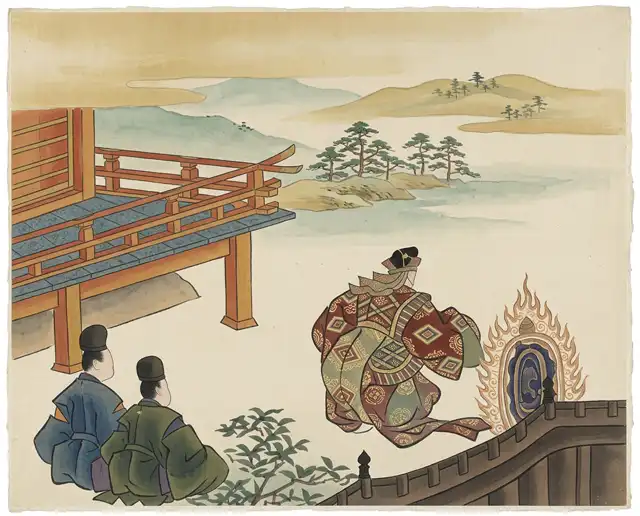
This image is based on an illustration from William N. Porter's A Hundred Verses from Old Japan, his 1909 English translation of the Hyakunin Isshu published in England, colorized and reworked using Adobe Firefly (generative AI).
- High Priest Henjō: A Short Timeline
-
- 816
- Born as a grandson of Emperor Kanmu
- 845
- Becomes Assistant Captain of the Left Palace Guards
- 849
- Becomes Head Chamberlain (Kurōdo no Tō)
- 850
- Becomes a monk after Emperor Ninmyō dies
- 869
- Also becomes head of Urin-in Temple
- 885
- Becomes High Priest (Sōjō)
- 890
- Dies
- Notes
-
- Counted as one of the Six Immortal Poets
- Counted as one of the Thirty-Six Immortal Poets
- High Priest Henjō's Family Tree
-
High Priest Henjō's grandfather was Emperor Kanmu. His father, Yoshimine no Yasuyo, was not made an imperial prince; he was given the family name Yoshimine and left the imperial family to become a subject, yet he still rose to Senior Third Rank and Upper Counselor.
Henjō also served Emperor Ninmyō, became Head Chamberlain, and was given Junior Fifth Rank, Upper Grade. When Emperor Ninmyō died that same year, Henjō became a monk in 850.
He studied under Ennin and Enchin, monks who had studied in Tang China, became a monk of the Tendai school, and in 885 rose to Sōjō, the highest rank for monks. His son was Priest Sosei.
- Appendix
-
- The Gosechi Dance
-
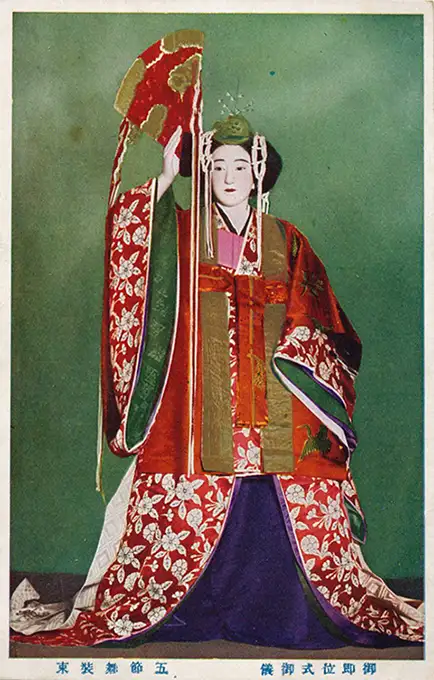
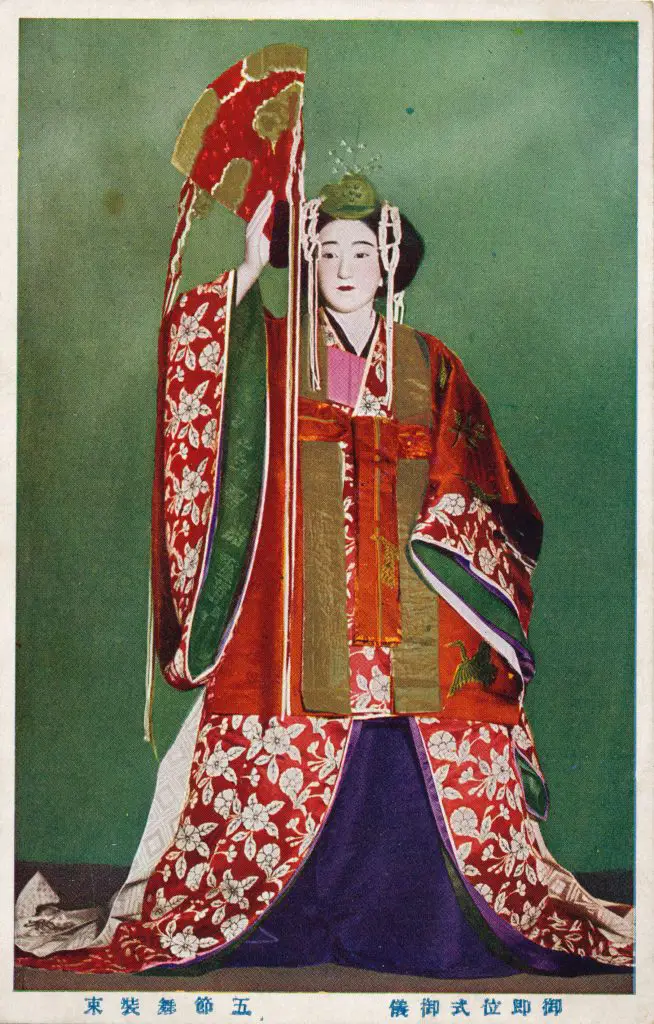
http://vintagepostcardsjapan.com The Gosechi dance is performed at the Toyo-no-Akari banquet held after the Daijōsai (the first harvest festival of a new emperor) and the Niinamesai (the yearly harvest festival). It is offered by four or five unmarried young women wearing the jūni-hitoe (twelve-layered robe), holding cypress-wood fans, with ornamental combs in their hair.
The dance is said to come from a legend: when Emperor Tenmu was playing the koto in Yoshino, a heavenly maiden appeared and danced, waving her sleeves five times.
This image is a postcard of the Gosechi dance, thought to have been performed at the enthronement of Emperor Shōwa. The dancer on the postcard wears her hair puffed out at the sides, but Heian-period dancers are thought to have worn their hair hanging down naturally.
- Another "Amatsukaze" and Maiden, by Princess Shikishi
-
Princess Shikishi wrote the next poem based on Henjō's poem. The holy glow of a maiden shines in the stillness of a winter night, cold and clear as ice.
In Japanese
天つ風 氷をわたる 冬の夜の
をとめの袖を みがく月影 amatsukaze kooriowataru fuyunoyono
otomenosodeo migakutsukikage Shin Chokusen Wakashū, Princess ShikishiIn English
On a winter night when the wind of heaven
blows cold and clear as ice,
the moonlight shines white on the maidens' sleeves. - The Six Poetic Sages (Rokkasen)
-
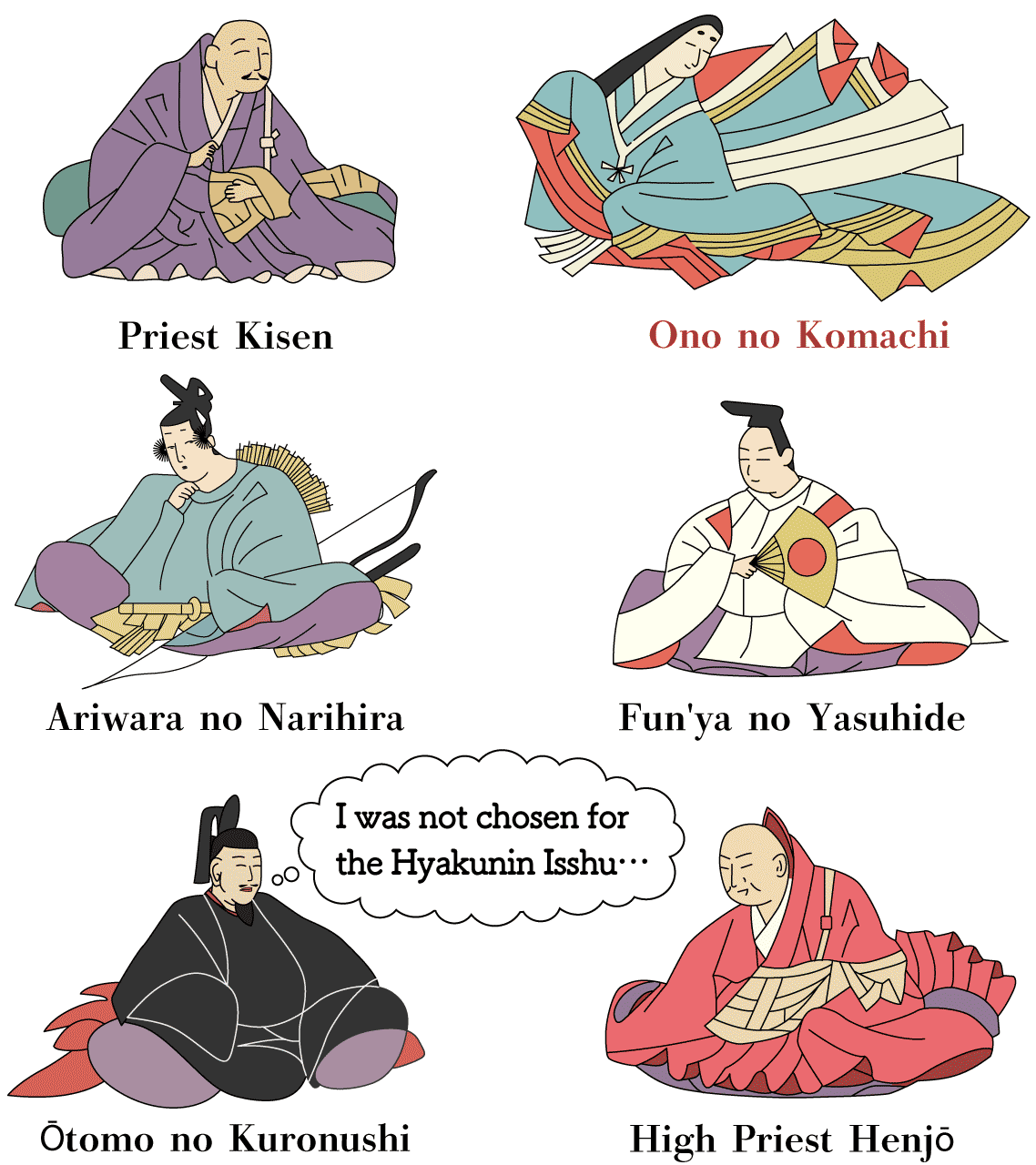
Click a poet to go to their poem page. When the Kokin Wakashū was compiled, these six poets, including High Priest Henjō, were very famous poets of the generation before. In the Japanese preface to the Kokin Wakashū, Ki no Tsurayuki picked them out as "people whose names were known in recent times" and judged their poetry. His judgments were quite harsh, but the six later came to be called the Rokkasen, the Six Poetic Sages, and were highly praised as great poets.
See Ki no Tsurayuki's judgments of the six poets.
One of the Six Poetic Sages, Ōtomo no Kuronushi, has no poem in the Hyakunin Isshu, while the other five were all chosen.
- A Haiku by Kobayashi Issa
Based on Henjō's Poem -
Issa moves the scene to spring, when the rapeseed flowers are in full bloom, and writes about a free-spirited cat.
In Japanese
なの花も 猫の通ひ路 吹とぢよ nanohanamo nekonokayohiji futojiyo Kobayashi IssaIn English
Rapeseed flowers, blow in the wind
and close the cat's path. - A Poem That Sees Willow Branches as Thread
and White Dew as Pearls -
With a delicate eye, Henjō captures the moment a spring willow shines with morning dew.
In Japanese
浅緑 糸縒りかけて 白露を
玉にも貫ける 春の柳か asamidori itoyorikakete shiratsuyuo
tamanimotsuranukeru harunoyanagika Kokin Wakashū, High Priest HenjōIn English
The spring willow twists its pale green branches like thread, and strings the white dew on them like pearls.
- A Poem Henjō Wrote When the Mourning
for Emperor Ninmyō Ended -
In the next poem, the official period of mourning for Emperor Ninmyō has ended and everyone around him has moved on, but Henjō alone is still left in his grief. The heartfelt feelings of Henjō, who had just become a monk, are preserved in the Kokin Wakashū.
In Japanese
みな人は 花の衣に なりぬなり
苔の袂よ 乾きだにせよ minabitoha hananokoromoni narinunari
kokenotamotoyo kawakidaniseyo Kokin Wakashū, High Priest HenjōIn English
Everyone has taken off their mourning clothes and put on bright robes. O sleeves of my monk's robe, wet with tears, at least please dry.
- A Poem in Memory of Prince Tsuneyasu, Son of Emperor Ninmyō
-
Just before he died, Prince Tsuneyasu gave Urin-in, his residence, to Henjō.
This poem is in the Kokin Wakashū, whose headnote says it was "written while standing in the shade of a tree at Urin-in."
It is thought that Henjō, crushed by the prince's death, wrote it at Urin-in.In Japanese
わび人の わきて立ち寄る 木の下は
たのむかげなく 紅葉散りけり wabibitono wakitetachiyoru konomotoha
tanomukagenaku momijichirikeri Kokin Wakashū, High Priest HenjōIn English
The tree I come to for comfort in my sorrow gives no shade to rely on, for its autumn leaves have all fallen.
- A Poem That Coolly Looks at
the Bloom of Young Women -
The next poem is in the Kokin Wakashū's section of haikaika (humorous poems).
It gently warns young women who are carried away by their youth: "Your bloom will soon be over."
In Japanese
秋の野に なまめき立てる
女郎花
あなかしがまし 花も一時 akinononi namamekitateru ominaeshi
anakashigamashi hanamohitotoki Kokin Wakashū, High Priest HenjōIn English
How noisy are the ominaeshi flowers ("maiden flowers"), showing off their charms in the autumn fields! Even beautiful flowers last only a short while.
- A Poem Hoping Visitors Would Stay
the Night at His Temple -
Henjō wrote the next poem hoping that people who came to pray at his temple would not go home, but stay the night.
The wish not to let something beautiful or a precious time end here is the same idea as in his Hyakunin Isshu poem, "Amatsukaze...," where he asks the wind to close the path through the clouds.
In Japanese
夕暮れの 籬は山と 見えななむ
夜は越えじと 宿りとるべく yuugureno magakihayamato mienanamu
yoruhakoejito yadoritorubeku Kokin Wakashū, High Priest HenjōIn English
I wish the hedge at dusk would look like a mountain. Then (the visitors to this Gangyō-ji temple) would decide not to cross it at night, and stay here.
- Gangyō-ji Temple
-
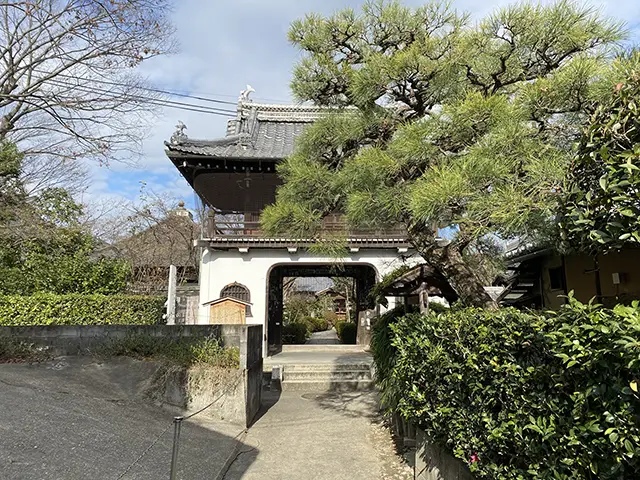
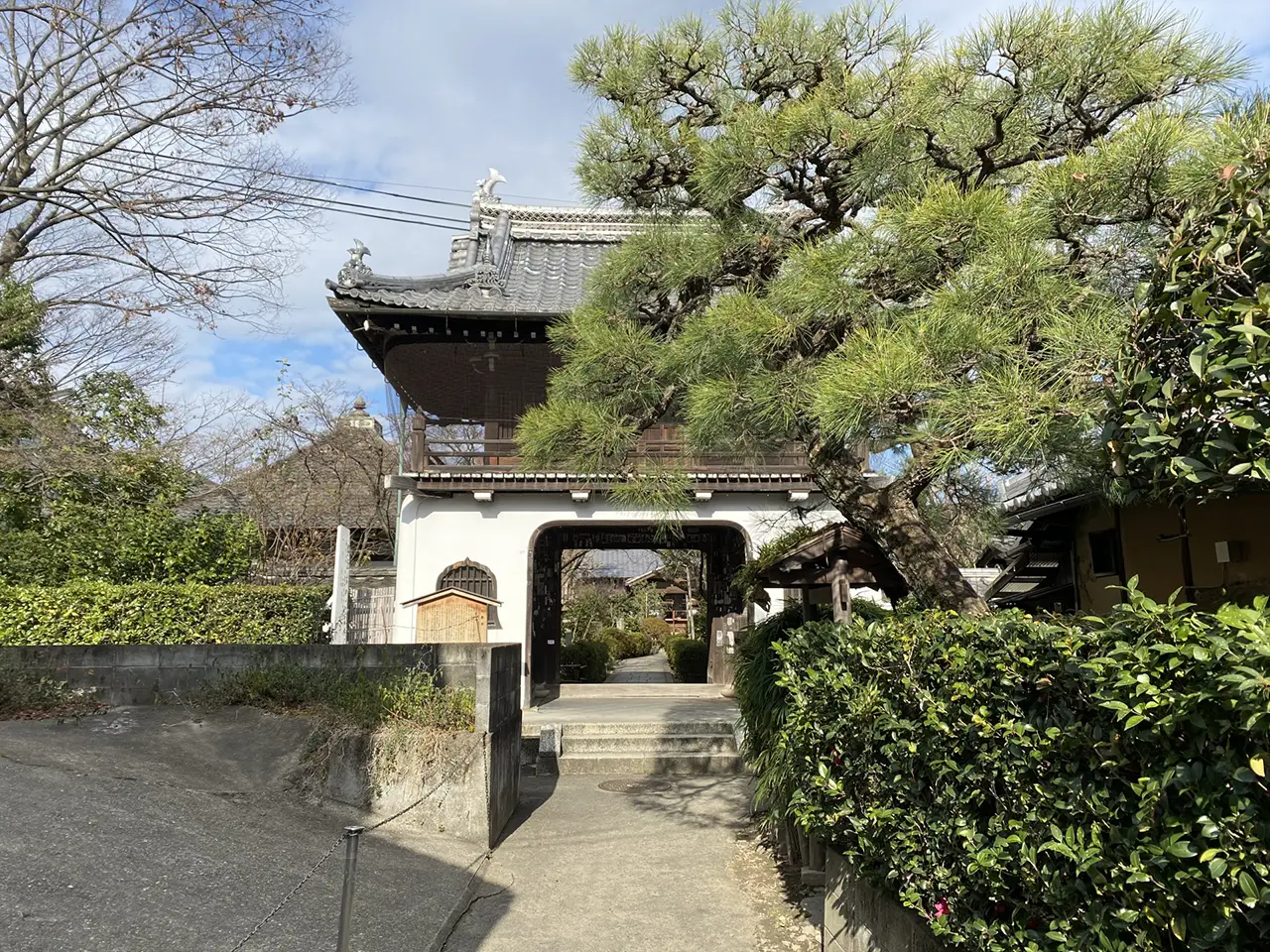
A Tendai temple in Kitakazan Kawara-chō, Yamashina Ward, Kyoto. In 868, High Priest Henjō proposed it to celebrate the birth of the 57th emperor, Emperor Yōzei, and Fujiwara no Takaiko (Emperor Seiwa's consort and Emperor Yōzei's mother) built it.
Later, in 986, the 65th emperor, Emperor Kazan, was tricked by Fujiwara no Kaneie and his son Michikane into becoming a monk at this temple.
Kaneie then put his daughter Senshi's son on the throne as Emperor Ichijō. This political upheaval, which included Emperor Kazan becoming a monk, is called the Kanna Incident. - Ukiyo-e by Katsushika Hokusai
-
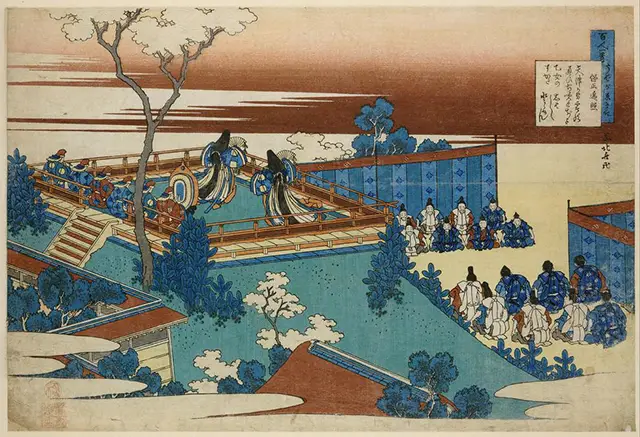
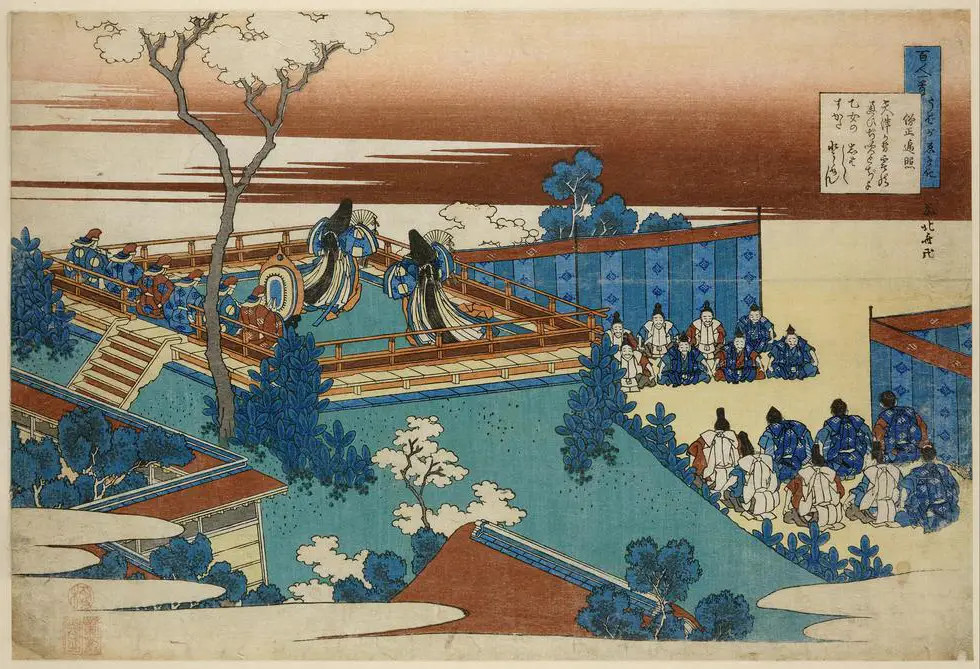
© The Trustees of the British Museum This print is from One Hundred Poems Explained by the Nurse (Hyakunin Isshu Uba ga Etoki) by Katsushika Hokusai, an ukiyo-e artist of the Edo period. The idea of the series is a nurse explaining the Hyakunin Isshu poems with easy-to-understand pictures. On the stage, women performing the Gosechi dance and court musicians are drawn.
- Utagawa Kuniyoshi's Hyakunin Isshu no Uchi
-
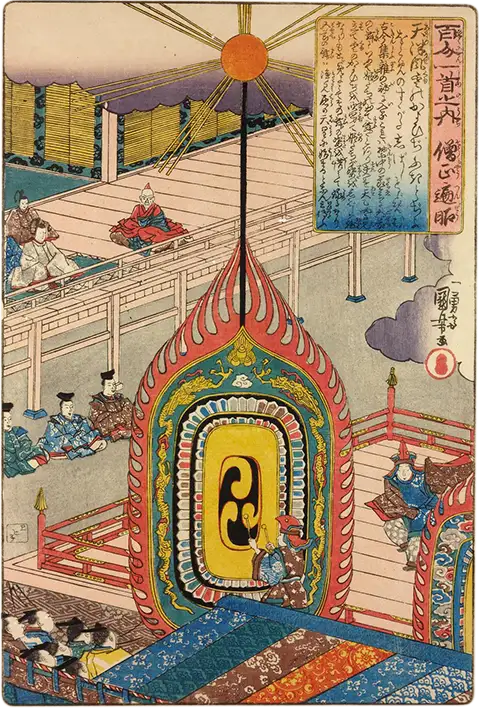
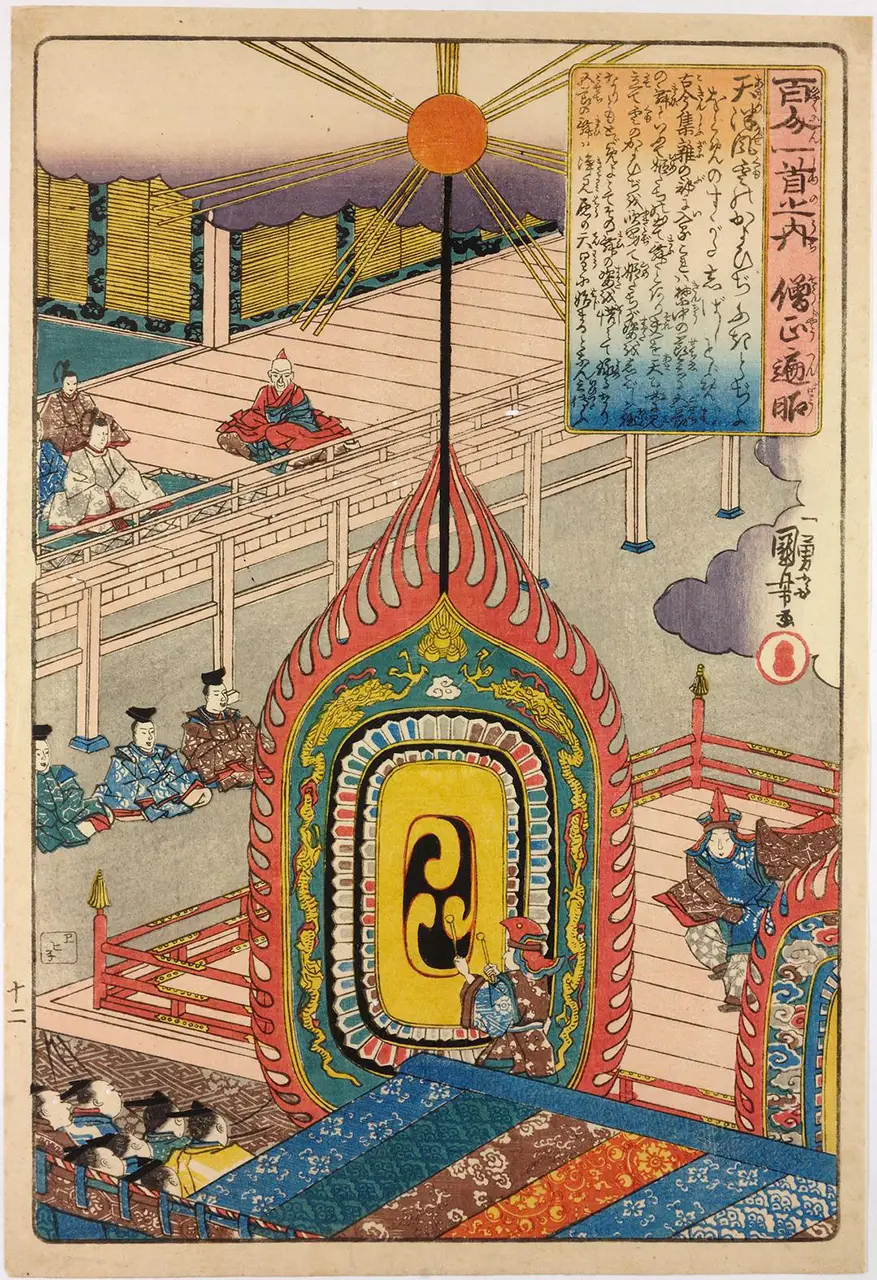
British Museum, Public domain, via Wikimedia Commons This ukiyo-e is by Utagawa Kuniyoshi, an artist of the Edo period.
It shows a scene that matches the poem in the Hyakunin Isshu. No dancers are to be seen, but a huge, beautifully decorated dadaiko (great drum) catches the eye.