Front of the Card
Back of the Card
Japanese
English
Audio: NHK Creative Library
Read by LibriVox volunteer Larry Wilson.
Audio courtesy of LibriVox
中納言行平
立ち別れ
いなばの山の
峰に生ふる
まつとし聞かば
今帰りこむ
まつとしき
かはいまか
へりこむ

たち


- Poem 16
- 立ち別れ
いなばの山の
峰に生ふる
まつとし聞かば 今帰りこむ
Author: Middle Counselor Yukihira (818–893)
Source: Kokin Wakashū, Parting
- English Verse Translation
- If breezes on Inaba's peak Sigh through the old pine tree, To whisper in my lonely ears
That thou dost pine for me,— Swiftly I'll fly to thee.
— William N. Porter, 1909
- Modern Translation
- I am leaving for the province of Inaba, where the pines grow on the mountain peak. If I hear that you are waiting for me, I will come back right away.
- Commentary
- Yukihira wrote this for the people who came to see him off when he left the capital to become governor of Inaba. The poem is also known as a charm: hung by the door, it is said to bring a lost pet home, perhaps because of the love and hope of reunion in it.
- About the Poet
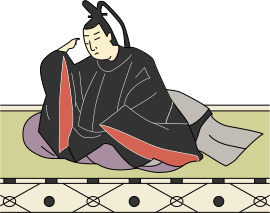
- Ariwara no Yukihira was the second son of Prince Abo (a son of Emperor Heizei) and the elder half-brother of Ariwara no Narihira. An able official, he served in many posts and rose to Middle Counselor. At 63 he founded the Shōgakuin, a school for the Ariwara clan.
- Poem Illustration
-
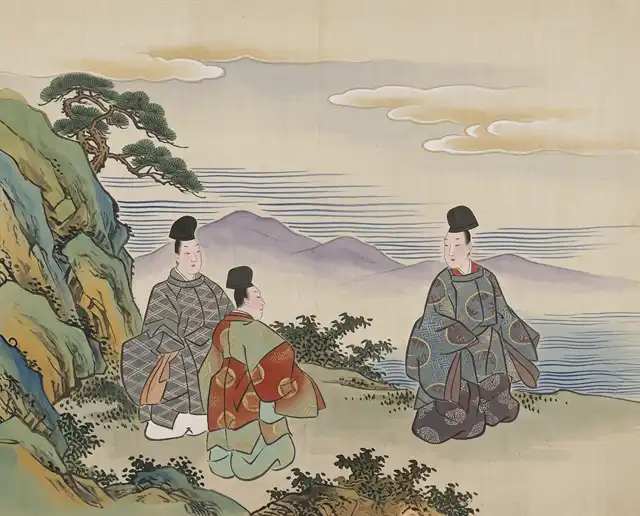
This image is based on an illustration from William N. Porter's A Hundred Verses from Old Japan, his 1909 English translation of the Hyakunin Isshu published in England, colorized and reworked using Adobe Firefly (generative AI).
- Ariwara no Yukihira: A Short Timeline
-
- 818
- Born as a son of Prince Abo
- 826
- Given the family name Ariwara
- 855
- Becomes governor of Inaba Province
- 881
- Founds the Shōgakuin, a school for young members of his clan
- 882
- Becomes Middle Counselor
- 884
- Also becomes Minister of Popular Affairs
- 887
- Retires from office
- 893
- Dies
- Middle Counselor Yukihira's Family Tree
-
Ariwara no Yukihira was born the son of Prince Abo, a son of Emperor Heizei. His mother is not clearly known. (One theory says she was Princess Ito, a daughter of Emperor Kanmu and the mother of Narihira, but this is not thought to be true.)
Prince Abo, however, was caught up in the Kusuko Incident and sent away to Dazaifu in Kyushu as its acting governor-general, which took him far from the throne. Later he asked the court to let his children leave the imperial family and become subjects. In 826, Yukihira, together with his younger half-brother Narihira and others, left the imperial family and was given the family name "Ariwara no Ason."
After that, Yukihira served the court in posts such as Commander of the Left Military Guards, Governor of Inaba, and Minister of Popular Affairs. He worked both as a governor in the provinces and in the central government, and finally rose to Senior Third Rank and Middle Counselor.
His younger brother Narihira is remembered, through The Tales of Ise and other works, as a man of love affairs, while Yukihira stands out as a statesman and official. Yukihira was also a fine poet, and many of his poems were included in imperial anthologies, starting with the Kokin Wakashū.
- Appendix
-
- A Charm for Finding a Lost Pet
-
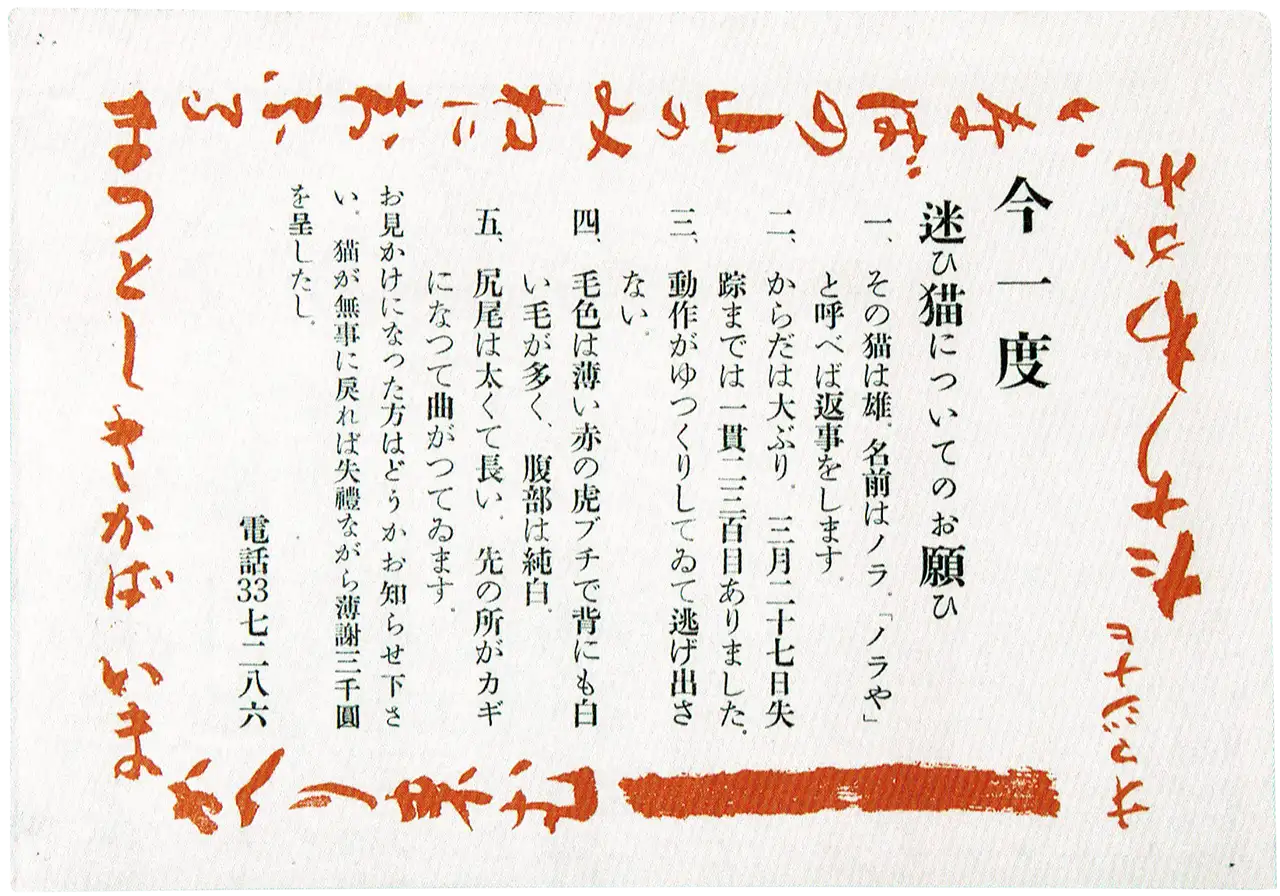
Yukihira's Hyakunin Isshu poem "Tachiwakare..." has long been known as a charm to help you find a pet that has gone missing. In Noraya, a famous work by the writer Uchida Hyakken, he puts flyers into newspapers to look for his missing cat, Nora. Around all four edges of the flyer, the poem "Tachiwakare..." was printed in red as a charm. In this way, Yukihira's poem has lived on through the ages, quietly staying close to people's prayers and wishes.
Image source: Noraya: Aibyō Zuihitsu-shū by Uchida Hyakken (Chuokoron-Shinsha)
- Prince Abo
-
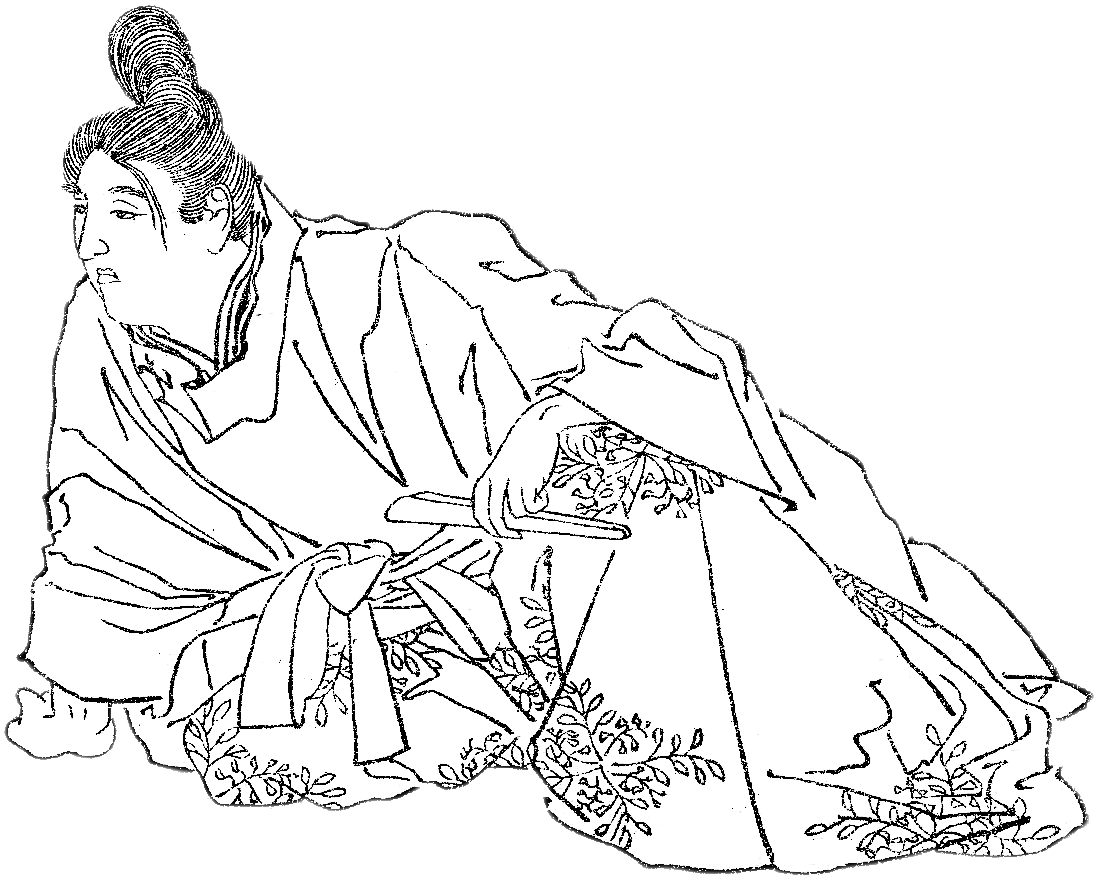
The first son of Emperor Heizei, and the father of Ariwara no Yukihira and Ariwara no Narihira.
He is also said to be the real grandfather of Ōe no Chisato.
- Why Yukihira Left the Imperial Family
- After stepping down, Retired Emperor Heizei, urged on by Fujiwara no Kusuko, tried to take back power and clashed with his younger brother, Emperor Saga. Because of this "Retired Emperor Heizei Incident" (also called the "Kusuko Incident"), Heizei's first son, Prince Abo, was also punished and sent away to Dazaifu as its acting governor-general. Later, Prince Abo asked the emperor to let his sons leave the imperial family and become subjects, and Yukihira and Narihira were given the family name "Ariwara."
- Matsukaze and Murasame
-
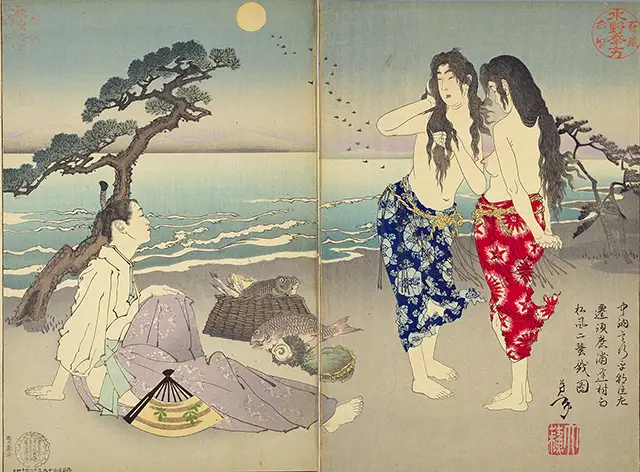
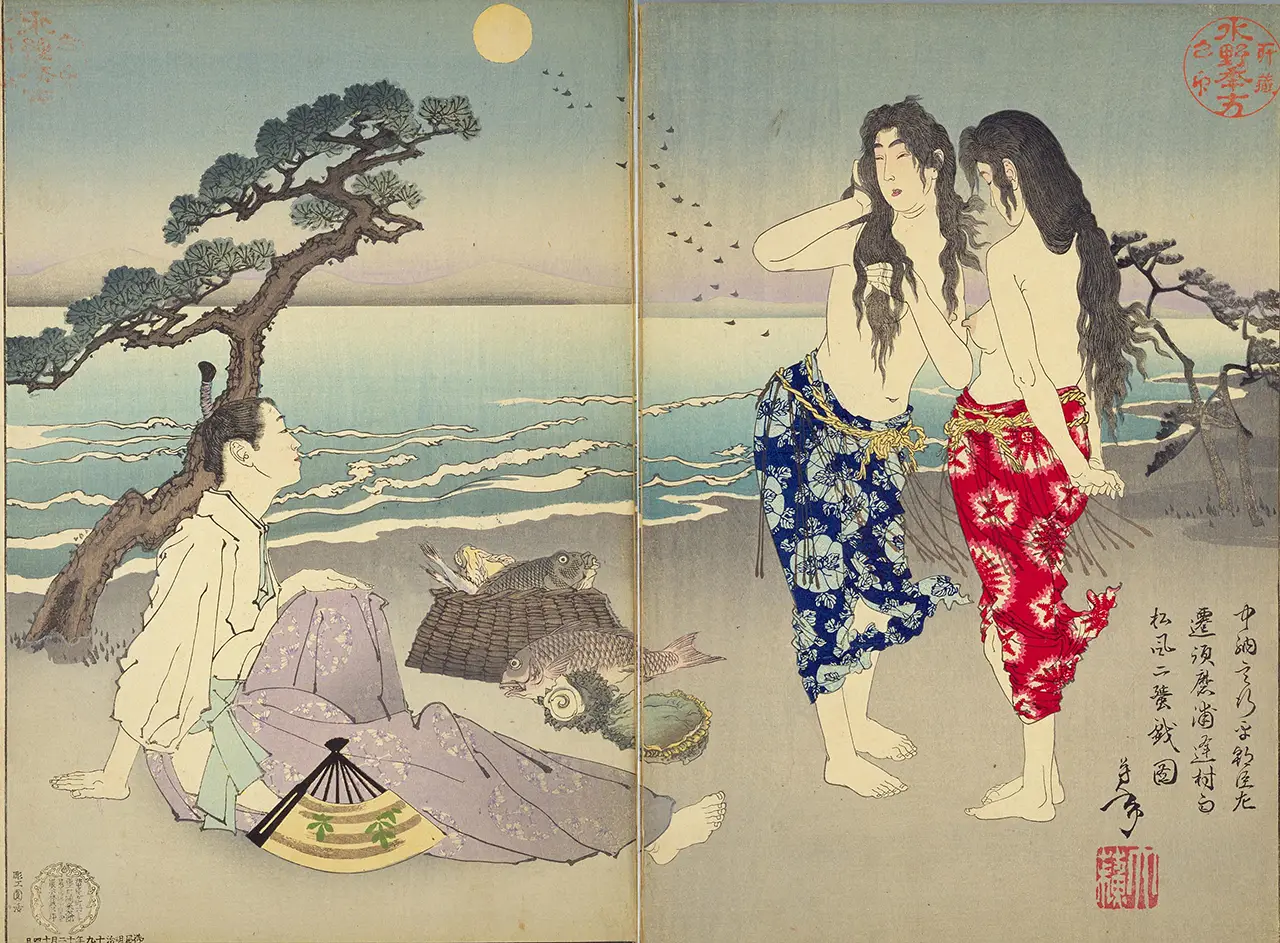
Yoshitoshi, Public domain, via Wikimedia Commons For a time, Yukihira was sent away to Suma (why is not known). A legend says that there he met two sisters, Moshio and Kofuji, gave them the names "Matsukaze" (Wind in the Pines) and "Murasame" (Passing Shower), and loved them dearly. According to this legend, the poem "Tachiwakare Inaba no yama no..." was written when he parted from the two.
You may wonder, "Isn't Inaba in Tottori?" But Suma also once had a mountain called Inaba-yama, so the place name in the poem fits too. By the way, because Yukihira used to view the moon there, Suma's Inaba-yama is now called Tsukimi-yama, "Moon-Viewing Mountain."
- A Poem Written at Suma
-
Yukihira wrote the next poem while he was sent away to Suma.
In Japanese
わくらばに 問ふ人あらば 須磨の浦に
藻塩たれつつ 侘ぶと答へよ wakurabani tofuhitoaraba sumanourani
moshiotaretsutsu wabutokotaheyo Kokin Wakashū, Ariwara no YukihiraIn English
If by chance anyone should ask about me, tell them I am living a lonely life on the shore of Suma, making salt from seaweed and wet with tears.
- Yukihira Pans
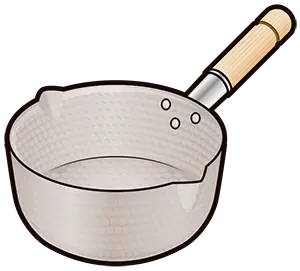 There are several theories about where the name of the yukihira-nabe (a small Japanese cooking pan) comes from. One says it comes from the pans Ariwara no Yukihira had the women divers use to make salt from seawater while he was in Suma.
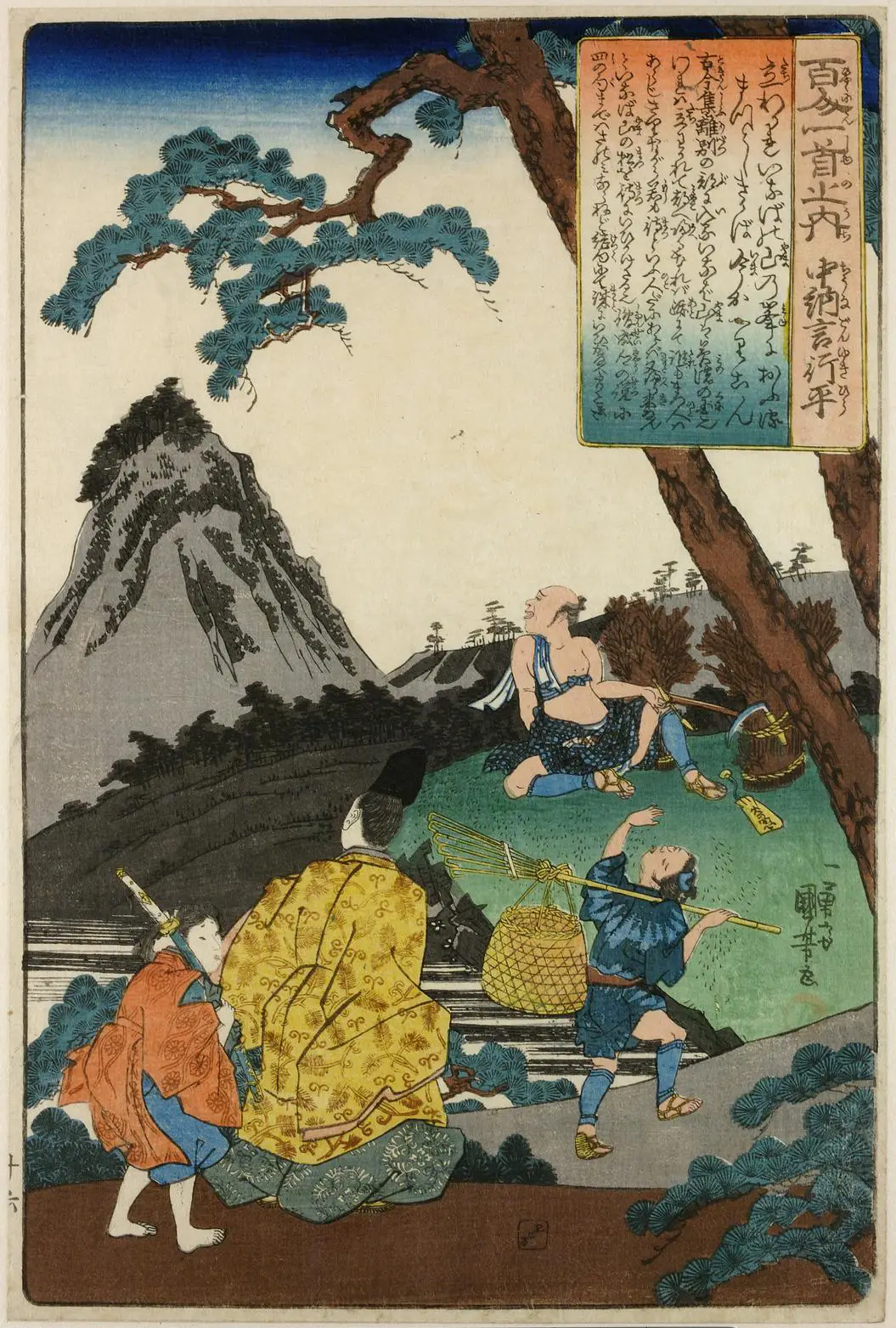
- Utagawa Kuniyoshi's Hyakunin Isshu no Uchi
-
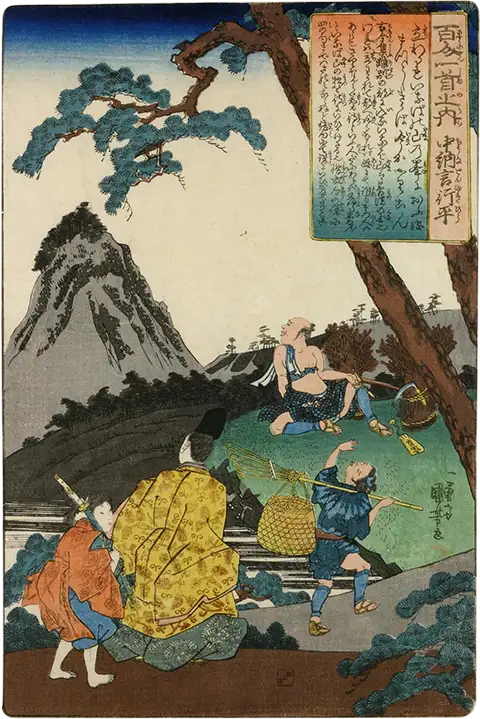
British Museum, Public domain, via Wikimedia Commons This ukiyo-e is by Utagawa Kuniyoshi, an artist of the Edo period.
It shows a scene that matches the poem in the Hyakunin Isshu.The headnote of this poem says it was "written when I went to the province of Inaba." It was written for the people who came to see him off as he left the capital for his new post.
Kuniyoshi's print seems to show the moment he arrived in Inaba. Looking at the pine trees on Mount Inaba, Yukihira seems to be fondly remembering that parting.