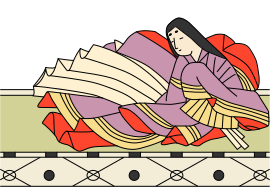
Front of the Card
Back of the Card
Japanese
English
Audio: NHK Creative Library
Read by LibriVox volunteer Larry Wilson.
Audio courtesy of LibriVox
右大将道綱母
嘆きつつ
ひとり寝る夜の
明くる間は
いかに久しき
ものとかは知る
いかにひさ
しきものと
かはしる

なげき


- Poem 53
- 嘆きつつ
ひとり寝る夜の
明くる間は
いかに久しき ものとかは知る
Author: Mother of the Right Captain Michitsuna (c. 936–995)
Source: Shūi Wakashū, Love
- English Verse Translation
- All through the long and dreary night I lie awake and moan; How desolate my chamber feels,
How weary I have grown Of being left alone!
— William N. Porter, 1909
- Modern Translation
- Lying alone, waiting for the long night to end — how endless it feels. Does the person who left me even know?
- Commentary
- The poet married Fujiwara no Kaneie, who already had a chief wife. After she bore their first child, he came home less and began seeing another woman. One night she refused to let him in, and the next day sent him this poem with a single faded chrysanthemum.
- About the Poet
- The Mother of the Right Captain Michitsuna was a secondary wife of Fujiwara no Kaneie, who later became chief adviser to the emperor. Her Kagerō Diary tells of her pain over his affairs, but also shows a proud woman who stood up to a powerful man. She is counted among Japan's three great beauties.
- Poem Illustration
-
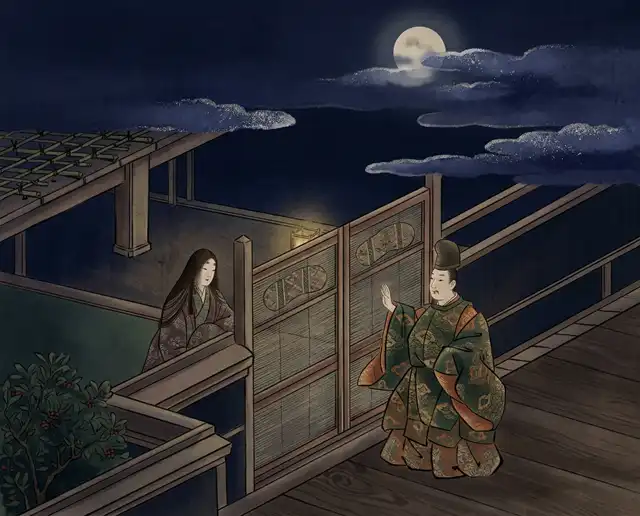
This image is based on an illustration from William N. Porter's A Hundred Verses from Old Japan, his 1909 English translation of the Hyakunin Isshu published in England, colorized and reworked using Adobe Firefly (generative AI).
- Mother of the Right Captain Michitsuna: A Short Timeline
-
- c. 936
- Born as a daughter of Fujiwara no Tomoyasu
- 954
- Becomes a wife of Fujiwara no Kaneie
- 955
- Gives birth to Fujiwara no Michitsuna
- c. 974
- Finishes The Kagerō Diary
- 995
- Dies
- Family Tree of the Mother of the Right Captain Michitsuna
-
Michitsuna's mother was one of the wives of Fujiwara no Kaneie. A wife who was not the principal wife had a weak position, and she often spent her days simply waiting, never knowing when her husband would visit.
Kaneie's principal wife was a woman named Tokihime. Their children included Fujiwara no Michitaka, who founded the Naka-no-Kanpaku family, and Fujiwara no Michinaga, who led regency politics (sekkan seiji) at its height.
Her niece was Sugawara no Takasue's Daughter, the author of the Sarashina Diary. Takasue's Daughter was a descendant of Sugawara no Michizane.
- Appendix
-
- Fujiwara no Yasuko
- Women in the Heian period did not make their names public, so even Michitsuna's mother, who left a great diary, is not known by her real name. In the 2024 NHK historical drama Hikaru Kimi e (Dear Radiance), she appears under the name "Fujiwara no Yasuko." The makers of the drama probably made up this name themselves, taking one character from the name of her father, Fujiwara no Tomoyasu.
- Fujiwara no Kaneie
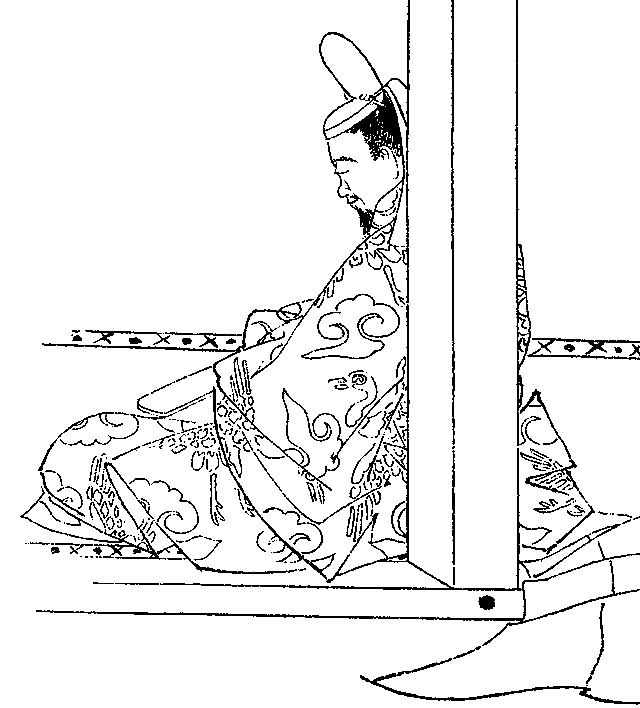 A court noble of the mid-Heian period. He came from the regents' family (sekkanke), and as the grandfather of Emperor Ichijō on his mother's side, he himself became Regent and Kampaku (chief adviser). The Mother of the Right Captain Michitsuna was a secondary wife of Kaneie. Fujiwara no Michitaka, the husband of the Mother of the Honorary Grand Minister, was the eldest son of Kaneie and his principal wife, Tokihime.
- Kaneie's Answer
- This is Kaneie's answer to the poem "Nagekitsutsu hitori nuru yo no...."
In Japanese
げにやげに 冬の夜ならぬ 槙の戸も
遅く明くるは 侘びしかりけり geniyageni fuyunoyonaranu makinotomo
osokuakuruha wabishikarikeri Kagerō Diary, Fujiwara no KaneieIn English
Indeed, a winter night that is slow to end is hard to bear, but so is a cedar door that is slow to open.
- Poems Exchanged on the Uji River
-
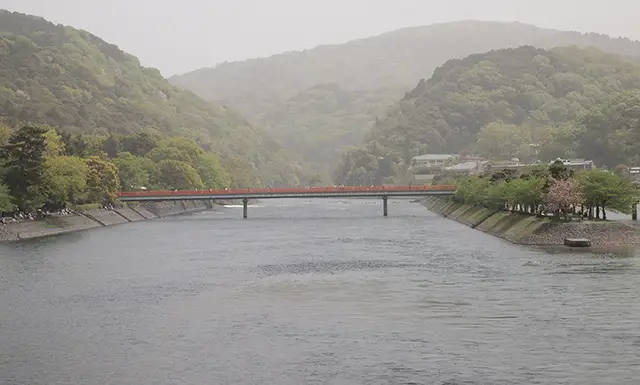
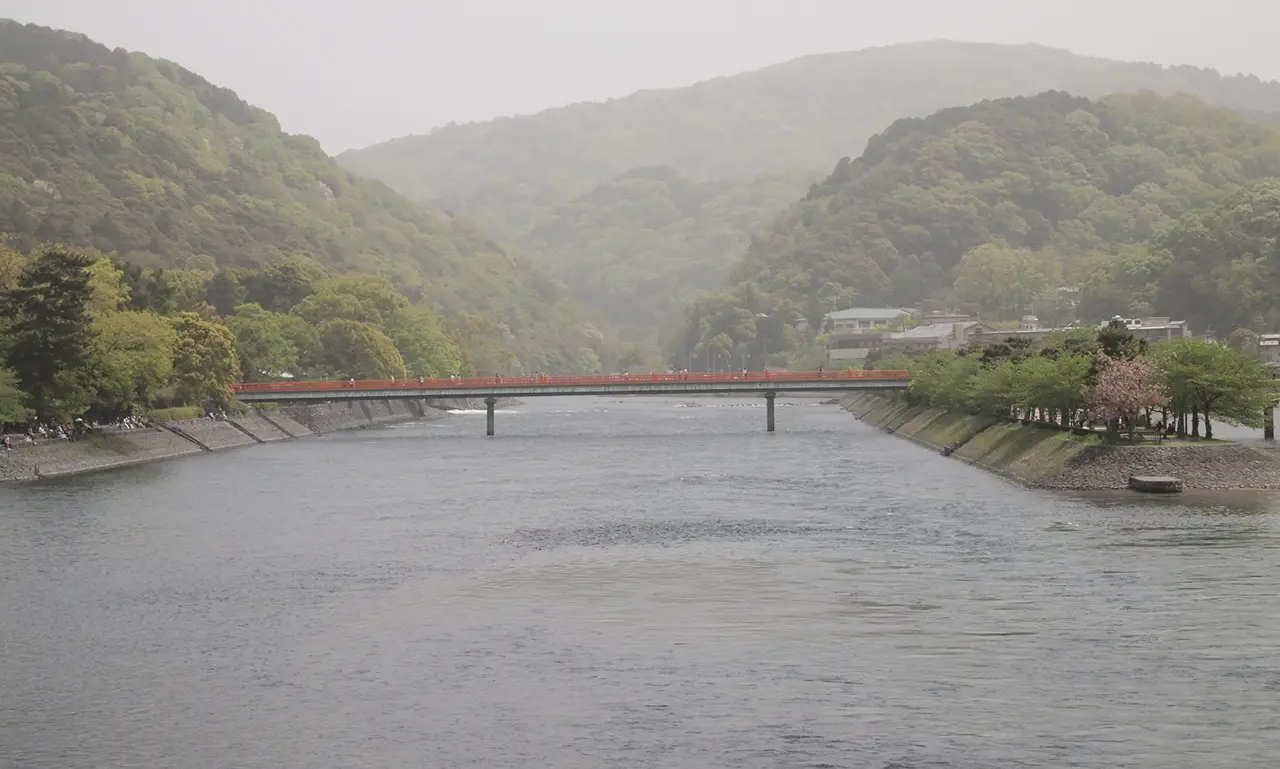
When Michitsuna's mother went on a pilgrimage to Hase, Kaneie came to Uji to meet her, and the two exchanged the following poems across the Uji River, which was covered in fog. "Uji" is a pun (kakekotoba) on the place name Uji and ushi (unkind).
Ajiro are stakes set up to catch hio (young sweetfish), a winter sight on the Uji River. For details, see this page. - Poem by Michitsuna's Mother
-
In Japanese
人心 うぢの網代に たまさかに
よるひをだにも 訪ねけるかな hitogokoro ujinoajironi tamasakani
yoruhiodanimo tazunekerukana Kagerō Diary, Michitsuna's motherIn English
You did not come to meet me; you just happened to stop by to see the hio caught in the ajiro at Uji. How unkind.
- Kaneie's Answer
-
In Japanese
帰る日を 心のうちに 数へつつ
誰によりてか 網代をもとふ kaeruhio kokoronouchini kazohetsutsu
dareniyoriteka ajiroomotofu Kagerō Diary, Fujiwara no KaneieIn English
I have been counting in my heart the days until you come home.
For whom else would I come to see the ajiro?