Front of the Card
Back of the Card
Japanese
English
Audio: NHK Creative Library
Read by LibriVox volunteer Larry Wilson.
Audio courtesy of LibriVox
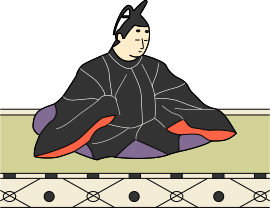
後徳大寺左大臣
ほととぎす
鳴きつる方を
ながむれば
ただ有明の
月ぞ残れる
たたありあ
けのつきそ
のこれる

ほ


- Poem 81
- ほととぎす
鳴きつる方を
ながむれば
ただ有明の 月ぞ残れる
Author: Later Tokudaiji Minister of the Left (1139–1192)
Source: Senzai Wakashū, Summer
- English Verse Translation
- The cuckoo's echo dies away, And lo! the branch is bare I only see the morning moon, Whose
light is fading there Before the daylight's glare.
— William N. Porter, 1909
- Modern Translation
- I looked toward where the cuckoo had just called — and all that remained was the pale moon at dawn.
- Commentary
- Written on the theme "hearing the hototogisu at dawn." The bird's first call of the year told Heian people that summer had come. Nobles stayed up all night to hear it, and the poet may have been waiting too.
- About the Poet
- Fujiwara no Sanesada was a cousin of Fujiwara no Sadaie, compiler of the Hyakunin Isshu. A fine poet, he was also famous as a musician. His grandfather Saneyoshi had also been Minister of the Left and was called the "Tokudaiji Minister of the Left," so Sanesada was called the "Later" Tokudaiji Minister of the Left.
- Poem Illustration
-
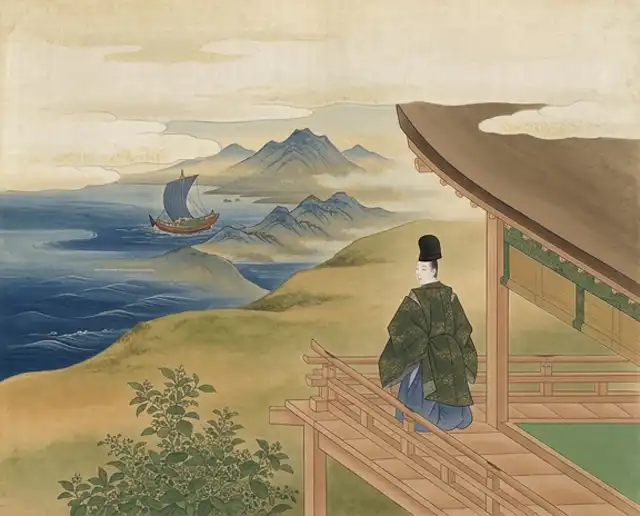
This image is based on an illustration from William N. Porter's A Hundred Verses from Old Japan, his 1909 English translation of the Hyakunin Isshu published in England, colorized and reworked using Adobe Firefly (generative AI).
- Later Tokudaiji Minister of the Left: A Short Timeline
-
- 1139
- Born as a son of Fujiwara no Kinyoshi
- 1141
- Given Junior Fifth Rank, Lower Grade
- 1177
- Becomes Upper Counselor again
- 1183
- Becomes Palace Minister
- 1189
- Becomes Minister of the Left
- 1191
- Resigns because of illness and becomes a monk
- 1192
- Dies
- Later Tokudaiji Minister of the Left's Family Tree
-
- Appendix
-
- The Call of the Hototogisu
-
Audio: NHK Creative Library
* Audio may not play in silent mode. - The Dawn Moon and the Phases of the Moon
-
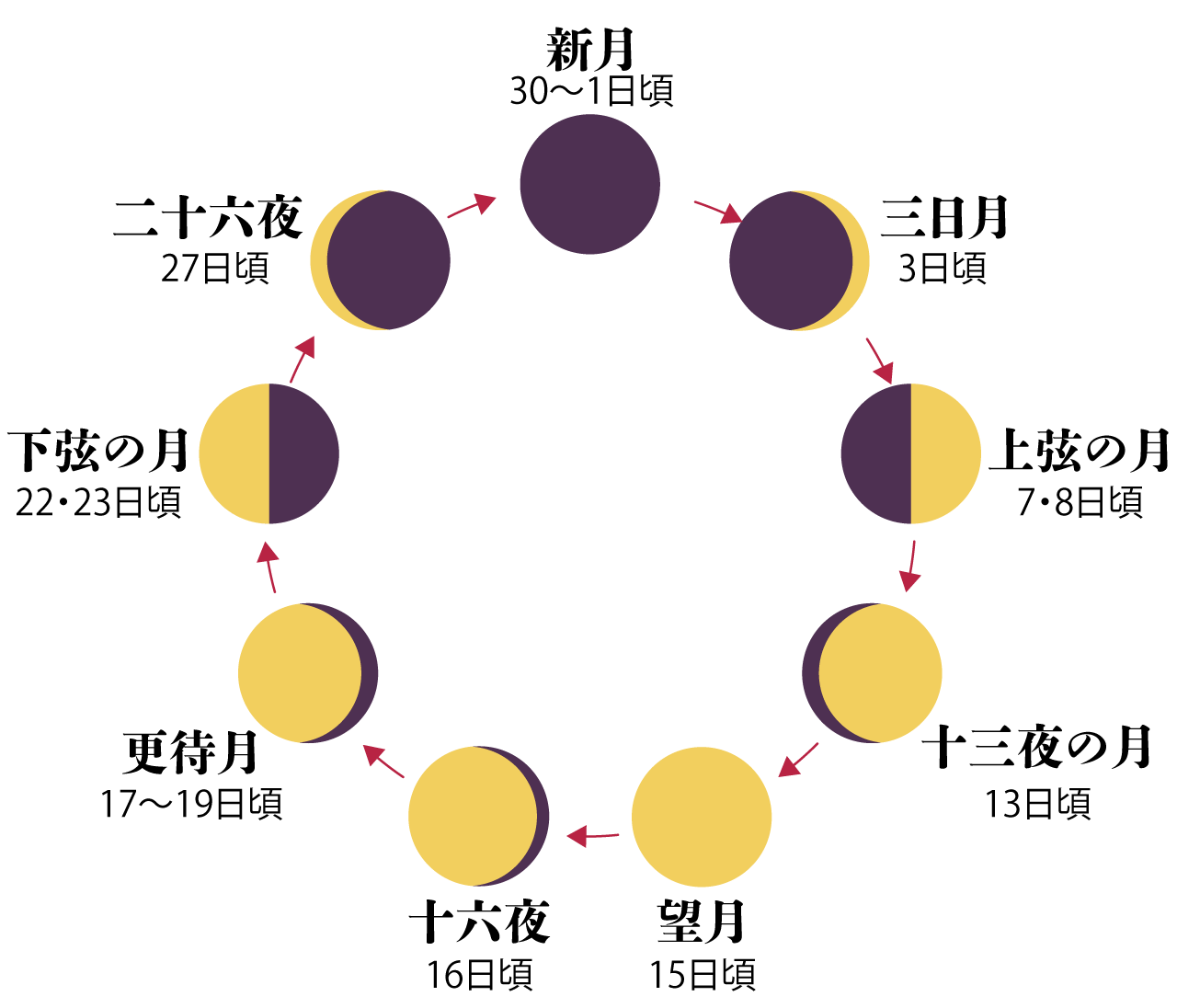
The ariake no tsuki (dawn moon) is the moon that is still in the sky after the night ends. From about the 15th day of the lunar month until about the 29th, the moon can be seen in the sky at dawn.
In the Heian period, only privileged people had calendars. So for ordinary people, the changing shape of the moon probably worked as a kind of natural calendar.
Phase Moonrise Moonset New moon 6:00 18:00 First quarter 12:00 24:00 Full moon 18:00 6:00 Last quarter 24:00 12:00 - Poems About the Hototogisu
-
For Heian nobles, the first call of the hototogisu (a kind of cuckoo), which announced the coming of summer, was a specially elegant moment.
Here are two summer poems about the hototogisu.The next poem is by the Mother of the Right Captain Michitsuna and is in her personal collection, the Michitsuna no Haha-shū.
In Japanese
都人 ねてまつらめや ほととぎす
今ぞ山辺を 鳴きていづなり miyakobito netematsurameya hototogisu
imazoyamabeo nakiteizunari Michitsuna no Haha-shū, the Mother of the Right Captain MichitsunaIn English
Would the people of the capital wait for it asleep? Surely they stay awake.
Right now the hototogisu is crying as it sets out from the hills.The next poem is by Izumi Shikibu and is in the Goshūi Wakashū.
In Japanese
桜色に そめし衣を ぬぎかへて
山ほととぎす 今日よりぞ待つ sakuraironi someshikoromoo nugikahete
yamahototogisu kyouyorizomatsu Goshūi Wakashū, Izumi ShikibuIn English
I have taken off my robe dyed the color of cherry blossoms,
and from today I wait for the mountain hototogisu. - A Song That Feels Like the End of the Heian Period
-
After Taira no Kiyomori moved the capital to Fukuhara in 1180, Fujiwara no Sanesada went back to Kyoto and composed the following imayō (a popular song style of the time).
In Japanese
ふるき都を 来て見れば 浅茅が原とぞ 荒れにける
月の光は 隈なくて 秋風のみぞ 身にはしむ furukimiyakoo kitemireba asajigaharatozo arenikeru
tsukinohikariha kumanakute akikazenomizo minihashimu The Tale of the Heike, Fujiwara no SanesadaIn English
When I came to see the old capital, it had fallen to ruin, like a field overgrown with low reeds. The moonlight shines everywhere, but only the autumn wind, all the more empty, pierces me to the bone.
- The Legend of Naishi-iwa Rock
-
Sanesada appears in a sad love story handed down on Miyajima, the legend of Naishi-iwa Rock (Naishi-iwa densetsu), so here it is.
When Sanesada was an Upper Counselor, he was not getting the promotions he hoped for and was thinking of becoming a monk. On the advice of an aide, he came to stay and pray at Itsukushima Shrine, which the Taira clan deeply worshipped. There he fell in love at first sight with Ariko, a shrine maiden of Itsukushima and a master of the biwa (a Japanese lute), and wrote the following poem.
In Japanese
山の端に 契りて出む 夜半の月
めぐり逢べき 折を知らねど yamanohani chigiriteidemu yowanotsuki
meguriaubeki orioshiranedo The Legend of Naishi-iwa Rock, Fujiwara no SanesadaIn English
As if by promise, the midnight moon rises over the mountain ridge.
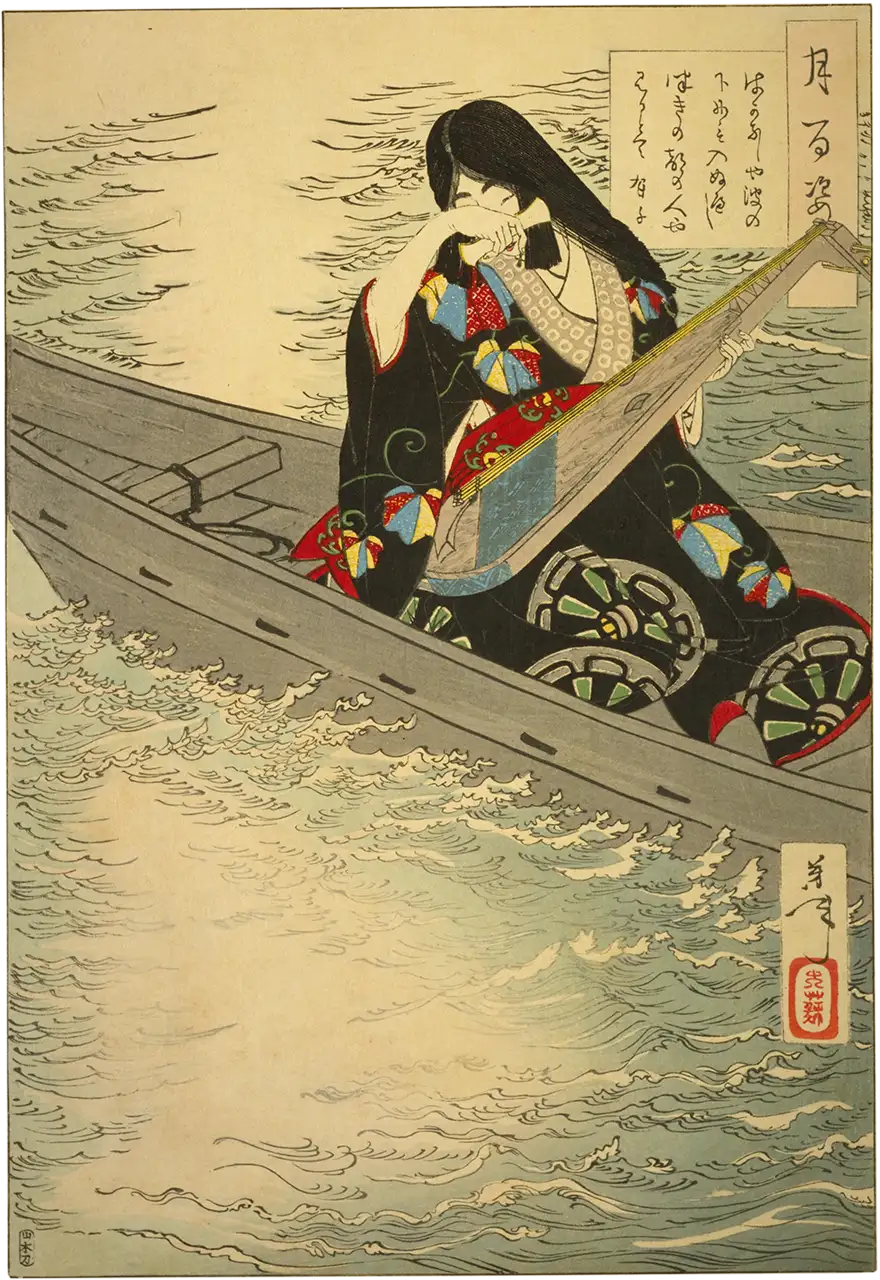
Though I do not know when I will meet you again.When Sanesada left for the capital, Ariko ran after his ship, stood on a rock by the shore, and watched until the ship disappeared from sight. After that, Ariko could not forget her love for Sanesada and went to the capital. But the difference in their social standing kept them apart, and she was not even allowed to come near him. In despair, Ariko rowed a boat out onto the sea at Sumiyoshi in Settsu Province and played her biwa as she drifted on the waves. But her tears overflowed and she could no longer play. She composed the following poem, full of grief, and threw herself into the sea.
In Japanese
はかなしや 浪の下にも いりぬべし
月の都の 人や見るとて hakanashiya naminoshitanimo irinubeshi
tsukinomiyakono hitoyamirutote The Legend of Naishi-iwa Rock, Ariko no NaishiIn English
How fleeting! I will go down beneath the waves, thinking that the one in the capital, who wrote of the moon to me, may be watching.
- Tsukioka Yoshitoshi's One Hundred Aspects of the Moon
-
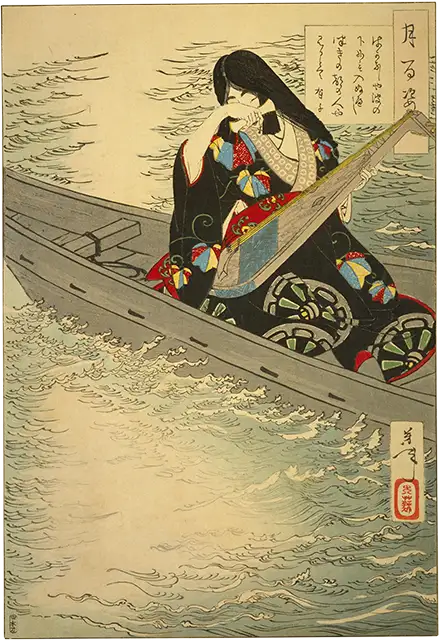
National Diet Library, Public domain, via Wikimedia Commons This ukiyo-e print is from the series One Hundred Aspects of the Moon (Tsuki Hyakushi) by Tsukioka Yoshitoshi, an ukiyo-e artist active from the end of the Edo period to the early Meiji period.
It shows the last moments of Ariko from the legend of Naishi-iwa Rock.
- Utagawa Kuniyoshi's Hyakunin Isshu no Uchi
-
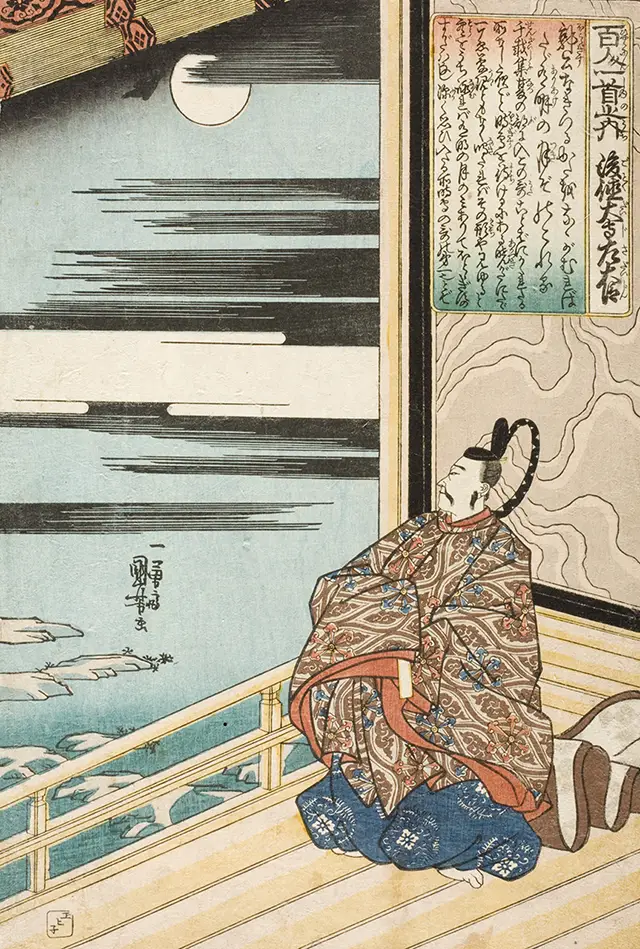
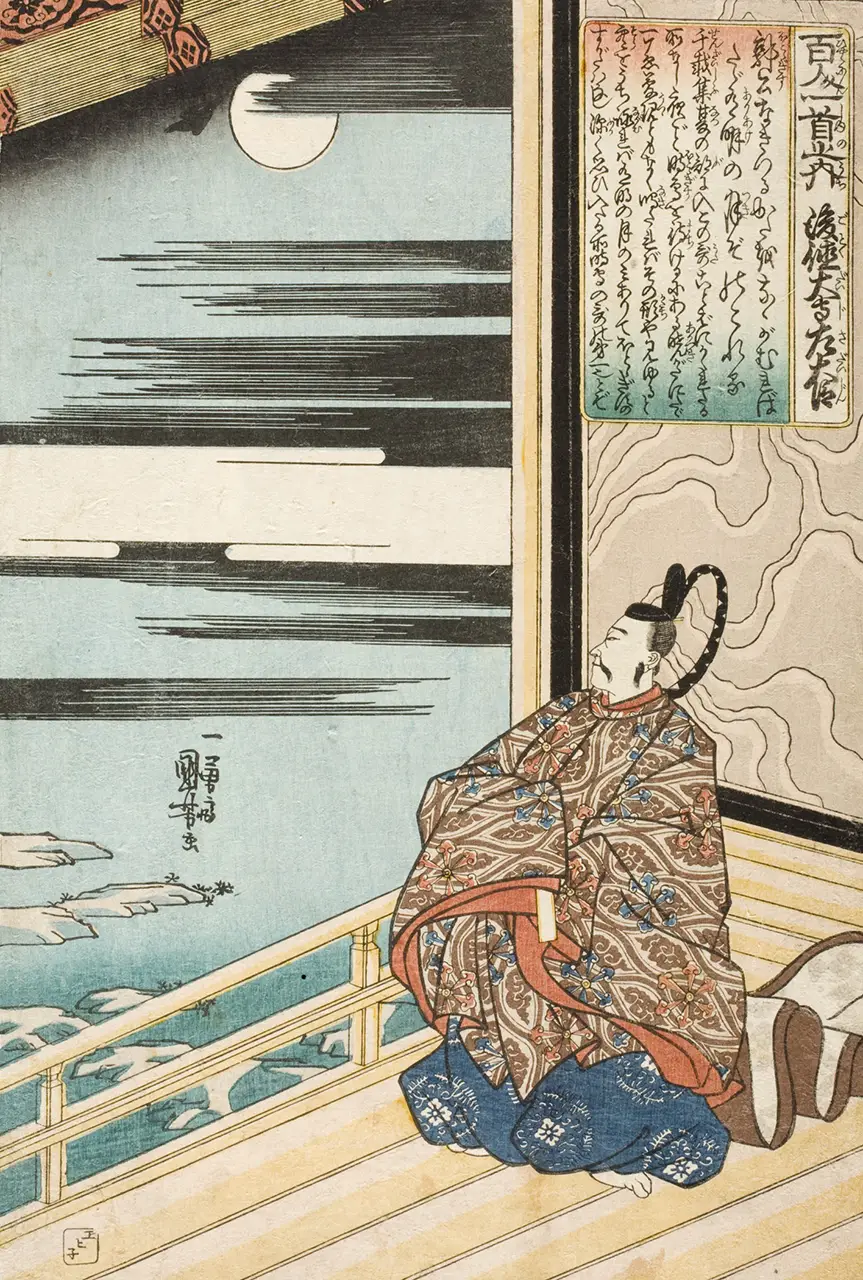
Los Angeles County Museum of Art, Public domain, via Wikimedia Commons An ukiyo-e print by Utagawa Kuniyoshi, an ukiyo-e artist of the Edo period.
It shows a scene that matches the Hyakunin Isshu poem.The figure seems to be looking toward where the call of the hototogisu came from.