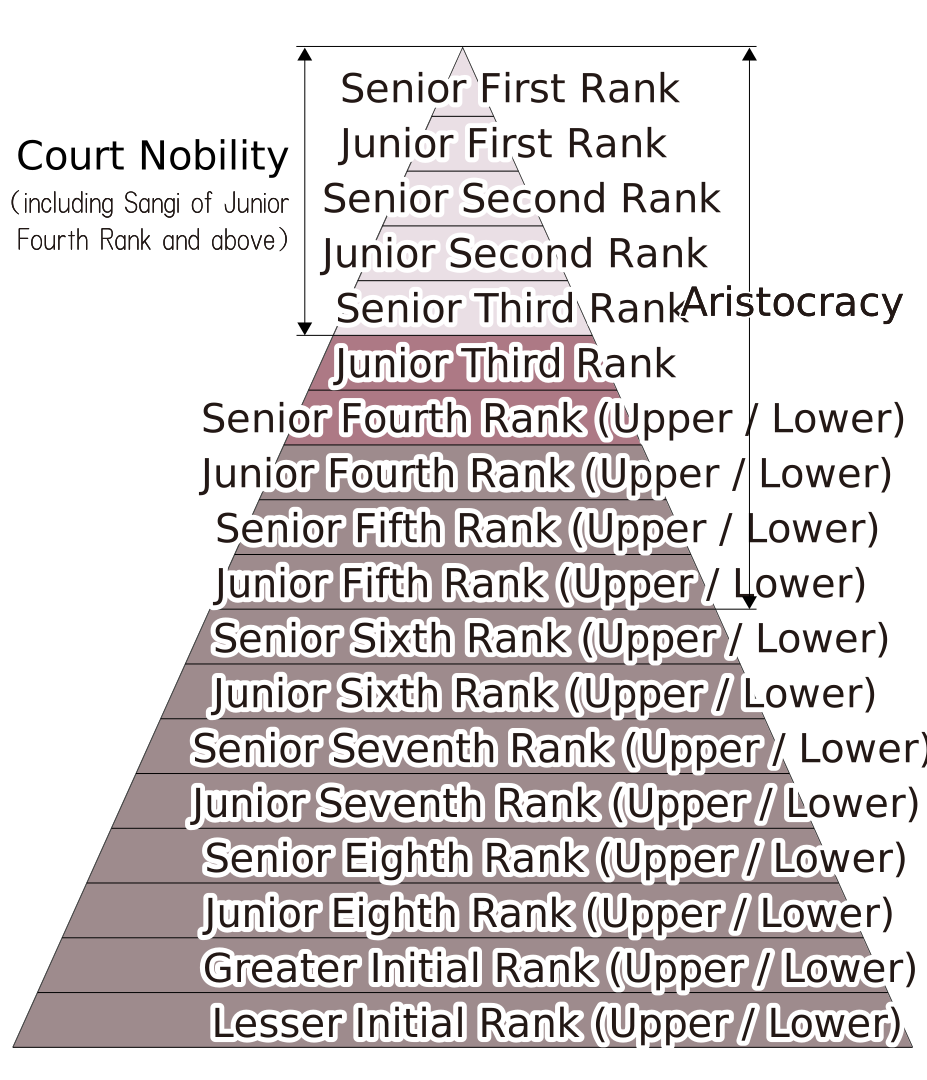
Aristocratic Status and Hierarchy
Here, we introduce the nobility divided roughly into three tiers: upper, middle, and lower.
- Upper-tier nobles (jōryū kizoku) held the Third Rank or higher, or held the Fourth Rank while serving as a Councillor (sangi). They were known as kugyō or kandachime. This group included officials such as the Chancellor (daijō-daijin), the Ministers of the Left and Right, the Major and Middle Counselors, the Inner Minister, and Councillors — roughly equivalent to today's cabinet ministers, at the very center of court politics.
- Middle-tier nobles (chūryū kizoku) mainly held the Fourth or Fifth Rank, and were sometimes called tenjōbito. A tenjōbito was someone permitted to enter the Tenjō-no-Ma chamber of the Seiryōden — a privilege that was not determined by rank alone. For example, Chamberlains (kurōdo), who served close to the emperor, were granted this privilege even at the Sixth Rank. This tier formed the senior bureaucratic class that supported the core of the imperial court.
- Lower-tier nobles (karyū kizoku) were those not permitted to enter the Seiryōden, including those holding the Sixth through Eighth Ranks, or the Initial Rank. They were known as jigenin.
Even so, someone at the Sixth Rank could still be appointed as a provincial governor (kokushi). In particular, in lower-graded provinces — those classified as chūgoku or gekoku — a Sixth Rank official could even be appointed to the top post of kami. In this way, a person's actual social standing depended not only on rank, but also on office and posting.