Front of the Card
Back of the Card
Japanese
English
Audio: NHK Creative Library
Read by LibriVox volunteer Larry Wilson.
Audio courtesy of LibriVox
大中臣能宣朝臣
御垣守
衛士のたく火の
夜はもえ
昼は消えつつ
物をこそ思へ
ひるはきえ
つつものを
こそおもへ

みかき


- Poem 49
- 御垣守
衛士のたく火の
夜はもえ
昼は消えつつ 物をこそ思へ
Author: Ōnakatomi no Yoshinobu Ason (921–991)
Source: Shika Wakashū, Love
- English Verse Translation
- My constancy to her I love I never will forsake; As surely as the Palace Guards Each night
their watch-fire make And guard it till daybreak.
— William N. Porter, 1909
- Modern Translation
- Like the fire tended by the palace guards, I burn at night and fade in the day — lost in endless longing.
- Commentary
- "Mikakimori" were guards of the palace gates; here "mikakimori eji (guardsmen) no taku hi no" is a jokotoba, an introductory phrase. The poet compares the guards' watch-fires to the fire of his love, burning at night and dying out by day, when he cannot meet his love.
- About the Poet
- Ōnakatomi no Yoshinobu came from the Nakatomi clan, which led Shinto rites and shared ancestors with Nakatomi no Kamatari. He served as chief priest of Ise Shrine. Many poets came from his family; Ise no Taifu was his granddaughter. He was one of the "Five Men of the Pear Pavilion" who compiled the Gosen Wakashū.
- Poem Illustration
-
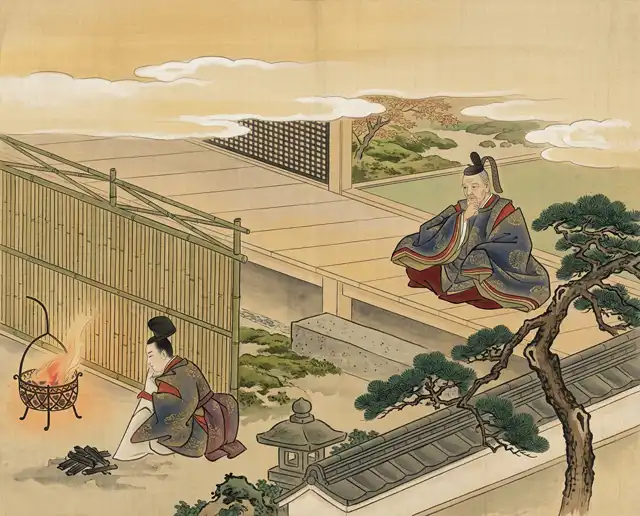
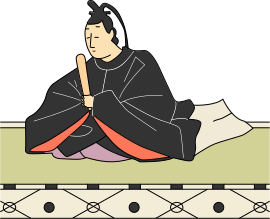
This image is based on an illustration from William N. Porter's A Hundred Verses from Old Japan, his 1909 English translation of the Hyakunin Isshu published in England, colorized and reworked using Adobe Firefly (generative AI).
- Ōnakatomi no Yoshinobu: A Short Timeline
-
- 921
- Born
- 951
- Joins the Office of Poetry as one of the Five Men of the Pear Pavilion
- 958
- Becomes a junior official of the Office of Shrine Affairs
- 972
- Becomes Senior Assistant Head of the Office of Shrine Affairs and chief priest of Ise Shrine
- 986
- Given Senior Fourth Rank, Lower Grade
- 991
- Dies
- Notes
-
- Counted as one of the Thirty-Six Immortal Poets
- Ōnakatomi no Yoshinobu's Family Tree
-
If you trace the Ōnakatomi family back, you reach the same ancestors as the Fujiwara clan, which flourished in the Heian period.
The Nakatomi family led Shinto rites and ceremonies, and produced many poets. Yorimoto, Yoshinobu, Sukechika, and Ise no Taifu are well known as poets.
- The Compilers of the Gosen Wakashū
-
In 951 (the 5th year of Tenryaku), on the orders of Emperor Murakami, an Office of Poetry was set up in the Shōyōsha (Nashitsubo, the Pear Pavilion) of the palace, and five men compiled the Gosen Wakashū: Ōnakatomi no Yoshinobu, Kiyohara no Motosuke, Minamoto no Shitagō, Ki no Tokibumi, and Sakanoue no Mochiki. They are called the "Five Men of the Pear Pavilion."
- Appendix
-
- A Poem of Blessing
-
In the Heian period there was a court custom called komatsu-hiki (pulling up young pines), held on the first Day of the Rat (ne no hi) of the new year. People pulled up young pine trees, hoping to take in the life force of the pine, which lives a thousand years, and so live long themselves. This poem is a blessing that Yoshinobu presented when Prince Atsumi, a son of Emperor Uda, pulled up a young pine. There is a story that when Yoshinobu showed the poem to his father, Yorimoto, Yorimoto scolded him: "(If you write such a fine poem now,) what will you write if you are ever invited to a Day of the Rat held by the emperor?" Komatsu-hiki is also called ne no hi asobi (the Day of the Rat outing).
In Japanese
千年まで かぎれる松も けふよりは
君がひかれて 万代や経む chitosemade kagirerumatsumo kefuyoriha
kimigahikarete yorozuyoyahemu Shūi Wakashū, Ōnakatomi no YoshinobuIn English
Even the pine, whose life is limited to a thousand years,
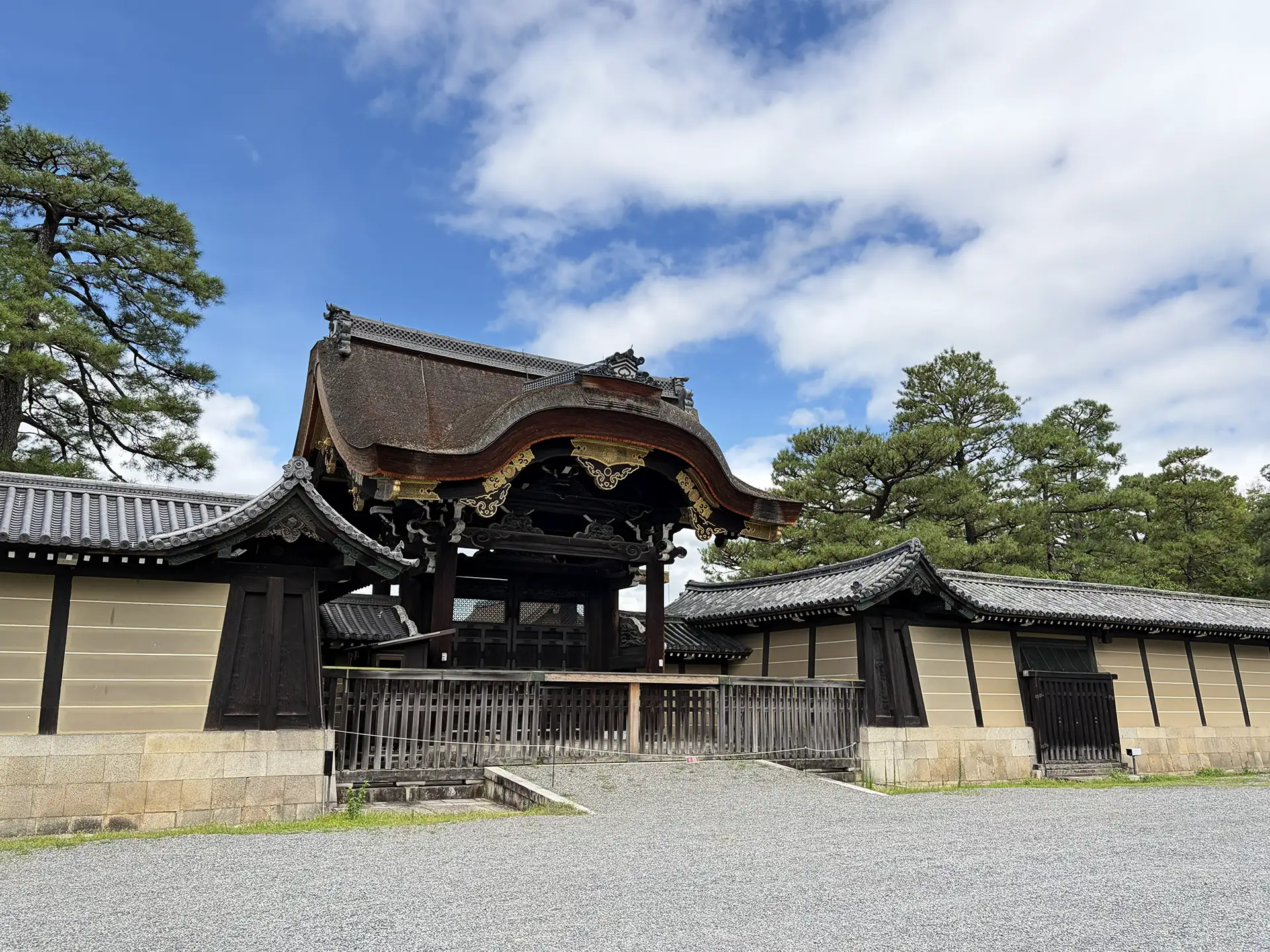
will, from today, be pulled by you and live for ten thousand. - Kenshunmon Gate, Kyoto Imperial Palace
-
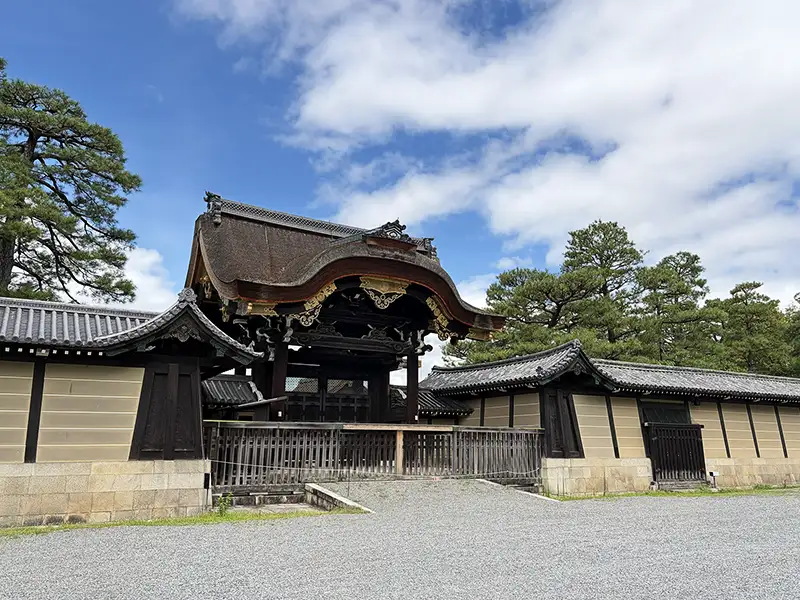
This is the Kenshunmon Gate of today's Kyoto Imperial Palace. It is the main east gate of the inner palace, where the emperor lived.
The Heian-period inner palace, the emperor's home, burned down many times, and after it burned in 1227 it was never rebuilt.
Today's Kyoto Imperial Palace was rebuilt in 1855, so this gate is not from the Heian period. But it was built following the styles and traditions of the Heian palace buildings, and the mikakimori probably guarded palace gates like this one.
(Photo taken August 8, 2026)
- Katsushika Hokusai's One Hundred Poems Explained by the Nurse
-
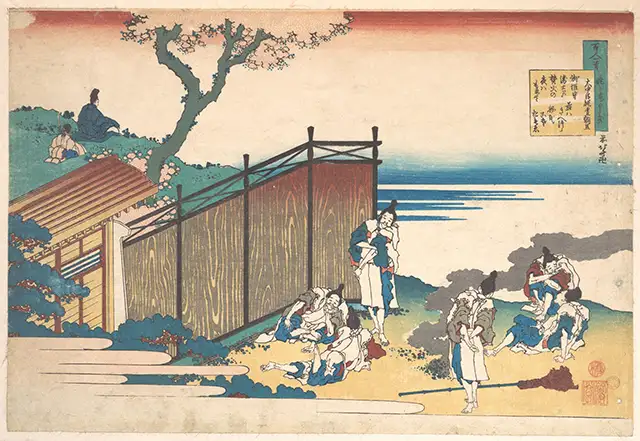
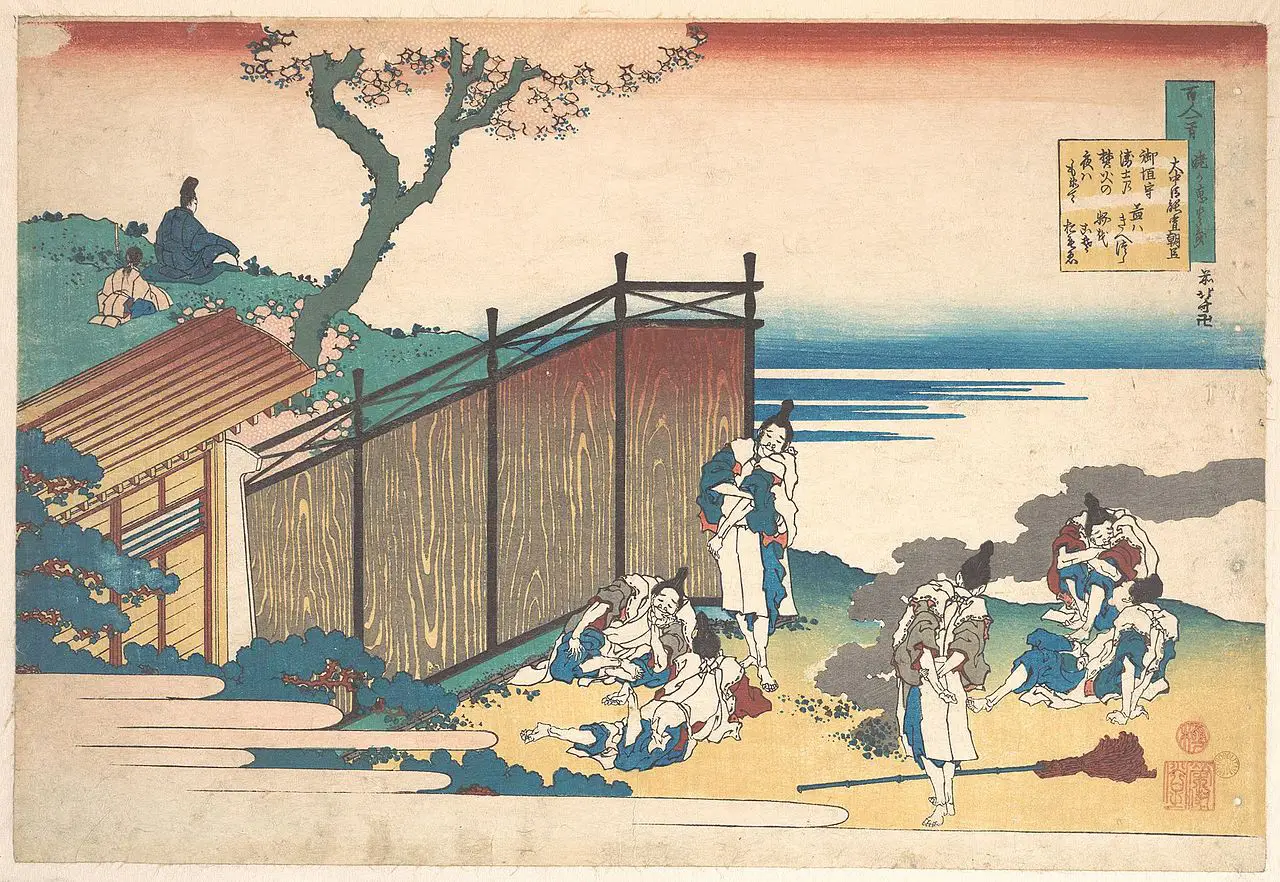
Katsushika Hokusai, CC0, via Wikimedia Commons This print is from One Hundred Poems Explained by the Nurse (Hyakunin Isshu Uba ga Etoki) by Katsushika Hokusai, an ukiyo-e artist of the Edo period. The idea of the series is a nurse explaining the Hyakunin Isshu poems with easy-to-understand pictures. The palace guards seem to be taking a break. The nobleman standing at the back on the left is probably Yoshinobu. Like the smoldering smoke, is he thinking of the lover he cannot meet by day?
- Utagawa Kuniyoshi's Hyakunin Isshu no Uchi
-
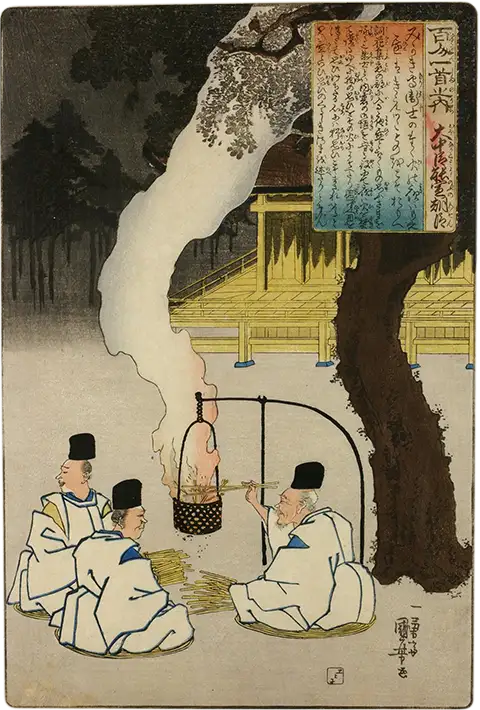
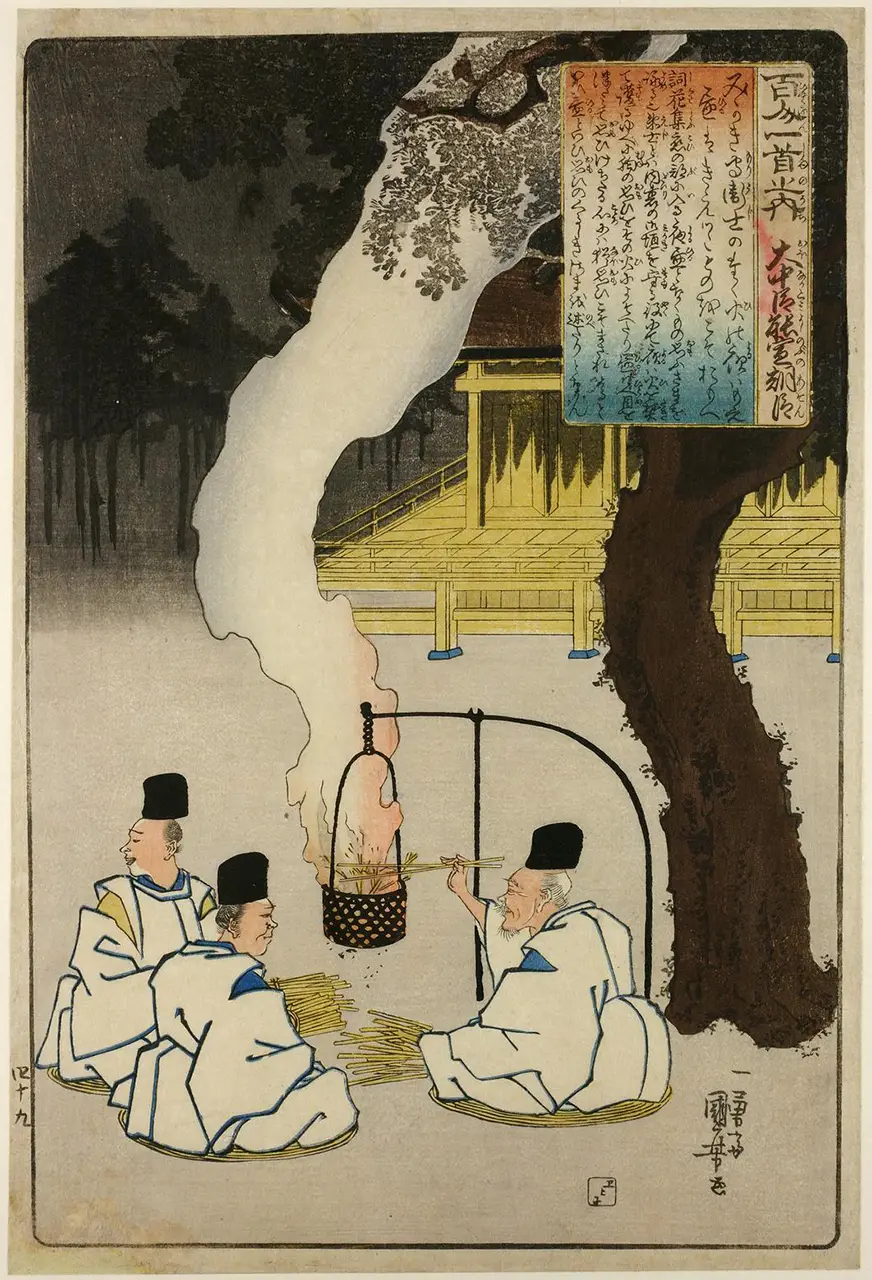
British Museum, Public domain, via Wikimedia Commons This ukiyo-e print is by Utagawa Kuniyoshi, an artist of the Edo period.
It shows a scene to go with the Hyakunin Isshu poem.