Front of the Card
Back of the Card
Japanese
English
Audio: NHK Creative Library
Read by LibriVox volunteer Larry Wilson.
Audio courtesy of LibriVox
紫式部
めぐり逢ひて
見しやそれとも
わかぬ間に
雲隠れにし
夜半の月かな
くもかくれ
にしよはの
つきかな

め


- Poem 57
- めぐり逢ひて
見しやそれとも
わかぬ間に
雲隠れにし 夜半の月かな
Author: Murasaki Shikibu (c. 970–c. 1014)
Source: Shin Kokin Wakashū, Miscellaneous
- English Verse Translation
- I wandered forth this moonlight night, And some one hurried by; But who it was I could
not see,— Clouds driving o'er the sky Obscured the moon on high.
— William N. Porter, 1909
- Modern Translation
- We met for just a moment, yet I could not be sure it was really you — and then you vanished behind the clouds, like the midnight moon.
- Commentary
- The Shin Kokin Wakashū says a childhood friend she had not seen for years came to visit, but left again quickly, racing the moon. The poem expresses her disappointment at the friend's quick departure.
- About the Poet
- Murasaki Shikibu was bright from childhood; it is said she learned Chinese poems faster than her brother just by listening. Fujiwara no Michinaga heard of her gift for stories and brought her to serve Empress Akiko. While teaching Akiko, she finished The Tale of Genji, often called the world's first long novel.
- Poem Illustration
-
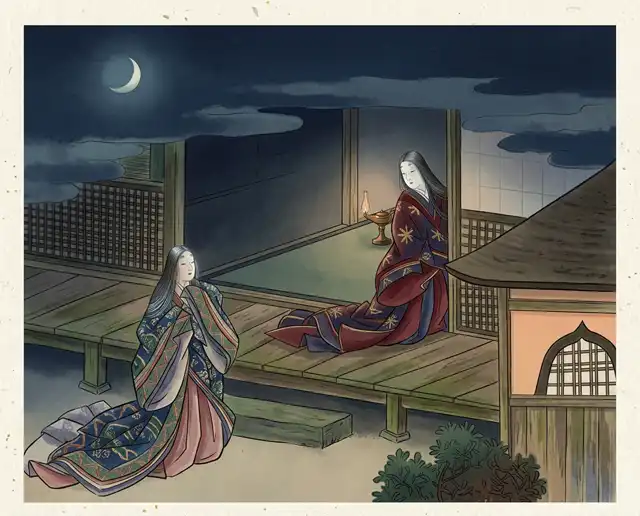
This image is based on an illustration from William N. Porter's A Hundred Verses from Old Japan, his 1909 English translation of the Hyakunin Isshu published in England, colorized and reworked using Adobe Firefly (generative AI).
- Murasaki Shikibu: A Short Timeline
-
- c. 970
- Born as a daughter of Fujiwara no Tametoki
- c. 998
- Marries Fujiwara no Nobutaka
- 999
- Gives birth to her daughter Katako (Daini no Sanmi)
- 1001
- Her husband Nobutaka dies
- c. 1002
- Begins writing The Tale of Genji
- c. 1005
- Begins serving Empress Akiko as a lady-in-waiting
- 1008
- Begins writing The Murasaki Shikibu Diary
- c. 1014
- Dies (other dates are also given)
- Murasaki Shikibu's Family Tree
-
Murasaki Shikibu's husband, Nobutaka, was her second cousin.
Minamoto no Tomoko, the mother of Akiko, whom Murasaki Shikibu served, was also her second cousin.Murasaki Shikibu tutored Akiko and wrote The Tale of Genji, the world's oldest long novel. Perhaps thanks to this, Emperor Ichijō, who had been devoted only to Teishi, gradually came to love Akiko.
With her husband Nobutaka, Murasaki Shikibu had Fujiwara no Katako (Daini no Sanmi), who also served Akiko.
- Appendix
-
- Murasaki Shikibu's Court Name (Nyōbō-na)
- Murasaki Shikibu's real name is unknown. When she began serving Akiko, she was called "Tō Shikibu," because her family name was Fujiwara (written with the character also read tō) and her father had once been a secretary of the Ministry of Ceremonial (Shikibu no jō). Later, when her Tale of Genji became famous, she seems to have come to be called "Murasaki Shikibu," after Murasaki no Ue, the heroine of the tale.
- Her Nickname, "Lady of the Chronicles"
-
In The Murasaki Shikibu Diary, Murasaki Shikibu reveals that she was given the nickname "Nihongi no Mitsubone" (the Lady of the Chronicles of Japan).
When Emperor Ichijō had The Tale of Genji read aloud to him, he praised her deep learning, saying, "This author must have read the Nihongi (Chronicles of Japan)." When an older lady-in-waiting, Saemon no Naishi, heard this, she gave Murasaki Shikibu the nickname "Lady of the Chronicles" to make fun of her.
In fact, Murasaki Shikibu is said to have avoided showing off her learning, even pretending she could not write simple Chinese characters. In her diary she writes that she found the nickname ridiculous. On the other hand, she was secretly teaching Akiko a Chinese text, the New Music Bureau Ballads (Shingafu), and her diary also shows her fear of trouble if Saemon no Naishi found out.
- A Poem to Nobutaka Before Their Marriage
- While Murasaki Shikibu was living in Echizen Province with her father, the governor, Nobutaka proposed to her. But Nobutaka already had several wives with children, and he was also courting another woman. Around the New Year, he wrote to her: "I would like to show you that when spring comes, your heart will open to me just as the ice melts." So Murasaki Shikibu sent him the next poem.
In Japanese
春なれど 白嶺の深雪 いやつもり
解くべきほどの いつとなきかな harunaredo shiranenomiyuki iyatsumori
tokubekihodono itsutonakikana Murasaki Shikibu-shūIn English
It is spring, but here the snow on Mount Shirane keeps piling up. Who knows when it will melt?
- Poems from a Quarrel Between Husband and Wife
- Murasaki Shikibu was angry that her husband Nobutaka was showing her letters to other people, and told him to return all the letters she had sent him.
Nobutaka then hinted that he would break off with her. The two exchanged the following poems about this. - Murasaki Shikibu's Poem
-
In Japanese
閉ぢたりし 上の薄氷 解けながら
さは絶えねとや 山の下水 tojitarishi uhenousurahi tokenagara
sahataenetoya yamanoshitamizu Murasaki Shikibu-shūIn English
Our hearts opened to each other like the thin ice melting on a frozen stream,
and yet you say it should all end? - Poem by Her Husband, Fujiwara no Nobutaka
-
In Japanese
東風に 解くるばかりを 底見ゆる
石間の水は 絶えば絶えなむ kochikazeni tokurubakario sokomiyuru
ishimanomizuha taebataenamu Murasaki Shikibu-shūIn English
Ice that melts with just the spring east wind is like shallow water between the rocks, where you can see the bottom. If our bond is to end, let it end.
- Murasaki Shikibu's Poem
-
In Japanese
言ひ絶へば さこそは絶えめ
なにかその
みはらの池を
包みしもせむ ihitaheba sakosohataeme nanikasono
miharanoikeo tsutsumishimosemu Murasaki Shikibu-shūIn English
If you say we should no longer speak, then so be it.
Why should I hold back, like the bank (tsutsumi) of Mihara Pond,
when you do not hide (tsutsumu) your anger? - A Poem After Her Husband Nobutaka Died
-
In Japanese
見し人の けぶりとなりし 夕べより
名ぞむつましき 塩釜の浦 mishihitono keburitonarishi yuubeyori
nazomutsumashiki shiogamanoura Shin Kokin Wakashū, Murasaki ShikibuIn English
Ever since the evening the one I loved turned into smoke,
even the smoke rising over the bay of Shiogama feels dear to me.The "mutsu" in "mutsumashiki" (dear) also stands for Mutsu, the province where the bay of Shiogama is.
- A Poem When Her Daughter Fell Ill
- Murasaki Shikibu wrote this poem when her daughter, Katako (Daini no Sanmi), fell ill.
She wrote it when she saw a maid put bamboo in a vase and pray for Katako's recovery.In Japanese
若竹の 生ひゆく末を 祈るかな
この世を憂しと 厭ふものから wakatakeno ohiyukusueo inorukana
konoyooushito itofumonokara Murasaki Shikibu-shūIn English
I cannot help praying for the future of my daughter, growing like young bamboo, even though I myself find this world painful and wish to be rid of it.
- A Poem About Troubles with People
- When Murasaki Shikibu began serving at court, the other ladies-in-waiting did not accept her, and she had a hard time. She wrote this poem then.
In Japanese
わりなしや 人こそ人と 言わざらめ
みづから身をや 思ひ捨つべき warinashiya hitokosohitoto iwazarame
mizukaramioya omohisutsubeki Murasaki Shikibu-shūIn English
How hard it is not to be accepted by others.
But how could I ever give up on myself? - A Poem Celebrating the Birth of Prince Atsuhira (Emperor Go-Ichijō)
- The next poem was written to celebrate the birth of Prince Atsuhira (later Emperor Go-Ichijō), Empress Akiko's son.
In Japanese
めづらしき 光さしそふ 盃は
もちながらこそ 千代もめぐらめ mezurashiki hikarisashisofu sakazukiha
mochinagarakoso chiyomomegurame Go Shūi Wakashū, Murasaki ShikibuIn English
This cup, lit by beautiful new moonlight, will be held by everyone
and go round for a thousand ages, never waning, like the full moon.In episode 36 ("A Long-Awaited Day") of the NHK drama Hikaru Kimi e (Dear Radiance), Tō Shikibu (Murasaki Shikibu) explained the poem like this: "This cup, in which a new light, the prince, has joined the moonlight of Her Majesty the Empress, will go round for a thousand ages, just as splendid as tonight's full moon."
The next poem was written to celebrate the birth of Prince Atsuhira (Emperor Go-Ichijō) while looking at the moon reflected in the pond of the Tsuchimikado mansion, Fujiwara no Michinaga's home.
In Japanese
曇りなく 千年に澄める 水の面に
宿れる月の 影ものどけし kumorinaku chitosenisumeru mizunoomoni
yadorerutsukino kagemonodokeshi Shin Kokin Wakashū, Murasaki ShikibuIn English
On the surface of the pond, cloudless and clear for a thousand years,
even the reflected moon looks calm and peaceful. - Poems Exchanged with Fujiwara no Michinaga (1/3)
- On the night of the ika no gi for Prince Atsuhira, Akiko's son (a ceremony on the 50th day after birth, something like a baby's first-meal ceremony), Michinaga urged Murasaki Shikibu at the banquet to compose a poem, and she wrote the following. Michinaga answered at once.
- Murasaki Shikibu's Poem
-
In Japanese
いかにいかが かぞへやるべき
八千歳の
あまり久しき
君が御代をば ikaniikaga kazoheyarubeki yachitoseno
amarihisashiki kimigamiyooba Murasaki Shikibu Diary, Murasaki ShikibuIn English
How on earth should I count
the prince's years, which will last as long as eight thousand ages? - Fujiwara no Michinaga's Poem
-
In Japanese
あしたづの よはひしあらば 君が代の
千歳の数も 数へとりてむ ashitazuno yohahishiaraba kimigayono
chitosenokazumo kazohetoritemu Murasaki Shikibu Diary, Fujiwara no MichinagaIn English
If I had the long life of a crane (ashitazu),
I could count all the thousand years of the prince's reign. - Poems Exchanged with Fujiwara no Michinaga (2/3)
- While Murasaki Shikibu was writing The Tale of Genji, Fujiwara no Michinaga wrote a teasing poem on the paper laid under some plums. Murasaki Shikibu wrote a poem in reply.
- Fujiwara no Michinaga's Poem
-
In Japanese
すきものと 名にし立てれば 見る人の
折らで過ぐるは あらじとぞ思ふ sukimonoto nanishitatereba miruhitono
oradesuguruha arajitozoomofu Murasaki Shikibu Diary, Fujiwara no MichinagaIn English
Since you are known as a sukimono (a lover of romance),
surely no one who sees you could pass by without trying to win you."Sukimono" is a pun on "sour plum" (suki mono) and "a person fond of love affairs." "Orade suguru" means passing by without breaking off a branch of the plum, that is, without making her his own.
- Murasaki Shikibu's Poem
-
In Japanese
人にまだ 折られぬものを 誰かこの
すきものぞとは 口ならしけむ hitonimada orarenumonoo darekakono
sukimonozotoha kuchinarashikemu Murasaki Shikibu Diary, Murasaki ShikibuIn English
No one has ever won me yet,
so who has been spreading the word that I am a sukimono? - Poems Exchanged with Fujiwara no Michinaga (3/3)
- While Murasaki Shikibu was serving at court, someone knocked on the door of her room (tsubone) late at night.
She was wary and did not open the door, but the next day a poem came from Fujiwara no Michinaga, and she sent one back. - Fujiwara no Michinaga's Poem
-
In Japanese
夜もすがら 水鶏よりけに なくなくぞ
真木の戸口に 叩きわびつる yomosugara kuinayorikeni nakunakuzo
makinotoguchini tatakiwabitsuru Murasaki Shikibu Diary, Fujiwara no MichinagaIn English
All night long, crying even harder than the water rail (kuina),
I knocked in misery at your cedar door. - Murasaki Shikibu's Poem
-
In Japanese
ただならじ とばかりたたく 水鶏ゆゑ
あけてはいかに くやしからまし tadanaraji tobakaritataku kuinayue
aketehaikani kuyashikaramashi Murasaki Shikibu Diary, Murasaki ShikibuIn English
You were a water rail knocking as if something serious were happening,
so how sorry I would have been if I had opened the door! - Rozan-ji Temple
-
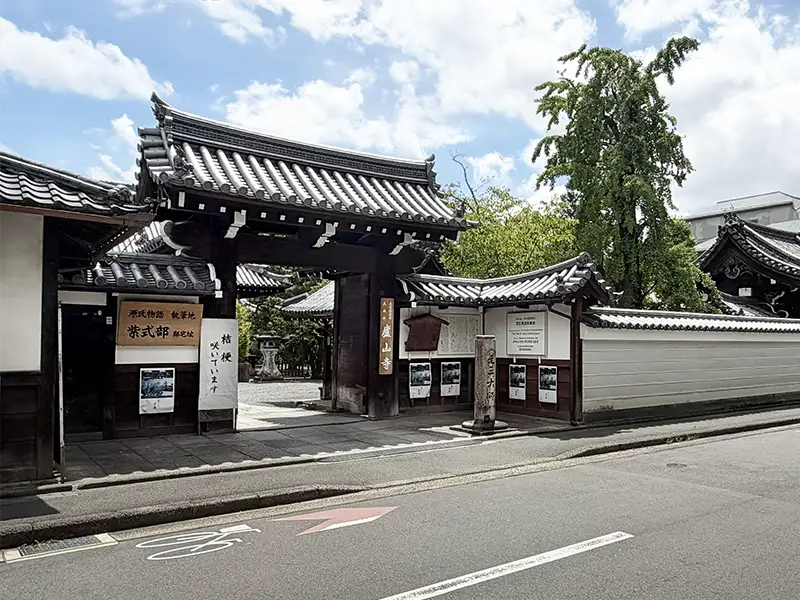
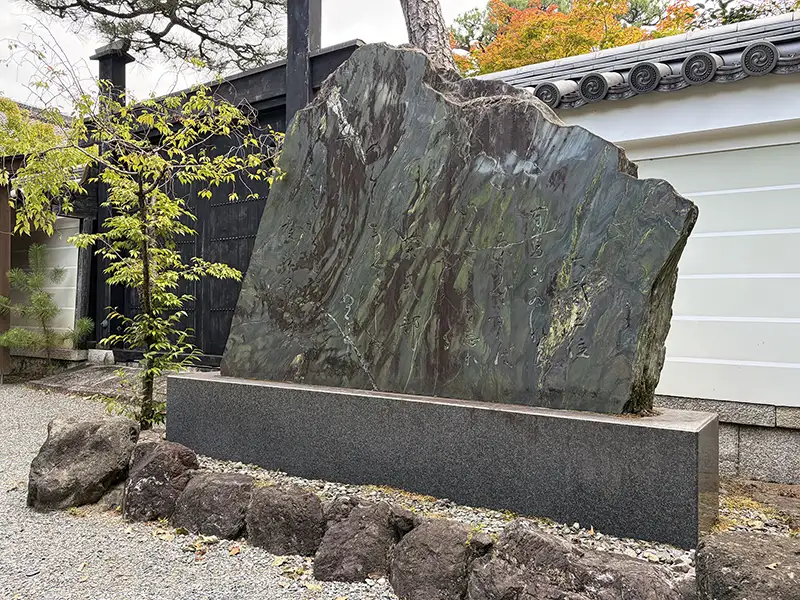
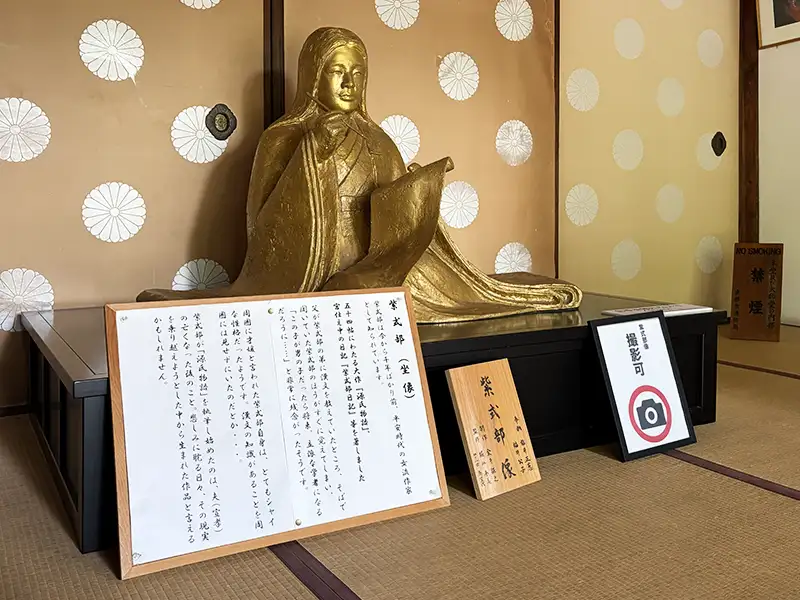
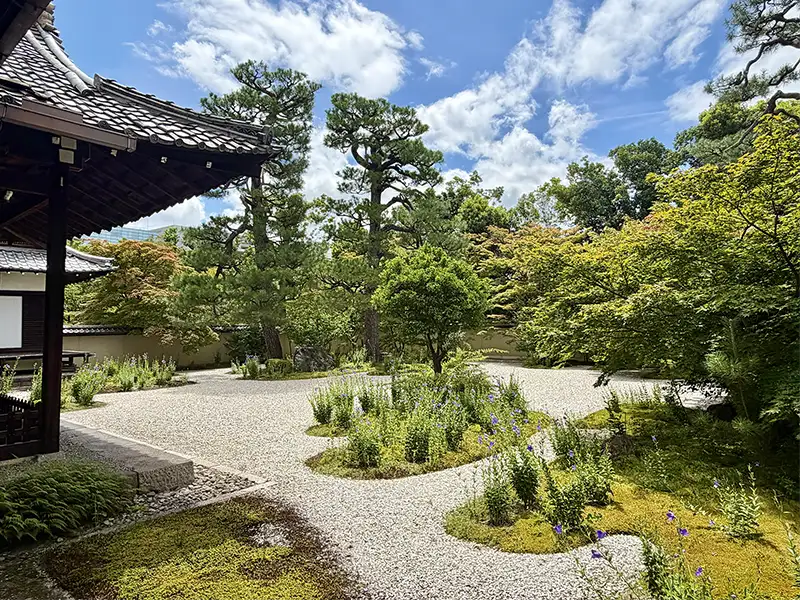
Rozan-ji in Kamigyō Ward, Kyoto, is known as a place connected with Murasaki Shikibu. The mansion of her great-grandfather, Fujiwara no Kanesuke, once stood in this area, and Murasaki Shikibu was born and raised here.
The grounds have a beautiful dry landscape garden of white sand and moss, the "Genji Garden." In summer, when they are at their best, lovely purple bellflowers (kikyō), which match the image of Murasaki Shikibu, color the garden.
See it on the map(Photos taken August 8, 2026)
- Murasaki Shikibu (the Plant)
-
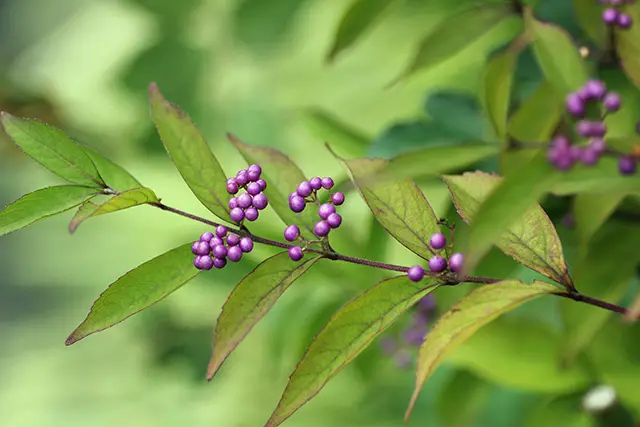
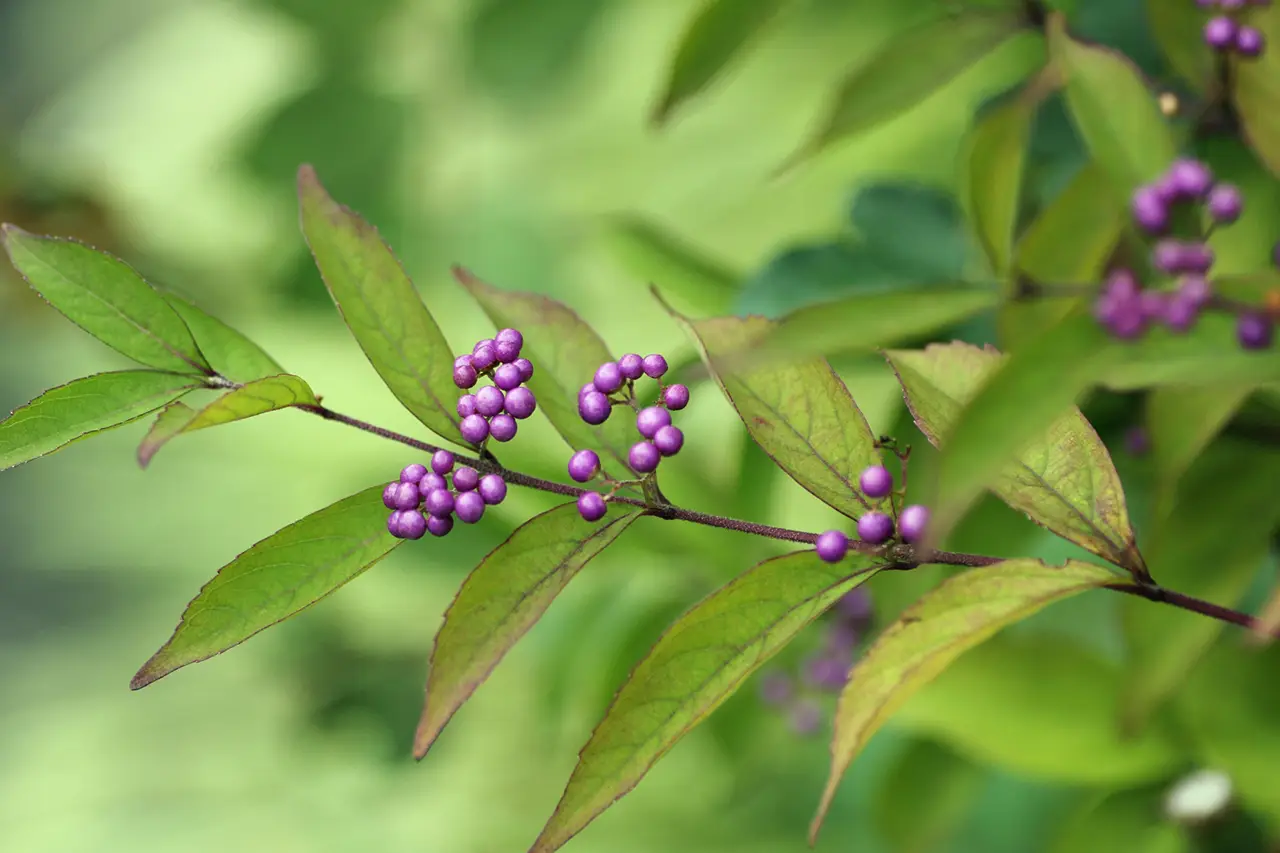
Murasaki shikibu (Japanese beautyberry) is a deciduous shrub of the genus Callicarpa in the mint family.
It grows wild in woods all over Japan and bears purple berries in autumn. - Ishiyama-dera Temple
-
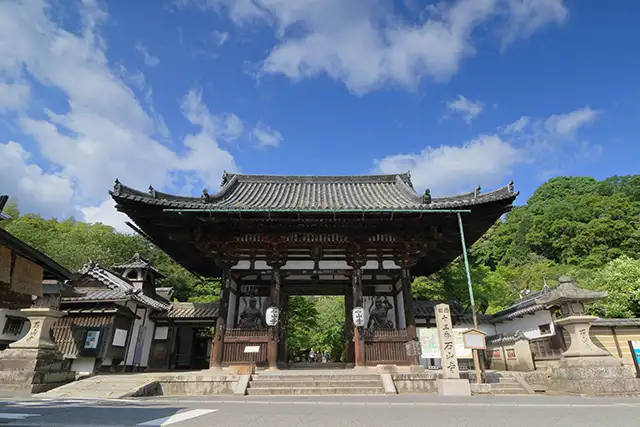
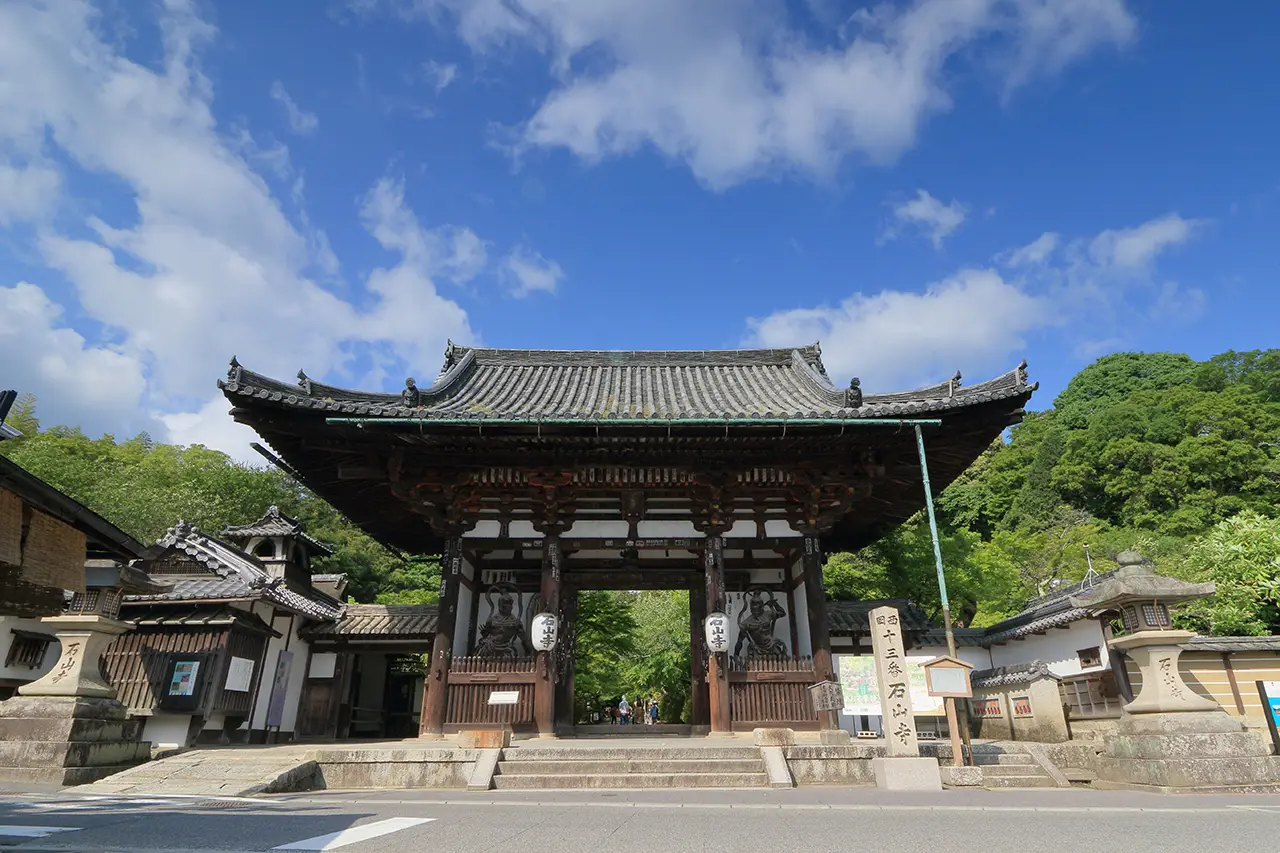
Photo: Adobe Stock In Ōtsu City, Shiga Prefecture. Just as its name ("stone mountain temple") says, it stands on rocks of wollastonite. Murasaki Shikibu is said to have gotten the idea for the "Suma" and "Akashi" chapters while staying at Ishiyama-dera, and the main hall has a "Murasaki Shikibu Room."
See it on the map - Complete View of the Eight Views of Ōmi, Seen from Ishiyama
-
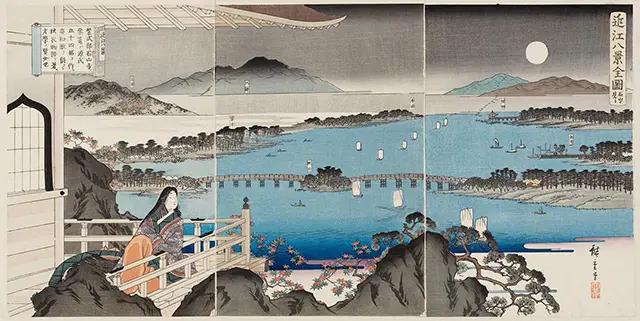
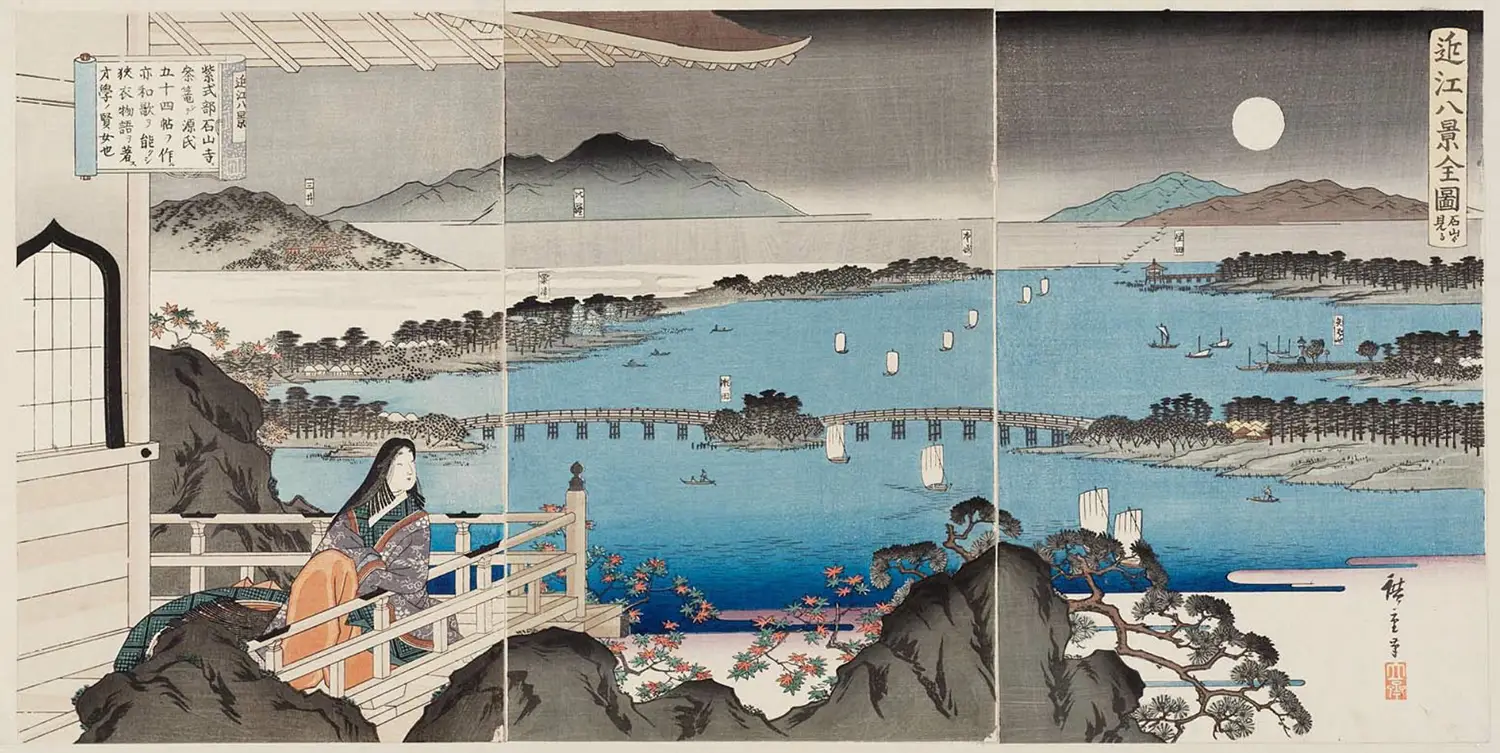
Utagawa Hiroshige, Public domain, via Wikimedia Commons Complete View of the Eight Views of Ōmi, Seen from Ishiyama by Utagawa Hiroshige.
It shows Murasaki Shikibu looking at the moon reflected on Lake Biwa. - Murasaki Shikibu Park
-
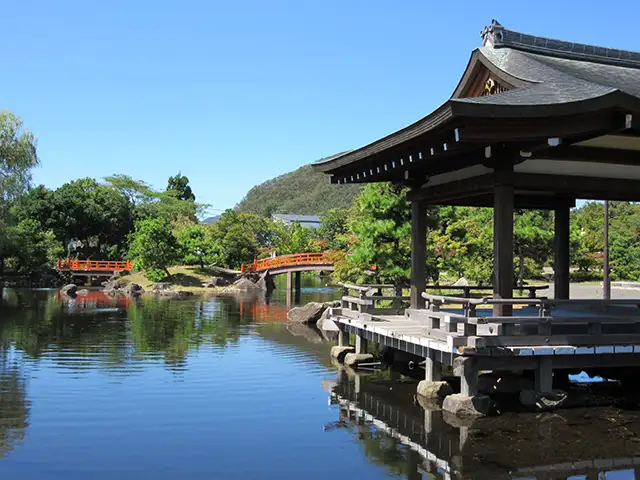
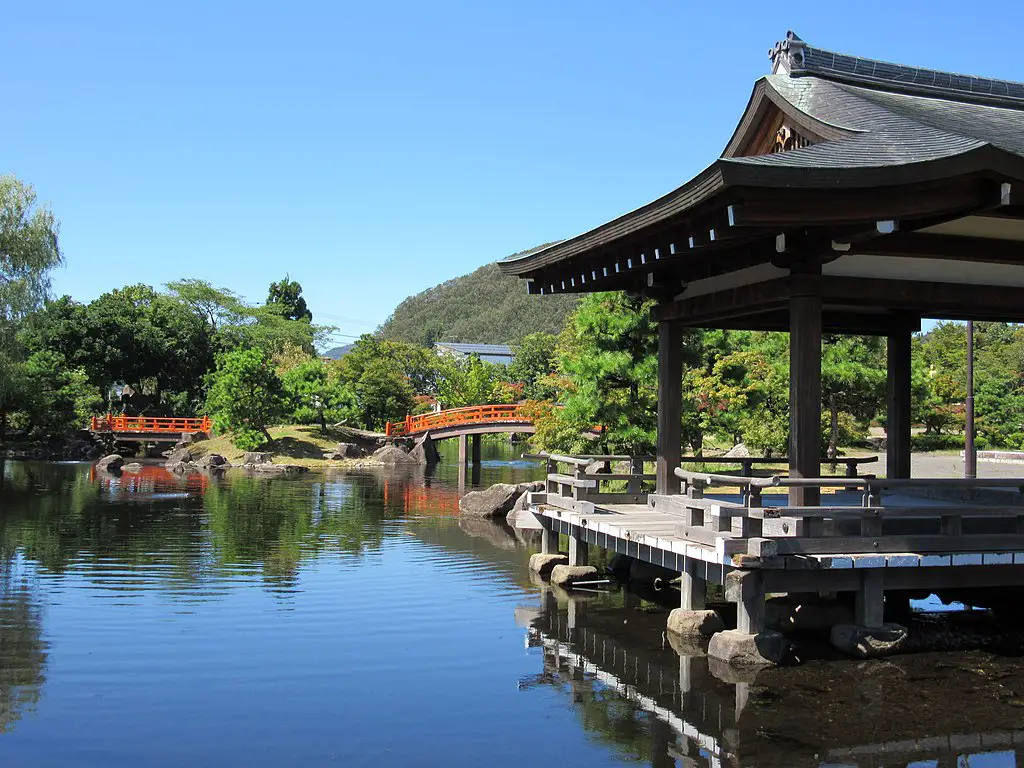
Opqr, CC BY-SA 4.0 , via Wikimedia Commons A park in Echizen City, Fukui Prefecture, with a garden that recreates a Heian-period shinden-zukuri mansion. Murasaki Shikibu spent more than a year in Echizen with her father, Fujiwara no Tametoki, who had become governor of the province.
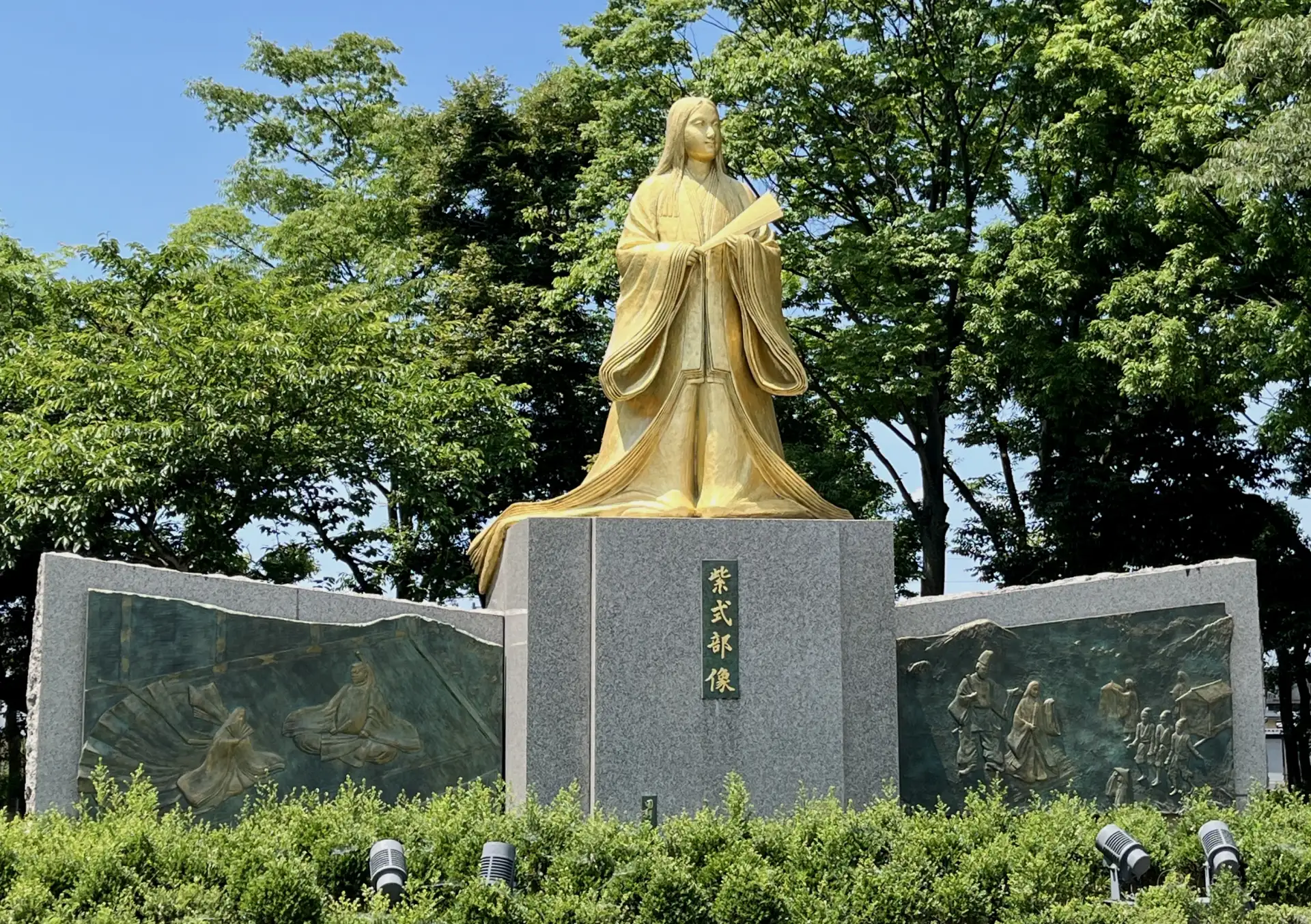
See it on the map - The Statue of Murasaki Shikibu in Murasaki Shikibu Park
-
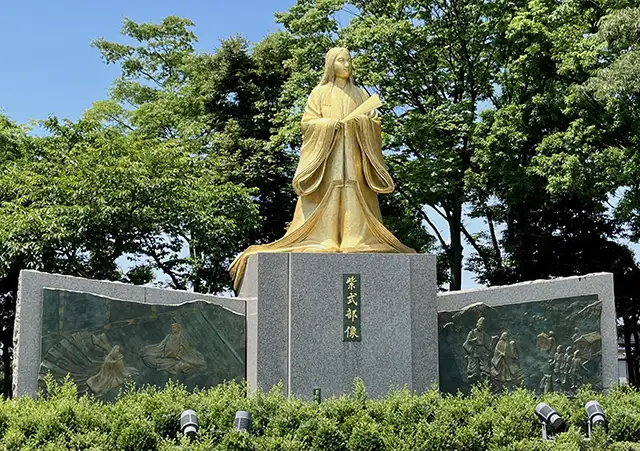 There is a golden statue of Murasaki Shikibu in the park. It looks toward Mount Hino. Missing the capital, Murasaki Shikibu wrote the next poem.
In Japanese
ここにかく 日野の杉むら 埋む雪
小塩の松に 今日やまがへる kokonikaku hinonosugimura uzumuyuki
oshihonomatsuni kefuyamagaheruIn English
Here in Echizen, the cedar woods of Mount Hino are almost buried in snow. Is snow falling today on the pines of Mount Oshio in the capital, too?
- The Tale of Genji
-
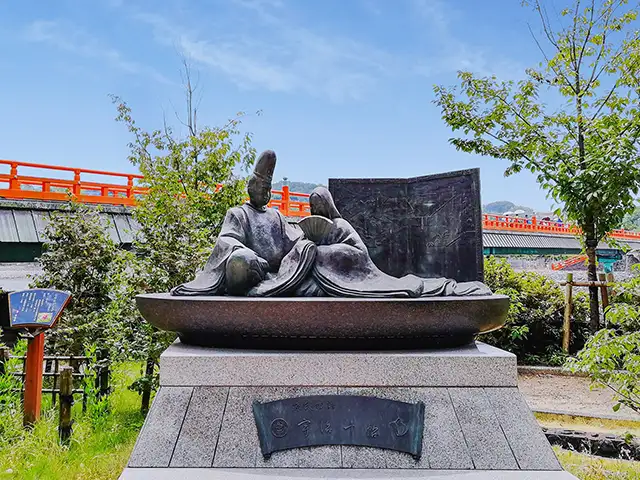
The world's oldest long love story, in 54 chapters. It describes the culture and love lives of Heian nobles.
When The Tale of Genji was written, books in Chinese were considered the official ones, and tales written in kana were seen as rather low.
But over time, the literary value of The Tale of Genji came to be highly praised. Today it has been translated into more than 30 languages and is still read around the world after 1,000 years. In Japan, too, many famous writers have made modern Japanese versions of it.
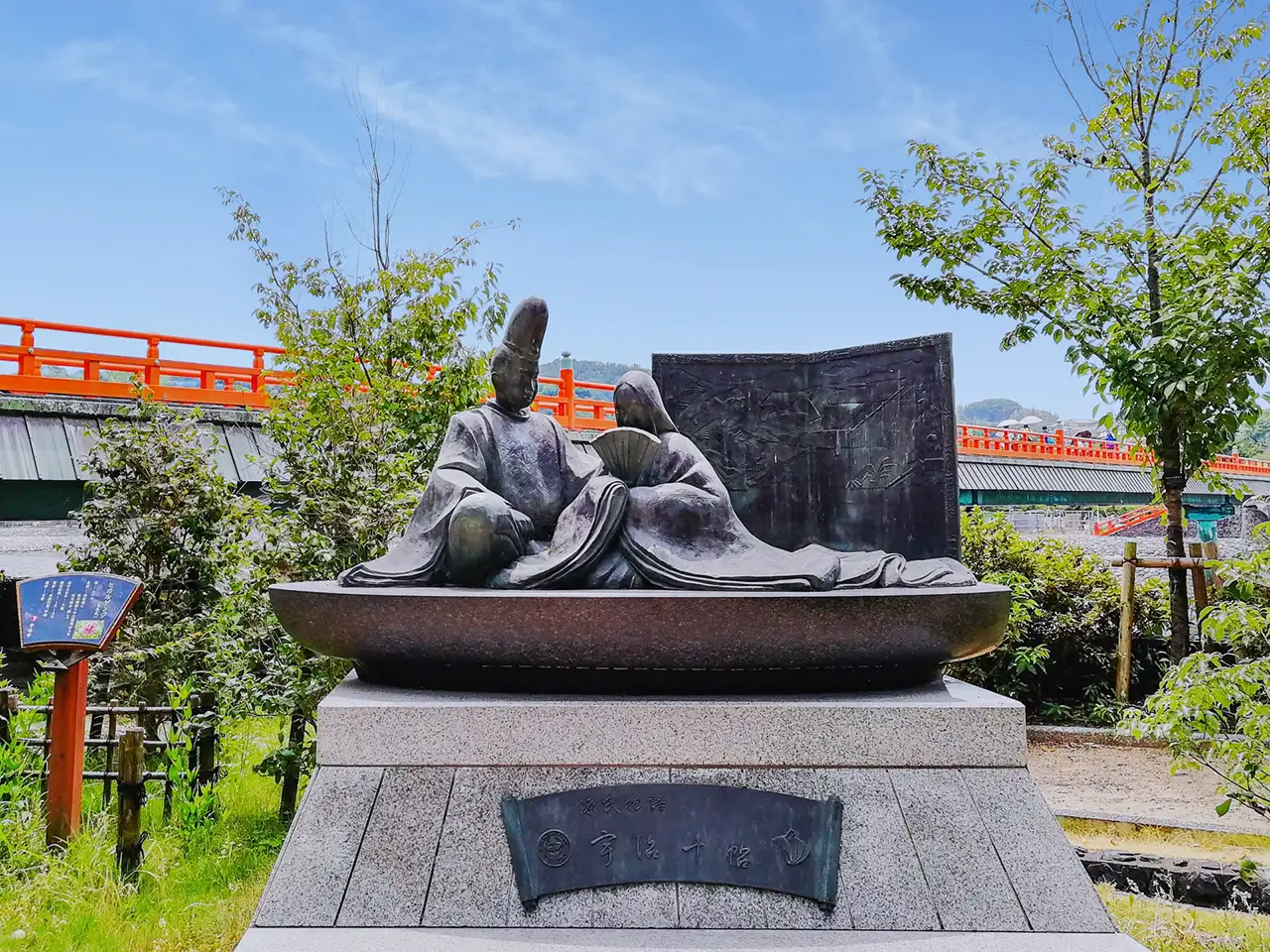
The photo shows a monument to The Tale of Genji near the Asagiri Bridge over the Uji River.
- The Opening of The Tale of Genji
- In an age when "tales" were generally thought of as reading for children, a story this real, opening with such smooth yet somehow uneasy sentences, came as a shock and greatly stirred the hearts of people at court.
In Japanese
いづれの御時にか、
女御、更衣あまたさぶらひたまひける中に、
いとやむごとなき際にはあらぬが、
すぐれて時めきたまふありけり。In English
In which emperor's reign was it?
Among the many consorts (nyōgo and kōi) serving the emperor,
there was one, not of very high rank,
whom the emperor loved above all the others. - Hikaru Genji's Last Poem in The Tale of Genji
- This poem appeared in episode 42 of the NHK drama Hikaru Kimi e (Dear Radiance). In the drama, Fujiwara no Michinaga visits Murasaki Shikibu's room to discuss how Emperor Sanjō does not visit his empress Kenshi (Kiyoko), Michinaga's daughter. Michinaga says, "Between Emperor Ichijō and his empress Akiko there was The Tale of Genji, but between Emperor Sanjō and Kenshi there is nothing. The Tale of Genji is no use." After this talk, Murasaki Shikibu quietly writes down the next poem. It is the last poem Hikaru Genji composes in The Tale of Genji.
In Japanese
もの思ふと 過ぐる月日も 知らぬ間に
年もわが世も 今日や尽きぬる monoomofuto sugurutsukihimo shiranumani
toshimowagayomo kyouyatsukinuru The Tale of Genji, Hikaru GenjiIn English
Lost in thought, I did not even notice the months and days go by. Do this year and my life both end today?
- A Poem by Toshinari, Who Praised The Tale of Genji
- This poem was written by Fujiwara no Toshinari on the theme of "love" at a poetry gathering. Toshinari praised The Tale of Genji as literature that embodies mono no aware (a deep feeling for the sadness of things), and left the words, "A poet who has not read Genji is to be pitied." This poem says that through love, not only joy but also sorrow and pain enrich the heart, so that one can deeply understand mono no aware, the fleeting and painful nature of life.
In Japanese
恋せずは 人も心も なからまし
もののあはれも これよりぞ知る koisezuha hitomokokoromo nakaramashi
mononoaharemo koreyorizoshiru Shin Kokin Wakashū, Fujiwara no ToshinariIn English
Without love, people would never grow a heart. It is through love that we come to understand mono no aware.
- Murasaki Shikibu's Death Poem
-
The Tale of Genji, written by Murasaki Shikibu, has now been translated into more than 30 languages, and in Japan famous writers keep making new modern versions; it has been read for over 1,000 years. But Murasaki Shikibu herself may never have imagined this.
In Japanese
誰か世に 長らへて見る 書きとめし
跡は消えせぬ 形見なれども darekayoni nagarahetemiru kakitomeshi
atohakiesenu kataminaredomo Shin Kokin Wakashū, Murasaki ShikibuIn English
Who will live on and read what I (who am dying) have written? Though what I wrote down is a keepsake that will not disappear.
- Murasaki Shikibu, Thought to Have Fallen into Hell
-
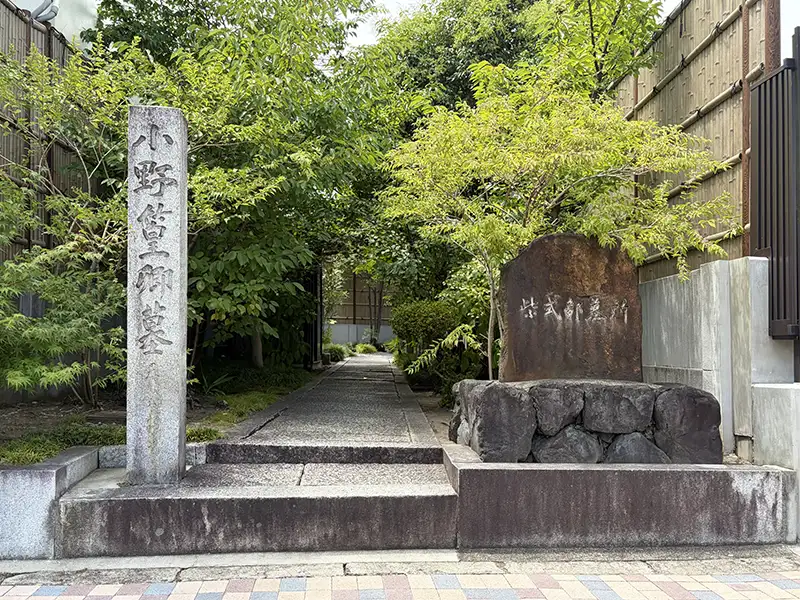
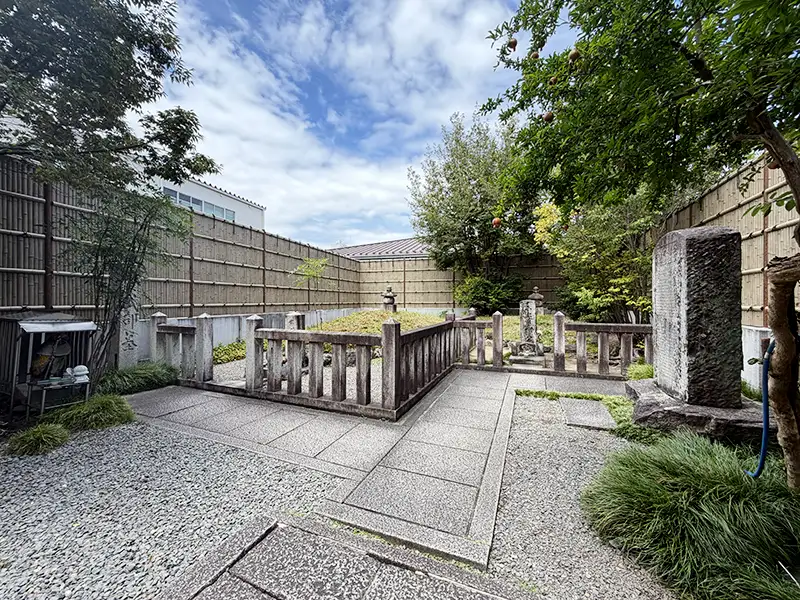
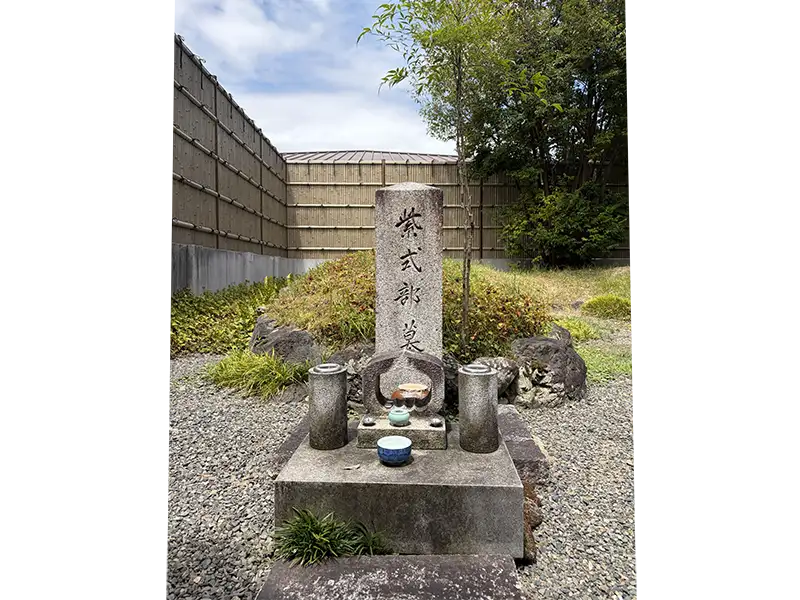
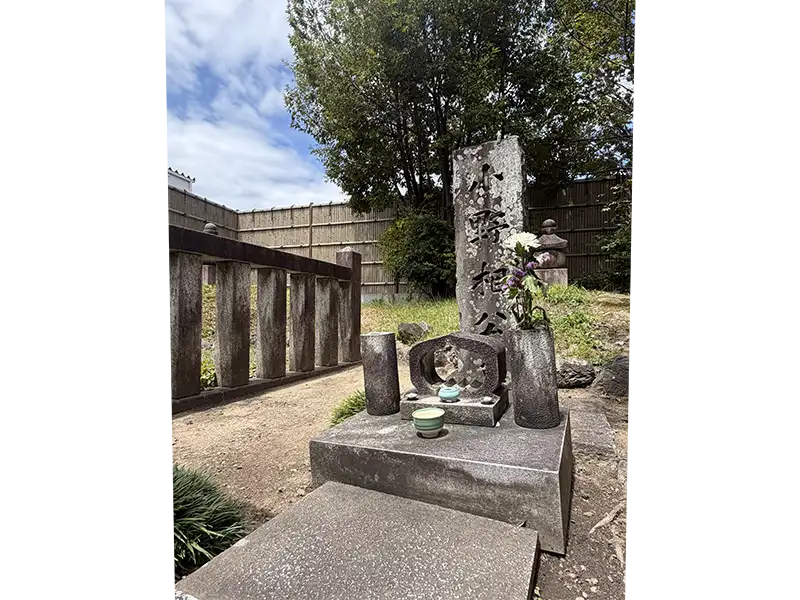
The graves of Murasaki Shikibu and Ono no Takamura, the poet of Poem 11, stand side by side.
At the end of the Heian period, people worried that Murasaki Shikibu, the author of The Tale of Genji, a tale of love and desire, might have fallen into hell after death.
According to a legend, her grave was moved next to Takamura's so that she could be saved with the help of Takamura, who was said to work at the court of Enma, the king of hell. The graves still stand quietly today.
(Photos taken August 8, 2026)
Timeline of Murasaki Shikibu
(Click to open or close.)Murasaki Shikibu is born
Her real name is unknown.
Moves to Echizen
She goes with her father, Fujiwara no Tametoki, who has been made Governor of Echizen, and stays about two years.
Marries Fujiwara no Nobutaka, Governor of Yamashiro
Murasaki Shikibu is 28; Fujiwara no Nobutaka is 48.
Gives birth to Katako (Daini no Sanmi)
Her father, Tametoki, returns to the capital
Her husband, Fujiwara no Nobutaka, dies
Begins writing The Tale of Genji
Begins serving Akiko, empress of Emperor Ichijō
Writes The Murasaki Shikibu Diary
Her father, Tametoki, goes to Echigo as its governor
Her younger brother Nobunori dies in Echigo
Emperor Ichijō dies
After Emperor Ichijō's death, Murasaki Shikibu continued to serve Akiko.
In his diary, the Shōyūki, Fujiwara no Sanesuke wrote that he relied on Murasaki Shikibu to pass messages to Akiko.Her father, Tametoki, returns to the capital
Her father, Tametoki, becomes a monk
Murasaki Shikibu dies
Her daughter Katako serves Akiko, now Empress Dowager
Her father, Tametoki, dies