Front of the Card
Back of the Card
Japanese
English
Audio: NHK Creative Library
Read by LibriVox volunteer Larry Wilson.
Audio courtesy of LibriVox
源宗于朝臣
山里は
冬ぞさびしさ
まさりける
人目も草も
かれぬと思へば
ひとめもく
さもかれぬ
とおもへは

やまざ


- Poem 28
- 山里は
冬ぞさびしさ
まさりける
人目も草も かれぬと思へば
Author: Minamoto no Muneyuki Ason (dates unknown–940)
Source: Kokin Wakashū, Winter
- English Verse Translation
- The mountain village solitude In winter time I dread; It seems as if, when friends are gone,
And trees their leaves have shed, All men and plants are dead.
— William N. Porter, 1909
- Modern Translation
- In a mountain village, loneliness deepens in winter. Not only people disappear — the grass too withers away.
- Commentary
- A mountain village is lonely, and in winter it is lonelier still. No visitors come, and the grass and trees wither. This scene seems to match the poet's grief over his stalled career; he may have seen himself in the forgotten village.
- About the Poet
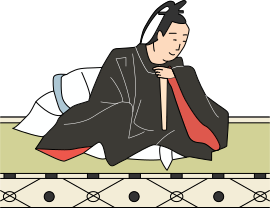
- Minamoto no Muneyuki was a grandson of Emperor Kōkō but became a commoner and served the court. Emperor Uda praised his poems, but he never rose to high rank. Heian emperors had many wives and children, so grandsons rarely received special treatment.
- Poem Illustration
-
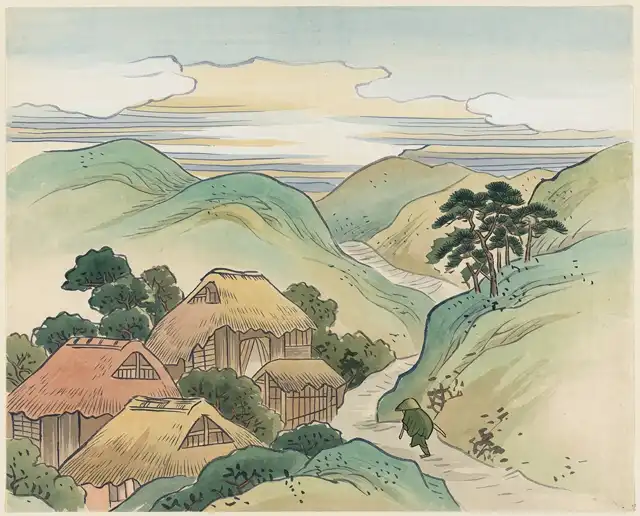
This image is based on an illustration from William N. Porter's A Hundred Verses from Old Japan, his 1909 English translation of the Hyakunin Isshu published in England, colorized and reworked using Adobe Firefly (generative AI).
- Minamoto no Muneyuki: A Short Timeline
-
- 894
- Given the family name Minamoto and Junior Fourth Rank, Lower Grade
- 905
- Becomes Senior Assistant Minister of Military Affairs
- 908
- Becomes Head of the Right Stables
- 915
- Becomes governor of Sagami Province
- 933
- Becomes Master of the Right Capital
- 939
- Given Senior Fourth Rank, Lower Grade
- 940
- Dies
- Notes
-
- Counted as one of the Thirty-Six Immortal Poets
- Minamoto no Muneyuki Ason's Family Tree
-
Minamoto no Muneyuki was a grandson of Emperor Kōkō and a nephew of Emperor Uda.
He was given the family name Minamoto and left the imperial family to become a subject. He did not rise far in rank, and he told Emperor Uda of his hard luck in a poem. The Tales of Yamato says, however, that he still was not promoted.
- Appendix
-
- A Poem to Emperor Uda About His Hard Luck
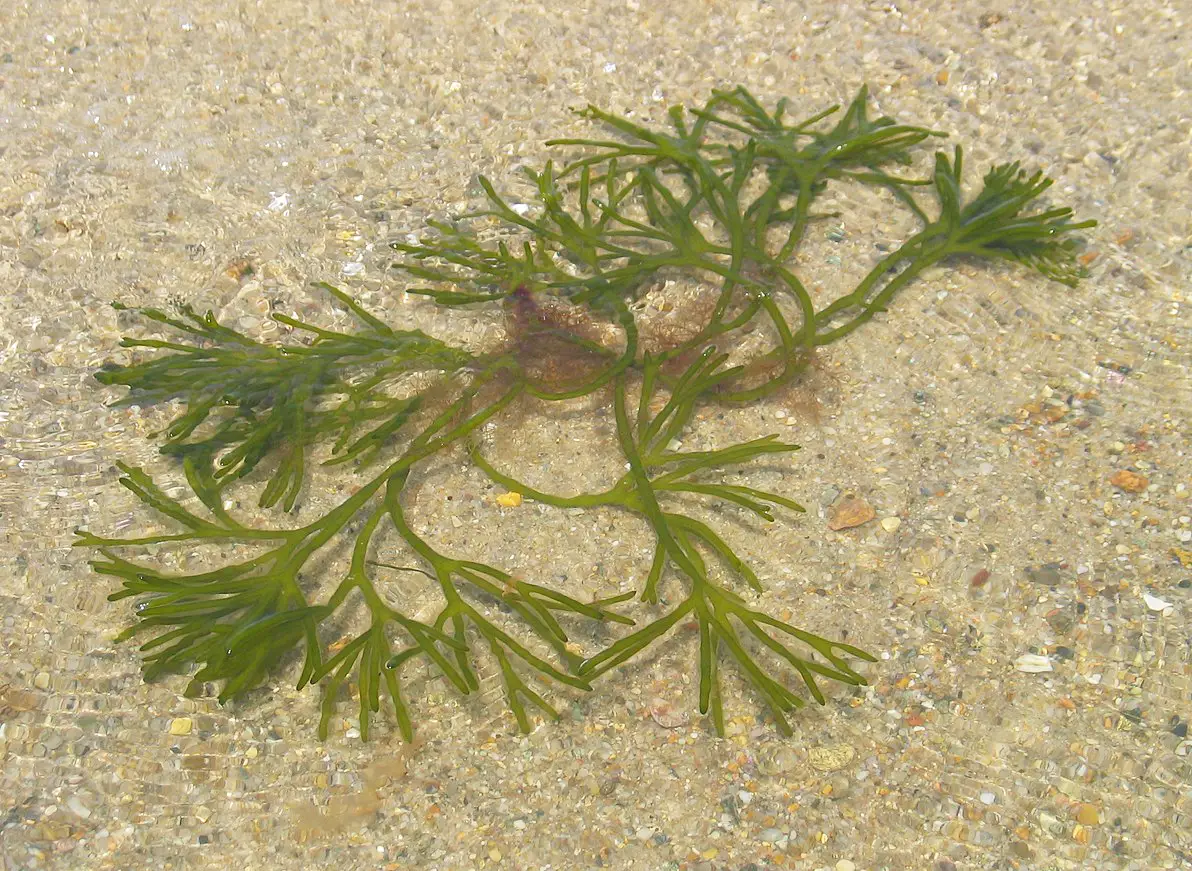
- Minamoto no Muneyuki wrote this poem on miru seaweed still attached to a stone, which had been presented to Emperor Uda from the province of Kii.
In Japanese
沖つ風 ふけゐの浦に 立つ浪の
名残にさへや 我はしづまむ okitsukaze fukeinourani tatsunamino
nagorinisaheya warehashizumamu The Tales of Yamato, Minamoto no MuneyukiIn English
The wind blows from the open sea, but I am not lifted even by the last of the waves rising at Fukei Bay; (like seaweed clinging to a stone) I will sink to the bottom.
- Miru (Codium Seaweed)
-
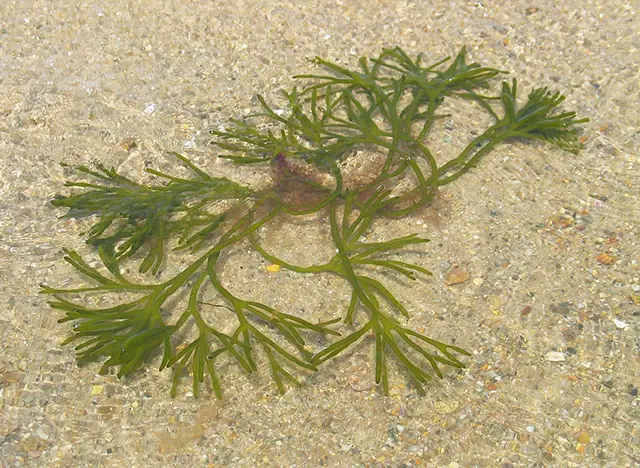
Flyingdream at Wikipedia, Public domain, via Wikimedia Commons Miru is a dark green seaweed that grows on rocks on the floor of shallow seas. It is not often eaten today, but long ago it was a common seaweed for food.
Because of its unusual shape and beauty, miru was used as a decorative pattern called mirumon in clothing designs of the Heian period.
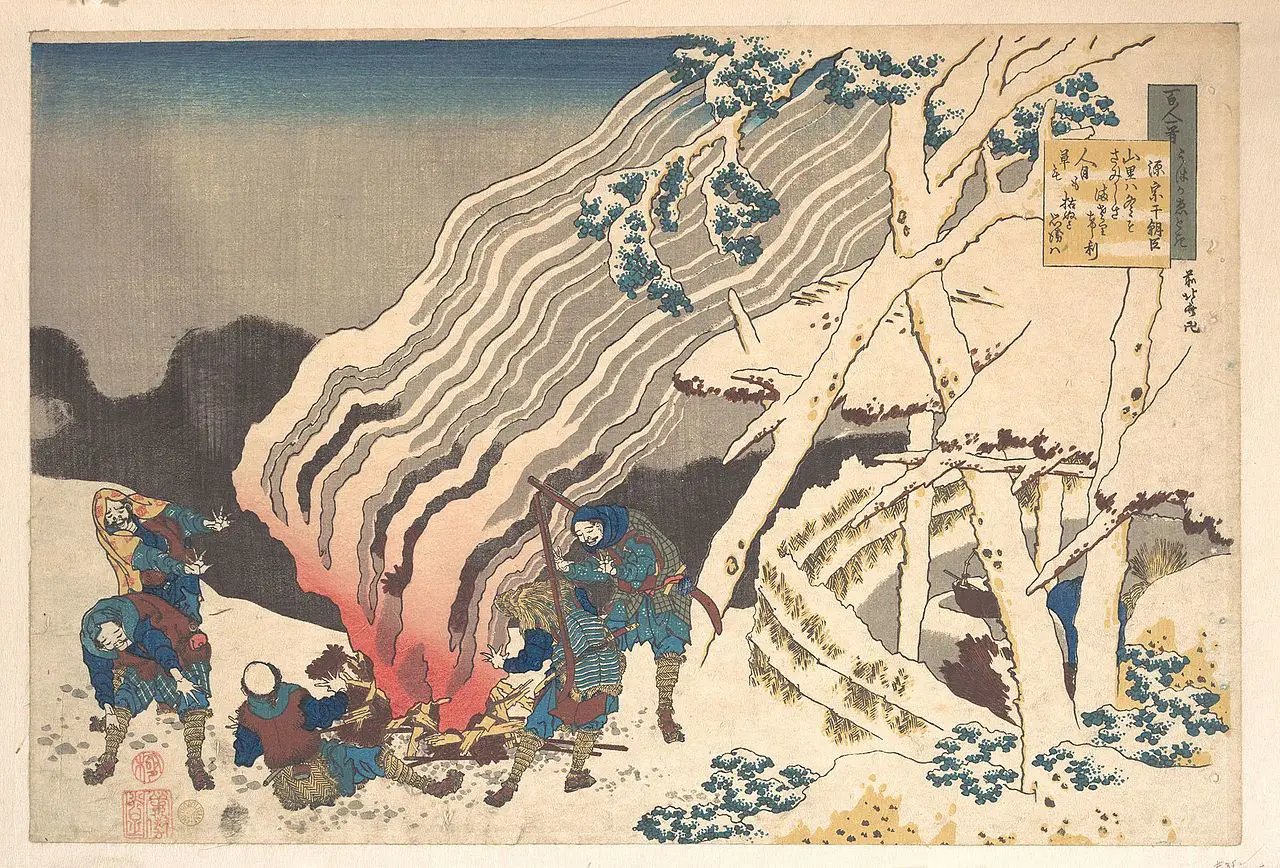
- Ukiyo-e by Katsushika Hokusai
-
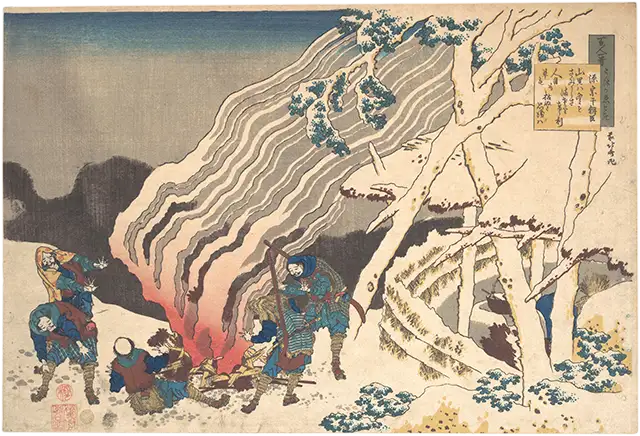
Katsushika Hokusai, CC0, via Wikimedia Commons This print is from One Hundred Poems Explained by the Nurse (Hyakunin Isshu Uba ga Etoki) by Katsushika Hokusai, an ukiyo-e artist of the Edo period. The idea of the series is a nurse explaining the Hyakunin Isshu poems with easy-to-understand pictures.
It shows fishermen warming themselves in a mountain village in winter. Unlike the mood of the poem, Hokusai's picture is full of cheerfulness.