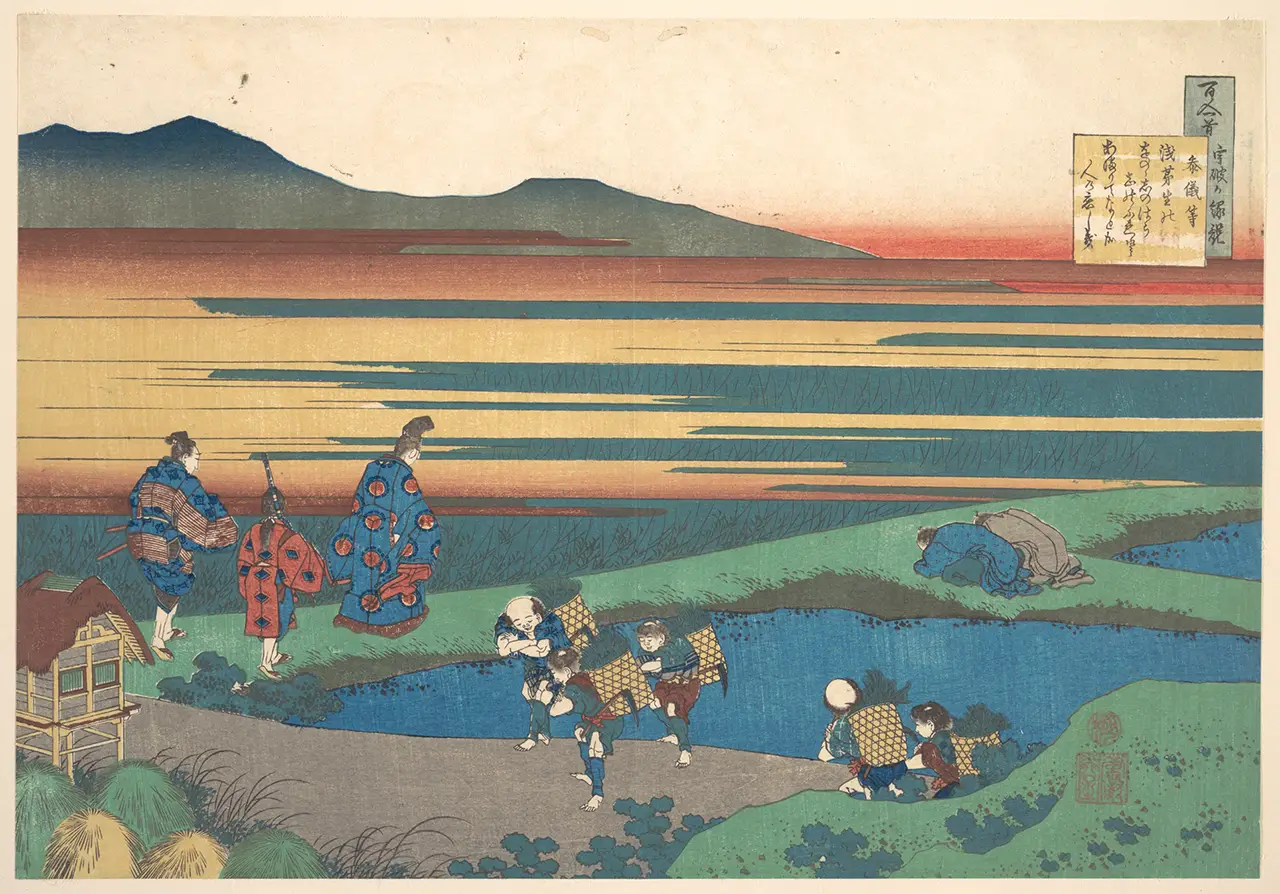
Front of the Card
Back of the Card
Japanese
English
Audio: NHK Creative Library
Read by LibriVox volunteer Larry Wilson.
Audio courtesy of LibriVox
参議等
浅茅生の
小野の篠原
しのぶれど
あまりてなどか
人の恋しき
あまりてな
とかひとの
こひしき

あさじ


- Poem 39
- 浅茅生の
小野の篠原
しのぶれど
あまりてなどか 人の恋しき
Author: Councillor Hitoshi (880–951)
Source: Gosen Wakashū, Love
- English Verse Translation
- 'Tis easier to hide the reeds Upon the moor that grow, Than try to hide the ardent love
That sets my cheeks aglow For somebody I know.
— William N. Porter, 1909
- Modern Translation
- Though I try to hide it, my longing spills over. Why is it that I cannot stop thinking of that person?
- Commentary
- A poem of one-sided love that can no longer be hidden. "Asajiu no ono no shinohara" (the low bamboo grass of the moor) leads into "shinobu" (to hide). Some say the scene has no meaning of its own; others say the bleak moor reflects the pain of hiding love.
- About the Poet
- Councillor Hitoshi was a great-grandson of Emperor Saga but became a commoner named Minamoto no Hitoshi. He served as governor of Mikawa, Tanba, Mino, and Bizen, and finally rose to Councillor, joining the top nobles.
- Poem Illustration
-
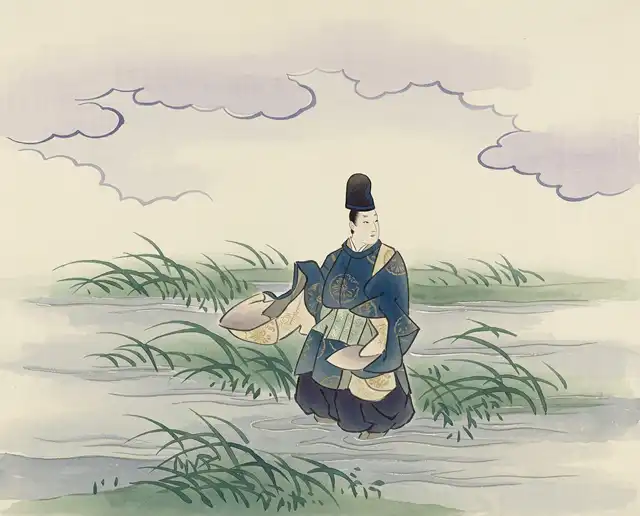
This image is based on an illustration from William N. Porter's A Hundred Verses from Old Japan, his 1909 English translation of the Hyakunin Isshu published in England, colorized and reworked using Adobe Firefly (generative AI).
- Minamoto no Hitoshi: A Short Timeline
-
- 880
- Born as a son of Middle Counselor Minamoto no Mare
- 897
- Becomes a Chamberlain (Kurōdo) of the Sixth Rank
- 904
- Given Junior Fifth Rank, Lower Grade, and becomes Junior Assistant Minister of the Treasury
- 907
- Becomes governor of Mikawa Province
Later serves as governor of Tanba, Yamashiro, and other provinces - 930
- Becomes Senior Assistant Governor-General of Dazaifu
- 947
- Becomes Councillor (Sangi)
- 948
- Also becomes governor of Sanuki Province
- 951
- Given Senior Fourth Rank, Lower Grade; dies later
- Notes
-
- Only 4 of his poems appear in the Gosenshū
- Councillor Hitoshi's Family Tree
-
Minamoto no Hitoshi was a descendant of Emperor Saga. He served as a provincial official in many places, including Mikawa, Tanba, Mino (acting governor), Bizen (acting vice-governor), and Yamashiro. In 947, at 68, he became a Councillor and joined the top nobles (kugyō), but he died only four years later, at 72.
- Appendix
-
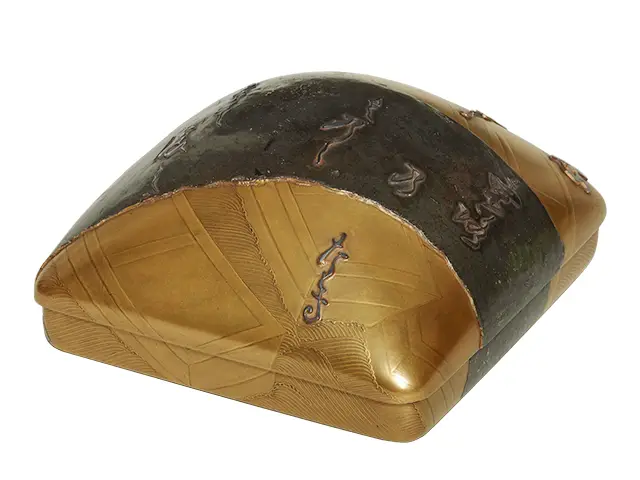
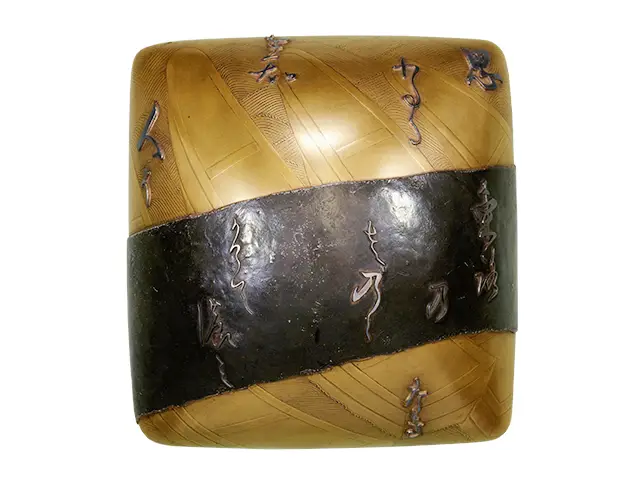
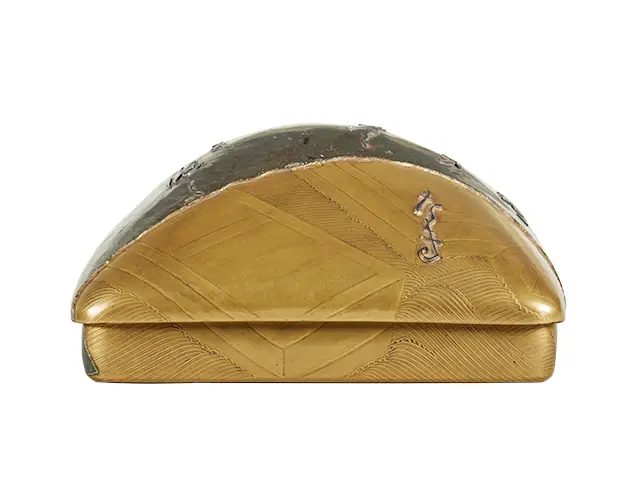
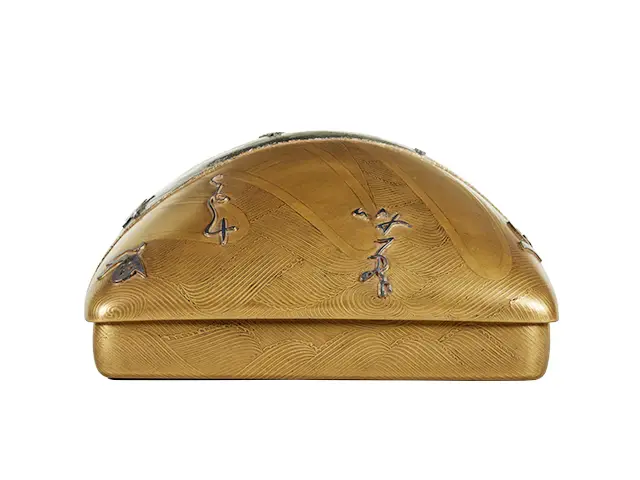
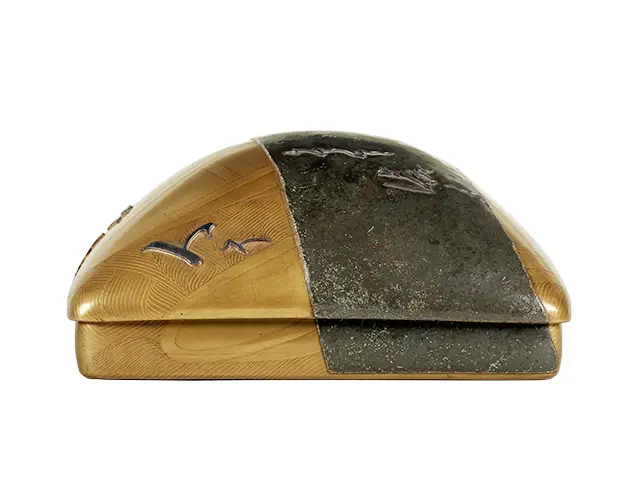
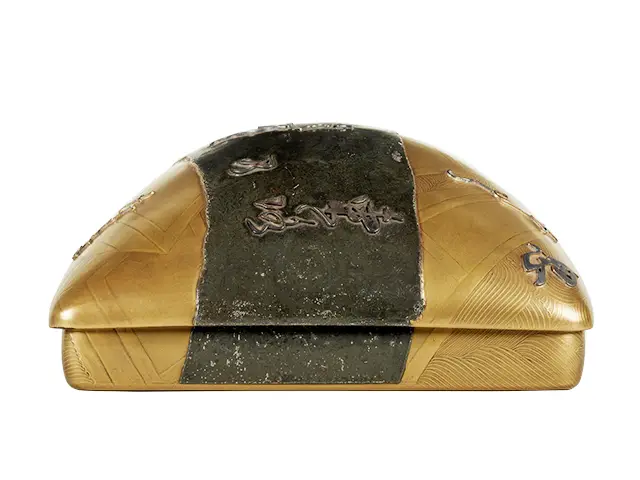
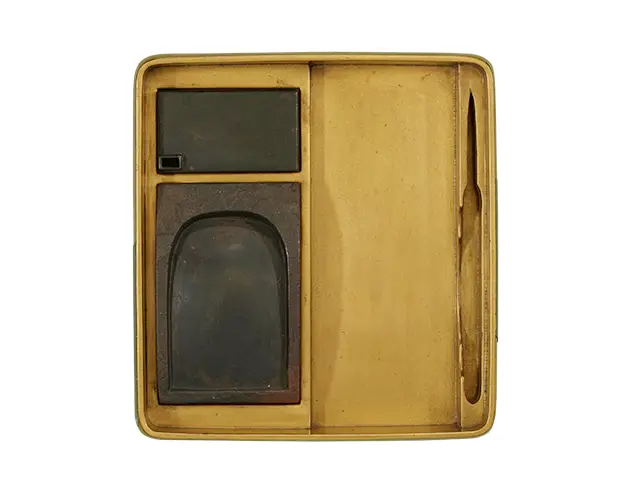
- Hon'ami Kōetsu's Writing Box with Boat Bridge
-
A writing box (suzuribako) by Hon'ami Kōetsu, an artist of the Edo period. On its domed lid, the characters of Minamoto no Hitoshi's poem "Azumaji no Sano no (funabashi) kakete nomi omoiwataru wo shiru hito zo naki" are scattered across the surface. The characters for "boat" (funa) and "bridge" (hashi) are left out: the boats are drawn in gold lacquer (maki-e), and the bridge is a strip of lead.
Source: ColBase (https://colbase.nich.go.jp/) - The Poem on the Writing Box
-
In Japanese
東路の 佐野の舟橋 かけてのみ
思ひ渡るを 知る人ぞなき azumajino sanonofunahashi kaketenomi
omohiwataruo shiruhitozonaki Gosen Wakashū, Minamoto no HitoshiIn English
Like the boat bridge laid across the river at Sano in the eastern lands,
I keep you always in my heart and go on loving you,
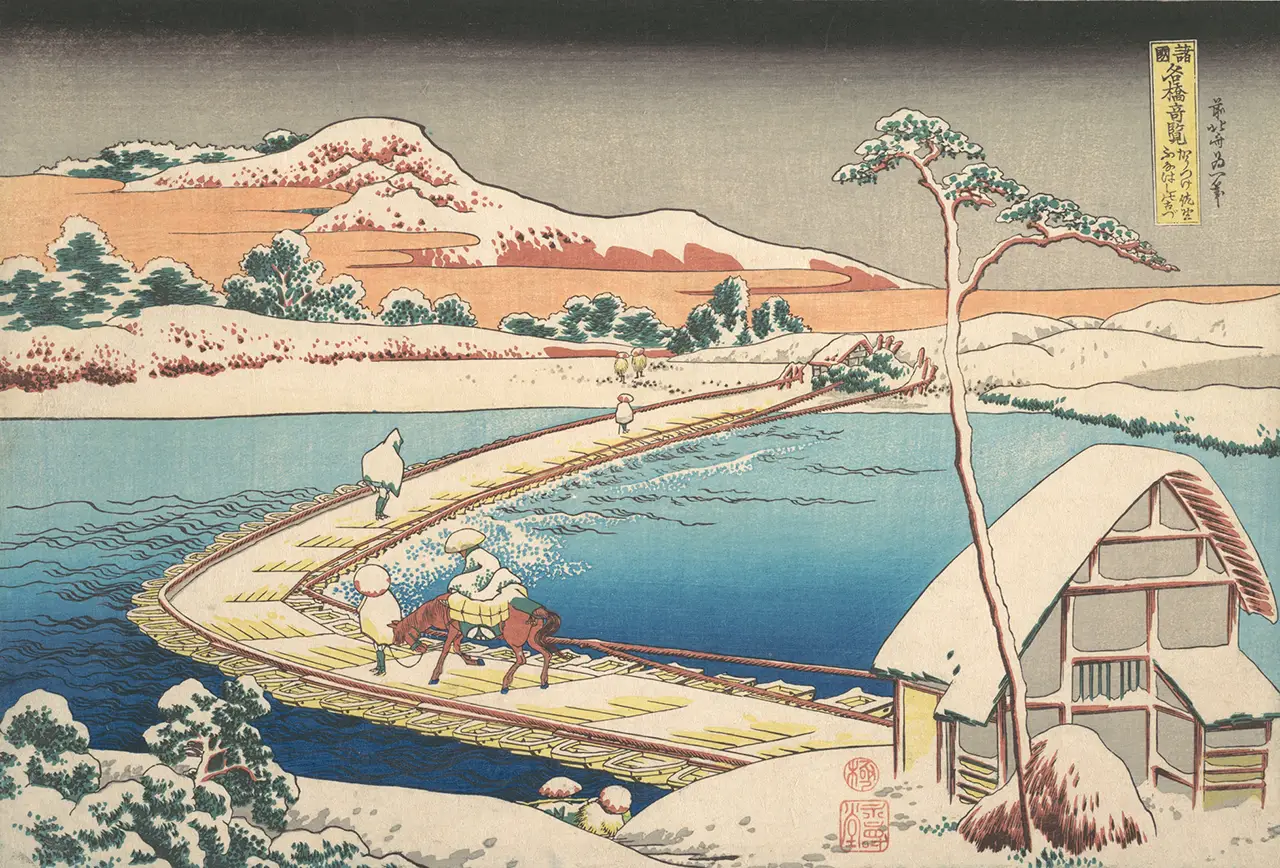
but you do not notice. - The Boat Bridge at Sano, from Remarkable Views of Bridges in Various Provinces
-
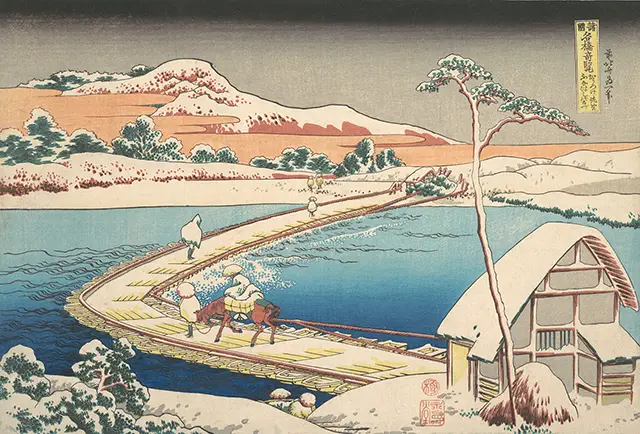 Katsushika Hokusai, CC0, via Wikimedia
Commons
Katsushika Hokusai, CC0, via Wikimedia
Commons
The "boat bridge at Sano" crossed the Karasu River in what is now Takasaki, Gunma Prefecture. A boat bridge is made by lining up many boats side by side and laying boards across them.
This is Katsushika Hokusai's ukiyo-e print The Boat Bridge at Sano (Shokoku Meikyō Kiran: Sano no Funahashi). Click the picture to enlarge it and look at the many boats lined up under the bridge.
- A Poem About Asajiu
in The Tale of Genji - The next poem appears in the "Sakaki" (The Sacred Tree) chapter of The Tale of Genji.
Hikaru Genji wrote it while staying at a temple, away from the wife he loved, to test whether he was ready to become a monk.In Japanese
浅茅生の 露のやどりに 君をおきて
四方の嵐ぞ しづ心なき asajiuno tsuyunoyadorini kimiookite
yomonoarashizo shizugokoronaki The Tale of Genji, Hikaru GenjiIn English
I have left you in a place as fleeting as dew on the cogon grass,
and when I hear the fierce winds blowing from all sides, my heart cannot rest. - A Poem About Asajiu
in The Tosa Diary -
This poem appears in The Tosa Diary (Tosa Nikki) and is said to have been written near what is now Tōchi, Nankoku City, Kōchi Prefecture.
The place had a name with "pond" (ike) in it, but in fact there was no water, only a wide field thick with cogon grass (asaji). There Ki no Tsurayuki was given presents such as fish from the rivers and sea, and young spring greens. The diary notes that the fish he was given was not carp. He may have been a little surprised by food that did not suit a place called "Pond."
The diary tells how deeply he was moved when he read this poem, which came with the young greens.
In Japanese
浅茅生の 野辺にしあれば 水もなき
池に摘みつる 若菜なりけり asajiuno nobenishiareba mizumonaki
ikenitsumitsuru wakananarikeri From The Tosa DiaryIn English
Here in a field of cogon grass there is no water,
yet these are young greens picked at the place called "Pond." - One Hundred Poems Explained by the Nurse
-
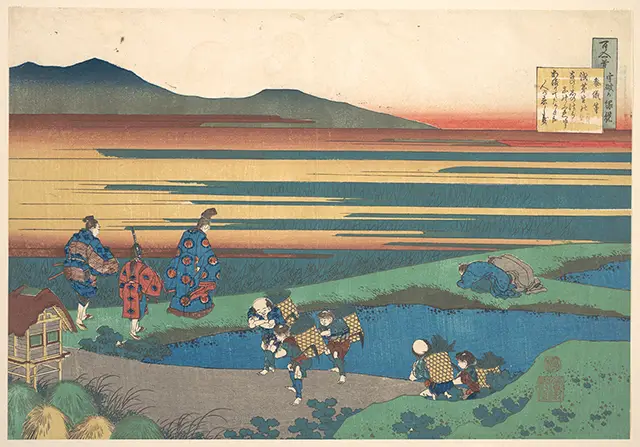
Katsushika Hokusai, CC0, via Wikimedia Commons This print is from One Hundred Poems Explained by the Nurse (Hyakunin Isshu Uba ga Etoki) by Katsushika Hokusai, an ukiyo-e artist of the Edo period. The idea of the series is a nurse explaining the Hyakunin Isshu poems with easy-to-understand pictures.
The nobleman walking along the path between the rice fields seems to hang his shoulders. Together with the gloomy, misty scene, the picture seems to show the sadness of lost love.