Front of the Card
Back of the Card
Japanese
English
Audio: NHK Creative Library
Read by LibriVox volunteer Larry Wilson.
Audio courtesy of LibriVox
恵慶法師
八重葎
しげれる宿の
さびしきに
人こそ見えね
秋は来にけり
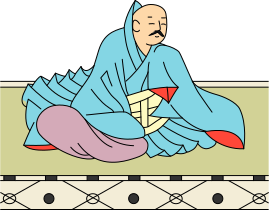
ひとこそみ
えねあきは
きにけり

やえ


- Poem 47
- 八重葎
しげれる宿の
さびしきに
人こそ見えね 秋は来にけり
Author: Priest Egyō (dates unknown)
Source: Shūi Wakashū, Autumn
- English Verse Translation
- My little temple stands alone, No other hut is near; No one will pass to stop and praise
Its vine-grown roof, I fear, Now that the autumn's here.
— William N. Porter, 1909
- Modern Translation
- Weeds grow thick around the deserted house. No one comes to visit. And yet — autumn has arrived.
- Commentary
- Written at a gathering at Kawara-in on the theme "autumn comes to a ruined house." Built by the Minister of the Left of Kawara (Poem 14), this splendid mansion fell to ruin after his death. His great-grandson, Priest Anpō, lived there and let weeds grow wild, yet poets were inspired by its faded glory and often met there for poetry.
- About the Poet
- Priest Egyō is said to have been a lecturer at the provincial temple of Harima. He was a friend of Priest Anpō, who lived at Kawara-in, and often visited the mansion.
- Poem Illustration
-
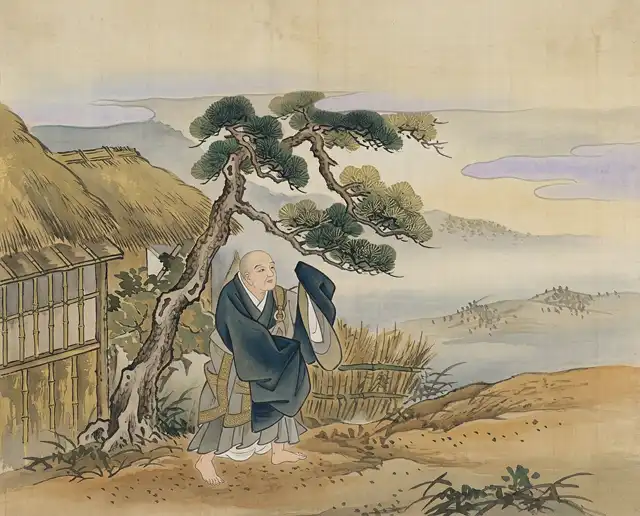
This image is based on an illustration from William N. Porter's A Hundred Verses from Old Japan, his 1909 English translation of the Hyakunin Isshu published in England, colorized and reworked using Adobe Firefly (generative AI).
- Priest Egyō: A Short Timeline
-
- c. 962
- Begins to be active at poetry contests and other events
- 986
- Travels with Retired Emperor Kazan on his pilgrimage to Kumano
- Priest Egyō's Family Tree
-
Priest Egyō was a friend of Priest Anpō. Anpō was a great-grandson of the Minister of the Left of Kawara, Minamoto no Tōru, and lived in part of the Kawara-in, which he had turned into a temple.
At the Kawara-in, Anpō was friends with many poets, such as Minamoto no Shitagō, Kiyohara no Motosuke, and Taira no Kanemori. Egyō, too, is said to have been friends with Ōnakatomi no Yoshinobu, Ki no Tokibumi, Kiyohara no Motosuke, and others.
- Appendix
-
- Ki no Tsurayuki's Poem About the Kawara-in
-
The Kawara-in was once known as a place of splendor and great glory. But after its master died, it lost its shine and became full of the feeling of decline. Egyō was not the only poet who found beauty in that decline.
In Japanese
君まさで 煙絶えにし 塩竃の
うらさびしくも 見えわたるかな kimimasade keburitaenishi shiogamano
urasabishikumo miewatarukana Kokin Wakashū, Ki no TsurayukiIn English
Now that our lord has passed away, the smoke of the salt kilns is gone,
and the bay of Shiogama looks lonely as far as the eye can see. - Egyō's Poem About the Coming of Autumn
-
The next poem, about an autumn field, is by Egyō. It is in the Shūi Wakashū.
In Japanese
浅茅原 玉まく葛の 裏風の
うらがなしかる 秋は来にけり asajihara tamamakukuzuno urakazeno
uraganashikaru akihakinikeri Shūi Wakashū, Priest EgyōIn English
Like the wind that curls the kudzu leaves over the field of cogon grass, showing their backs (ura),
sad (uraganashi) autumn has come. - Egyō's Poem About the Winter Night Sky
-
The next poem, about the winter night sky, is by Egyō. It is in the Shūi Wakashū.
In Japanese
天の原 空さへ冴えや 渡るらむ
氷と見ゆる 冬の夜の月 amanohara sorasahesaeya wataruramu
kooritomiyuru fuyunoyonotsuki Shūi Wakashū, Priest EgyōIn English
Is even the wide sky frozen clear and cold?
The moon on this winter night looks like ice. - The Kawara-in
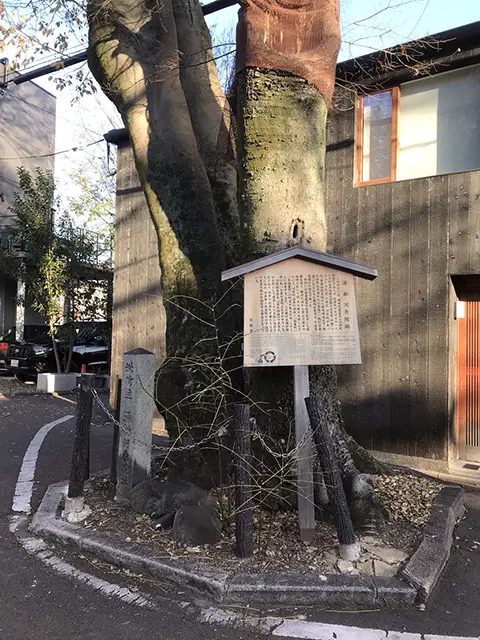
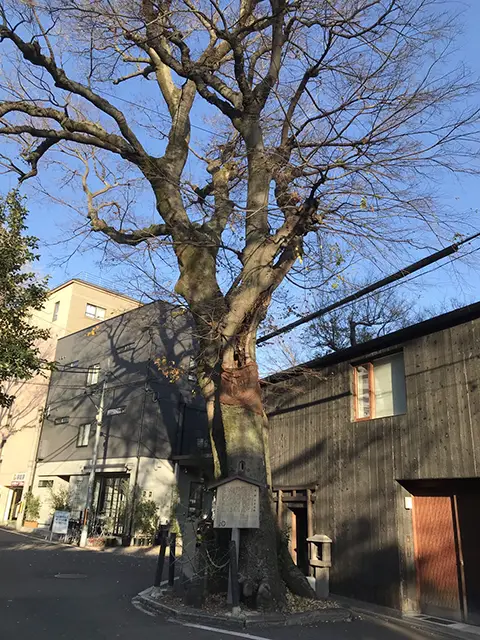
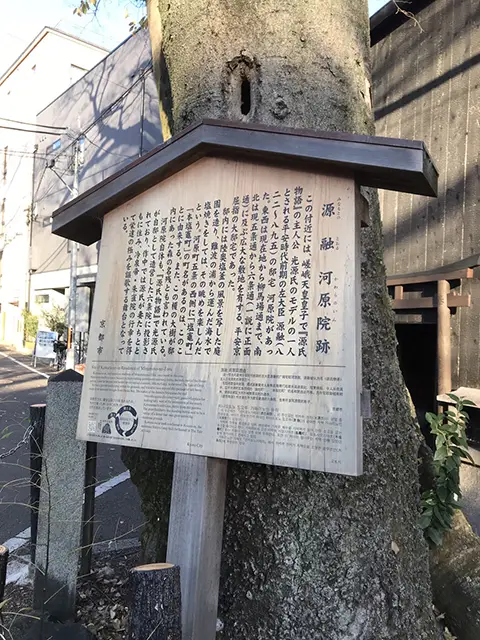
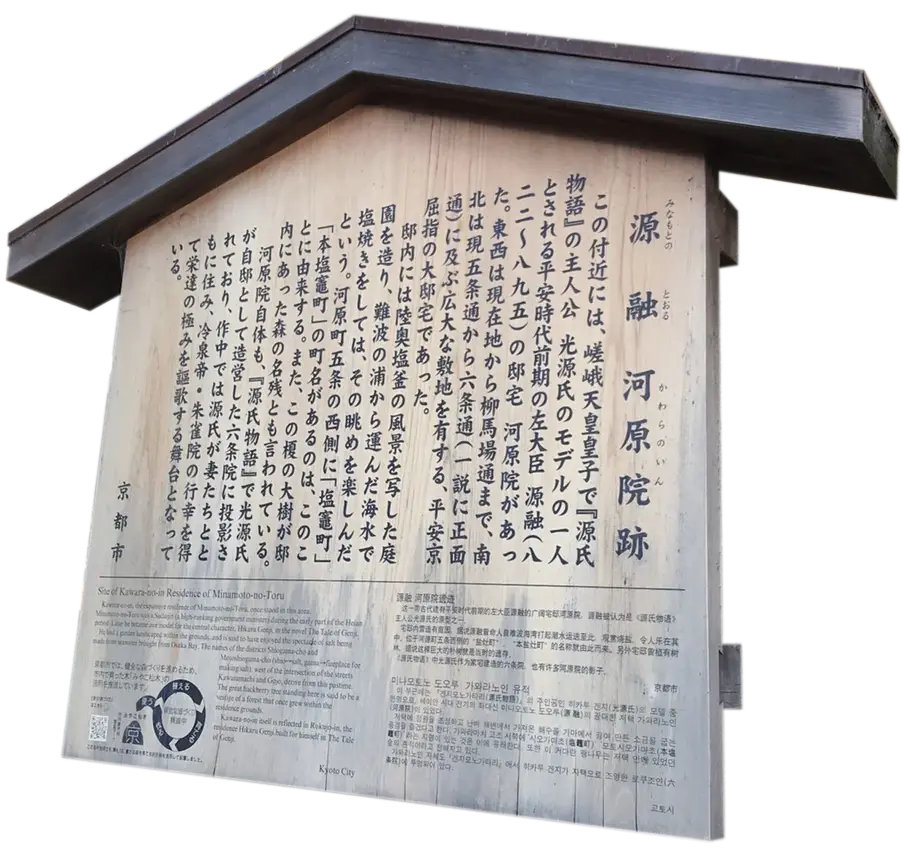
- The Kawara-in burned down at the end of the Heian period, but the site still remains today, and you can imagine what it was like.