Front of the Card
Back of the Card
Japanese
English
Audio: NHK Creative Library
Read by LibriVox volunteer Larry Wilson.
Audio courtesy of LibriVox
藤原義孝
君がため
惜しからざりし
いのちさへ
長くもがなと
思ひけるかな
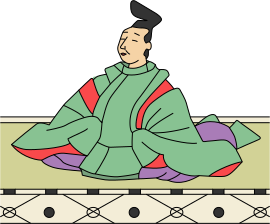
なかくもか
なとおもひ
けるかな

きみがためお


- Poem 50
- 君がため
惜しからざりし
いのちさへ
長くもがなと 思ひけるかな
Author: Fujiwara no Yoshitaka (954–974)
Source: Go Shūi Wakashū, Love
- English Verse Translation
- Death had no terrors, Life no joys, Before I met with thee; But now I fear, however long
My life may chance to be, 'Twill be too short for me!
— William N. Porter, 1909
- Modern Translation
- A life I once did not mind losing — now, for your sake, I wish it would last forever.
- Commentary
- A morning-after poem sent by Fujiwara no Yoshitaka to a woman after their night together. It delicately shows how his feelings changed before and after they met.
- About the Poet
- Fujiwara no Yoshitaka was the son of Kentoku-kō (Poem 45). Handsome and full of promise, he died of smallpox at only 21, even though he had written a poem wishing to live long. A devout Buddhist, he is said never to have eaten meat or fish. His eldest son, Fujiwara no Yukinari, was one of the Three Great Calligraphers.
- Poem Illustration
-
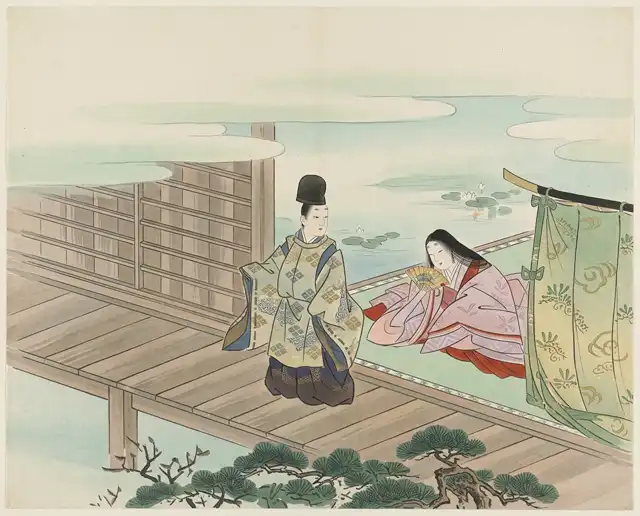
This image is based on an illustration from William N. Porter's A Hundred Verses from Old Japan, his 1909 English translation of the Hyakunin Isshu published in England, colorized and reworked using Adobe Firefly (generative AI).
- Fujiwara no Yoshitaka: A Short Timeline
-
- 954
- Born as a son of Fujiwara no Koretada
- 970
- Becomes Acting Assistant Captain of the Left Military Guards
- 971
- Becomes Minor Captain of the Right Palace Guards
- 972
- His son Yukinari is born. His father, Koretada, dies
- 974
- Dies of smallpox at age 21
- Fujiwara no Yoshitaka's Family Tree
-
Fujiwara no Yoshitaka was the third son of the Regent Kentoku-kō (Fujiwara no Koretada). He was a talented poet and was also known as a handsome man. He was deeply devoted to Buddhism, and when his father died, he thought of becoming a monk at 19, but gave up the idea for the sake of his son Yukinari. Yoshitaka then caught smallpox and died at only 21.
Yoshitaka's son, Fujiwara no Yukinari, is famous as a master calligrapher. He lost his father's support early, but later did well as one of the Four Counselors (Shinagon) who supported Fujiwara no Michinaga.
- Appendix
-
- A Poem Yoshitaka Wrote as a Child
-
At a linked-verse (renga) gathering at the home of Fujiwara no Koretada, the upper verse (the first part, 5-7-5) "Aki wa nao / yūmagure koso / tada narane" was given, but for a long time no one could add the lower verse (the second part, 7-7). Then Yoshitaka, only 13 years old, added "Ogi no uwakaze / hagi no shitatsuyu," and everyone praised him highly. This poem is in the Wakan Rōeishū, compiled by Fujiwara no Kintō.
In Japanese
秋はなほ 夕まぐれこそ ただならね
荻の上風 萩の下露 akihanaho yuumagurekoso tadanarane
oginouwakaze haginoshitatsuyu Wakan Rōeishū, Fujiwara no YoshitakaIn English
Autumn evenings are truly special: the sound of the wind over the reed leaves, and the dew on the lower leaves of the bush clover.
- Ukiyo-e by Katsushika Hokusai
-
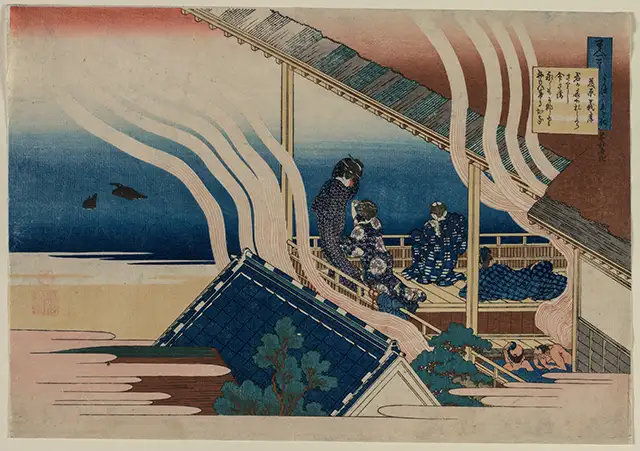
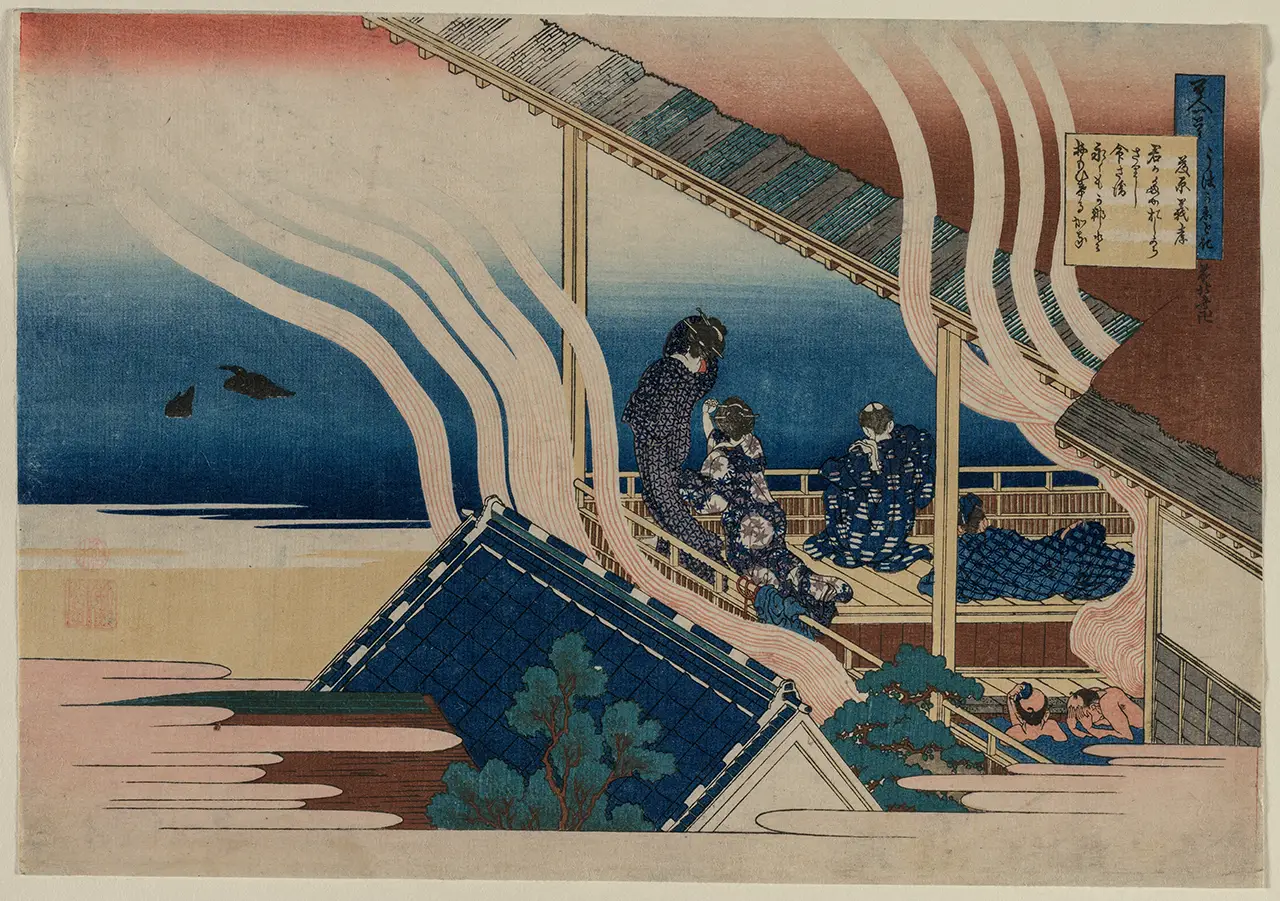
Katsushika Hokusai, CC0, via Wikimedia Commons This print is from One Hundred Poems Explained by the Nurse (Hyakunin Isshu Uba ga Etoki) by Katsushika Hokusai, an ukiyo-e artist of the Edo period. The idea of the series is a nurse explaining the Hyakunin Isshu poems with easy-to-understand pictures. It shows a peaceful hot-spring town. Perhaps it expresses Yoshitaka's happiness after his love came true.
- Utagawa Kuniyoshi's Hyakunin Isshu no Uchi
-
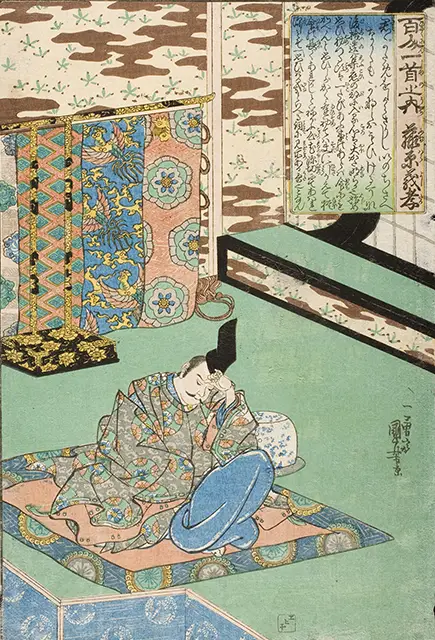
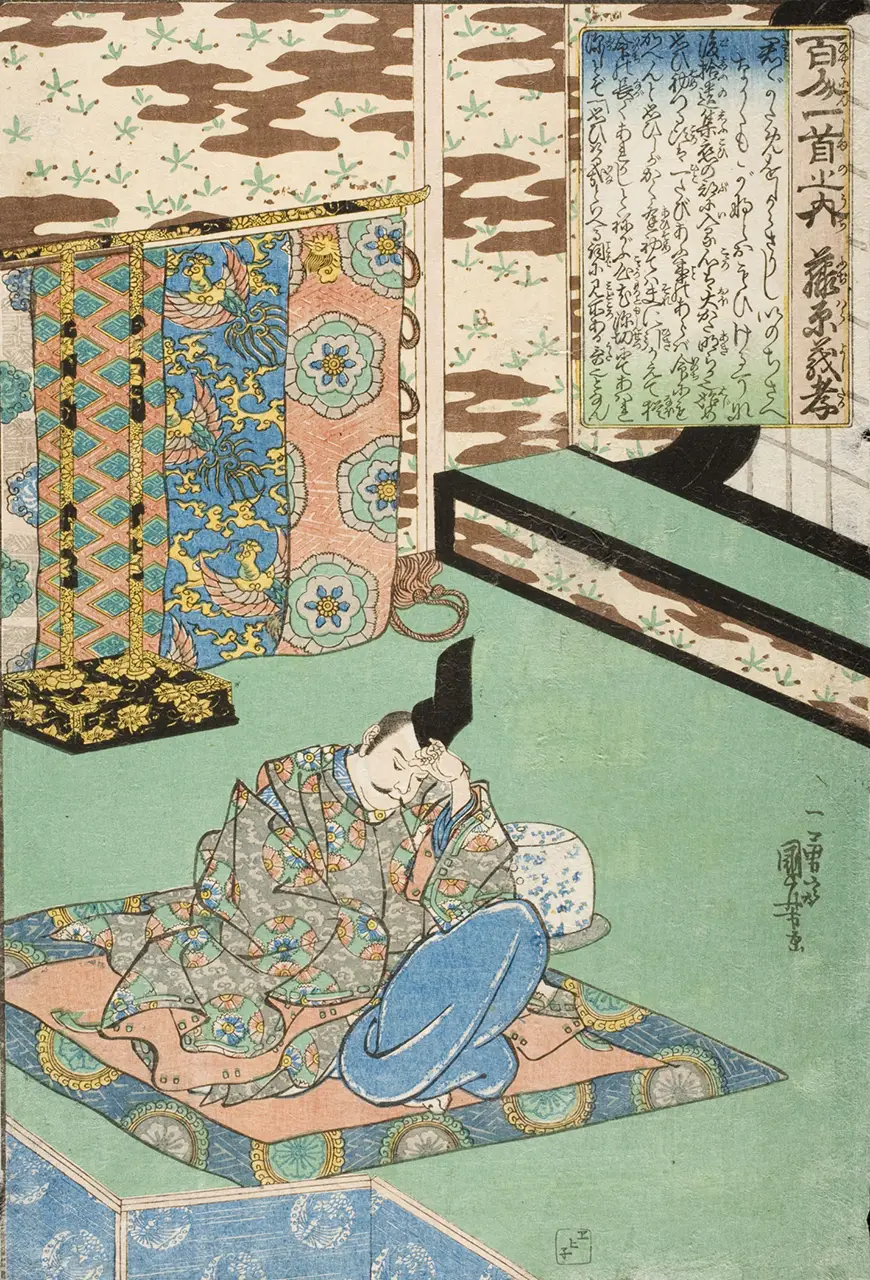
Los Angeles County Museum of Art, Public domain, via Wikimedia Commons This ukiyo-e print is by Utagawa Kuniyoshi, an artist of the Edo period.
It shows a scene to go with the Hyakunin Isshu poem.