Front of the Card
Back of the Card
Japanese
English
Audio: NHK Creative Library
Read by LibriVox volunteer Larry Wilson.
Audio courtesy of LibriVox
藤原実方朝臣
かくとだに
えやはいぶきの
さしも草
さしも知らじな
もゆる思ひを
さしもしら
しなもゆる
おもひを

かく


- Poem 51
- かくとだに
えやはいぶきの
さしも草
さしも知らじな もゆる思ひを
Author: Fujiwara no Sanekata Ason (dates unknown–999)
Source: Go Shūi Wakashū, Love
- English Verse Translation
- Though love, like blisters made from leaves Grown on Mount Ibuki, Torments me more than
I can say, My lady shall not see, How she is paining me.
— William N. Porter, 1909
- Modern Translation
- I cannot even tell you how I feel — like the smoldering fire of ibuki wormwood, my hidden love quietly burns.
- Commentary
- The Go Shūi Wakashū says this was sent to a woman on a snowy day. One theory says it was sent to Sei Shōnagon.
- About the Poet
- Fujiwara no Sanekata, great-grandson of Teishin-kō, came from a top family and was expected to rise high. But after a quarrel at court in which he threw Fujiwara no Yukinari's cap to the ground, Emperor Ichijō sent him off to Mutsu, saying, "Go and see the famous poetic places." The tale is told in the Kojidan.
- Poem Illustration
-
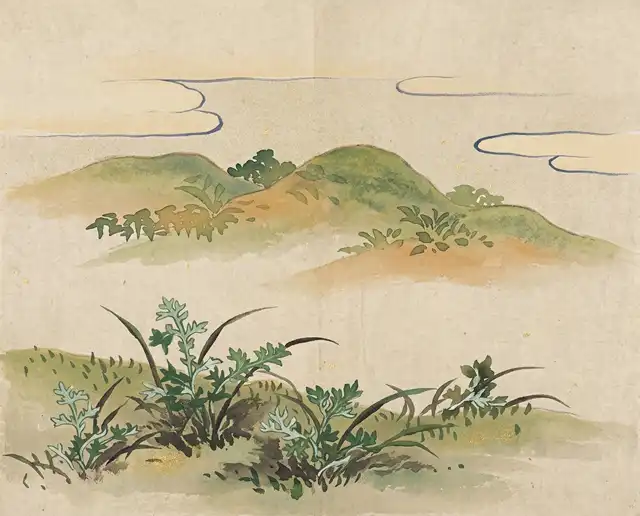
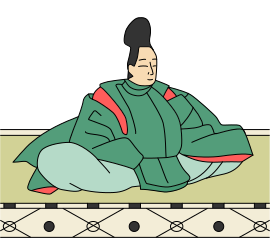
This image is based on an illustration from William N. Porter's A Hundred Verses from Old Japan, his 1909 English translation of the Hyakunin Isshu published in England, colorized and reworked using Adobe Firefly (generative AI).
- Fujiwara no Sanekata: A Short Timeline
-
- 973
- Given Junior Fifth Rank, Lower Grade
- 975
- Becomes a Chamberlain (Jijū)
- 994
- Becomes Middle Captain of the Left Palace Guards
- 995
- Becomes governor of Mutsu Province and travels there
- 995
- Given Senior Fourth Rank, Lower Grade
- 999
- Dies in Mutsu Province
- Fujiwara no Sanekata's Family Tree
-
Fujiwara no Sanekata was born into the Koichijō line of the Northern House of the Fujiwara. His grandfather Morotada played an important part in the Anna Incident and rose to Minister of the Left and Senior Second Rank. But Sanekata's father, Sadatoki, died young, so his final rank was only Junior Fifth Rank, Lower Grade. Because of his father's early death, Sanekata was adopted by his uncle, Fujiwara no Naritoki.
Sanekata built a career as a military officer and was promoted to Junior Fourth Rank, Lower Grade, in 986. But in front of Emperor Ichijō, he quarreled with Fujiwara no Yukinari about a poem, and in anger he knocked Yukinari's cap (eboshi) to the ground. This angered the emperor, and it is said that in 995 Sanekata was sent away to be governor of Mutsu. He went down to Mutsu with Minamoto no Shigeyuki, but in 999 (the 4th year of Chōtoku) he fell from his horse there, was crushed under it, and died. His final rank was Senior Fourth Rank, Lower Grade.
- Appendix
-
- Possible Sites of the Poetic Place "Ibukiyama"
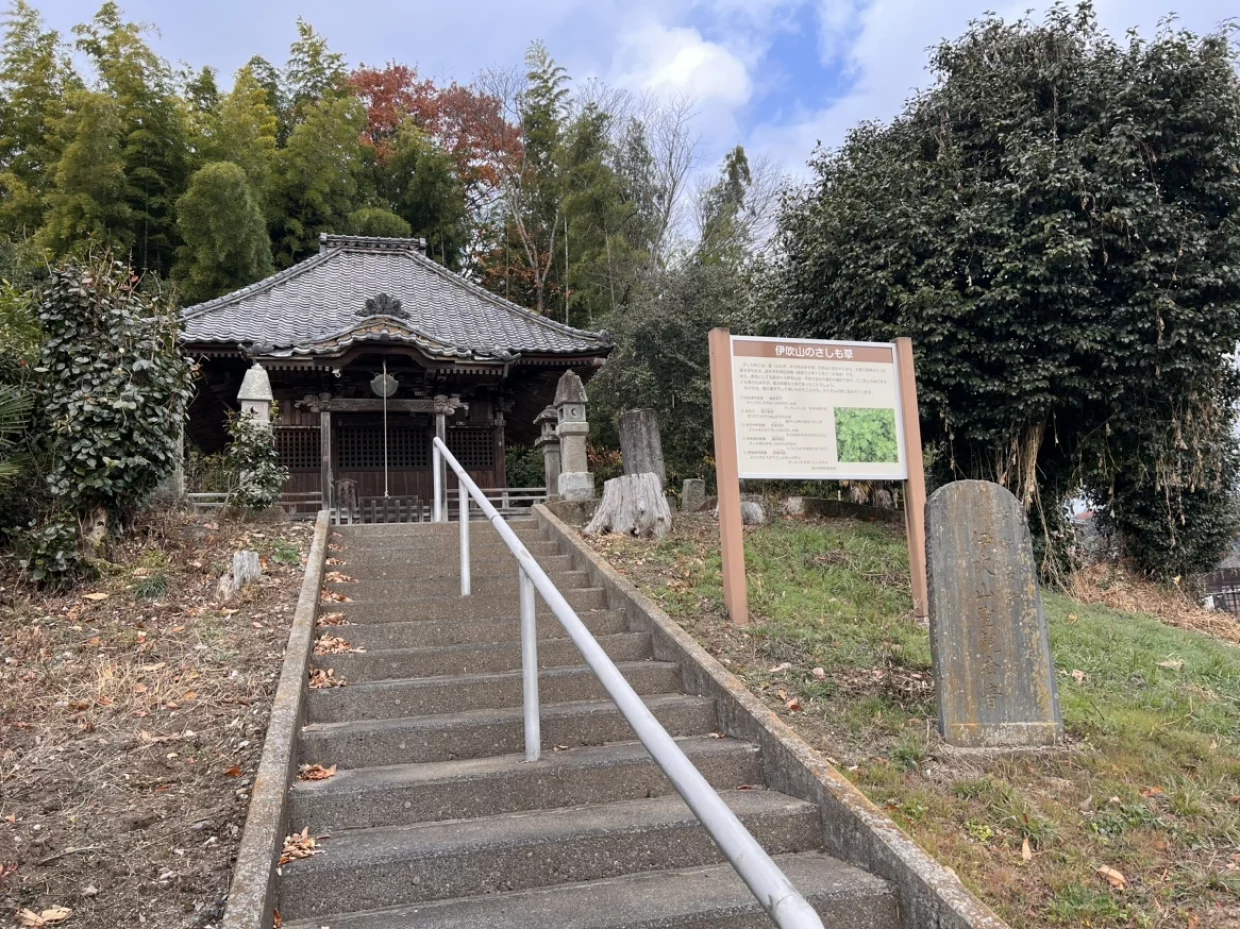
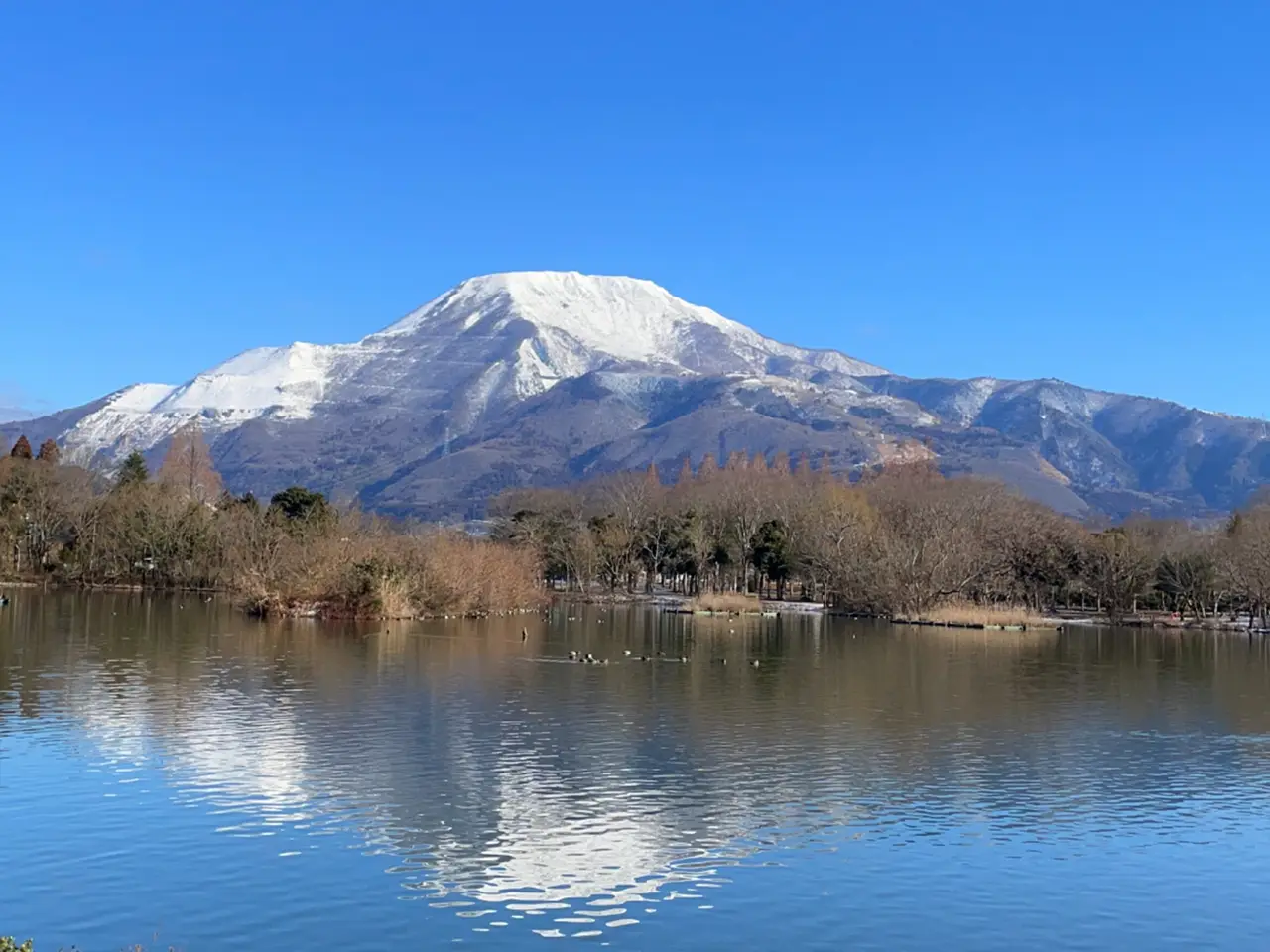
- Two places have been suggested for the "Ibukiyama" that Heian poems describe as a place where mugwort grows: Mount Ibuki in Tochigi Prefecture, and Mount Ibuki on the border of Shiga and Gifu Prefectures.
- Mount Ibuki (Tochigi Prefecture)
-
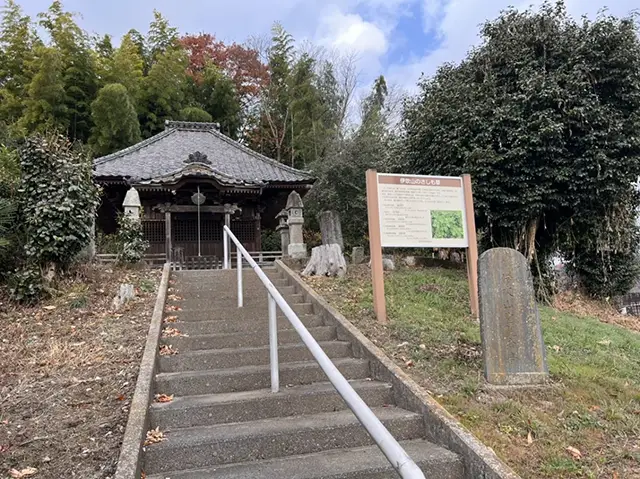
©Flat Local (a website supporting the Kita-Kantō border area) A range of hills in the Fukiage area of Tochigi City, Tochigi Prefecture.
The Dai Nihon Chimei Jisho (Great Dictionary of Japanese Place Names, by Yoshida Tōgo, published by Fuzanbō) has an entry for "Ibukiyama." It quotes three poems, including Sanekata's, and explains: "As for Ibukiyama, Kenshō's Shūchūshō says that Nōin wrote in his Kongengi, 'This mountain is not the one on the border of Mino and Ōmi, but is in Shimotsuke.' The Shōchi Tokaihen also says that all the poems about sashimogusa refer to Shimotsuke."
So the "Ibukiyama" in Sanekata's poem is thought to be the mountain in Tochigi Prefecture.
- Mount Ibuki (Border of Shiga and Gifu Prefectures)
-
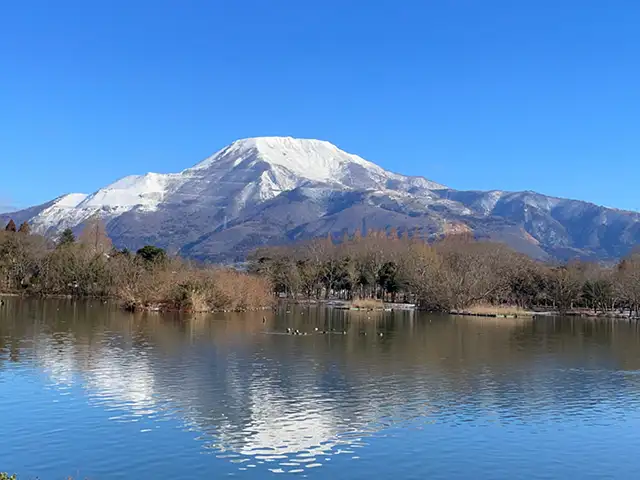
Mount Ibuki, on the border of Shiga and Gifu Prefectures. It is close to the Heian capital and has long been known as a treasure house of medicinal herbs. But it is said to have become a source of mugwort only in the Edo period.
See it on the map - The Feud with Fujiwara no Yukinari
-
Once, when courtiers went to see the cherry blossoms in Higashiyama, it began to rain.
While everyone hurried for cover, Fujiwara no Sanekata recited the next poem.
People praised it as elegant, but Yukinari remarked coldly, "The poem is charming, but Sanekata is a fool."
When Sanekata heard of this, he is said to have come to resent Yukinari.
In Japanese
桜狩 雨は降りきぬ おなじくは
濡るとも花の 蔭に隠れむ sakuragari amehafurikinu onajikuha
nurutomohanano kagenikakuremu Senjūshō, Fujiwara no SanekataIn English
We came to see the cherry blossoms, and now it has started to rain.
If we must get wet anyway, let's shelter under the blossoms. - A Big Quarrel over a Poem
-
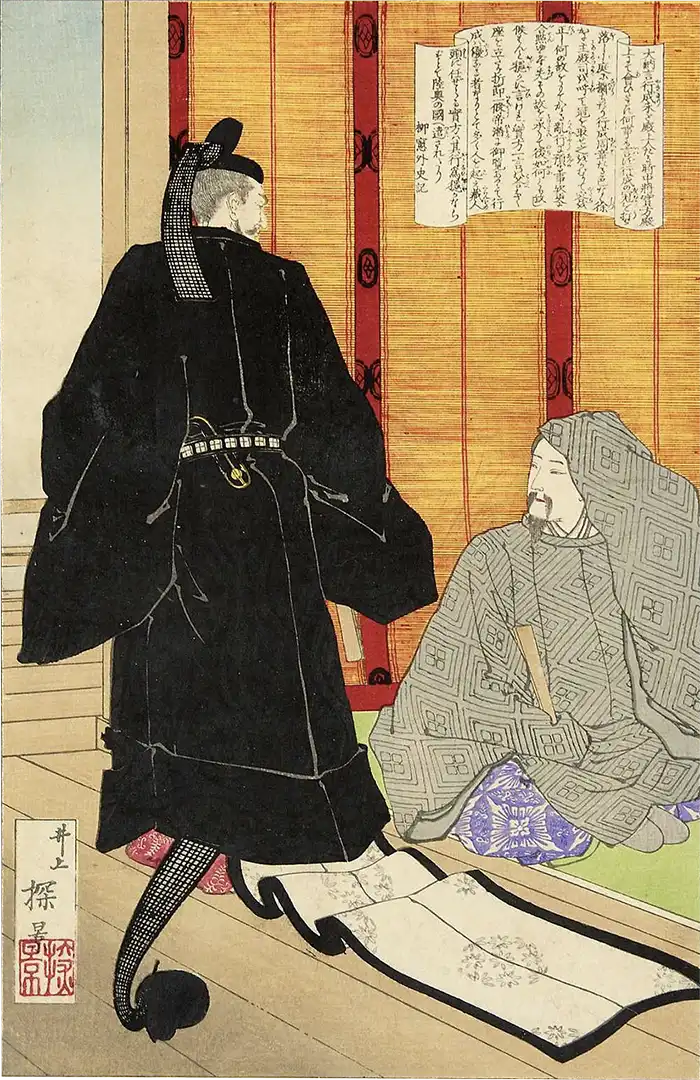
Inoue Yasuji, Public domain, via Wikimedia Commons This ukiyo-e print is based on a famous story told in the Kojidan, a collection of old tales.
Fujiwara no Sanekata was furious when Fujiwara no Yukinari harshly criticized his poem about viewing blossoms in the rain. After an argument, he finally knocked Yukinari's cap (eboshi) off his head.
In those days, grown men wore their eboshi even when they slept, and showing the top of one's head was thought to be the worst kind of shame. It is said to have been even harder to bear than "having one's underwear pulled off" would be today.
This outrageous behavior became a problem at court.
It is said that Emperor Ichijō told Sanekata, "Go and see the famous poetic places (and write poems about them)," and ordered him down to Mutsu Province.Click the red circles in the picture to see the names of the people and things.
- Sanekata's Lover? A Poem by Sei Shōnagon
-
Sei Shōnagon had many loves, and Fujiwara no Sanekata is said to have been one of her lovers. Once, when someone asked her, "Is it true that Sanekata is going down to Shimotsuke (today's Tochigi Prefecture)?" she wrote the next poem. Behind it, it seems, was a rumor that she would go with Sanekata when he took up his post in Shimotsuke.
In Japanese
思ひだに かからぬ山の させも草
誰か伊吹の 里は告げしぞ omohidani kakaranuyamano sasemokusa
tarekaibukino satohatsugeshizo The Pillow Book, Sei ShōnagonIn English
I never even thought of it. Like the mugwort of the village of Ibuki, who could have "told" (ifu) you such a thing?
- Izumi Shikibu's Poem Borrowing from Sanekata
-
The next poem is by Izumi Shikibu, who borrowed from Sanekata's Hyakunin Isshu poem (honkadori). Sanekata's original pours out his overflowing love directly, while Izumi Shikibu writes with a generous heart, ready to keep a fire burning inside until the one she loves turns to her.
In Japanese
けふもまた かくや伊吹の さしも草
さらば我のみ 燃えや渡らむ kefumomata kakuyaibukino sashimogusa
sarabawarenomi moeyawataramu Shin Kokin Wakashū, Izumi ShikibuIn English
Will you say such cold things again today?
Then I alone will keep burning, like the mugwort of Ibuki. - A Farewell Poem from Prince Okisada
-
The next poem was sent to Sanekata by Prince Okisada (later Emperor Sanjō) when Sanekata was leaving for Mutsu.
It suggests that Sanekata was someone the prince trusted.In Japanese
わかれぢの 涙に袖も さそはれて
いかなる道に とまらざるらむ wakarejino namidanisodemo sasoharete
ikanarumichini tomarazaruramu Sanekata-shū, Prince OkisadaIn English
My sleeves are wet with tears of parting, and the tears do not seem to stop.
What road are you taking, that you will not stay in the capital? - The Grave of Fujiwara no Sanekata
-
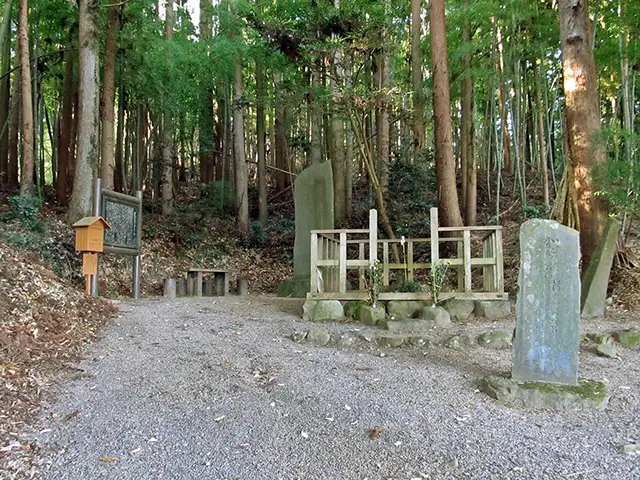
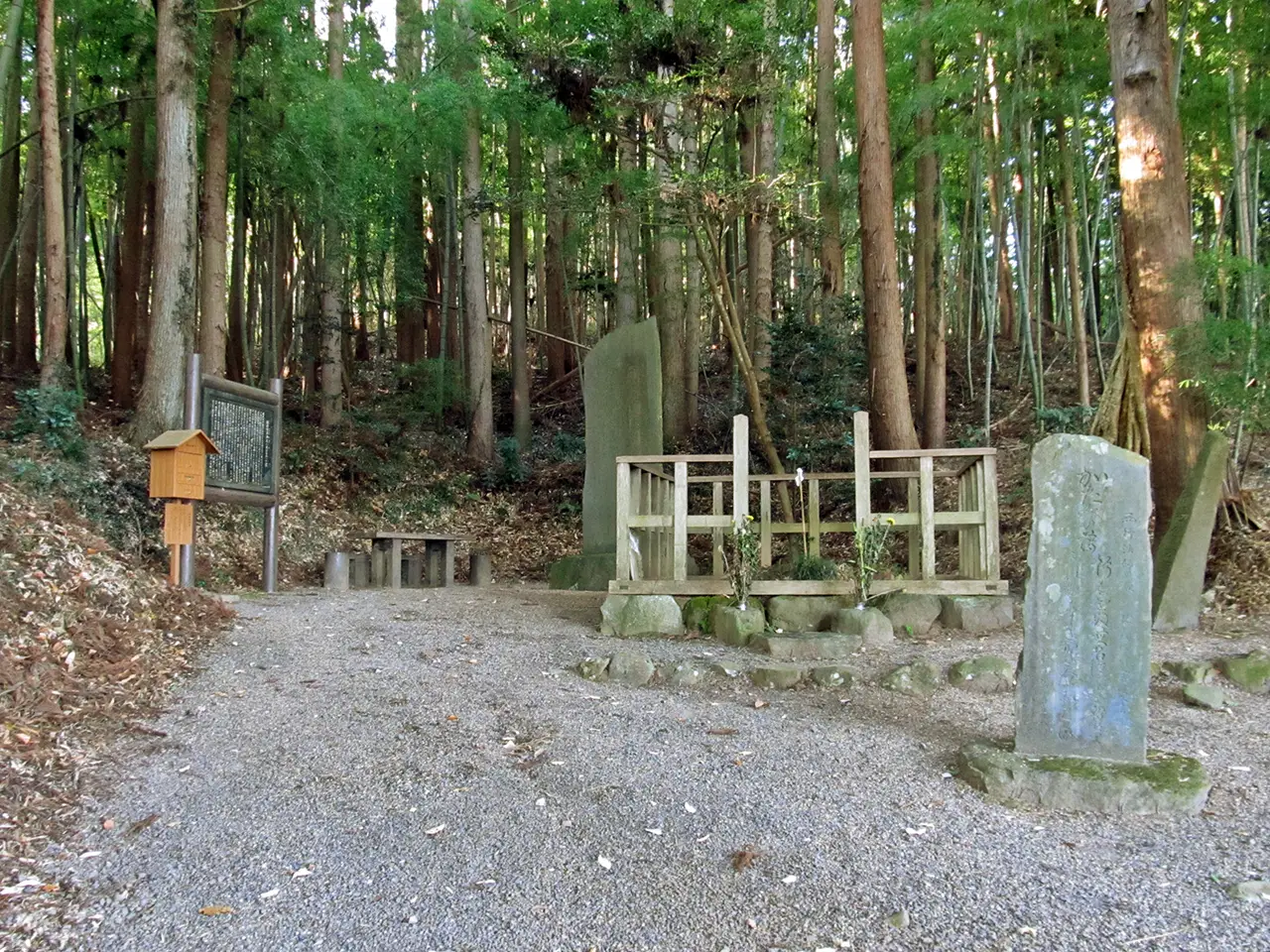
Bachstelze, CC BY-SA 3.0 <https://creativecommons.org/licenses/by-sa/3.0>, via Wikimedia Commons The grave of Fujiwara no Sanekata is in Natori City, Miyagi Prefecture. While on his way to visit the "Pine of Akoya," a famous poetic place in Dewa Province, he tried to ride past the Kasashima Dōsojin shrine without getting off his horse.
Local people warned him to get off his horse and pray, to avoid the god's anger, but Sanekata ignored them and rode on. Suddenly his horse went wild, and Sanekata fell. It is said that, by bad luck, he was crushed under the horse and died.
Near the grave there is a stone carved with a poem by the priest Saigyō.
- Saigyō's Poem Mourning Sanekata
- This is the poem that Saigyō wrote when he visited Sanekata's grave.

In Japanese
朽ちもせぬ その名ばかりを
留め置きて
枯野のすすき
形見にぞ見る kuchimosenu sononabakario todomeokite
karenonosusuki kataminizomiru Shin Kokin Wakashū, SaigyōIn English
He left behind only a name that will never decay, and lies buried here;
all I can see as a keepsake of him is the pampas grass of this withered field.