Front of the Card
Back of the Card
Japanese
English
Audio: NHK Creative Library
Read by LibriVox volunteer Larry Wilson.
Audio courtesy of LibriVox
大納言公任
滝の音は
たえて久しく
なりぬれど
名こそ流れて
なほ聞こえけれ
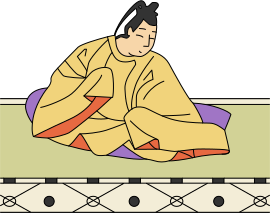
なこそなか
れてなほき
こえけれ

たき


- Poem 55
- 滝の音は
たえて久しく
なりぬれど
名こそ流れて なほ聞こえけれ
Author: Upper Counselor Kintō (966–1041)
Source: Senzai Wakashū, Miscellaneous
- English Verse Translation
- This waterfall's melodious voice Was famed both far and near; Although it long has ceased
to flow, Yet still with memory's ear Its gentle splash I hear.
— William N. Porter, 1909
- Modern Translation
- The sound of the waterfall has long since faded, but its name flows on and is still heard by the world.
- Commentary
- Written at the remains of the waterfall pavilion in the garden of Daikaku-ji, once Emperor Saga's villa. By Kintō's time the waterfall had stopped, but he wrote that its fame still lived on.
- About the Poet
- Fujiwara no Kintō was so learned that he was praised for "the talent of three boats": Chinese poetry, waka, and music. But he could be careless: when his sister became Emperor En'yū's empress, he mocked another consort, Senshi, asking when she would become empress, and earned her grudge. Unhappy with his rank, he later retired from court life.
- Poem Illustration
-
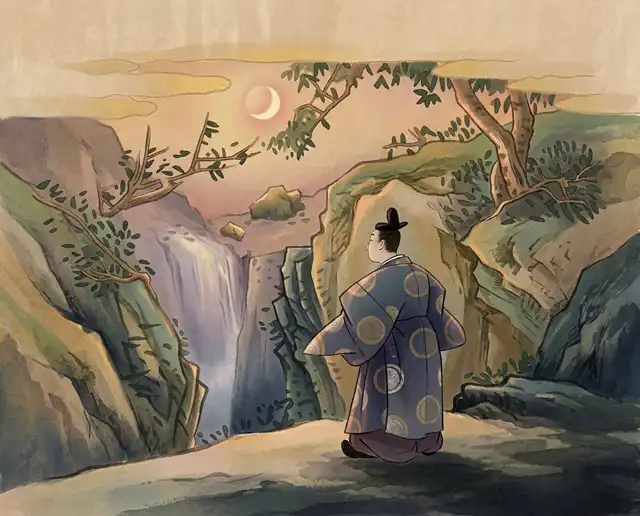
This image is based on an illustration from William N. Porter's A Hundred Verses from Old Japan, his 1909 English translation of the Hyakunin Isshu published in England, colorized and reworked using Adobe Firefly (generative AI).
- Fujiwara no Kintō: A Short Timeline
-
- 966
- Born as a son of Fujiwara no Yoritada
- 980
- Holds his coming-of-age ceremony before Emperor En'yū
- 986
- At a boating party on the Ōi River, praised as a man of "three boats' worth of talent" (poetry, Chinese verse, and music)
- 1009
- Becomes Acting Upper Counselor
- c. 1012
- Compiles the Wakan Rōeishū, a collection of Japanese and Chinese verses for singing
- 1026
- Becomes a monk
- 1041
- Dies
- Fujiwara no Kintō's Family Tree
-
Fujiwara no Kintō was gifted in waka, Chinese poetry, and music, and he belonged to the Ononomiya line, the main line of the Northern House of the Fujiwara. Much was expected of him. But in his father Yoritada's time, the Kanna Incident changed everything: the post of Regent and Kampaku passed from Yoritada of the Ononomiya line to Kaneie of the Kujō line. As a result, Kintō ended up supporting Michinaga, whom he had once looked down on.
His cousin was Fujiwara no Sanesuke, who kept a diary called the Shōyūki for more than 50 years. It is an important source for learning about society and court customs in the age of the regents. Kintō's son was Middle Counselor Sadayori (Fujiwara no Sadayori), who was also chosen for the Hyakunin Isshu.
- Appendix
-
- The Poem in the Ōkagami Story of "the Talent of Three Boats"
-
The historical tale Ōkagami tells this story. When Michinaga held a boating party on the Ōi River, he prepared three boats and put people skilled in music, Chinese poetry, and waka in each. Kintō was good at all three, so Michinaga asked him which boat he would ride in. Kintō got into the waka boat and wrote the next poem, which was highly praised. But Kintō regretted that if he had been in the Chinese poetry boat, his fame would have grown even more. The story shows how many talents he had.
In Japanese
小倉山 嵐の風の 寒ければ
もみぢの錦 きぬ人ぞなき ogurayama arashinokazeno samukereba
momijinonishiki kinuhitozonaki Ōkagami, Fujiwara no KintōIn English
The storm wind blowing down from Mount Ogura is so cold that there is no one here who is not wearing a brocade of falling autumn leaves like a robe.
- A Poem for the Screen for Akiko's Entry to Court
-
When Fujiwara no Michinaga's daughter Akiko entered the court as a consort of Emperor Ichijō, a splendid folding screen was prepared as part of her wedding goods. Michinaga asked the nobles to write poems to go with the pictures on the screen. Fujiwara no Kintō wrote this one for the picture "where wisteria is blooming." It compares wisteria (fuji), the symbol of the Fujiwara, to purple clouds, a lucky sign, and wishes for the prosperity of Michinaga's family.
In Japanese
紫の 雲ぞみゆる 藤の花
いかなる宿の しるしなるらむ murasakino kumozomiyuru fujinohana
ikanaruyadono shirushinaruramu Shūi Wakashū, Fujiwara no KintōIn English
The wisteria blooms like purple clouds.
What good fortune could it be a sign of for this house? - The Thirty-Six Immortal Poets
-
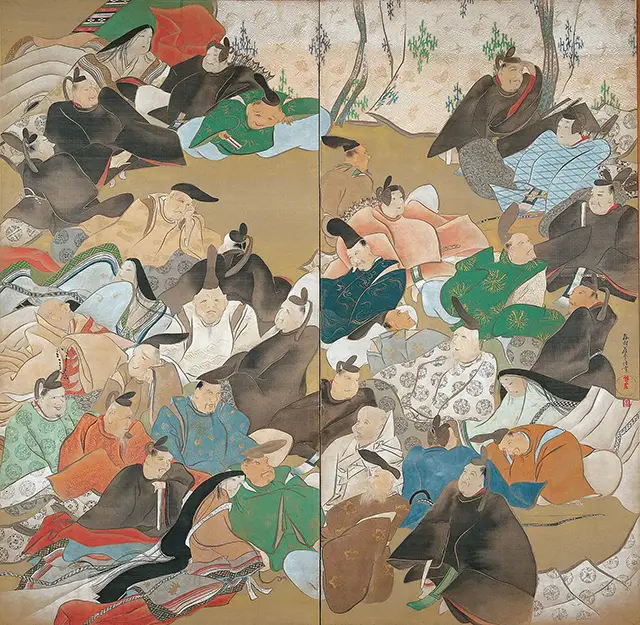
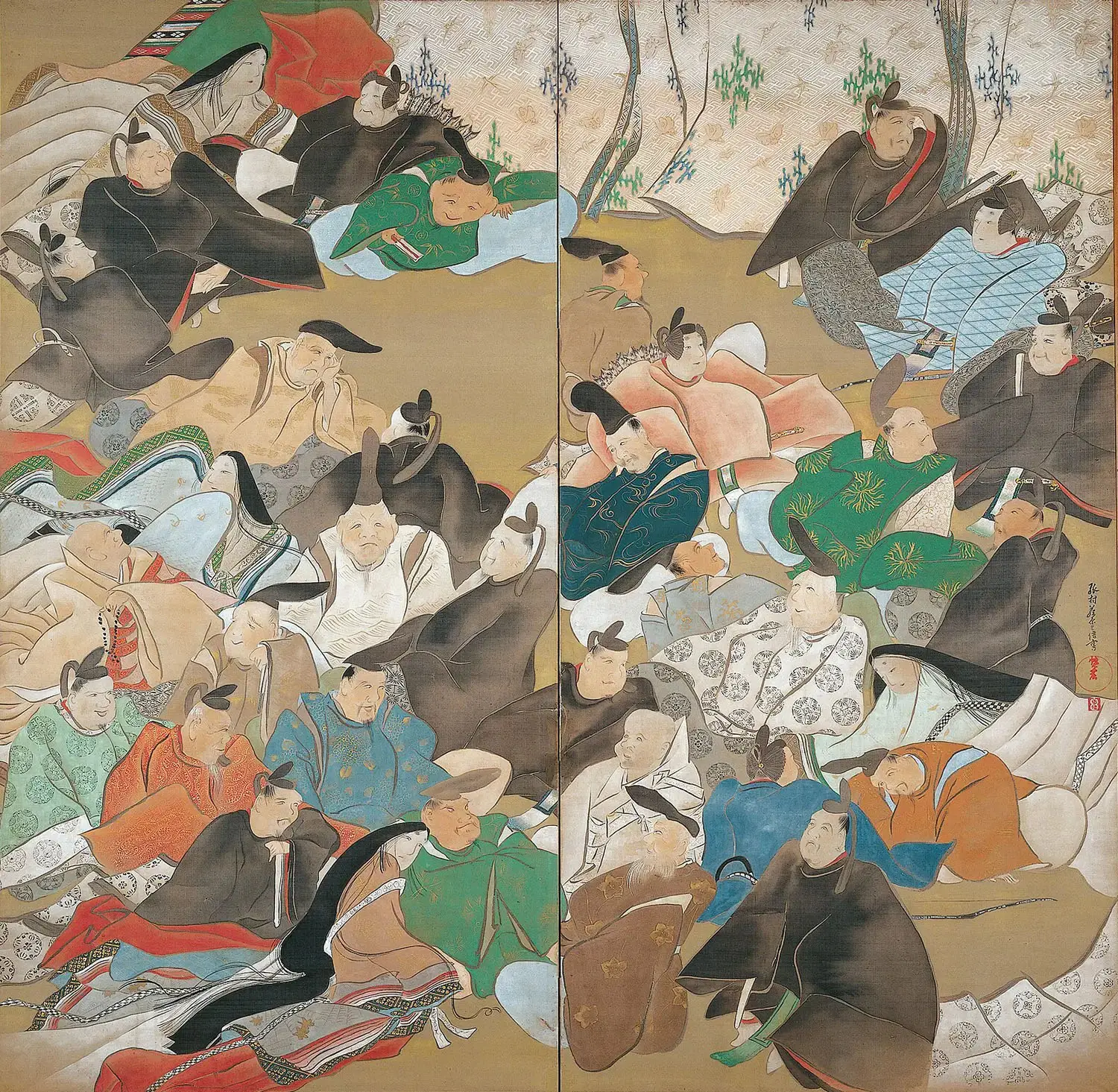
Ikeda Koson, Public domain, via Wikimedia Commons This is a folding screen of the Thirty-Six Immortal Poets by Ikeda Koson. The 36 poets in the Sanjūrokuninsen (Selection of Thirty-Six Poets), a collection of fine poems in the form of a poetry contest compiled by Fujiwara no Kintō, are called the Thirty-Six Immortal Poets.
- Wakan Rōeishū
- A collection of poems compiled by Fujiwara no Kintō. It contains waka and Chinese poems and prose that are good for reciting aloud.
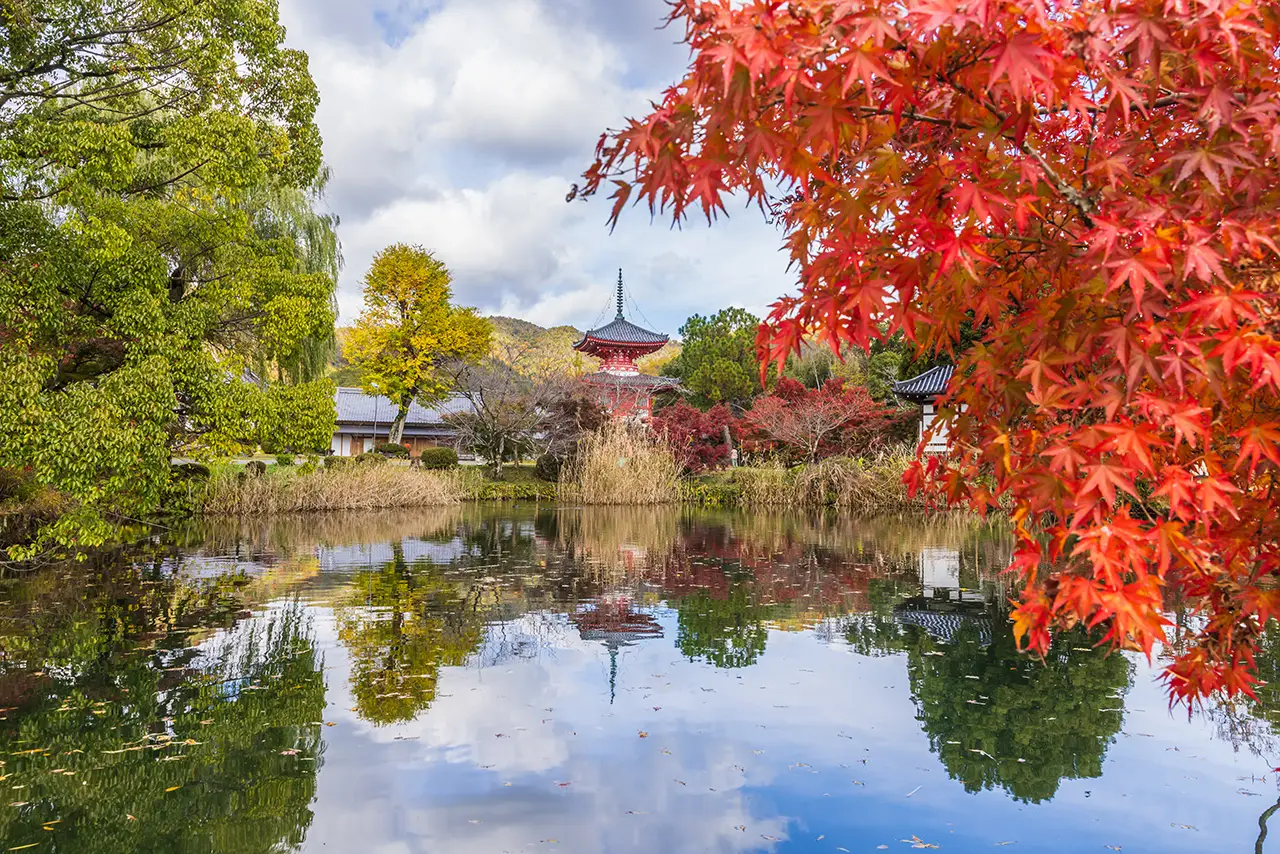
- Daikaku-ji, Where the Waterfall Remains
-
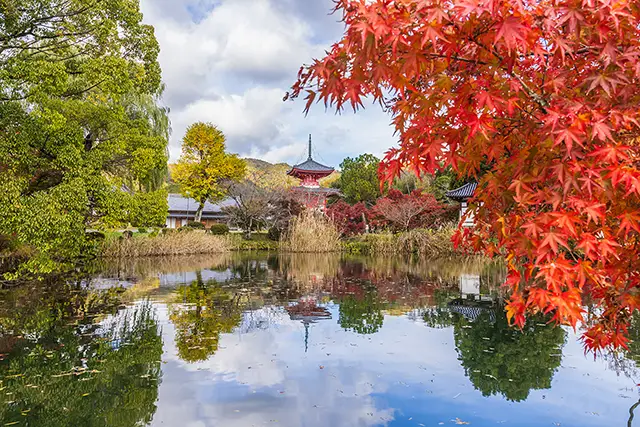
A temple in Saga Ōsawa-chō, Ukyō Ward, Kyoto. It was first built as a detached palace of Emperor Saga. The photo shows Ōsawa Pond in the temple grounds, said to be the oldest man-made garden pond in Japan.
Fujiwara no Kintō wrote his poem at the remains of the waterfall pavilion in a corner of this garden. The site of the waterfall still remains today as the "Site of the Nakoso Waterfall."
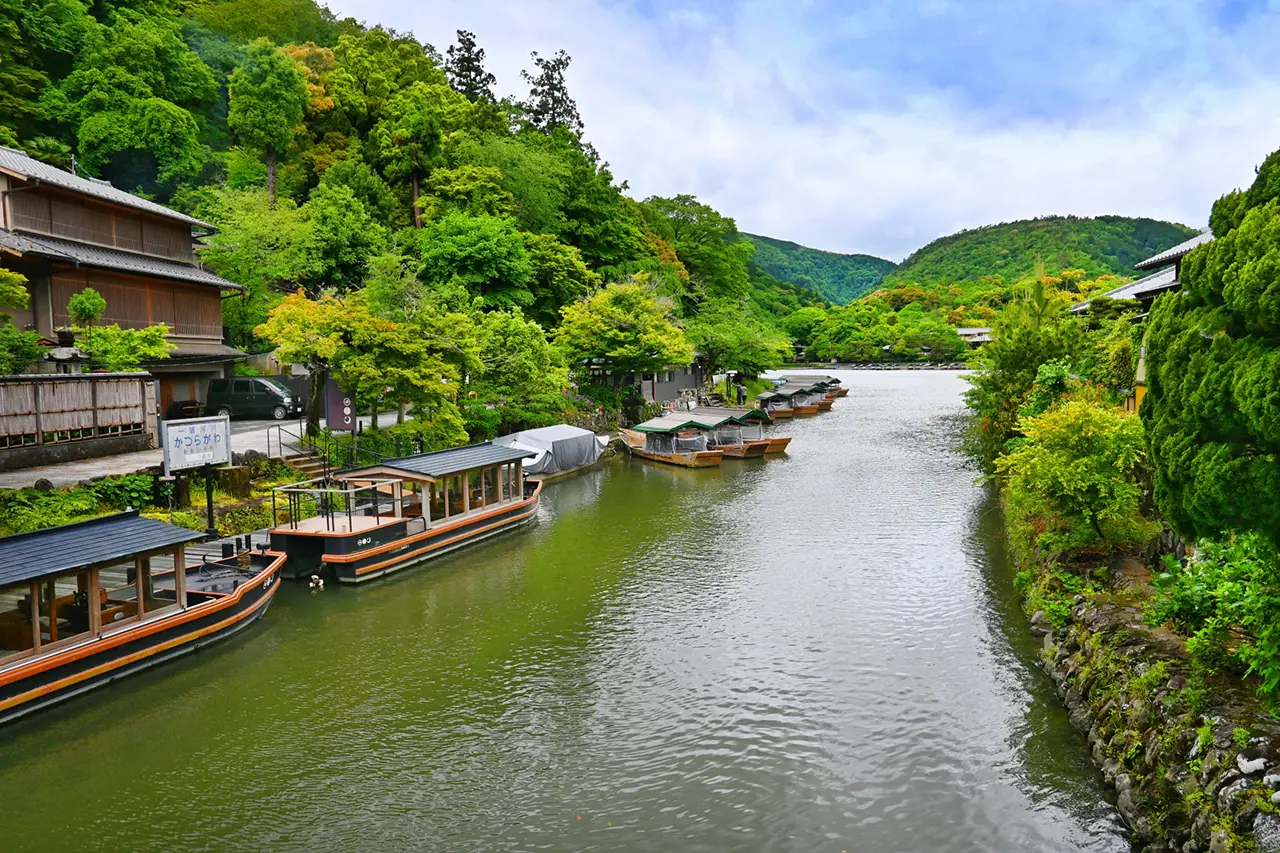
- The Ōi River, Where the Boating Party Was Held
-
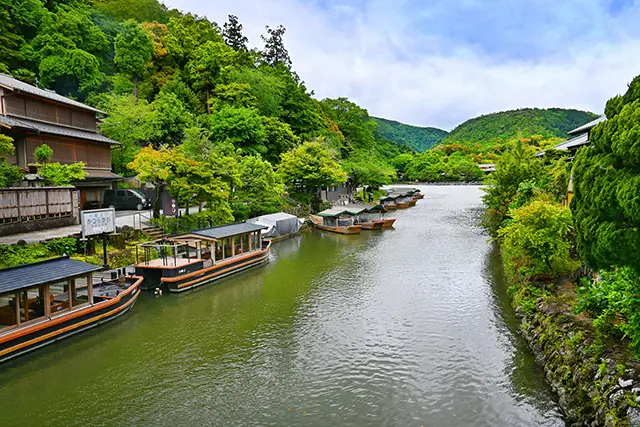
The Ōi River flows through the beautiful Arashiyama area of Kyoto and is also called the Katsura River. Heian nobles went boating on this river.
Sightseeing on roofed pleasure boats (yakatabune) to enjoy the Arashiyama scenery in every season is still popular today.
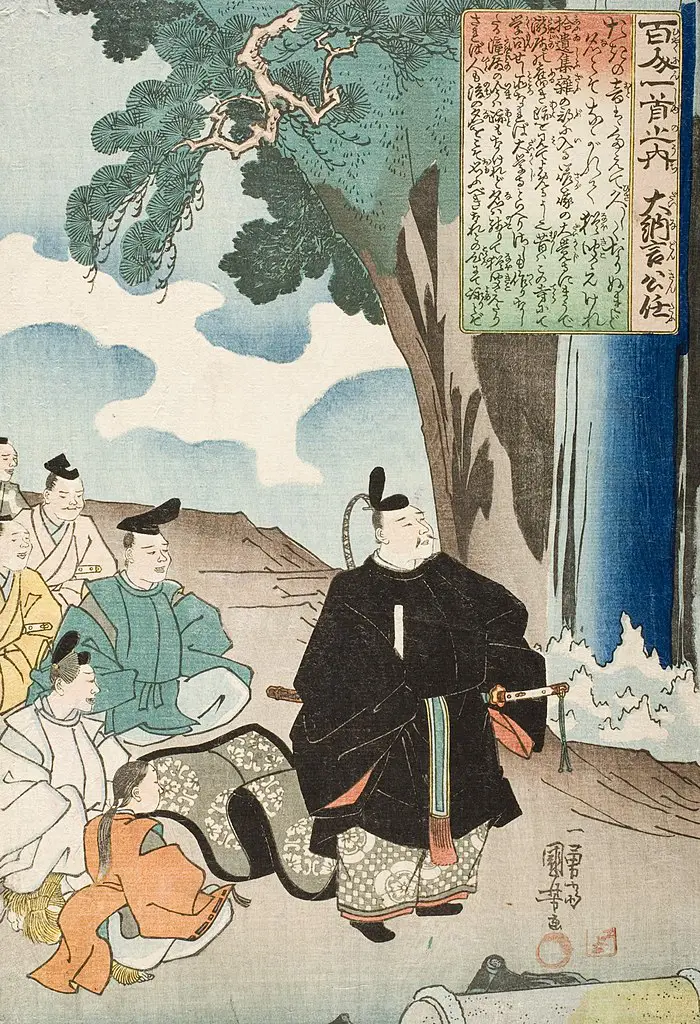
- Utagawa Kuniyoshi's Hyakunin Isshu no Uchi
-
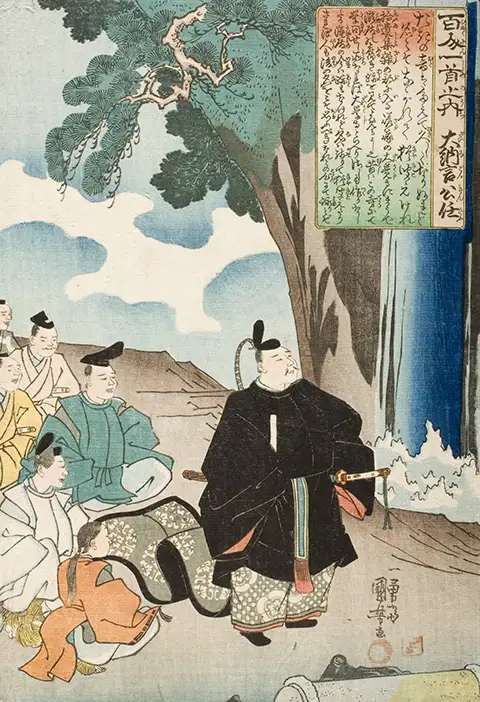
Los Angeles County Museum of Art, Public domain, via Wikimedia Commons This ukiyo-e print is by Utagawa Kuniyoshi, an artist of the Edo period.
It shows a scene to go with the Hyakunin Isshu poem.