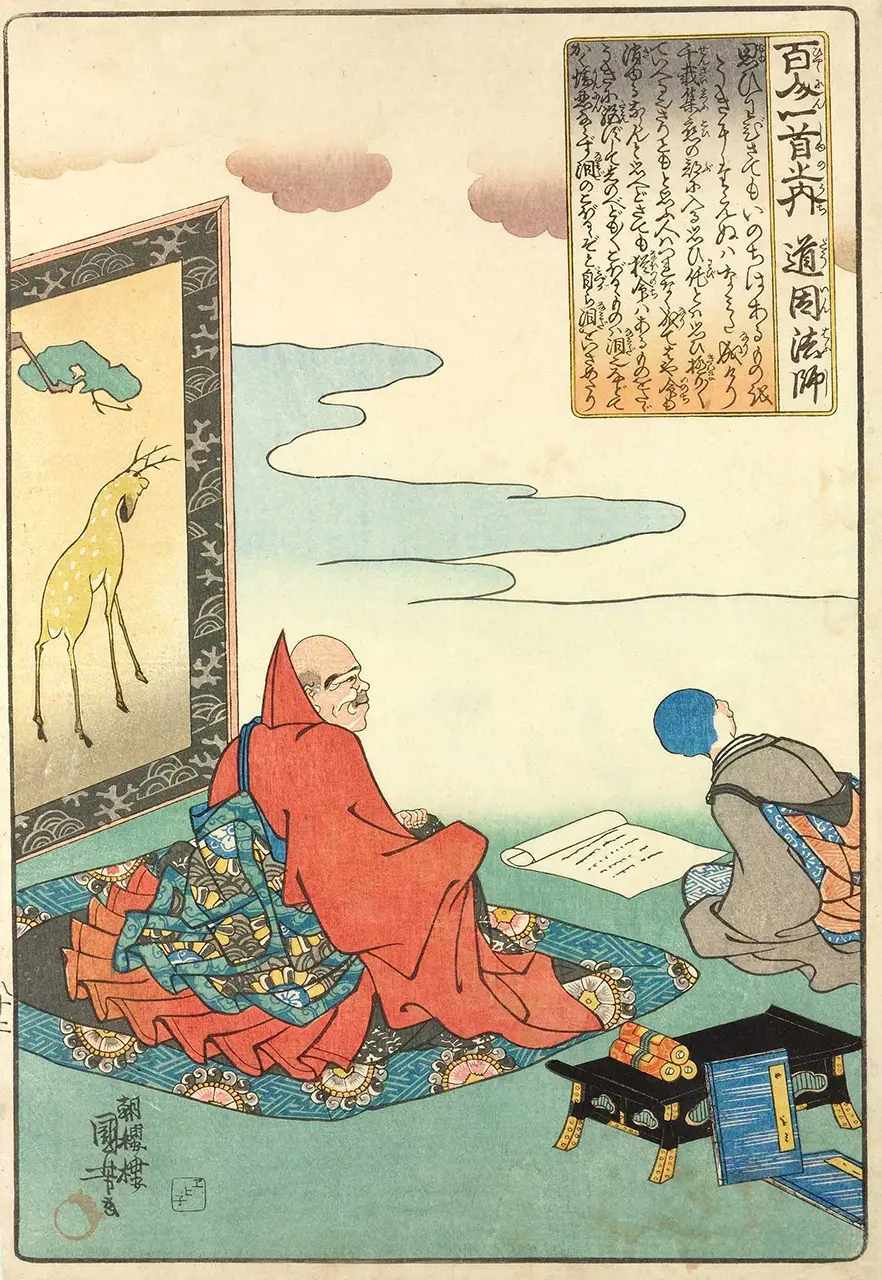
Front of the Card
Back of the Card
Japanese
English
Audio: NHK Creative Library
Read by LibriVox volunteer Larry Wilson.
Audio courtesy of LibriVox
道因法師
思ひわび
さても命は
あるものを
憂きにたへぬは
涙なりけり
うきにたへ
ぬはなみた
なりけり

おも


- Poem 82
- 思ひわび
さても命は
あるものを
憂きにたへぬは 涙なりけり
Author: Priest Dōin (1090–c. 1182)
Source: Senzai Wakashū, Love
- English Verse Translation
- How sad and gloomy is the world, This world of sin and woe! Ah! while I drift along Life's
stream, Tossed helpless to and fro, My tears will ever flow.
— William N. Porter, 1909
- Modern Translation
- I am exhausted with sorrow, yet somehow I am still alive. What cannot endure is not my life — but my tears.
- Commentary
- The poet grieves over a lover's coldness and the pain of lost love. Though overwhelmed by sorrow, he shows his resolve to go on living.
- About the Poet
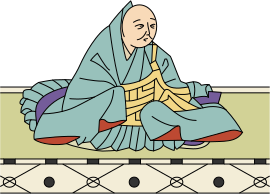
- Priest Dōin (Fujiwara no Atsuyori) worked in the court stables and reached the fifth rank. Wishing to write good poems, he walked from Kyoto to Sumiyoshi Shrine every month until he was 70 or 80. After becoming a monk past 80, he still joined poetry gatherings in his advanced years, eagerly listening to critiques.
- Poem Illustration
-
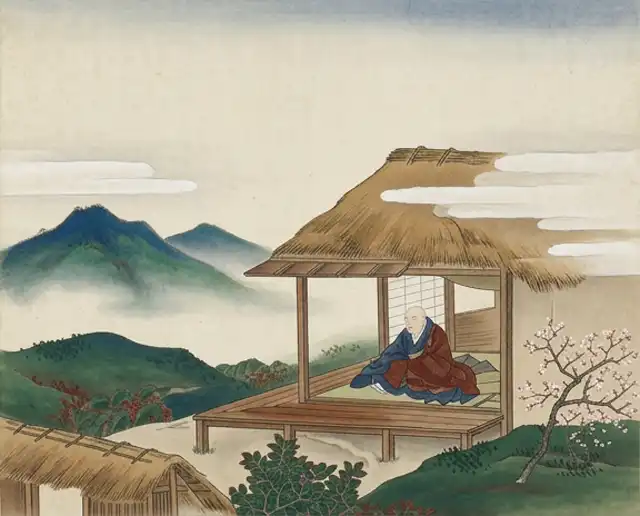
This image is based on an illustration from William N. Porter's A Hundred Verses from Old Japan, his 1909 English translation of the Hyakunin Isshu published in England, colorized and reworked using Adobe Firefly (generative AI).
- Priest Dōin: A Short Timeline
-
- 1090
- Born as a son of Fujiwara no Kiyotaka
- Unknown
- Serves as Assistant Head of the Right Stables and reaches Junior Fifth Rank, Upper Grade
- 1172
- Becomes a monk and takes the name Dōin
- c. 1182
- Dies
- Priest Dōin's Family Tree
-
- Appendix
-
- A Stingy Man Mocked as "Hadaka no Uma no Suke"
- The Kojidan (a collection of tales) tells a story from the time when Priest Dōin was Assistant Head of the Right Bureau of Horses (Uma no suke). He was stingy and kept putting off giving his men, the horse keepers, the clothes he had promised them as a reward. Losing patience, the horse keepers dragged him down from his ox carriage and stripped him of everything, from his court robes to his shoes and even his loincloth. People mocked him as "Hadaka no Uma no Suke" (the Naked Assistant Head of Horses), a pun joining his title with the word for "naked."
- His Passion for Waka in Old Age
- The Mumyōshō, a book on poetry by Kamo no Chōmei, tells stories about how passionate Priest Dōin was about waka.
Until he was 70 or 80, Dōin walked every month to Sumiyoshi Shrine in Osaka, which honors the god of waka, to pray, "Please let me write fine poems." When he grew hard of hearing, he sat right next to the reader at poetry contests and listened closely. Though he was a monk, he cared a great deal about winning, and when he lost a contest, he later went to the judge's house and wept in earnest. The Mumyōshō even tells what happened after his death: when Fujiwara no Toshinari chose 18 of Dōin's poems for the Senzai Wakashū, Dōin appeared in his dream and wept for joy, so Toshinari added two more, for a total of 20. - Utagawa Kuniyoshi's Hyakunin Isshu no Uchi
-
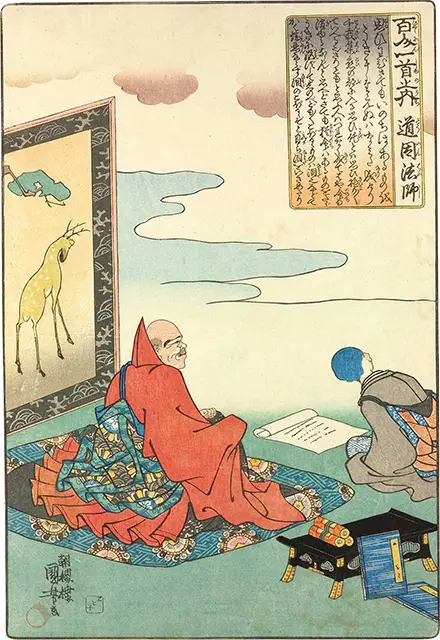
© The Trustees of the British Museum An ukiyo-e print by Utagawa Kuniyoshi, an ukiyo-e artist of the Edo period.
It shows a scene that matches the Hyakunin Isshu poem.