Front of the Card
Back of the Card
Japanese
English
Audio: NHK Creative Library
Read by LibriVox volunteer Larry Wilson.
Audio courtesy of LibriVox
持統天皇
春過ぎて
夏来にけらし
白妙の
衣ほすてふ
天の香具山
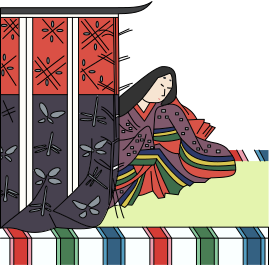
ころもほす
てふあまの
かくやま

はるす


- Poem 2
- 春過ぎて
夏来にけらし
白妙の
衣ほすてふ 天の香具山
Author: Empress Jitō (645–703)
Source: Shin Kokin Wakashū, Summer
- English Verse Translation
- The spring has gone, the summer's come, And I can just descry The peak of Ama-no-kagu,
Where angels of the sky Spread their white robes to dry.
— William N. Porter, 1909
- Modern Translation
- Spring has passed and summer seems to have come — white robes are said to be hung out to dry on the heavenly Mount Kagu.
- Commentary
- Mount Kagu is a low hill in present-day Kashihara, Nara Prefecture. From Fujiwara-kyō, where Empress Jitō ruled, it could be seen to the east. In early summer, white robes were hung out to dry on this mountain, a sight that told people summer had come.
- About the Poet
- Her personal name was Uno no Sarara, and she was a daughter of Emperor Tenji. In the Jinshin War, the largest civil war of ancient Japan, she fought beside her husband, Emperor Tenmu, and won. After he died and her son died young, she took the throne herself in her mid-40s, building Fujiwara-kyō and a system of written law as he had wished.
- Poem Illustration
-
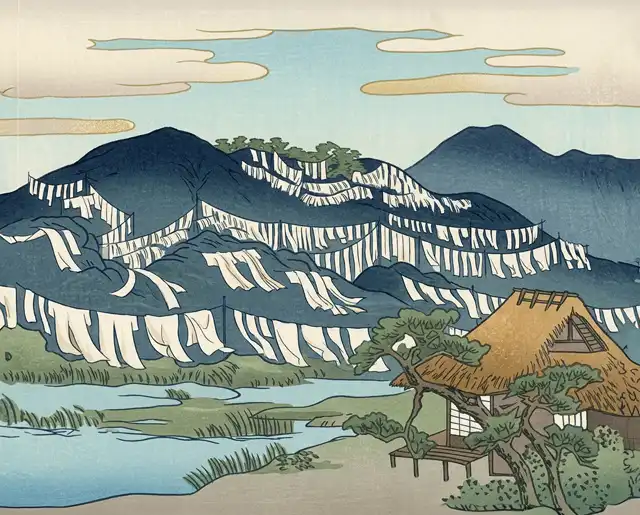
This image is based on an illustration from William N. Porter's A Hundred Verses from Old Japan, his 1909 English translation of the Hyakunin Isshu published in England, colorized and reworked using Adobe Firefly (generative AI).
- Empress Jitō: A Short Timeline
-
- 645
- Born as a daughter of Emperor Tenji
- 657
- Marries Prince Ōama (later Emperor Tenmu) at age 13
- 662
- Gives birth to Prince Kusakabe
- 672
- Wins the Jinshin War against Prince Ōtomo
- 673
- Becomes Emperor Tenmu's empress
- 686
- Runs the government after Emperor Tenmu dies
- 686
- Drives Prince Ōtsu to take his own life
- 689
- Puts the Asuka Kiyomihara Code into effect
- 690
- Becomes empress regnant (ruler)
- 694
- Moves the capital to Fujiwara-kyō
- 697
- Hands the throne to Emperor Monmu and becomes retired empress
- 703
- Dies
- Empress Jitō's Family Tree
-
Empress Jitō was the daughter of Emperor Tenji (Poem 1).
After Emperor Tenji died, a fight over the throne — the Jinshin War — broke out in 672. Empress Jitō fought alongside her husband, Prince Ōama (Emperor Tenmu), against the court army led by Prince Ōtomo (Emperor Kōbun), and they won.
In 686, when Emperor Tenmu died, Prince Ōtsu was charged with plotting a rebellion and took his own life. There are different views about this. One says that Empress Jitō wanted her own son, Prince Kusakabe, to take the throne, so she removed Prince Ōtsu, who was well liked and could have become Prince Kusakabe's rival.
Prince Ōtsu's farewell poem is introduced below.In 689, Prince Kusakabe fell ill and died at just 27. Empress Jitō wanted his son, Prince Karu (later Emperor Monmu), to take the throne, but Prince Karu was only 7 years old, so she took the throne herself.
In 697, when Emperor Monmu took the throne, Empress Jitō became the first retired sovereign (Daijō Tennō).
- Appendix
-
-
Timeline of Empress Jitō
(Click to open or close.)Empress Jitō is born
She was born to Emperor Tenji and Ochi no Iratsume. Her personal name was Uno no Sarara.
In the same year, her father, Emperor Tenji, killed Soga no Iruka together with Nakatomi no Kamatari and others in the Isshi Incident.
Soga no Ishikawa-maro takes his own life
Her grandfather on her mother's side, Soga no Ishikawa-maro, was falsely accused by his half-brother, Soga no Himuka, of plotting a rebellion, and took his own life.
Marries Prince Ōama (Emperor Tenmu)
At 13, she married Prince Ōama, Emperor Tenji's younger brother, who later became Emperor Tenmu.
Gives birth to Prince Kusakabe
She and Emperor Tenmu had a son, Prince Kusakabe.
Her father, Emperor Tenji, dies (age 27)
After Emperor Tenji died, she withdrew to Yoshino with Prince Ōama.
The Jinshin War breaks out
Learning that Prince Ōtomo was moving to attack her husband, Prince Ōama, she and her husband started the Jinshin War and defeated the court army led by Prince Ōtomo.
Her husband takes the throne as Emperor Tenmu
At Asuka Kiyomihara Palace, her husband, Prince Ōama, became Emperor Tenmu. One theory says the name "Kiyomihara" came from a wish for Emperor Tenmu to recover from an illness.
Her grandson Prince Karu is born
Her son, Prince Kusakabe, had a son, Prince Karu.
Her husband, Emperor Tenmu, dies
She held funeral rites called mogari for more than two years, using the time to prepare for her son Prince Kusakabe to take the throne. She ruled as the real head of the country without formally taking the throne, a form of rule called shōsei.
She drives Prince Ōtsu to take his own life
She had Prince Ōtsu arrested for plotting a rebellion and drove him to take his own life. Some say she was removing a rival to her son Prince Kusakabe; others say it was a hard but necessary political choice to keep the country from splitting apart.
April: Her son Prince Kusakabe dies
The cause of his death is not clear. Some say he was weak from birth; others say the forced death of Prince Ōtsu and the pressure of being heir to the throne put too much stress on him.
June: The Asuka Kiyomihara Code is put into effect
Japan's first organized code of law, begun by Emperor Tenmu, was put into effect by Empress Jitō. Under this code, the country's name was officially set as "Nihon" (Japan).
She takes the throne as Empress Jitō
The Kōin Nenjaku family register is made
Building on the Kōgo Nenjaku made by Emperor Tenji, she had the Kōin Nenjaku made — the first family register based on the ritsuryō law codes. It included a rule to remake the registers every six years, and this rule was actually put into practice.
The capital moves to Fujiwara-kyō
She led the move to Fujiwara-kyō that her husband, Emperor Tenmu, had planned. Eight years after his death, she finally completed Japan's first true planned capital.
Empress Jitō steps down
Emperor Monmu takes the throne
Her grandson Prince Karu became Emperor Monmu at age 15. Empress Jitō became the first retired sovereign and helped him rule.
Empress Jitō dies
As she had wished, she became the first emperor to be cremated. She was given the posthumous name "Takamanohara Hironohime no Sumeramikoto," which shows her as an heir of the sun goddess Amaterasu.
Her tomb is robbed
Fujiwara no Sadaie's diary, the Meigetsuki, records that Hinokuma no Ōuchi no Misasagi, the tomb of Emperor Tenmu and Empress Jitō, was robbed. The silver urn holding Empress Jitō's remains was stolen, and her remains were thrown away near the tomb.
- The Original Poem
- This poem is taken from the Shin Kokin Wakashū, but its original version is in the Man'yōshū, Japan's oldest poetry collection (Book 1, Poem 28). The original simply describes what the poet sees: "white robes are hung out to dry." The Hyakunin Isshu version changes this to something heard from others: "white robes are said to be hung out to dry."
In Japanese
春過ぎて 夏来るらし 白妙の
衣干したり 天の香具山 harusugite natsukitarurashi shirotaeno
koromohoshitari amanokaguyama Man'yōshū, Empress JitōIn English
Spring has passed, and summer seems to have come.
Pure white robes are hung out to dry on heavenly Mount Kagu. - A Poem That Borrows Across Time and Seasons
- This poem by Fujiwara no Yoshitsune (Kujō Yoshitsune) borrows from Empress Jitō's poem in the Hyakunin Isshu, a technique called honkadori. In the Hyakunin Isshu he appears as Poem 91, under the name Gokyōgoku Regent and Former Chancellor of the Realm. By borrowing a summer poem to describe a winter scene, Yoshitsune may have wanted to give his poem a feeling that goes beyond time and season.
In Japanese
雲晴るる 雪の光や 白妙の
衣ほすてふ 天の香久山 kumoharuru yukinohikariya shirotaeno
koromohosutefu amanokaguyama Akishino Gesseishū, Fujiwara no YoshitsuneIn English
On heavenly Mount Kagu, where white robes are said to be hung out to dry in summer,
the clouds have now cleared, and the light of the snow shines like those white robes. - A Poem Empress Jitō Drew On
- This poem by an unknown author is in the Man'yōshū. As winter turns into spring, it quietly contrasts two things: the year becomes new, but people only grow older.
In Japanese
冬過ぎて 春の来れば 年月は
新たなれども 人は古り行く fuyusugite harunokitareba toshitsukiha
aratanaredomo hitohafuriyuku Man'yōshū, author unknownIn English
When winter has passed and spring has come, the months and years become new,
but people only grow old. - The Farewell Poem of Prince Ōtsu,
Who Was Forced to Take His Own Life - The next poem is by Prince Ōtsu, who was driven to take his own life — perhaps by Empress Jitō's scheming.
Did he leave this world feeling the brightness of life in the cries of the ducks?
This is the farewell poem of a tragic prince who was forced to die at just 24.
In Japanese
ももづたふ
磐余の池に
鳴く鴨を
今日のみみてや
雲隠りなむ momozutafu iwarenoikeni
nakukamoo kyounomimiteya kumogakurinamu Man'yōshū, Prince ŌtsuIn English
Is today the last time I will see the ducks crying on Iware Pond, before I hide behind the clouds and die?
"Momozutau" is a makurakotoba (pillow word), a set phrase used before "Iware."
- A Poem Empress Jitō Wrote When Her Husband,
Emperor Tenmu, Died - When Emperor Tenmu died, the palace was Asuka Kiyomihara Palace, in Asuka, Asuka Village, Nara Prefecture. Mount Kagu lies to the north of the palace, so the "northern mountain" in the poem is thought to mean Mount Kagu. Empress Jitō seems to have seen her husband's spirit in the blue clouds trailing over Mount Kagu.
In Japanese
北山に たなびく雲の 青雲の
星離れ行き 月を離れて kitayamani tanabikukumono seiunno
hoshihanareyuki tsukiohanarete Man'yōshū, Empress JitōIn English
The blue clouds trailing over the northern mountain are drifting far away,
leaving the stars, leaving the moon. - Emperor Jomei's Poem About Mount Kagu
- Empress Jitō's grandfather, Emperor Jomei, wrote a poem praising Mount Kagu.
In Japanese
大和には 群山あれど とりよろふ
天の香具山 登り立ち
国見をすれば 国原は 煙立ち立つ
海原は かまめ立ち立つ
うまし国そ 蜻蛉島 大和の国は yamatoniha murayamaaredo toriyorofu
amanokaguyama noboritachi
kunimiosureba kuniharaha keburitachitatsu
unabaraha kamametachitatsu
umashikuniso akizushima yamatonokuniha Man'yōshū, Emperor JomeiIn English
There are many mountains in Yamato,
but the finest of all is heavenly Mount Kagu.
When I climb to its top and look out over the land,
smoke from cooking fires rises all over the plain,
and over the water, gulls fly up again and again.
What a fine land it is — Akizushima, the land of Yamato!"Akizushima" is an old poetic name for Yamato (Japan).
- A Poem About Yamato
-
The next poem was written by Yamato Takeru no Mikoto, thinking of Yamato (present-day Nara Prefecture). Empress Jitō, too, lived in an age when Yamato was the center of the country. The character 倭 can be read "Wa," but from early times it was also read "Yamato." 大和 is also read "Yamato," and in ancient times the name was also used for Japan as a whole.
The late 7th century, when Empress Jitō lived, was a time when a state run by written law was being built on the base of ancient Wa (Yamato). There are different views on how the country's name changed from "Wa" to "Nihon" (Japan), but some say the name "Nihon" was established under Emperor Tenmu and Empress Jitō.
In Japanese
大和は 国の真秀ろば 畳なづく青垣
山籠れる 大和しうるはし yamatoha kuninomahoroba tatanazukuaogaki
yamagomoreru yamatoshiuruhashi Kojiki, Yamato Takeru no MikotoIn English
Yamato is the finest place in the land. Wrapped in green mountains that rise layer upon layer like a fence, Yamato is beautiful.
- The Jinshin War
-
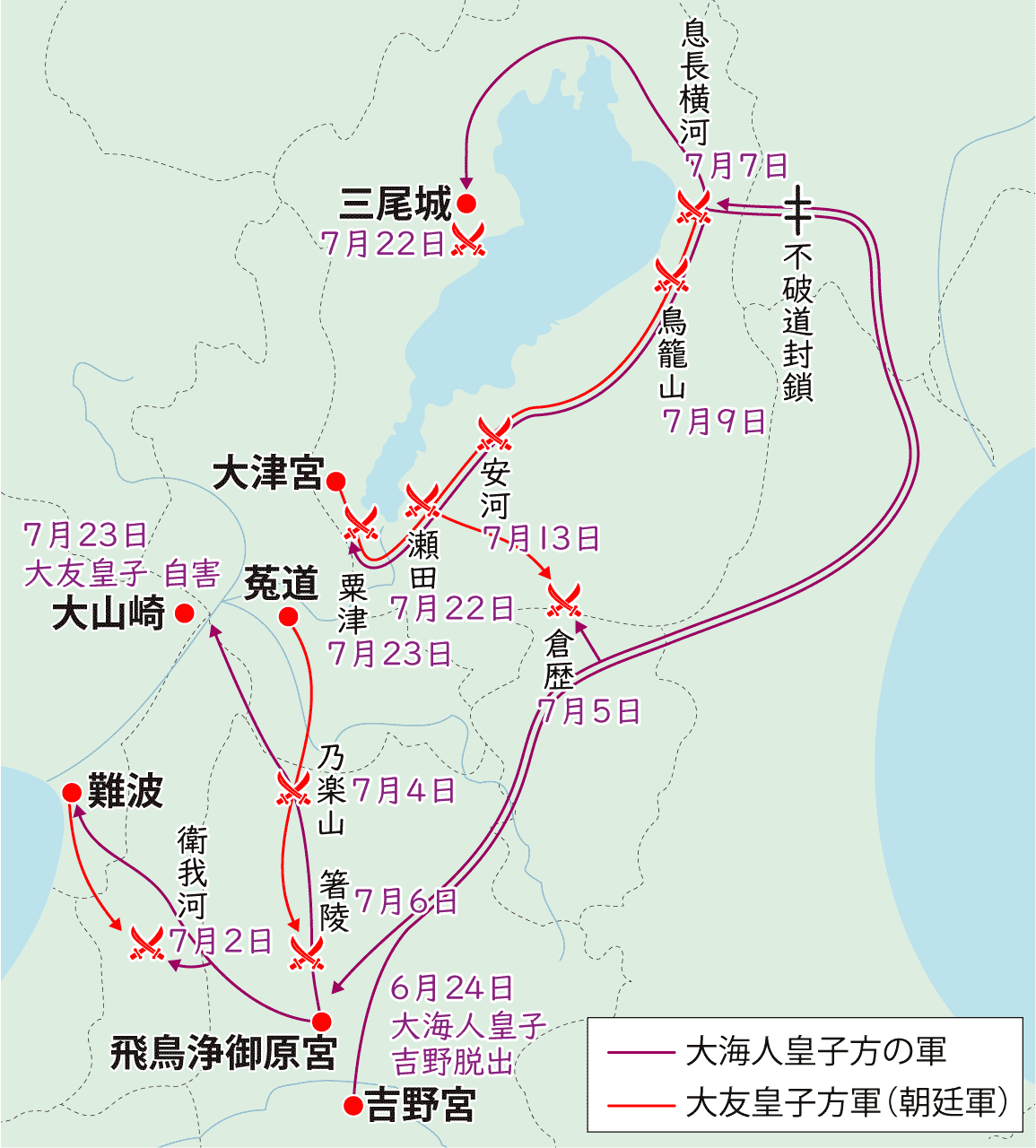
The Jinshin War was the largest civil war of ancient Japan. It was a fight over the throne between Emperor Tenji's younger brother, Prince Ōama, and Emperor Tenji's son, Prince Ōtomo. When Emperor Tenji died, Prince Ōama felt his life was in danger. He became a monk and withdrew to Yoshino (present-day Yoshino Town, Nara Prefecture) with only a few followers. Meanwhile, in the capital, the Ōmi court led by Prince Ōtomo took control.
When Prince Ōama learned that Prince Ōtomo's side had begun gathering soldiers to attack him, he rose up against the court in the 6th month of 672. This was the start of the Jinshin War.
Prince Ōama's side had fewer soldiers, but he blocked the Fuwa road (in present-day Sekigahara Town, Gifu Prefecture) and gathered troops from eastern Japan, and this let him fight back. The plan worked, and his army surrounded the capital at Ōmi (present-day Shiga Prefecture) from the east and the west.
Cornered, Prince Ōtomo took his own life at Yamasaki (in present-day Yamashina Ward, Kyoto) on the 23rd day of the 7th month, and Prince Ōama won.
Empress Jitō was with Prince Ōama from the time he became a monk and went to Yoshino. She helped plan the strategy and contributed to the victory.
- Akitsumikami: Empress Jitō as a Living God
-
Empress Jitō's enthronement was different from those before her. Until then, the support of the court officials had mattered a great deal, but Empress Jitō is said to have taken the throne as an akitsumikami — a living god who received her authority from the gods.
The Nihon Shoki describes the ceremony: a sword and a mirror were presented to her, the officials clapped their hands to worship her as they would a god, and Empress Jitō appeared from the Takamikura, the imperial throne.
This ceremony was handed down to later ages and became part of the 8th-century ritsuryō system. It is thought that by making the right to the throne clear in this way, the country built a system that made fights over the throne less likely.
- Fujiwara-kyō and Fujiwara Palace
-
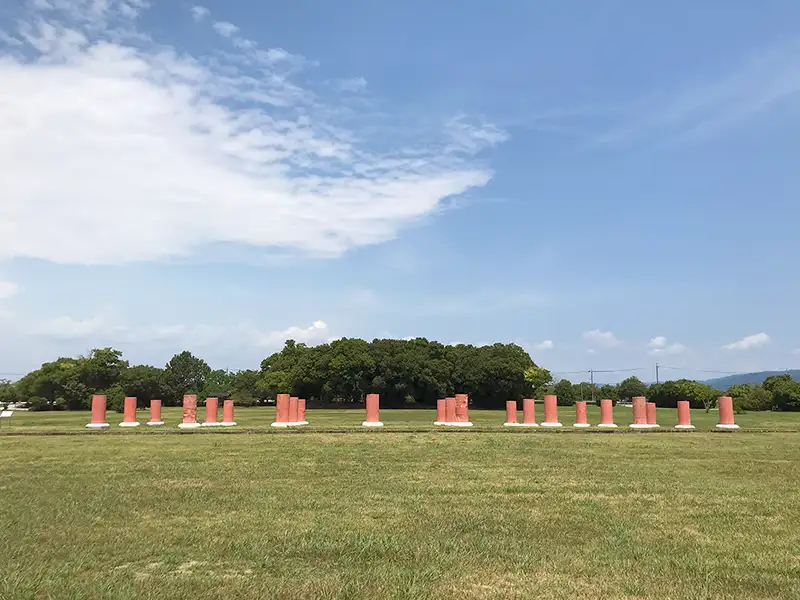
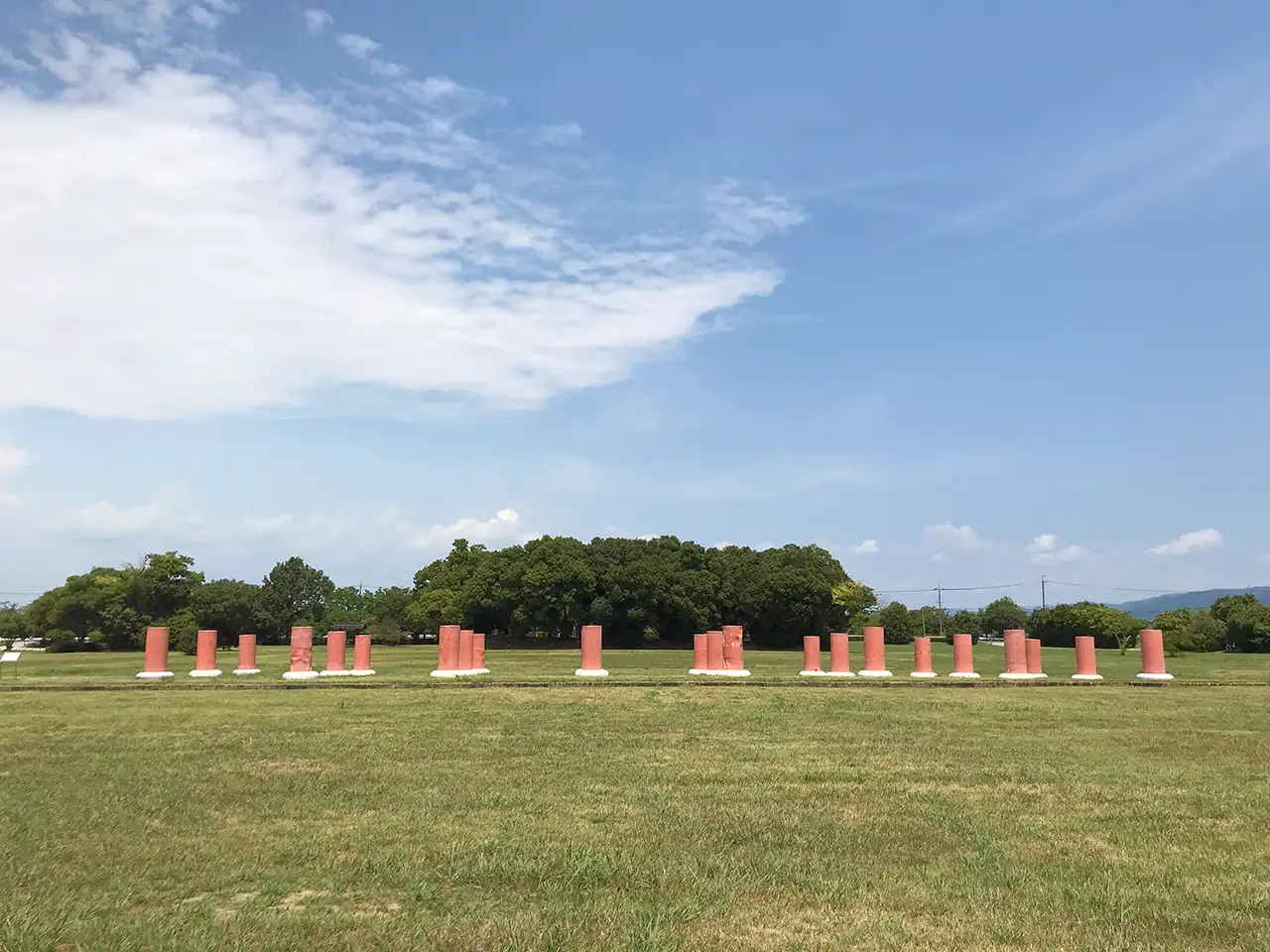
Fujiwara-kyō, built across present-day Kashihara City and Asuka Village in Nara Prefecture, was Japan's first true capital city planned on the Chinese model. It was also the first in Japan to use a grid of streets laid out like a go board (the jōbō system).
It was a grand capital where about 30,000 people are thought to have lived. But in 710, about 15 years after it was completed, the capital moved to Heijō-kyō. The area of Fujiwara-kyō became rice fields, and even its size was forgotten.
Its size only became clear in the 1990s. Many years of digging showed where the main buildings, such as the Great Hall of State (Daigokuden) and the State Halls (Chōdōin), stood and how they were built. This showed that Fujiwara Palace covered 1 km2, and that Fujiwara-kyō as a whole was a huge capital, about 5.2 km from east to west and 4.8 km from north to south.
The photo shows the site of the south gate of the Great Hall of State. Replica pillars mark where the gate stood. The hill-like mound in the back is the site of the Great Hall itself (the Ōmiya earthen platform).
(Photo taken August 15, 2025)
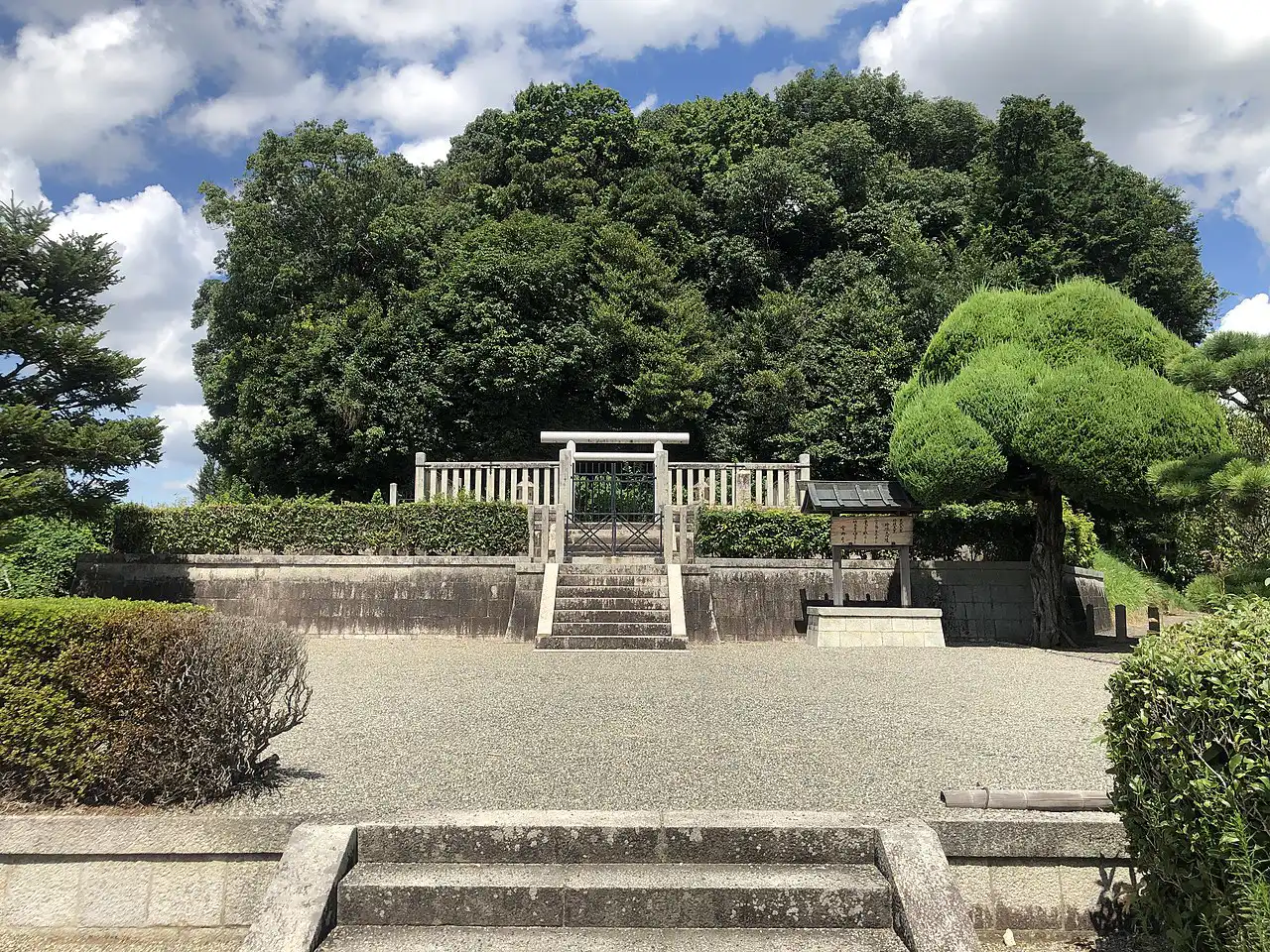
- Kamokimi Shrine (Site of the Great Hall of State)
-
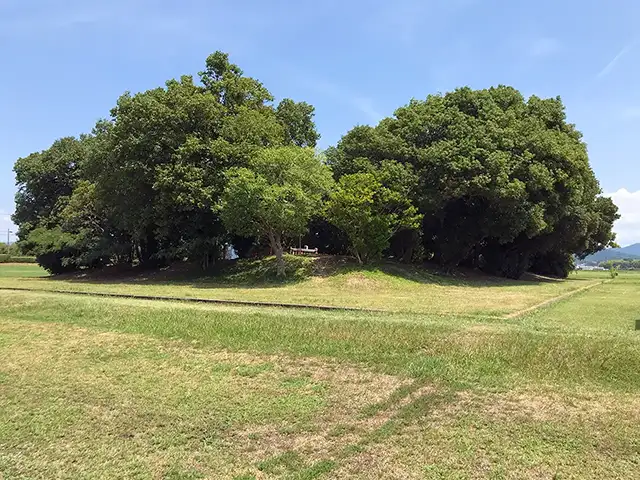
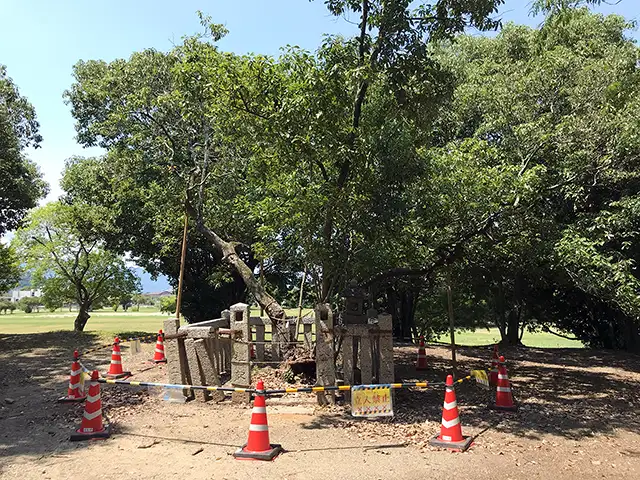
Kamokimi Shrine, which stands on the site of the Great Hall of State, honors Empress Jitō's throne. This land was originally home to the Kamo, an ancient powerful clan, and it is said that the Kamo clan offered it to Empress Jitō when Fujiwara Palace was built. "Kamokimi" in the shrine's name seems to have been a title showing high rank within the Kamo clan.
The Kamo clan is also known for having been in charge of the emperor's religious ceremonies. Their name lives on today, in changed forms, in places like the Kamo River in Kyoto and the Kamigamo and Shimogamo Shrines.
(Photo taken August 15, 2025)
- The Three Mountains of Yamato and Fujiwara Palace
-
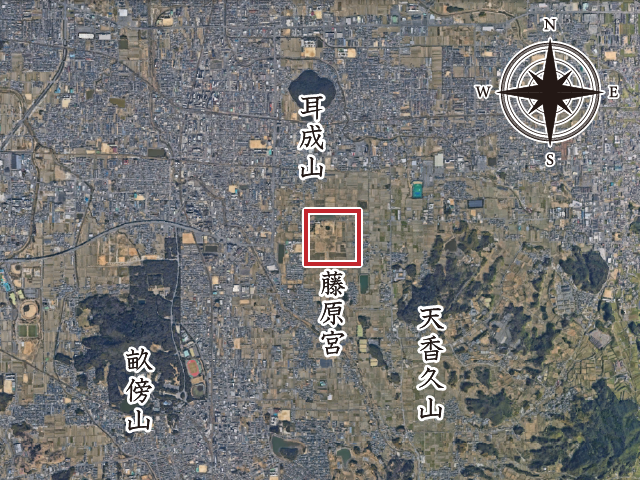
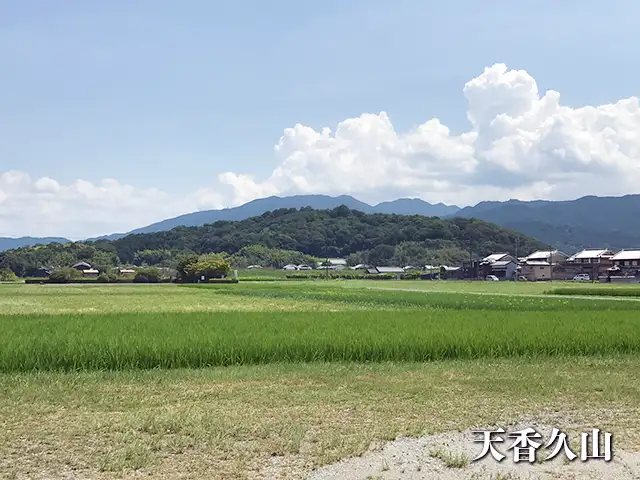
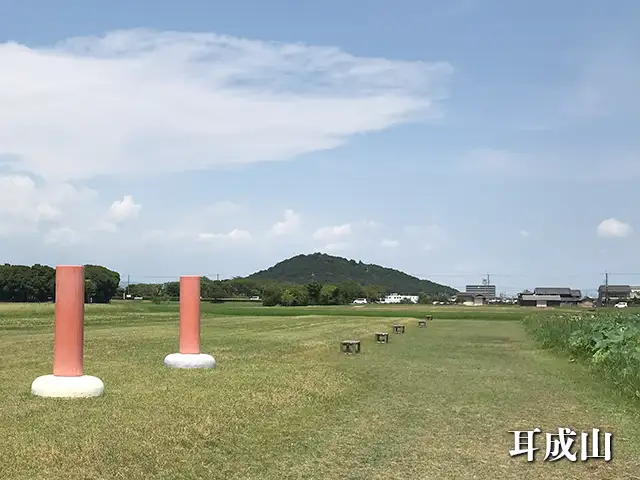
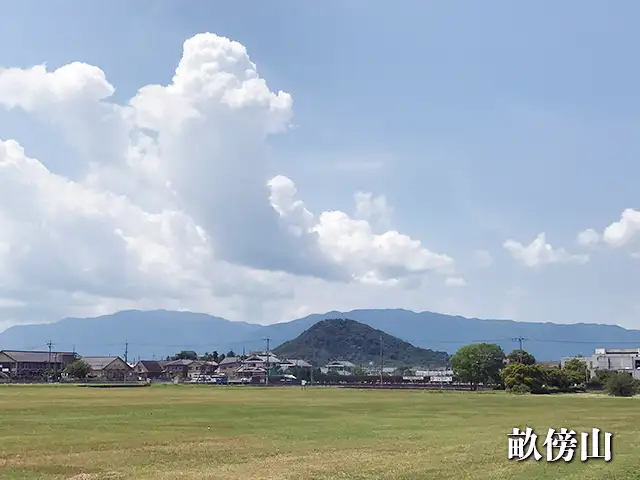
Mount Ama-no-Kagu (152 m), Mount Miminashi (140 m), and Mount Unebi (199 m) are called the Three Mountains of Yamato. They are in Kashihara City, Nara Prefecture, and Fujiwara Palace is surrounded by them.
Empress Jitō was given the posthumous name "Takamanohara Hironohime no Sumeramikoto," which shows her as an heir of the sun goddess Amaterasu. In myth, Mount Kagu was said to have come down from Takamanohara, the heavenly world. By building Fujiwara-kyō at the foot of this sacred mountain, she may have made her husband Emperor Tenmu's dream come true: bringing the world of myth to life on earth.
(Photo taken August 15, 2025)
- A Poem by Emperor Tenji About
a Fight Over a Woman -
The next poem was written by Emperor Tenji when he was still Prince Naka no Ōe. It is about the Three Mountains of Yamato: Kagu, Unebi, and Miminashi. There are different views on which mountains were male and which female, but in the age of myth, these mountains were said to be caught in a love triangle.
In Japanese
香具山は 畝傍ををしと
耳梨と 相争ひき
神代より かくにあるらし
古も 然にあれこそ
うつせみも 妻を 争ふらしき kaguyamaha unebiooshito miminashito ahiarasohiki
kamiyoyori kakuniarurashi inishihemo shikaniarekoso
utsusemimo tsumao arasofurashiki Man'yōshū, Prince Naka no ŌeIn English
Mount Kagu, not wanting to lose Mount Unebi, fought with Mount Miminashi.
It seems it has been this way since the age of the gods.
Because it was so in ancient times, people today also fight over wives. - Empress Jitō's Tomb
-
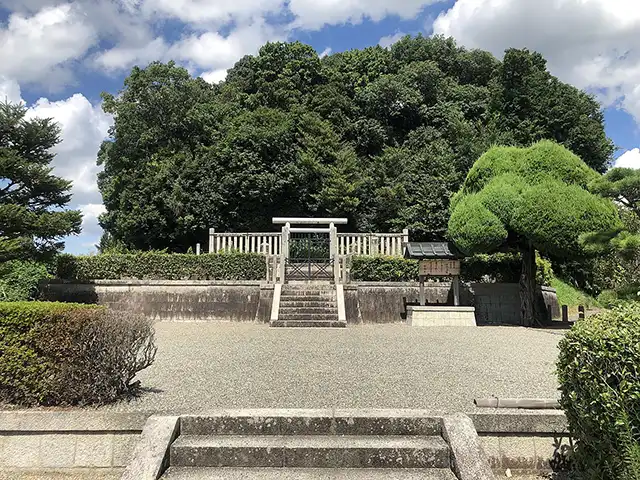
8-hachiro, CC BY-SA 4.0 <https://creativecommons.org/licenses/by-sa/4.0>, via Wikimedia Commons Empress Jitō died in 703 and was cremated about a year later — the first cremation of any emperor. Her ashes were placed in a silver urn and laid next to the coffin of her husband, Emperor Tenmu, who had already been buried.
However, according to records from the Kamakura period, the tomb was robbed in 1235, and Empress Jitō's silver urn was taken away. Because this robbery was recorded, we know for certain that she was cremated.
There are different views on why she was cremated. One says that she cared about her people and wanted a simple funeral. It is truly sad that the tomb of such an empress was robbed. The records tell of the people who robbed the tomb, but no one knows what became of the stolen silver urn. Its fate has been lost to history.
- Ukiyo-e by Katsushika Hokusai
-
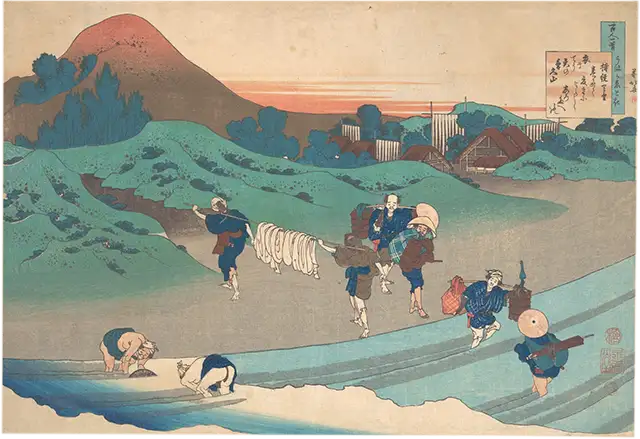
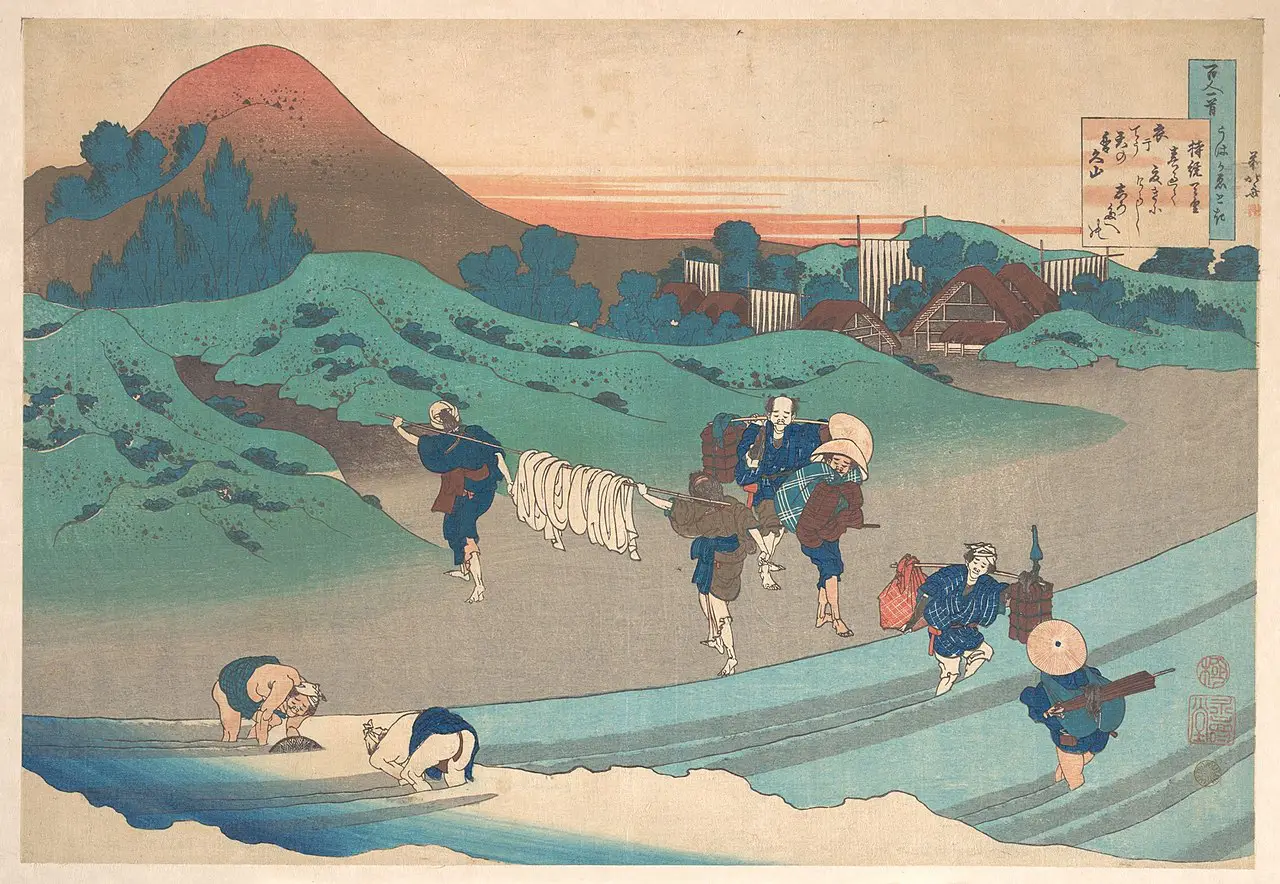
Katsushika Hokusai, CC0, via Wikimedia Commons This print is from One Hundred Poems Explained by the Nurse (Hyakunin Isshu Uba ga Etoki) by Katsushika Hokusai, an ukiyo-e artist of the Edo period. The idea of the series is a nurse explaining the Hyakunin Isshu poems with easy-to-understand pictures.
It shows workers carrying clothes, probably washed in the river, up the mountain. Taking wet clothes all the way up a mountain to dry is a lot of work. Mount Kagu was thought to be sacred, so this was probably for some religious ceremony, but the details are not known.
- Utagawa Kuniyoshi's Hyakunin Isshu no Uchi
-
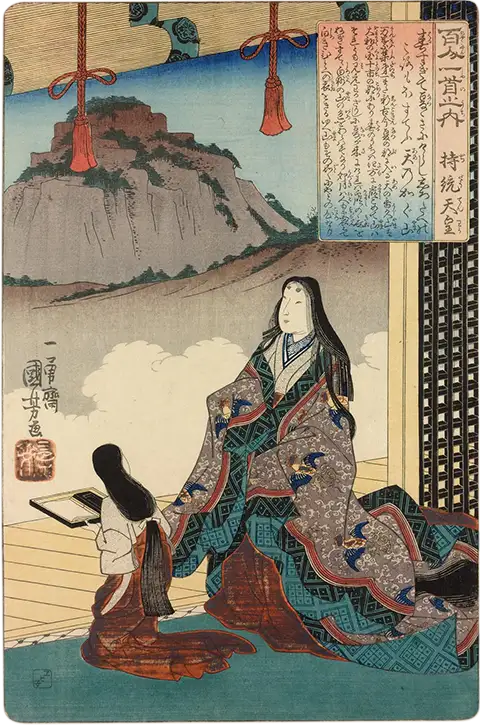
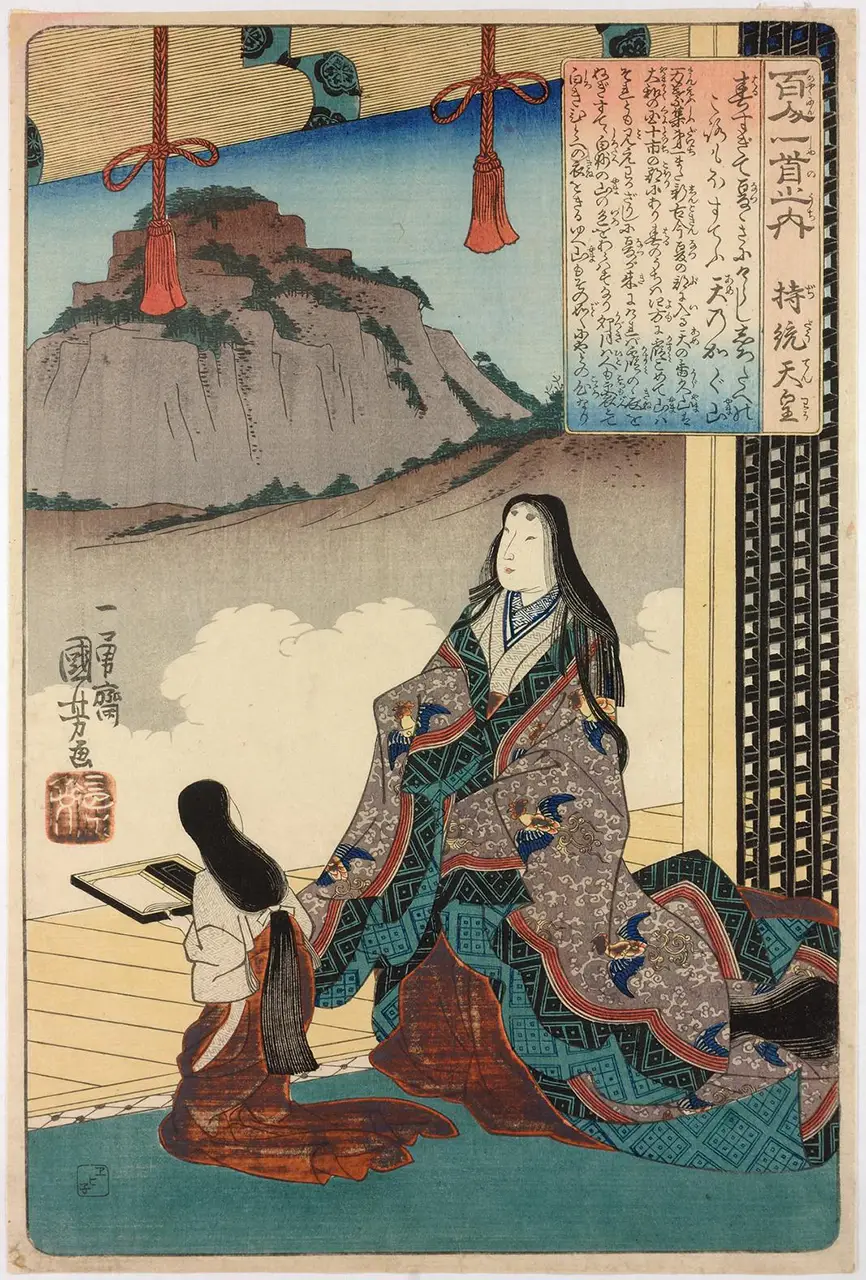
British Museum, Public domain, via Wikimedia Commons This ukiyo-e is by Utagawa Kuniyoshi, an artist of the Edo period. It shows a scene that matches the poem in the Hyakunin Isshu.
In the picture, Mount Kagu is a rugged peak with bare rock, but the real mountain looks very different. The real Mount Kagu is a low hill, only 152 m high, with gentle slopes.
Empress Jitō is wearing a splendid jūni-hitoe (twelve-layered robe). This is probably because the Hyakunin Isshu was loved as a symbol of Heian court culture, so the artist chose to dress her in the formal wear of the Heian period.
- Ukiyo-e by Suzuki Harunobu
-
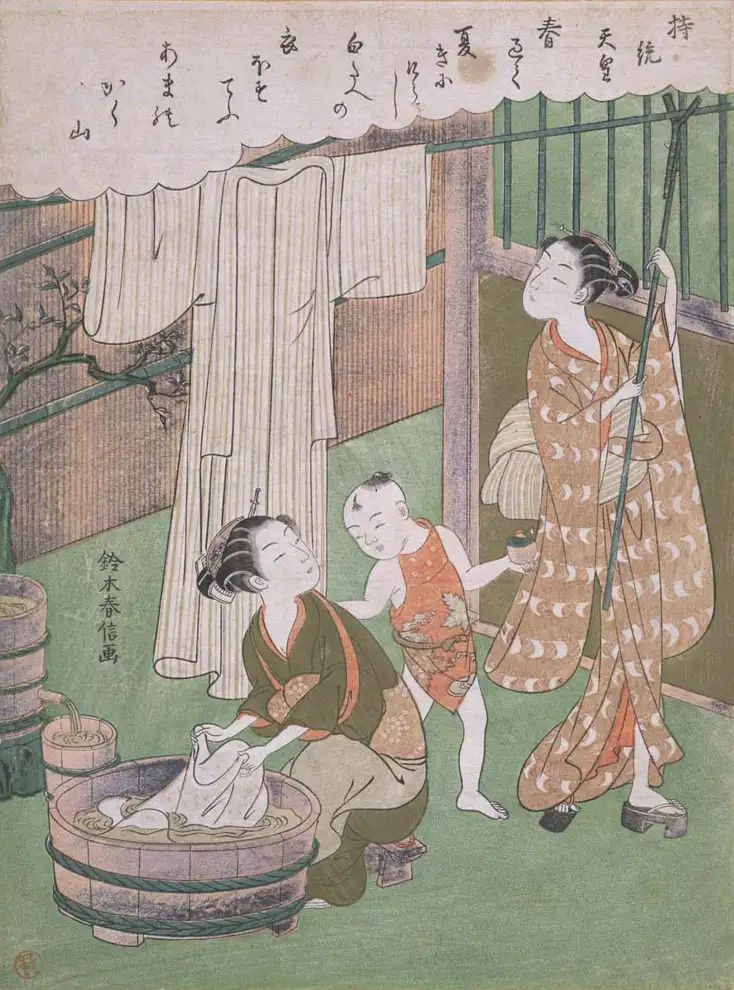
Courtesy of Tokyo National Museum This work is by Suzuki Harunobu, an ukiyo-e artist of the Edo period. It moves Empress Jitō's poem into the everyday life of Edo.
White summer clothes are hung out to dry, showing that summer has come in Edo. The water in the tub looks cloudy: at the time, people are said to have washed clothes with aku, an alkaline water made by mixing ashes into water.
-