


Front of the Card
Back of the Card
Japanese
English
Audio: NHK Creative Library
Read by LibriVox volunteer Larry Wilson.
Audio courtesy of LibriVox
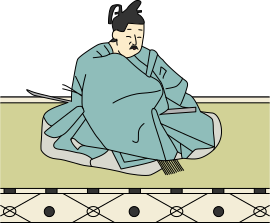
壬生忠岑
有明の
つれなく見えし
別れより
あかつきばかり
憂きものはなし
あかつきは
かりうきも
のはなし

ありあ


- Poem 30
- 有明の
つれなく見えし
別れより
あかつきばかり 憂きものはなし
Author: Mibu no Tadamine (c. 860–c. 920)
Source: Kokin Wakashū, Love
- English Verse Translation
- I hate the cold unfriendly moon, That shines at early morn; And nothing seems so sad and grey,
When I am left forlorn, As day's returning dawn.
— William N. Porter, 1909
- Modern Translation
- Ever since that cold dawn when we parted, I have come to dread the break of day more than anything in the world.
- Commentary
- The Kokin Wakashū places this among poems of "returning without meeting." A man visited a woman at night and left before dawn. Two readings exist: he regrets leaving because she was cold to him, or he finds the dawn moon "heartless" for ending the night as he grieves the parting.
- About the Poet
- Mibu no Tadamine was a low-ranking palace guard, but a gifted poet who often joined court poetry gatherings. He was skilled enough to be chosen as a compiler of the Kokin Wakashū. He was the father of Mibu no Tadami.
- Poem Illustration
-
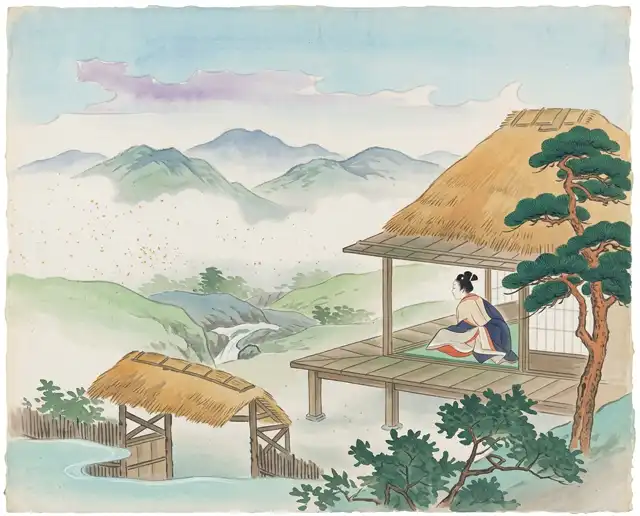
This image is based on an illustration from William N. Porter's A Hundred Verses from Old Japan, his 1909 English translation of the Hyakunin Isshu published in England, colorized and reworked using Adobe Firefly (generative AI).
- Mibu no Tadamine: A Short Timeline
-
- c. 860
- Born
- 905
- Chosen with Ki no Tsurayuki and others to compile the Kokin Wakashū
- c. 920
- Dies
- Notes
-
- Counted as one of the Thirty-Six Immortal Poets
- Mibu no Tadamine's Family Tree
-
Mibu no Tadamine was one of the compilers of the Kokin Wakashū. He and his son, Mibu no Tadami, were both chosen for the Hyakunin Isshu.
Tadamine's son, Mibu no Tadami, competed against Taira no Kanemori at the Poetry Contest of the Imperial Palace in 960 (Tentoku 4) and lost, but both poems were good, and it is said to have been a close contest.
Tadamine served as a bodyguard of Fujiwara no Sadakuni. The Tales of Yamato, a collection of poem-tales, tells a story about it: one night Sadakuni, drunk, visited the Minister of the Left, Fujiwara no Tokihira, and surprised him, but when his bodyguard Tadamine recited a poem, the mood eased.
- Appendix
-
- High Praise from Sadaie
- In Kenchū Mikkan, a commentary on the Kokin Wakashū, Fujiwara no Sadaie, the compiler of the Hyakunin Isshu, praised the poem "Ariake no tsurenaku mieshi wakare yori..." highly: "If I could write even one poem as fine as this, it would be a memory to treasure all my life."
- The Ariake Moon and the Phases of the Moon
-
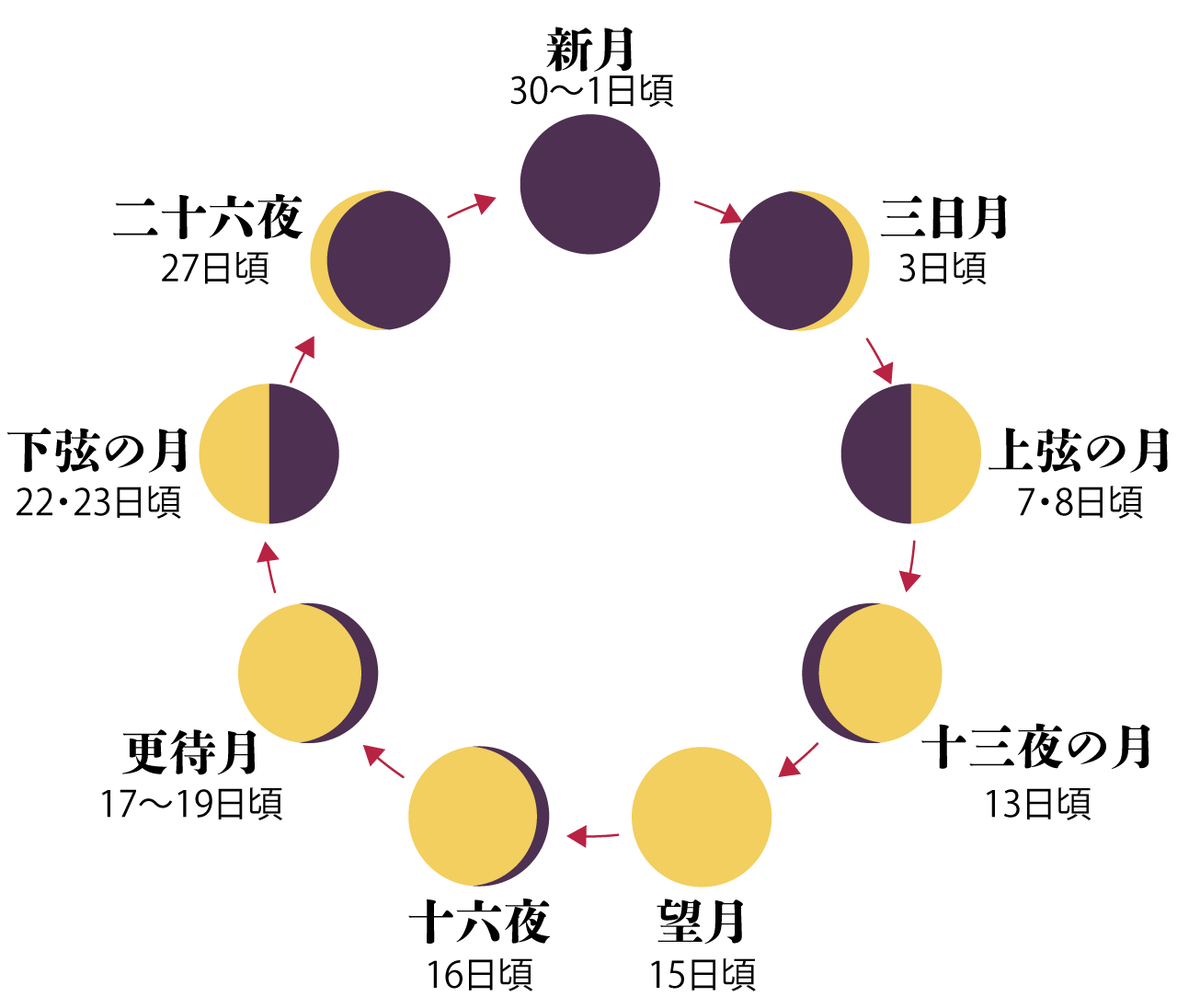
The ariake no tsuki is the moon that is still in the sky after dawn. From about the 15th to the 29th day of the lunar month, the moon can be seen in the early-morning sky.
In the Heian period, only privileged people could have calendars. So for ordinary people, the changing shape of the moon probably served as a kind of natural calendar.
Phase Moonrise Moonset New moon 6:00 18:00 First quarter 12:00 24:00 Full moon 18:00 6:00 Last quarter 24:00 12:00 - The Compilers of the Kokin Wakashū
-
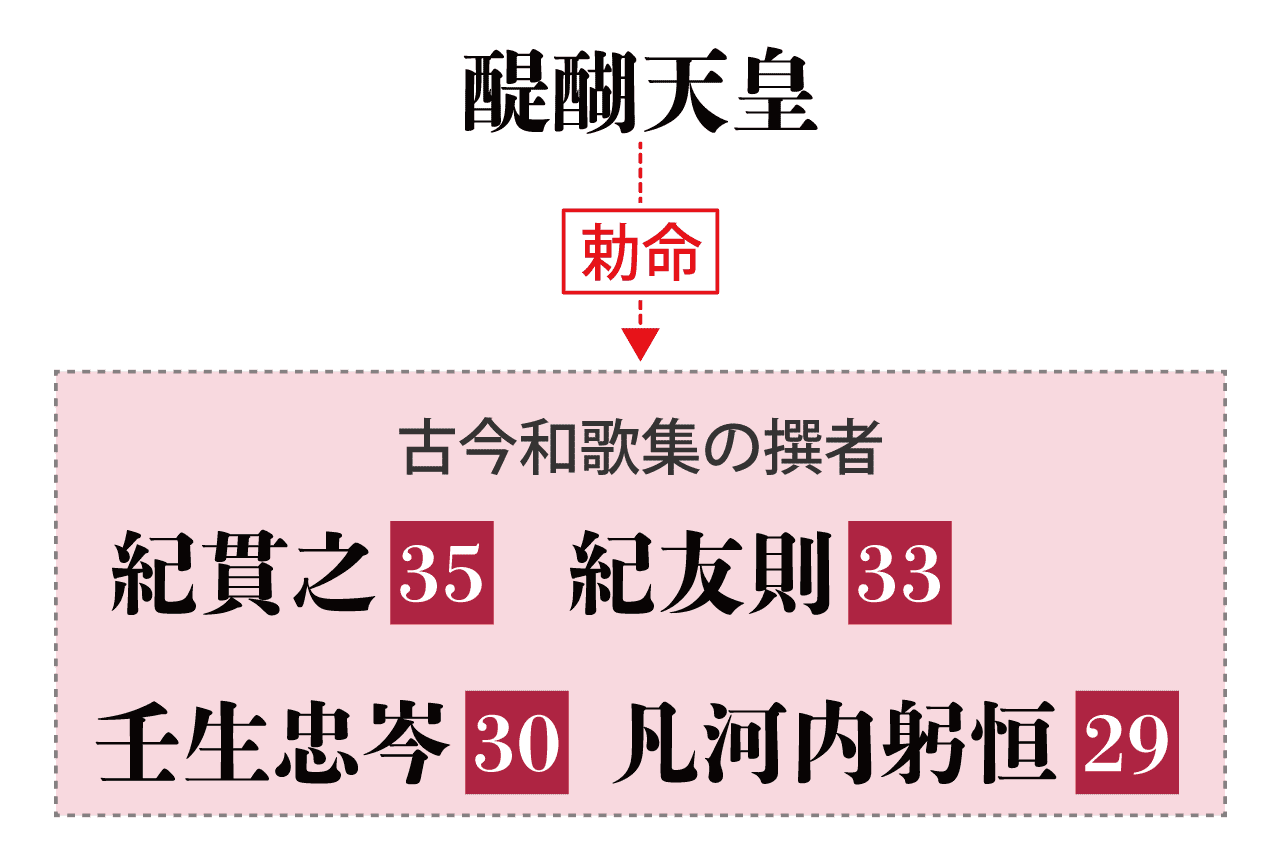
Click a poet marked with a ■number to go to that poet's page.
The Kokin Wakashū was the first imperial anthology of waka, compiled at the order of Emperor Daigo. Four poets, Ki no Tsurayuki, Ki no Tomonori, Mibu no Tadamine, and Ōshikōchi no Mitsune, served as its compilers and gathered about 1,100 poems, including poems not in the Man'yōshū and poems of their own time. It was completed around 913, but Ki no Tomonori died before it was finished.
- A Quick-Witted Poem That Borrows
from Ōtomo no Yakamochi -
Mibu no Tadamine served as a bodyguard of Fujiwara no Sadakuni. One night Sadakuni, drunk, went to visit the Minister of the Left, Fujiwara no Tokihira. Surprised, Tokihira asked, "Did you drop by on your way somewhere else?" The Tales of Yamato says that Tadamine, the bodyguard, quickly recited the next poem and eased the mood. The poem is based on Ōtomo no Yakamochi's poem.
In Japanese
かささぎの 渡せる橋の 霜の上を
夜半にふみわけ ことさらにこそ kasasagino wataseruhashino shimonoueo
yowanifumiwake kotosaranikoso The Tales of Yamato, Mibu no TadamineIn English
Treading at midnight over the frost on the palace steps,
like the frost on the magpies' bridge, I have come here to you on purpose. - A Poem of Love at First Sight
-
Mibu no Tadamine attended the Kasuga Festival in Nara. From the window of his ox carriage, he glimpsed a woman who was watching the festival, fell in love, found her house, and sent her the next poem. Did he follow her ox carriage to find where she lived? Today this would be called stalking and would not be allowed, but in the Heian period it was common to fall in love with a woman seen by chance and send her poems like this.
In Japanese
春日野の 雪間をわけて 生ひ出で来る
草のはつかに 見えし君はも kasuganono yukimaowakete ohiidekuru
kusanohatsukani mieshikimihamo Kokin Wakashū, Mibu no TadamineIn English
Like the grass peeking out between patches of snow in Kasuga Field, you were someone I saw only for a moment.
- Izumi Shikibu's Poem of Love at Dawn
- Izumi Shikibu wrote this poem after spending the whole night waiting for a lover who never came.
In Japanese
夢にだに 見で明かしつる 暁の
恋こそ恋の かぎりなりけれ yumenidani mideakashitsuru akatsukino
koikosokoino kagirinarikere Shin Chokusen Wakashū, Izumi ShikibuIn English
The love of a dawn after a night spent thinking of you, without meeting you even in a dream: that was love at its very deepest.