


Waka Poems Featured in
Hikaru Kimi e
Here are the waka poems quoted in the 2024 NHK historical drama Hikaru Kimi e, which follows the life of Murasaki Shikibu (called Mahiro in the drama).
Episode 2: "Encounters"
A poem Mahiro (Murasaki Shikibu) was copying out. It was composed by her great-grandfather, Fujiwara no Kanesuke, and is quoted many times in The Tale of Genji.
In Japanese
人の親の 心は闇に あらねども
子を思ふ道に まどひぬるかな hitonooyano kokorohayamini aranedomo
kooomofumichini madohinurukana Gosen Wakashū, Fujiwara no Kanesuke
In English
A parent's heart is not darkness itself, yet on the path of caring for a child, it wanders as if lost in the dark.
A poem Mahiro was writing while she ghostwrote love letters at a painter's workshop.
It is a poem by Hikaru Genji in the "Yūgao" (Evening Faces) chapter of The Tale of Genji.
In Japanese
寄りてこそ それかとも見め たそかれに
ほのぼの見つる 花の夕顔 yoritekoso sorekatomomime tasokareni
honobonomitsuru hananoyufugaho The Tale of Genji, Chapter 4, "Yūgao"
In English
Come closer and see whether it is so: the evening-face flower you glimpsed faintly in the twilight.
Episode 3: "The Mysterious Man"
This poem was quoted in a scene at the poetry-study gathering hosted by Minamoto no Tomoko, where a lady-in-waiting recited a poem from the Kokin Wakashū as if it were her own and was gently corrected by Akazome Emon.
In Japanese
見てもまた またも見まくの ほしければ
なるるを人は 厭ふべらなり mitemomata matamomimakuno hoshikereba
naruruohitoha itofuberanari Kokin Wakashū, author unknown
In English
Because I long to see you again even after we meet, you must be avoiding getting close to me.
This poem was quoted in a scene at the poetry-study gathering hosted by Minamoto no Tomoko, where Akazome Emon, said to know the whole Kokin Wakashū by heart, recited it as an example at Tomoko's urging.
In Japanese
秋の夜も 名のみなりけり 逢ふといへば
ことぞともなく 明けぬるものを akinoyomo nanominarikeri afutoiheba
kotozotomonaku akenurumonoo Kokin Wakashū, Ono no Komachi
In English
The long autumn night was long in name only: when I met you, dawn came all too soon.
Episode 6: "Two Talented Women"
A poem Fujiwara no Michinaga sent to Mahiro (Murasaki Shikibu).
It adapts a poem from The Tales of Ise, changing "people of the court" (ōmiyabito) to "the one I love" (koishiki hito).
In Japanese
ちはやぶる 神の斎垣も 越えぬべし
恋しき人の 見まくほしさに chihayaburu kaminoikakimo koenubeshi
koishikihitono mimakuhoshisani The Tales of Ise, Section 71
In English
I feel I could even cross the sacred fence of the gods, so much do I long to catch a glimpse of the one I love.
Episode 10: "A Plot on a Moonlit Night"
Fujiwara no Michinaga sent Mahiro (Murasaki Shikibu) the following poems, one at a time. As time goes on, you can feel from the poems how his love grows stronger.
In Japanese
思ふには 忍ぶることぞ 負けにける
色には出でじと 思ひしものを omofuniha shinoburukotozo makenikeru
ironihaidejito omohishimonoo Kokin Wakashū, author unknown
In English
My heart that tried to hide my love has lost. I thought I would never let it show on my face.
In Japanese
死ぬる命 生きもやすると こころみに
玉の緒ばかり 逢はむと言はなむ shinuruinochi ikimoyasuruto kokoromini
tamanoobakari ahamutoihanamu Kokin Wakashū, Fujiwara no Okikaze
In English
My life is about to end. It might come back to life, so just try telling me you will meet me, even for a moment.
In Japanese
命やは なにぞは露の あだものを
逢ふにしかへば 惜しからなくに inochiyaha nanizohatsuyuno adamonoo
afunishikaheba oshikaranakuni Kokin Wakashū, Ki no Tomonori
In English
"Life": what is it, after all? Is it not as fleeting as the dew? If I can meet you, I would not regret losing it.
Episode 14: "Even After the Star Falls"
Just before his death, Fujiwara no Kaneie looked back on his life and recited a poem by Yasuko (the Mother of Michitsuna). This poem was chosen for the Hyakunin Isshu.
In Japanese
嘆きつつ ひとり寝る夜の 明くる間は
いかに久しき ものとかは知る nagekitsutsu hitorinuruyono akurumaha
ikanihisashiki monotokahashiru Shūi Wakashū, the Mother of Michitsuna
In English
Do you know how long a night is, spent sleeping alone and grieving that you do not come, until the dawn finally breaks?
Episode 17: "Change"
Just before his death, Fujiwara no Michitaka recited a poem by his wife Takako (the Mother of the Honorary Grand Minister) and confessed, "It was this poem that made me choose Takako." This poem was also chosen for the Hyakunin Isshu.
In Japanese
忘れじの ゆく末までは かたければ
今日を限りの 命ともがな wasurejino yukusuemadeha katakereba
kefuokagirino inochitomogana Shin Kokin Wakashū, the Mother of the Honorary Grand Minister
In English
"I will never forget you" is a hard promise to keep, so I wish my life would end today, the day I heard those words.
Episode 23: "When the Snow Dances"
This poem was quoted, in a scene where Emperor Ichijō talks with Fujiwara no Yukinari, as a poem that Empress Teishi loved.
In Japanese
夢路にも 露やおくらむ 夜もすがら
かよへる袖の ひちて乾かぬ yumejinimo tsuyuyaokuramu yomosugara
kayoherusodeno hichitekawakanu Kokin Wakashū, Ki no Tsurayuki
In English
Does dew settle even on the path of dreams that leads to you? My sleeves, crossing it all night long, are wet and never dry.
A poem Mahiro (Murasaki Shikibu) composed after coming to Echizen, longing for the capital.
In Japanese
ここにかく 日野の杉むら 埋む雪
小塩の松に 今日やまがへる kokonikaku hinonosugimura uzumuyuki
oshihonomatsuni kefuyamagaheru Murasaki Shikibu Shū
In English
Here in Echizen, the cedar groves of Mount Hino are all but buried in snow. Is snow piling up today on the pines of Mount Oshio in the capital, too?
Episode 24: "The Unforgettable One"
This poem was in a letter telling Mahiro (Murasaki Shikibu) that her friend Sawa had died.
In Japanese
行きめぐり 逢ふを松浦の 鏡には
誰をかけつつ 祈るとか知る yukimeguri afuomatsurano kagaminiha
tareokaketsutsu inorutokashiru Murasaki Shikibu Shū
In English
Do you know for whom I pray at the Kagami Shrine of Matsura, hoping that, after all our wanderings, we will meet again?
Episode 25: "Resolve"
Sei Shōnagon added the upper verse to a lower verse composed by Fujiwara no Kintō. She based her upper verse on a passage from Bai Juyi's poem "Snow in Southern Qin." See here for details.
In Japanese
空寒み 花にまがへて 散る雪に
少し春ある 心地こそすれ sorasamumi hananimagahete chiruyukini
sukoshiharuaru kokochikososure The Pillow Book
In English
Because the sky is cold, the snow that scatters like falling blossoms gives me a slight feeling of spring.
Episode 26: "The Sacrificial Princess"
A poem by Fujiwara no Nobutaka, Mahiro's (Murasaki Shikibu's) husband, composed during a quarrel between the couple.
In Japanese
たけからぬ 人かずなみは わきかへり
みはらの池に 立てどかひなし takekaranu hitokazunamiha wakikaheri
miharanoikeni tatedokahinashi Murasaki Shikibu Shū
In English
For someone as ordinary as me, nothing great, there is no point in getting angry.
Episode 27: "A Life Bound by Fate"
When Akiko, daughter of Fujiwara no Michinaga, entered the court of Emperor Ichijō, a splendid folding screen was prepared as part of her trousseau. Michinaga asked the court nobles to compose poems to go with the pictures painted on the screen. This poem, by Fujiwara no Kintō, was added to the picture of "a place where wisteria blooms." It likens the wisteria, the symbol of the Fujiwara, to purple clouds, an auspicious sign, and wishes for the prosperity of Michinaga's line.
In Japanese
紫の 雲とぞ見ゆる 藤の花
いかなる宿の しるしなるらむ murasakino kumotozomiyuru fujinohana
ikanaruyadono shirushinaruramu Shūi Wakashū, Fujiwara no Kintō
In English
The wisteria blooms in glory like purple clouds. What good fortune can it be foretelling for this house?
Episode 28: "One Emperor, Two Empresses"
A poem by Teishi, Emperor Ichijō's empress, expressing her gratitude to Sei Shōnagon, who always looked out for her.
In Japanese
みな人の 花や蝶やと いそぐ日も
わが心をば 君ぞ知りける minahitono hanayachouyato isoguhimo
wagakokorooba kimizoshirikeru The Pillow Book, Fujiwara no Teishi
In English
Even on days when everyone hurries to chase flowers and butterflies, you alone understand my heart.
The death poem that Teishi, Emperor Ichijō's empress, sent to Emperor Ichijō. See here for details.
In Japanese
夜もすがら 契りしことを 忘れずは
こひむ涙の 色ぞゆかしき yomosugara chigirishikotoo wasurezuha
kohinnamidano irozoyukashiki Goshūi Wakashū, Fujiwara no Teishi
In English
If you have not forgotten the promises you made me all through the night, I long to see the color of the tears you will shed in missing me.
Episode 30: "Words That Connect"
A poem by Ki no Tsurayuki that Mahiro discussed at the poetry-study gathering hosted by Toshiko, wife of Fujiwara no Kintō.
In Japanese
人はいさ 心も知らず ふるさとは
花ぞ昔の 香に匂ひける hitohaisa kokoromoshirazu furusatoha
hanazomukashino kaninihohikeru Kokin Wakashū, Ki no Tsurayuki
In English
People's hearts change, so I cannot know your feelings. But in this old village, the plum blossoms bloom as beautifully as ever and give off the same fragrance as before.
A poem Akane (Izumi Shikibu) composed on the spot when she heard cicadas singing.
In Japanese
声聞けば 暑さぞまさる 蝉の羽の
薄き衣は 身に着たれども koekikeba atsusazomasaru seminohano
usukikoromoha minikitaredomo Izumi Shikibu Shū
In English
When I hear the cicadas, I feel all the hotter, even though I am wearing a robe as thin as a cicada's wing.
A poem Mahiro (Murasaki Shikibu) found herself reciting when she was at a loss raising her child. It is by her great-grandfather, Fujiwara no Kanesuke.
In Japanese
人の親の 心は闇に あらねども
子を思ふ道に まどひぬるかな hitonooyano kokorohayamini aranedomo
kooomofumichini madohinurukana Gosen Wakashū, Fujiwara no Kanesuke
In English
A parent's heart is not darkness itself, yet on the path of caring for a child, it wanders as if lost in the dark.
Episode 31: "Under the Moon"
Akane (Izumi Shikibu) said she could not feel the charm of The Pillow Book. Asked why by Mahiro, she answered that The Pillow Book is witty but lacks the warmth of human skin, and recited the following poem.
In Japanese
黒髪の 乱れも知らず うち伏せば
まづかきやりし 人ぞ恋しき kurokamino midaremoshirazu uchifuseba
mazukakiyarishi hitozokoishiki Goshūi Wakashū, Izumi Shikibu
In English
Lying down in turmoil, not caring that my black hair is tangled, I long for the one who used to brush it aside for me.
Episode 35: "The Empress's Tears"
A poem by Akane (Izumi Shikibu), sunk in deep grief after losing Prince Atsumichi.
In Japanese
ものをのみ 乱れてぞ思ふ 誰にかは
いまは嘆かむ むばたまの筋 monoonomi midaretezoomofu darenikaha
imahanagekan mubatamanosuji Izumi Shikibu Zokushū, Izumi Shikibu
In English
Lost in thought, my heart in disarray and my black hair in disarray too: to whom can I now pour out my grief?
This poem was composed by Fujiwara no Nobunori, Murasaki Shikibu's younger brother, when he was caught after slipping in to visit Saiin no Chūjō, a lady-in-waiting to the Kamo Priestess (Princess Senshi). It draws on the story of Emperor Tenji, who, while crown prince, had those who came before him give their names first. Moved by the poem, the Kamo Priestess forgave Nobunori.
In Japanese
神垣は 木の丸殿に あらねども
名のりをせねば 人とがめけり kamigakiha kinomarudononi aranedomo
nanorioseneba hitotogamekeri Konjaku Monogatarishū, Fujiwara no Nobunori
In English
The sacred fence of the shrine is not the Log Palace (Ki no Marudono), yet here, too, one is challenged for not giving one's name.
In the scene where Mahiro shows Michinaga The Tale of Genji, the story of Hikaru Genji's secret affair with Fujitsubo is introduced in Mahiro's narration. The narration is based on the following poems in the "Wakamurasaki" (Young Murasaki) chapter of The Tale of Genji.
In Japanese
見てもまた 逢ふ夜まれなる 夢のうちに
やがて紛るる 我が身ともがな mitemomata afuyomarenaru yumenouchini
yagatemagiruru wagamitomogana The Tale of Genji, Chapter 5, "Wakamurasaki," Hikaru Genji
In English (narration)
Even though we meet like this, there is no telling when we can meet again. I wish I could vanish within this dream, just as I am.
In Japanese
世語りに 人や伝へむ たぐひなく
憂き身を覚めぬ 夢になしても yogatarini hitoyatsutahemu taguhinaku
ukimiosamenu yumeninashitemo The Tale of Genji, Chapter 5, "Wakamurasaki," Fujitsubo
In English (narration)
Will people not pass it on as gossip, even if I make this matchlessly unhappy life a dream from which I never wake?
Episode 36: "The Long-Awaited Day"
A poem Tō Shikibu (Murasaki Shikibu) composed while looking at the moon on the night Empress Akiko gave birth to a prince.
In Japanese
めづらしき 光さしそふ 盃は
もちながらこそ 千代もめぐらめ mezurashiki hikarisashisofu sakazukiha
mochinagarakoso chiyomomegurame Goshūi Wakashū, Murasaki Shikibu
In English
This sake cup, lit by a wondrous new light, will pass from hand to hand and go round for a thousand ages, never waning, like the full moon.
In the drama, Tō Shikibu (Murasaki Shikibu) explained the meaning of the poem: "This cup, in which the new light of the prince has joined the moonlight of the Empress, will go round for a thousand ages, as splendid as tonight's full moon."
On the night of Prince Atsuhira's ika no gi (a ceremony held on the fiftieth day after birth, like a first-meal ceremony), Tō Shikibu (Murasaki Shikibu) was urged by Michinaga at the banquet to compose a poem, and she composed the following.
In Japanese
いかにいかが かぞへやるべき 八千歳の
あまり久しき 君が御代をば ikaniikaga kazoheyarubeki yachitoseno
amarihisashiki kimigamiyooba The Diary of Murasaki Shikibu, Murasaki Shikibu
In English
How on earth could I count them: the years of the prince's reign, which will last as long as eight thousand ages?
In reply to Tō Shikibu's (Murasaki Shikibu's) poem, Michinaga composed the following.
In Japanese
あしたづの よはひしあらば 君が代の
千歳の数も 数へとりてむ ashitazuno yohahishiaraba kimigayono
chitosenokazumo kazohetoritemu The Diary of Murasaki Shikibu, Fujiwara no Michinaga
In English
If only I had the lifespan of a crane, I could count all thousand years of the prince's life.
Episode 37: "Ripples" — Travel Segment: Higashiōmi, Shiga Prefecture
In the segment introducing Higashiōmi City, once a place where the gromwell plant (murasaki) was grown, a poem from the age of the Man'yōshū was introduced. It is by Princess Nukata, a wife of Emperor Tenji. She is said to have first been the wife of Emperor Tenmu and even had a daughter with him, but Emperor Tenmu's elder brother, Emperor Tenji, fell in love with her, and she left Emperor Tenmu to become Emperor Tenji's wife. This poem is said to have been sent by her to Emperor Tenmu after she had become Emperor Tenji's wife.
In Japanese
あかねさす 紫野行き 標野行き
野守は見ずや 君が袖振る akanesasu murasakinoyuki shimenoyuki
nomorihamizuya kimigasodefuru Man'yōshū, Princess Nukata
In English
You go through the fields of gromwell glowing madder-red, through the imperial preserve. Won't the field guard see you waving your sleeve to me?
Episode 38: "Dazzling Darkness" — Travel Segment: Kobe, Hyōgo Prefecture
For the crime of shooting arrows at the Cloistered Emperor Kazan in the Chōtoku Incident, Fujiwara no Korechika was exiled to Harima and Takaie to Tajima. Korechika expressed his feelings as the close brothers were torn apart in the following poem.
In Japanese
かたがたに 別るる身にも 似たるかな
明石も須磨も おのが浦々 katagatani wakaruruminimo nitarukana
akashimosumamo onogauraura Eiga Monogatari, Fujiwara no Korechika
In English
How like our fate, parted from each other: Akashi and Suma, each its own bay, so close and yet so far apart.
Korechika's poem above is thought to borrow from the following poem by Kakinomoto no Hitomaro (honkadori). "Tatsu" (to rise / to cut cloth) and "ura" (bay / lining) are pivot words (kakekotoba).
In Japanese
白浪は たてど衣に かさならず
明石も須磨も おのが浦々 shiranamiha tatedokoromoni kasanarazu
akashimosumamo onogauraura Shūi Wakashū, Kakinomoto no Hitomaro
In English
Cloth, once cut, can be sewn so that its face and lining overlap, but white waves, though they rise, never overlap: Akashi and Suma are separate bays.
Episode 39: "Unbroken Bonds"
Fujiwara no Nobunori, Murasaki Shikibu's younger brother, fell ill with stomach pains on the journey to Echigo with his father, Tametoki, who had been appointed Governor of Echigo, and died there. A poem expressing his wish to recover and return to the capital became his death poem. It is said that Nobunori ran out of strength after writing "omo" of the last word, "omofu," and that his father Tametoki added the final "fu."
In Japanese
都にも 恋しき人の 多かれば
なほこのたびは いかむとぞ思ふ miyakonimo koishikihitono ookareba
nahokonotabiha ikamutozoomofu Goshūi Wakashū, Fujiwara no Nobunori
In English
There are so many people I love in the capital, too, that I want to live and go back, whatever it takes.
Episode 39: "Unbroken Bonds" — Travel Segment: Ōtsu, Shiga Prefecture
Fujiwara no Nobunori wrote of how, on his way to Echigo, he had only just crossed the Ōsaka Barrier when he already began to miss the capital. The Ōsaka Barrier was like a gateway on the east side of the capital, so we can tell he composed this poem soon after setting out.
In Japanese
逢坂の 関うちこゆる ほどもなく
今朝は都の 人ぞ恋しき ousakano sekiuchikoyuru hodomonaku
kesahamiyakono hitozokoishiki Goshūi Wakashū, Fujiwara no Nobunori
In English
I have barely crossed the Ōsaka Barrier, yet this morning I already miss you, back in the capital.
Episode 40: "Leaving You Behind"
Emperor Ichijō, who had stepped down and lay ill in bed, composed the following poem for Empress Akiko. He had shaved his head, so this is thought to have been after he became a monk. For the last line (the last seven syllables), Fujiwara no Yukinari's diary Gonki records "koto zo kanashiki," while Fujiwara no Michinaga's diary Midō Kanpakuki records "koto o koso omoe." It is not known which is correct, but the meaning is almost the same.
In Japanese
露の身の 風の宿りに 君を置きて
塵を出でぬる 事ぞ悲しき tsuyunomino kazenoyadorini kimiookite
chirioidenuru kotozokanashiki Gonki, Emperor Ichijō
In English
How sad it is to leave you behind in this world, a passing shelter for a life as fleeting as the dew, and to leave this dust-filled world myself.
Episode 41: "Wavering"
After Emperor Ichijō died, Atsuhira, too young to understand his father's death, was innocently holding a pink (nadeshiko) flower. Seeing him like that, Akiko composed the following poem.
In Japanese
見るままに 露ぞこぼるる おくれにし
心も知らぬ 撫子の花 mirumamani tsuyuzokoboruru okurenishi
kokoromoshiranu nadeshikonohana Goshūi Wakashū, Akiko (Shōshi)
In English
Each time I look at you, tears fall like dew: my little pink flower, holding a nadeshiko, not knowing you have been left behind.
Akiko held a poetry gathering at the Fujitsubo. There her ladies-in-waiting, Akazome Emon, Murasaki Shikibu, and Izumi Shikibu, presented their poems.
In Japanese
誰にかは 告げにやるべき もみぢ葉を
思ふばかりに 見む人もがな tarenikaha tsugeniyarubeki momijibao
omofubakarini mimuhitomogana Akazome Emon Shū, Akazome Emon
In English
Whom should I tell? I wish someone were by my side who could enjoy these autumn leaves with me to my heart's content.
In Japanese
なにばかり 心づくしに ながめねど
見しにくれぬる 秋の月影 nanibakari kokorozukushini nagamenedo
mishinikurenuru akinotsukikage Murasaki Shikibu Shū, Murasaki Shikibu
In English
I was not gazing at the autumn moon with any special feeling, yet as I watched it, it blurred with my tears.
In Japanese
憂きことも 恋しきことも 秋の夜の
月には見ゆる 心地こそすれ ukikotomo koishikikotomo akinoyono
tsukinihamiyuru kokochikososure Izumi Shikibu Shū, Izumi Shikibu
In English
Both the painful things and the things I long for seem to be reflected in the moon of the clear autumn night.
Episode 41: "Wavering" — Travel Segment: Kyoto, Kyoto Prefecture
Fujiwara no Kintō was a man of wide learning and many talents, gifted in all three arts of Chinese poetry, waka, and music. The historical tale Ōkagami tells this story: when Fujiwara no Michinaga held a boating party on the Ōi River, he prepared three boats and put people skilled in music, Chinese poetry, and waka in each. Kintō was accomplished in all three, so Michinaga asked him which boat he would ride. Kintō boarded the waka boat and composed the following poem, which was highly praised. Yet Kintō is said to have regretted that, had he boarded the Chinese poetry boat, his fame would have risen even higher, and the story shows how many talents he had.
In Japanese
小倉山 嵐の風の 寒ければ
散るもみぢ葉を きぬ人ぞなき ogurayama arashinokazeno samukereba
chirumomijibao kinuhitozonaki Ōkagami, Fujiwara no Kintō
In English
The wind blowing down from Mount Ogura and Arashiyama is so cold that the falling autumn leaves land on everyone's robes: there is no one not clothed in a brocade of autumn leaves.
Episode 42: "A Vow by the River"
Fujiwara no Michinaga visited Murasaki Shikibu's room and consulted her about Emperor Sanjō not visiting Kenshi, Michinaga's daughter and Emperor Sanjō's empress. Michinaga said, "Between Emperor Ichijō and his empress Akiko there was The Tale of Genji, but between Emperor Sanjō and Kenshi there is nothing, and The Tale of Genji is of no use." After their conversation, Murasaki Shikibu quietly wrote down the following poem. It is the last poem Hikaru Genji composes in The Tale of Genji.
In Japanese
もの思ふと 過ぐる月日も 知らぬ間に
年もわが世も 今日や尽きぬる monoomofuto sugurutsukihimo shiranumani
toshimowagayomo kyouyatsukinuru The Tale of Genji, Murasaki Shikibu
In English
Lost in thought, I never noticed the months and days go by. Do both this year and my life end today?
Episode 44: "The Night of the Full Moon"
Fujiwara no Michinaga composed the following poem on the night Ishi was installed as empress (chūgū) of Emperor Go-Ichijō. For a long time this poem was often taken as a poem of a powerful man's arrogance, but recent research has offered a new interpretation: that "kono yo" ("this world") also means "this night," and that the poem likens his daughters who had become empresses to the moon while also playing on the sake cups held by the court nobles. According to this view, it is a poem that shows Michinaga's feelings as a father, calling on the nobles: "My daughters have all become empresses. Not one of you nobles sharing cups with me is missing. So let us all support my daughters together." See here for details.
In Japanese
この世をば 我が世とぞ思ふ 望月の
欠けたることも なしと思へば konoyooba wagayotozoomofu mochizukino
kaketarukotomo nashitoomoheba From the Shōyūki
In English
This world, I think, is my world. Like the full moon with nothing missing, everything is complete.
Episode 48: "Beyond the Tale"
On the very day Fujiwara no Michinaga died, Fujiwara no Yukinari also passed away. Yukinari, together with Fujiwara no Kintō, Fujiwara no Tadanobu, and Minamoto no Toshikata, was called one of the "Four Counselors," companions who supported Michinaga. Having lost dear friends one after another, Kintō and Tadanobu exchanged the following poems.
In Japanese
見し人の 亡くなりゆくを 聞くままに
いとど深山ぞ 寂しかりける mishihitono nakunariyukuo kikumamani
itodomiyamazo sabishikarikeru From the Eiga Monogatari, Fujiwara no Kintō
In English
Each time I hear that someone I knew has died, I feel ever lonelier, as if I were deep in the mountains.
In Japanese
消え残る 頭の雪を 払ひつつ
寂しき山を 思ひやるかな kienokoru kashiranoyukio harahitsutsu
sabishikiyamao omohiyarukana From the Eiga Monogatari, Fujiwara no Tadanobu
In English
Brushing off the snow that still remains on my head, my white hair, I think of the lonely mountain.
In the broadcast on the 15th, the "頭" in "kashira no yuki o" was pronounced "atama," but in the rerun on the 21st it was pronounced "kashira," so we corrected the furigana to match the drama.
Mahiro collected her own poems into the Murasaki Shikibu Shū and entrusted the precious collection to her daughter, Kenshi. Kenshi read out the first poem of the Murasaki Shikibu Shū. This poem was also chosen for the Hyakunin Isshu. See here for details.
In Japanese
めぐり逢ひて 見しやそれとも わかぬ間に
雲隠れにし 夜半の月かな meguriahite mishiyasoretomo wakanumani
kumogakurenishi yohanotsukikana Shin Kokin Wakashū, Miscellaneous, Murasaki Shikibu (c. 970–c. 1014)
In English
Meeting you again after so long, before I could even tell whether it was really you, you were gone, like the midnight moon hidden behind the clouds.
Hyakunin Isshu Poets Who Appear in
Hikaru Kimi e
The 2024 NHK historical drama Hikaru Kimi e focuses on the mid-Heian period, and many of its characters were masters of waka. Some of them are poets whose poems were chosen for the Hyakunin Isshu.
Kiyohara no Motosuke
Motosuke had his daughter Sei Shōnagon at around the age of 58. A noble of the provincial-governor class, he moved from province to province and died at around 82, a long life for the time.
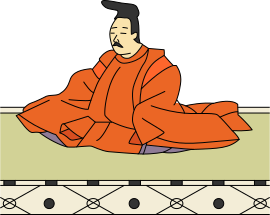
清原元輔
契りきな
かたみに袖を
しぼりつつ
末の松山
波こさじとは
In Japanese
契りきな かたみに袖を しぼりつつ
末の松山 波こさじとは chigirikina kataminisodeo shiboritsutsu
suenomatsuyama namikosajitoha
In English
We promised each other, wringing out our tear-soaked sleeves, that our love would last forever, never to be swept away like the waves beyond Suenomatsu.
Mother of the Right Captain Michitsuna
Author of the Kagerō Nikki and one of the wives of Fujiwara no Kaneie.
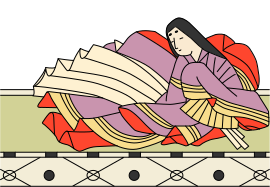
右大将道綱母
嘆きつつ
ひとり寝る夜の
明くる間は
いかに久しき
ものとかは知る
In Japanese
嘆きつつ ひとり寝る夜の 明くる間は
いかに久しき ものとかは知る nagekitsutsu hitorinuruyono akurumaha
ikanihisashiki monotokahashiru
In English
Lying alone, waiting for the long night to end — how endless it feels. Does the person who left me even know?
See Mother of the Right Captain Michitsuna's page (Poem 53).
Mother of the Honorary Grand Minister
Wife of Fujiwara no Michitaka and mother of Fujiwara no Korechika.
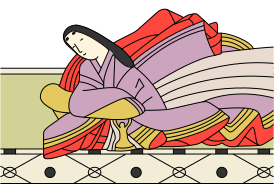
儀同三司母
忘れじの
ゆく末までは
かたければ
今日を限りの
命ともがな
In Japanese
忘れじの ゆく末までは かたければ
今日を限りの 命ともがな wasurejino yukusuemadeha katakereba
kefuokagirino inochitomogana
In English
The promise that you would never forget me — that is too much to ask forever. I only wish my life would end today, while the vow still holds.
Upper Counselor Kintō
One of the Four Counselors who supported Michinaga.
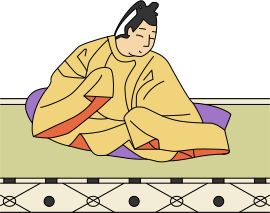
大納言公任
滝の音は
たえて久しく
なりぬれど
名こそ流れて
なほ聞こえけれ
In Japanese
滝の音は たえて久しく なりぬれど
名こそ流れて なほ聞こえけれ takinootoha taetehisashiku narinuredo
nakosonagarete nahokikoekere
In English
The sound of the waterfall has long since faded, but its name flows on and is still heard by the world.
Murasaki Shikibu
Author of The Tale of Genji and a lady-in-waiting to Akiko.
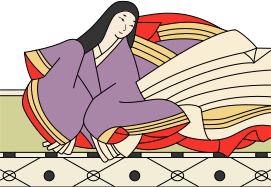
紫式部
めぐり逢ひて
見しやそれとも
わかぬ間に
雲隠れにし
夜半の月かな
In Japanese
めぐり逢ひて 見しやそれとも わかぬ間に
雲隠れにし 夜半の月かな meguriahite mishiyasoretomo wakanumani
kumogakurenishi yohanotsukikana
In English
We met for just a moment, yet I could not be sure it was really you — and then you vanished behind the clouds, like the midnight moon.
Akazome Emon
A lady-in-waiting to Minamoto no Tomoko and to Empress Akiko.
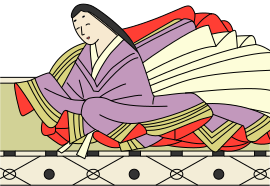
赤染衛門
やすらはで
寝なましものを
小夜更けて
かたぶくまでの
月を見しかな
In Japanese
やすらはで 寝なましものを 小夜更けて
かたぶくまでの 月を見しかな yasurahade nenamashimonoo sayofukete
katabukumadeno tsukiomishikana
In English
I waited and waited without sleep, watching the moon sink slowly toward the horizon in the deepening night. How I regret it.
Sei Shōnagon
Author of The Pillow Book and a lady-in-waiting to Empress Teishi.
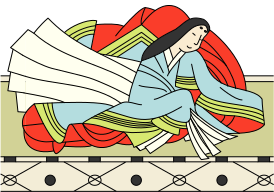
清少納言
夜をこめて
鳥のそらねは
はかるとも
よに逢坂の
関は許さじ
In Japanese
夜をこめて 鳥のそらねは はかるとも
よに逢坂の 関は許さじ yookomete torinosoraneha hakarutomo
yoniafusakano sekihayurusaji
In English
Even if you try to fool me with a crowing rooster in the night — I will not open the Barrier of Ōsaka for you.
Retired Emperor Sanjō
The tragic emperor who fell out with Fujiwara no Michinaga. Read the column on Emperor Sanjō.
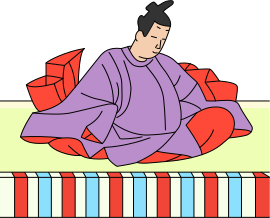
三条院
心にも
あらで憂き世に
ながらへば
恋しかるべき
夜半の月かな
In Japanese
心にも あらで憂き世に ながらへば
恋しかるべき 夜半の月かな kokoronimo aradeukiyoni nagaraheba
kohishikarubeki yohanotsukikana
In English
If I live on in this painful world without purpose, I am sure I will come to miss this night and its lonely moon.